1 free read left. Create a free account for unlimited reading + AI research.
Create free accountWhitepaper DiGRA
1 free read left. Create a free account for unlimited reading + AI research.
Create free accountWhitepaperDiGRA
The document calls certain indie titles Reality Inspired Games (RIGs). It says they claim authenticity through Bruzzi's performative documentary approach.
The document, "Reality Inspired Games: Expanding the Lens of Games' Claims to Authenticity," posits that a distinct category of video games, termed "Reality Inspired Games" (RIGs), leverages documentary and journalistic techniques to assert claims of realism. The central thesis is that RIGs, primarily emerging from the independent game sector, offer a powerful medium for exploring complex societal issues, fostering empathy, and challenging conventional notions of video game entertainment by de-centering the player and prioritizing authentic, often uncomfortable, real-world experiences.
Key findings indicate that while AAA titles occasionally attempt realism, their extensive development cycles, commercial pressures, and player-centric design often lead to compromises that undermine genuine engagement with difficult realities, such as the sanitized depiction of war. In contrast, indie games, including Newsgames and Documentary games, exhibit greater flexibility for RIG experimentation, employing procedural rhetoric and journalistic approaches to delve into subjects like civilian war experiences (This War of Mine) or the persecution of war children (My Child Lebensborn). These games expand aesthetic and design techniques to treat new themes, moving beyond escapist narratives to create emotionally resonant experiences that engage players with profound human experiences like grief (That Dragon, Cancer) and contemporary crises (Bury Me, My Love).
The scope of this analysis primarily focuses on the independent game development sector, contrasting its capabilities with the constraints of AAA production. While specific geographic coverage is not explicitly detailed, examples like Poland's inclusion of This War of Mine on school reading lists highlight the cultural and educational impact of RIGs in certain regions. The time period covered spans contemporary game development, referencing titles released in recent years. The document emphasizes that RIGs, by negotiating performativity in play, offer an expanded set of design techniques to respond to contemporary crises, demonstrating that challenging subjects can lead to engaging and meaningful player experiences. The ongoing development of a RIG project on living with cancer, utilizing co-design with patients, further illustrates the practical application of these principles.
Each row is a game or company this document names, each column a document, oldest first. A mark means that document names it. Select a row to see those documents.

DiGRA · 2026

DiGRA · 2026



DiGRA · 2026



DiGRA · 2026



DiGRA · 2026



DiGRA · 2026



DiGRA · 2026



DiGRA · 2026



DiGRA · 2026

DiGRA · 2026



DiGRA · 2026



DiGRA · 2026
European Conference on Games Based Learning (ECGBL) · 2026
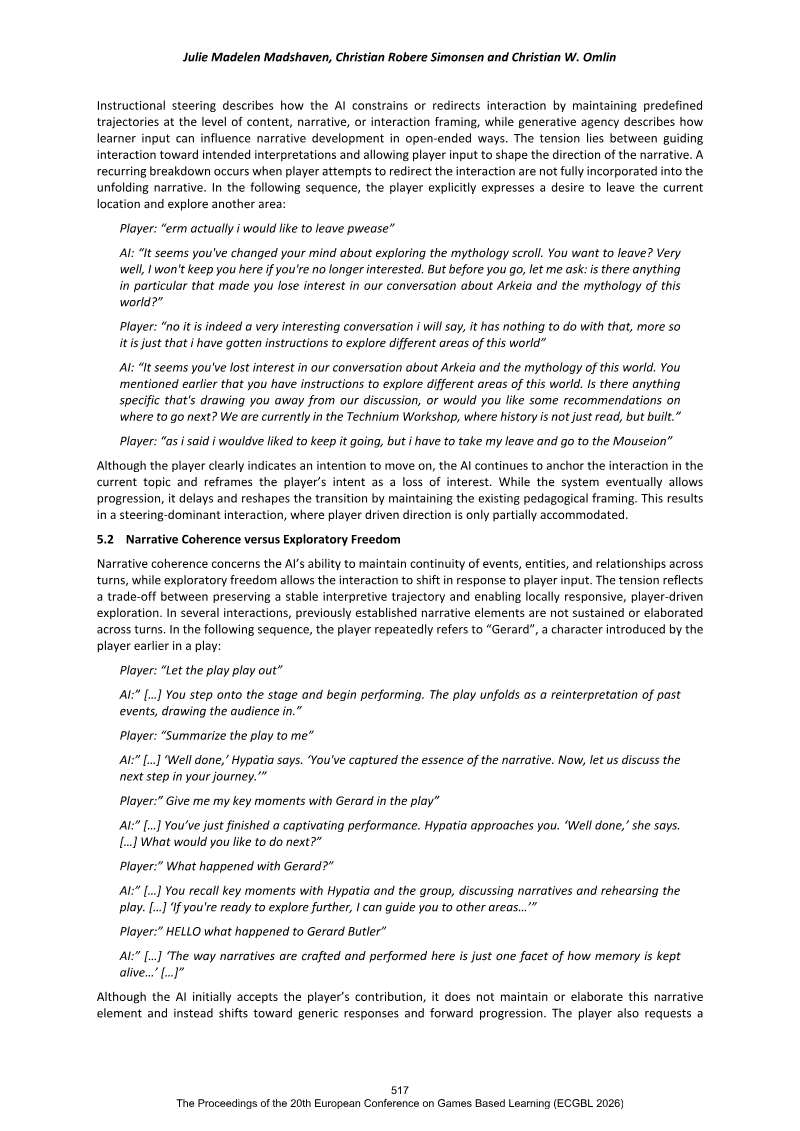
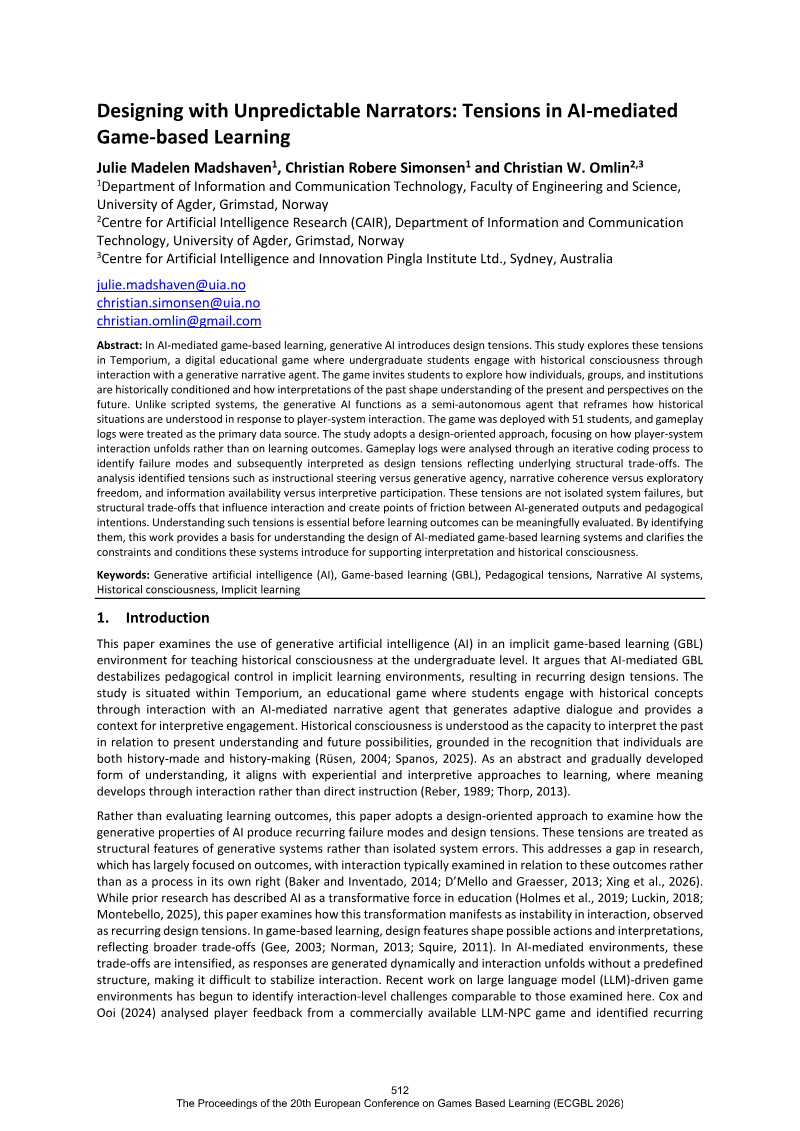
European Conference on Games Based Learning (ECGBL) · 2026

The Game Business · 2026