1 free read left. Create a free account for unlimited reading + AI research.
Create free accountArticle GameRefinery
1 free read left. Create a free account for unlimited reading + AI research.
Create free accountArticleGameRefinery
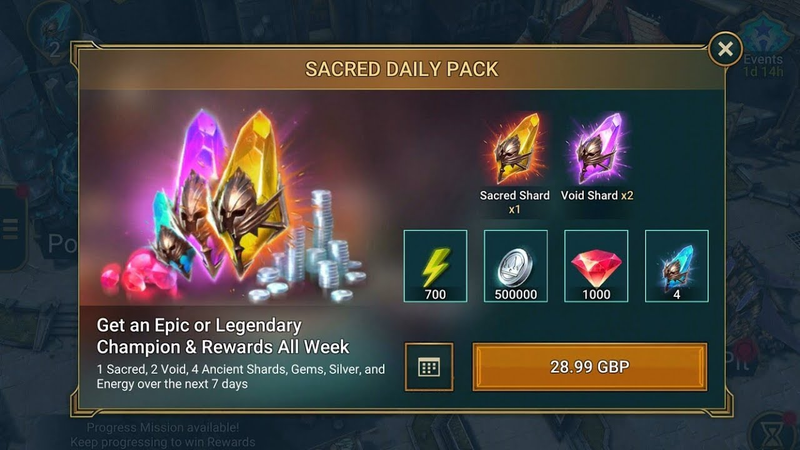
Energy is essential for all grinding activities, including dungeon runs and campaign progression. Players must frequently replenish energy using gems or limited-time in-app purchase offers.
This analysis examines the core monetization and engagement mechanics of the mobile turn-based RPG RAID: Shadow Legends from a player’s perspective. The primary thesis posits that player progression is fundamentally gated by energy management and the acquisition of high-tier champions, both of which are heavily incentivized through recurring events and limited-time in-app purchases.
The game utilizes a dual-resource system where energy and gems serve as the primary drivers of gameplay. Energy is required for all major activities, including dungeon grinding and campaign progression, but is depleted rapidly at higher levels. Gems function as the primary currency for energy refills and purchasing essential items. To maintain momentum, players are encouraged to participate in recurring events and utilize the multi-battle mechanic, which necessitates significant energy consumption. Monetization strategies are centered on these bottlenecks, with limited-time offers providing the most efficient path for players to acquire energy, shards for champion summoning, and resources for character upgrades.
Champion development is a central pillar of the experience, involving a complex system of affinities, factions, and rarity tiers. Progression requires systematic upgrading through rank increases, ascension using potions, and the application of masteries. Because these processes are time-intensive and resource-heavy, players are frequently prompted to purchase skill tomes, potions, and scrolls to bypass grinding. The analysis concludes that these design choices align with broader industry trends, noting that the top 20% of turn-based RPGs on iOS in the US market employ similar event-driven and limited-time offer monetization structures to sustain long-term player engagement and revenue.
GameRefinery · 2026

GameRefinery · 2026

GameRefinery · 2026
GameRefinery · 2026
GameRefinery · 2026

GameRefinery · 2026
GameRefinery · 2026

GameRefinery · 2026
GameRefinery · 2026
GameRefinery · 2026
GameRefinery · 2025
GameRefinery · 2025
Two & a Half Gamers · 2024