1 free read left. Create a free account for unlimited reading + AI research.
Create free accountWhitepaper DiGRA
1 free read left. Create a free account for unlimited reading + AI research.
Create free accountWhitepaperDiGRA
The abstract builds on the Situationists' interest in how geographical environments shape emotion and behaviour. It proposes that exploring virtual worlds in computer games extends this concept.
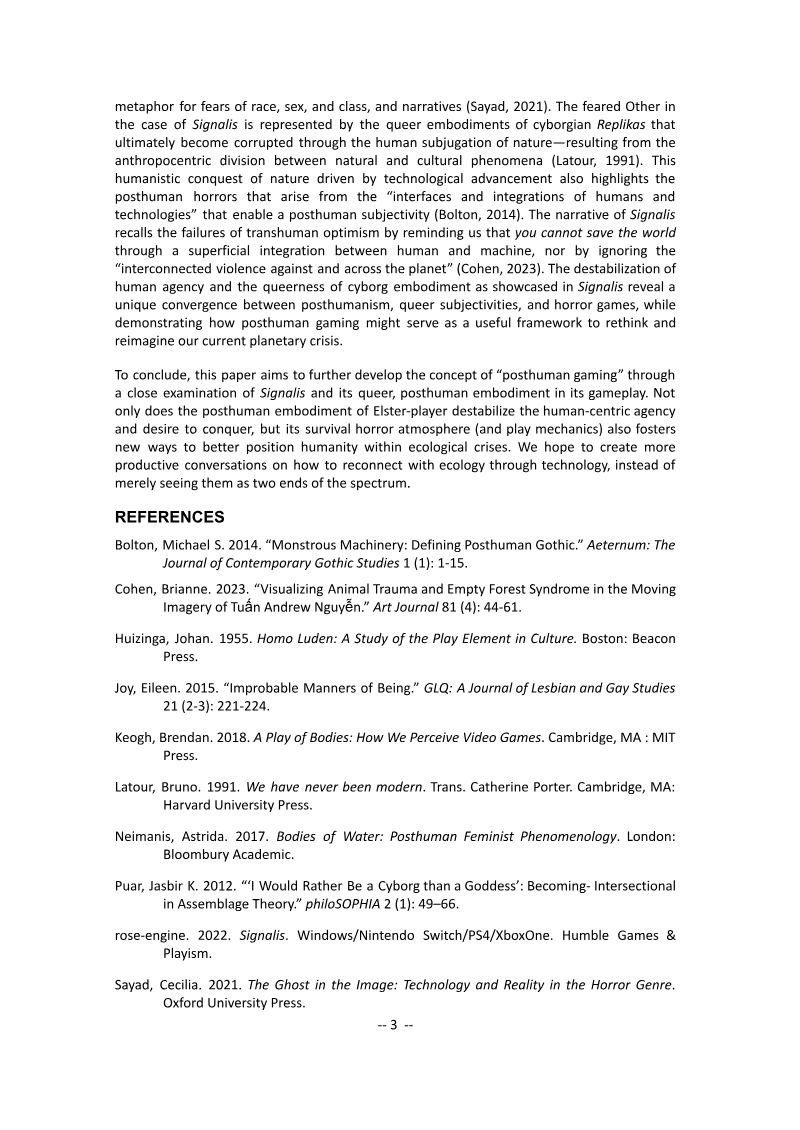
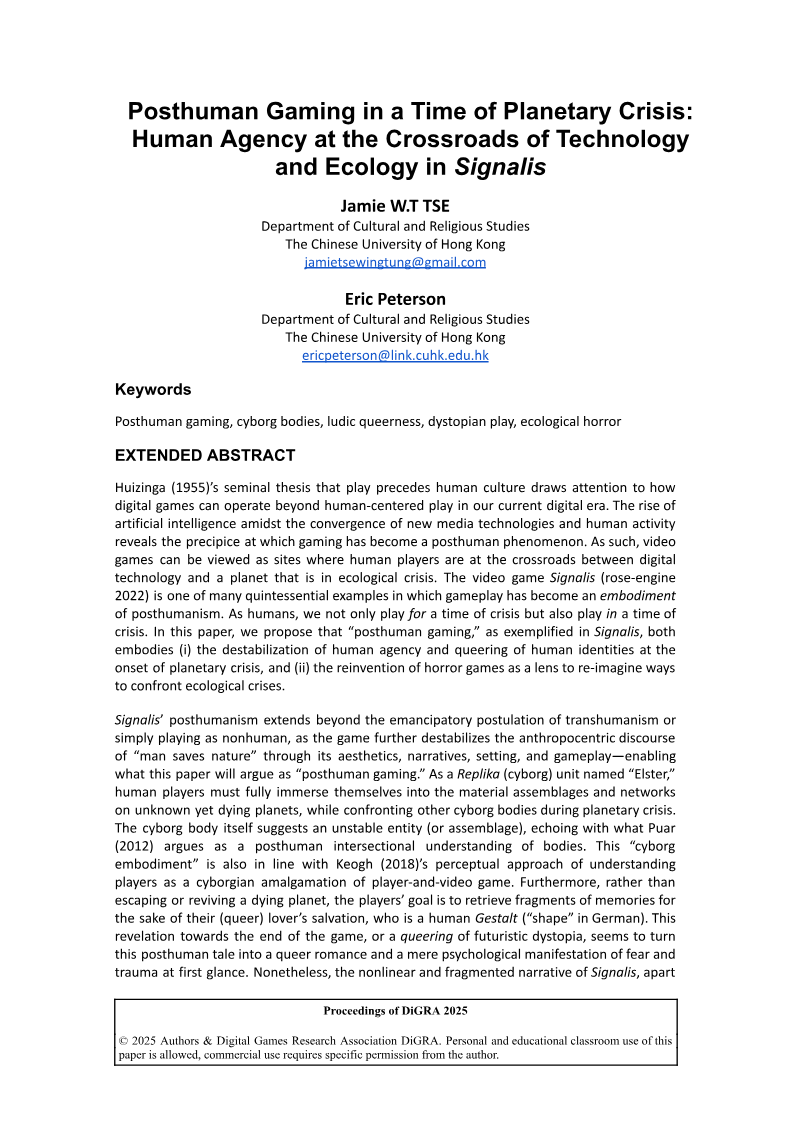
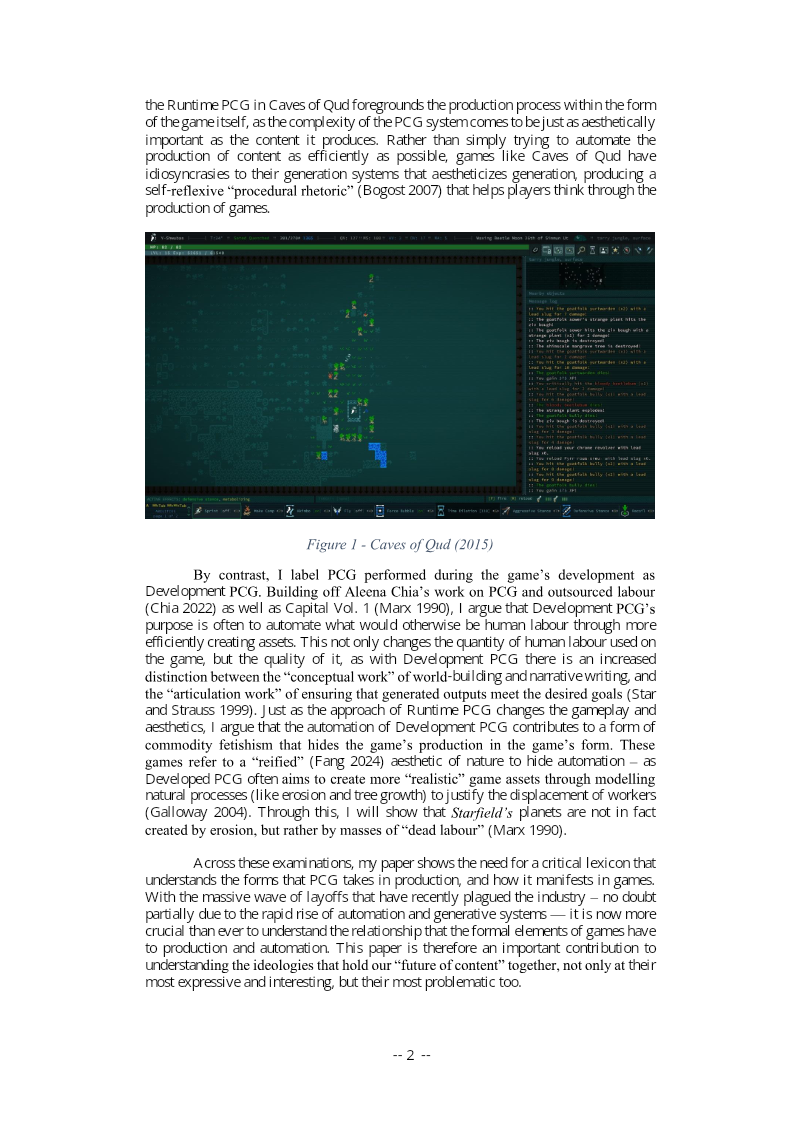
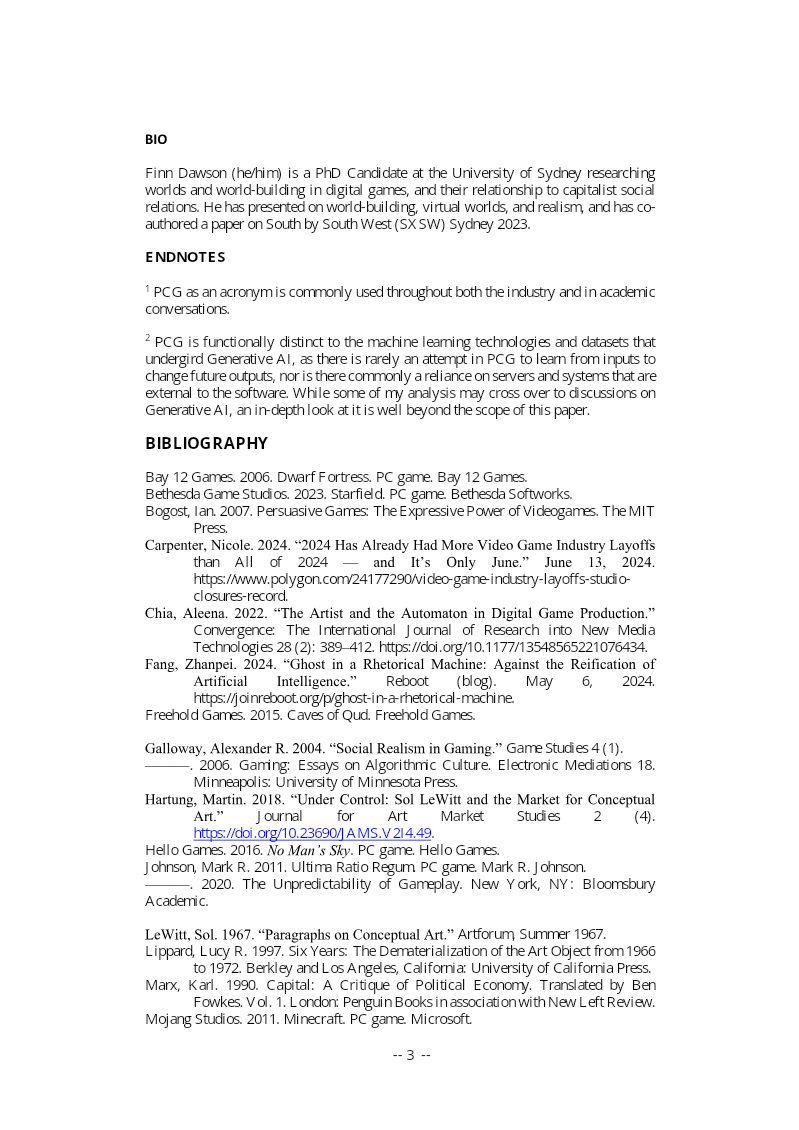
This extended abstract, prepared for a PhD consortium at DiGRA 2024, proposes that exploration of virtual worlds in computer games can be understood as an evolved form of the psychogeographical game, a concept rooted in the Situationists' interest in how geographical environments shape emotion and behaviour. Its central argument is that game spaces, which theorists such as Espen Aarseth and Stephan Günzel have framed as allegories of space within a "Ludotopia," can serve as a new medium for artistic practice. The author positions the work at the intersection of artistic research and game studies, asking how one plays a psychogeographical game inside a computer game and what distinguishes game spaces from physical ones.
The methodology is practice-led and practice-based. The proposed research uses in-game photography, critical drawing, artistic map-making, and game-making to analyse a diverse selection of games, treating play itself as a form of virtual fieldwork in which personal experiences are recorded and reflected upon. By translating game spaces into other artistic media, the author aims to reveal the technical and aesthetic properties of those media and the underlying logics of game spaces. The findings are to be presented through game prototypes and an artwork titled "Ludotopia," creating a feedback loop between theory and practice.
The abstract is framed as a work in progress rather than a set of empirical results, so it offers no quantitative data, sample sizes, or survey findings. Its anticipated contribution is conceptual: a methodology for analysing virtual spaces that draws on both situationist ideas and contemporary theories of cyberspace, along with a shared vocabulary intended to bridge game studies and contemporary art. The author concludes that computer game media offer new ways of exemplifying spatial ideas and aims to encourage future collaboration between these fields.

DiGRA · 2026

DiGRA · 2026



DiGRA · 2026



DiGRA · 2026



DiGRA · 2026



DiGRA · 2026



DiGRA · 2026



DiGRA · 2026

DiGRA · 2026



DiGRA · 2026



DiGRA · 2026

DiGRA · 2026
DiGRA · 2016