1 free read left. Create a free account for unlimited reading + AI research.
Create free accountArticle Eludamos: Journal for Computer Game Culture
1 free read left. Create a free account for unlimited reading + AI research.
Create free accountArticleEludamos: Journal for Computer Game Culture
Lammes argues that Age of Empires, Civilization and Rise of Nations are arenas where players engage with and reshape colonial legacies.
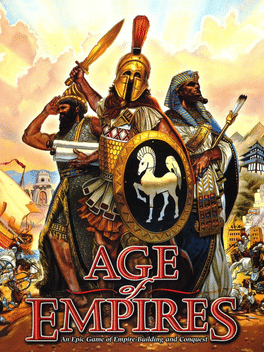
Sybille Lammes argues in this article that historical strategy games such as Age of Empires, Civilization, and Rise of Nations can be understood as "postcolonial playgrounds," arenas where players engage with and reshape colonial legacies. Rather than simply reproducing colonial power relations or speaking from the standpoint of formerly colonized peoples, these games are presented as sites where the mutated, impure, and unsettling inheritances of colonialism are played out. The core claim is that the interactive nature of digital games, particularly their mechanics of exploration and environmental change, makes them especially suited to expressing these tensions.
The analysis centers on the player's role as a cartographer. Unlike colonial-era maps, which were presented as fixed and objective, the maps in these games are mutable, expanding and shifting according to the player's actions. Lammes draws on Michel de Certeau's distinction between maps and touring to argue that these games blur the separation between abstract spatial representation and personal spatial experience, with looking and going constantly feeding into one another. Borders in Civilization, for example, shift as the player explores, and the mini-map in Age of Empires grows as territory is discovered.
The article distinguishes three definitions of postcolonialism and concludes that only the third, which treats the "post" as signaling the hybridized and transformed legacies of colonialism, fits these games well. The games are described as neither celebrating the end of colonialism nor merely reproducing it, but translating spatial hegemonies into personal, subjective play. The scope is limited to a set of commercial PC strategy titles, and the argument is conceptual and theoretical rather than based on empirical data such as surveys or player studies.
Each row is a game or company this document names, each column a document, oldest first. A mark means that document names it. Select a row to see those documents.

Eludamos: Journal for Computer Game Culture · 2026

Eludamos: Journal for Computer Game Culture · 2026

Eludamos: Journal for Computer Game Culture · 2026

Eludamos: Journal for Computer Game Culture · 2026

Eludamos: Journal for Computer Game Culture · 2026

Eludamos: Journal for Computer Game Culture · 2026

Eludamos: Journal for Computer Game Culture · 2026

Eludamos: Journal for Computer Game Culture · 2025

Eludamos: Journal for Computer Game Culture · 2025

Eludamos: Journal for Computer Game Culture · 2025

Eludamos: Journal for Computer Game Culture · 2025

Eludamos: Journal for Computer Game Culture · 2025
DiGRA · 2020