1 free read left. Create a free account for unlimited reading + AI research.
Create free accountWhitepaper DiGRA
1 free read left. Create a free account for unlimited reading + AI research.
Create free accountWhitepaperDiGRA
The paper argues Ukrainian scholars are excluded both by structural conditions inside Ukraine and by epistemic misrecognition in Western academic institutions.
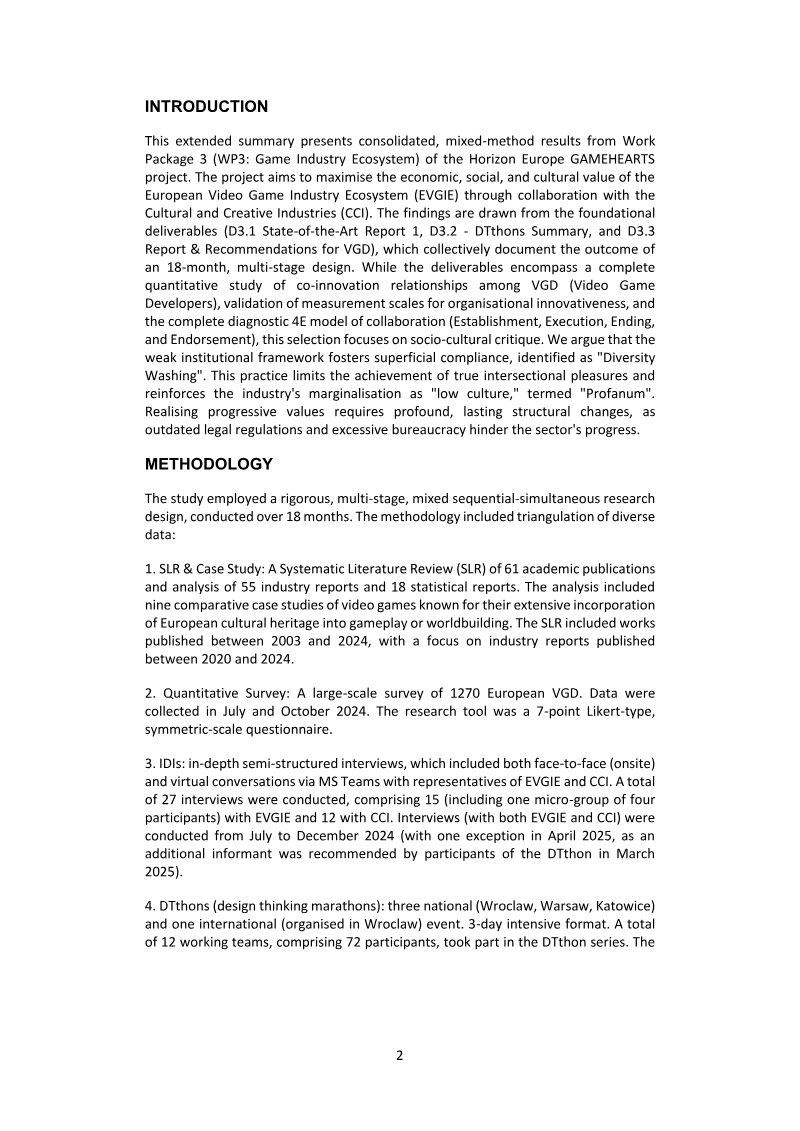
This paper, co-authored by Mark Maletska and Kseniia Harshina, argues that Ukrainian scholars face a dual barrier of exclusion from game studies: structural inaccessibility within Ukraine and epistemic misrecognition within Western academic institutions. Drawing on Miranda Fricker's concept of epistemic injustice, the authors contend that the field's claims to being international and intersectional are undercut by unevenly distributed infrastructures, including funding, publication venues, conferences, and academic networks. The study positions itself as an in-progress collaborative autoethnography in which the authors reflect on their career paths in HCI and game studies, aiming to expose the limits of current diversity discussions in the field.
The central analysis holds that Ukraine's postcolonial position has been obscured by "post-Soviet" generalizations and by the framing of its population as white and its oppressor as a non-European empire. Within Ukraine, the authors identify material constraints such as limited humanities funding, scarce institutional support for games research, restricted access to libraries and journals, and the disruptions of ongoing war. Within Western institutions, they describe Russia's colonial aggression going unacknowledged, Eastern European game cultures being flattened together, and a recurring assumption that Ukrainians are "too traumatized" to theorize play, pleasure, or storytelling. The paper draws on Chernetsky's notion of pre-emptive testimonial injustice and Chouliaraki's account of hierarchies of suffering to explain how Ukrainians are cast as objects of humanitarian concern rather than producers of knowledge.
The authors state that their preliminary findings concern scholarship and visa applications, conference participation, and peer review, though the extended abstract presents these as emerging rather than fully developed results. They conclude by proposing that international game studies communities move from humanitarian concern toward genuine epistemic inclusion, recognizing Ukrainian scholars as legitimate theorists of games under conditions of war, displacement, and resistance.

DiGRA · 2026

DiGRA · 2026



DiGRA · 2026



DiGRA · 2026



DiGRA · 2026



DiGRA · 2026



DiGRA · 2026



DiGRA · 2026

DiGRA · 2026



DiGRA · 2026



DiGRA · 2026

DiGRA · 2026
DiGRA · 2026