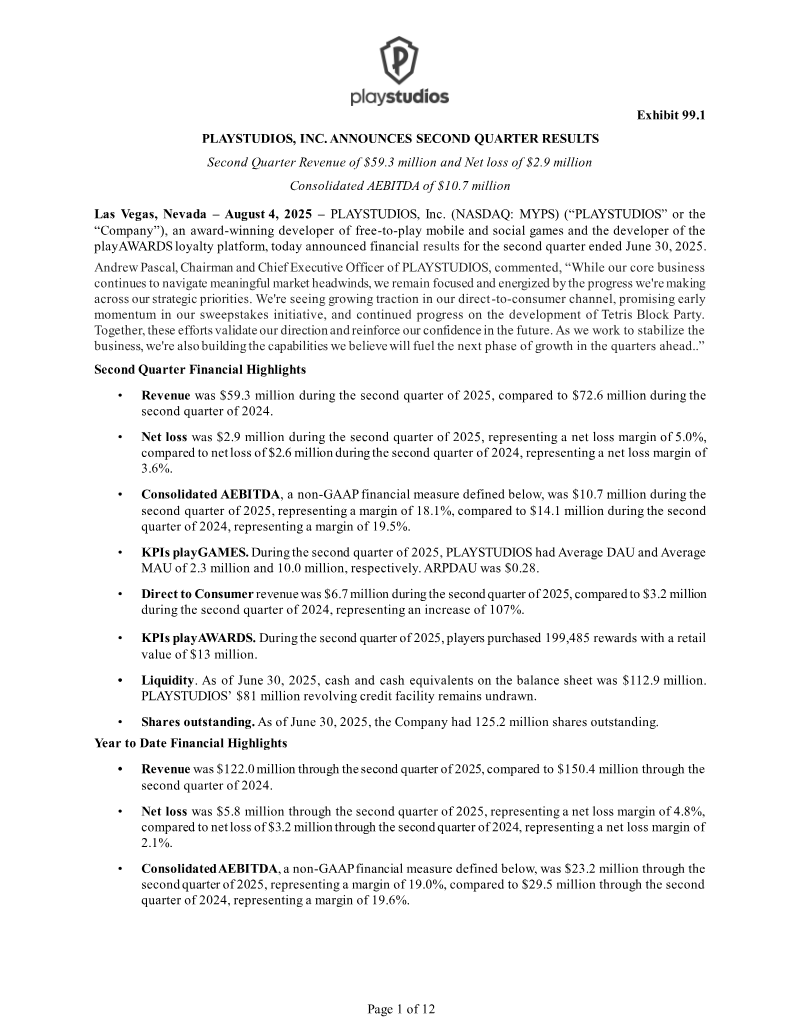
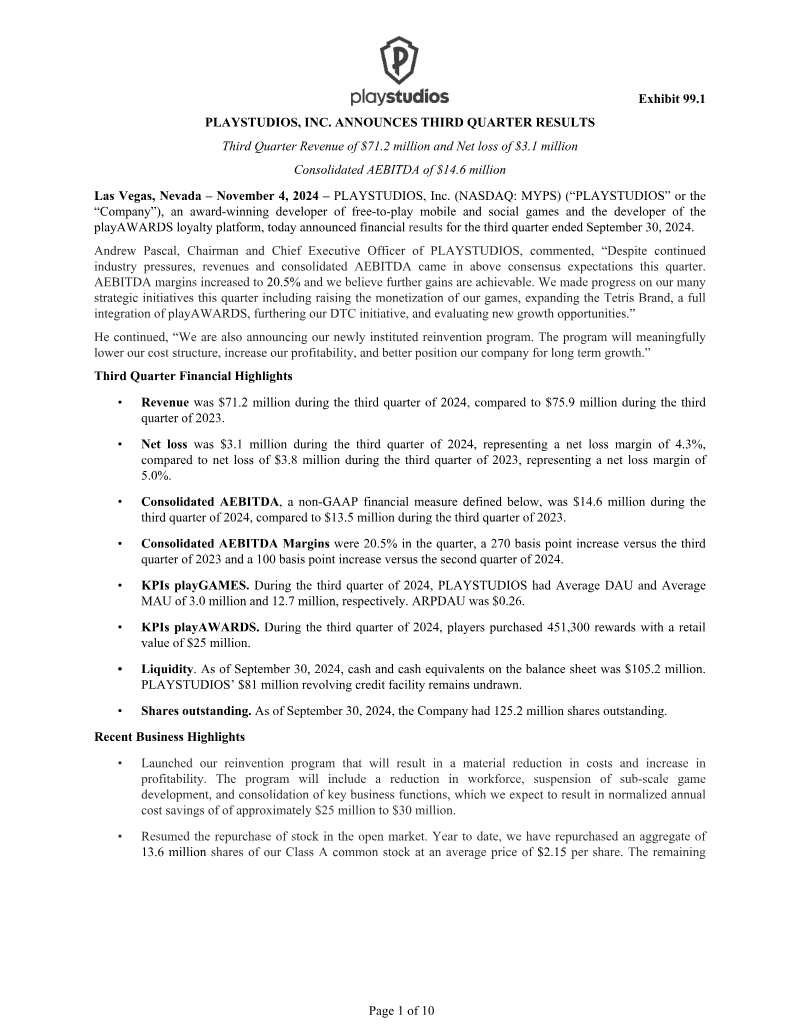
Playstudios experienced a challenging first quarter in 2022, characterized by a transition from profitability to a net loss of $25.2 million. This downturn was driven by a 4.9% decline in net revenue to $70.5 million, alongside significant non-recurring expenses, including $8.7 million in restructuring costs and an $8.4 million asset impairment charge following the suspension of its Kingdom Boss title. While the company achieved a 23.5% increase in daily active users, the influx of high-volume, lower-monetizing titles like Tetris contributed to a contraction in payer conversion rates and a decline in average daily revenue per user. Despite these financial pressures, the company maintained a stable liquidity position with $219.9 million in cash and cash equivalents as of March 31, 2022.
The company operates as a social gaming entity heavily dependent on third-party platforms, specifically Apple and Google, which account for the vast majority of its receivables. Its business model relies on a combination of in-game virtual currency sales and advertising, supported by the proprietary playAWARDS loyalty program. However, this model faces ongoing headwinds from the COVID-19 pandemic, which has disrupted the travel and entertainment sectors essential to the loyalty program’s value proposition. Furthermore, the company must navigate a complex regulatory landscape involving global data privacy laws, evolving tax requirements, and intense competition for both market share and specialized talent.
Operational risks remain a central theme, as the company manages potential legal liabilities, including a breach of contract claim and a class-action securities lawsuit. Management continues to monitor key performance indicators while navigating the volatility associated with derivative warrant liabilities and the integration of strategic acquisitions. Although the company maintains effective disclosure controls, its long-term profitability is contingent upon its ability to innovate within the mobile gaming market, mitigate cybersecurity threats, and successfully navigate the dependencies inherent in its reliance on third-party distribution and cloud infrastructure providers.