1 free read left. Create a free account for unlimited reading + AI research.
Create free accountArticle Eludamos: Journal for Computer Game Culture
1 free read left. Create a free account for unlimited reading + AI research.
Create free accountArticleEludamos: Journal for Computer Game Culture
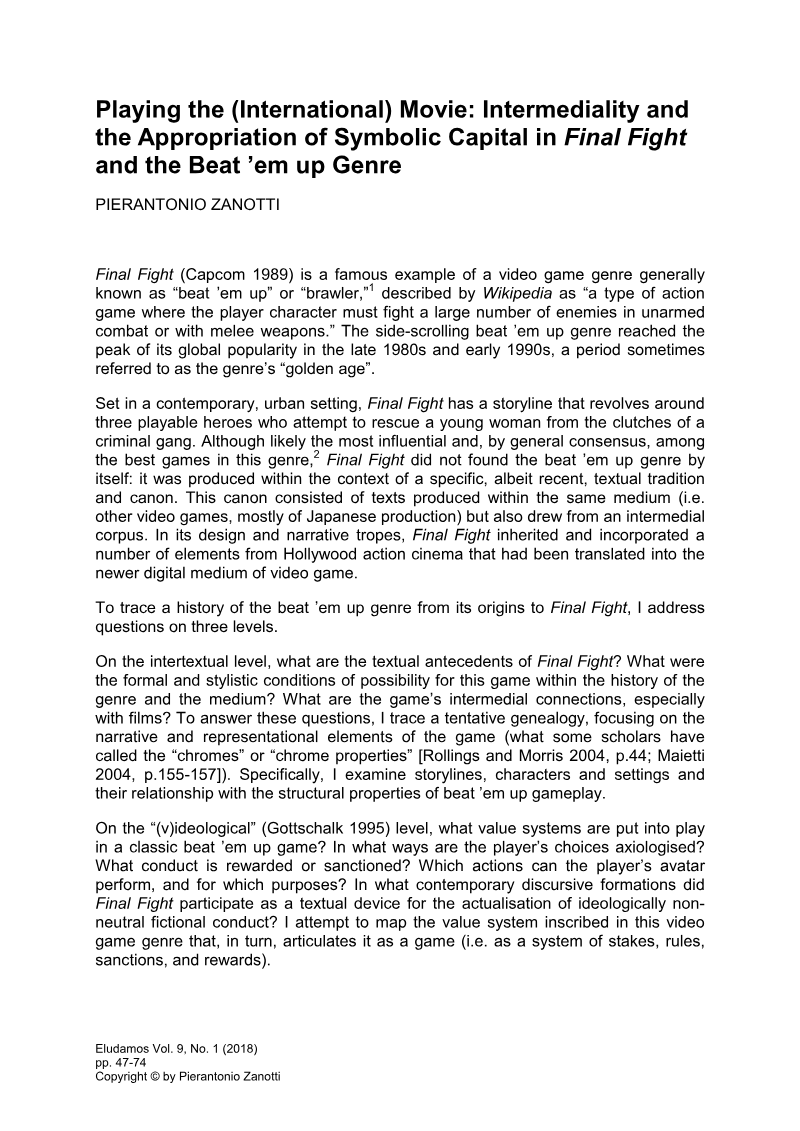
Zanotti's article examines how Japanese arcade beat 'em ups of the 1980s, most prominently Final Fight, turned American urban vigilante and gang cinema into interactive form.
Zanotti's article examines how Japanese beat 'em up video games of the 1980s, most prominently Final Fight (Capcom, 1989), remediated the conventions of American urban vigilante and gang cinema into interactive form. Its central thesis is that this appropriation of Hollywood's symbolic capital allowed Japanese developers to achieve international commercial and cultural success that few other Japanese cultural sectors reached in the same decade. Films such as Death Wish, Dirty Harry, The Warriors, and Streets of Fire, widely consumed in Japan and often perceived there as quintessentially American, supplied the narrative and moral framework for the genre's endless street brawls, in which a single hero restores personal rather than systemic order.
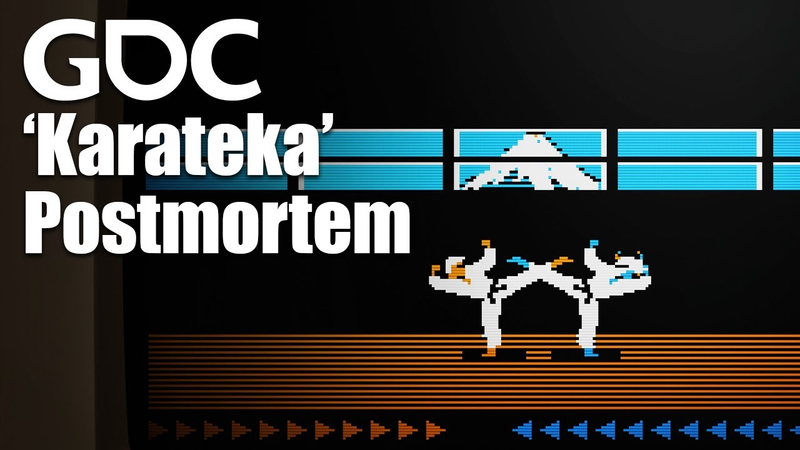
The article traces this lineage through a broad catalogue of 1980s and early 1990s arcade titles from companies including Capcom, Data East, Irem, Konami, Technōs Japan, and SNK. It contrasts these games with earlier martial-arts fighters such as Karate Champ and Urban Champion, which lacked the urban vigilante framing that the sidescrolling beat 'em up required. Kunio-kun, later remade as Renegade for Western audiences, and Double Dragon, which was directly influenced by Mad Max 2 and The Warriors, are presented as emblematic examples of this deliberate adaptation of foreign imagery.
Zanotti situates the genre within a design environment shaped by hit-driven arcade markets, in which Final Fight functioned both as a clone of Double Dragon and as a highly productive hypotext. The analysis highlights the dissonance created by Japanese developers depicting stereotyped American cityscapes, pop-culture references, and openly stated ambitions to target the American market. The article also notes that these games circulated within a wider Japanese media ecosystem of anime, television dramas, and films, which sustained the cross-references that gave the genre its cultural weight.
Commercial data supports the argument about reach. Double Dragon's multi-platform ports sold roughly 40,000 arcade boards worldwide, with 26,000 in the United States, and the Final Fight franchise reached 3.2 million home units by March 2015. The article concludes that Kunio-kun/Renegade, Double Dragon, and Final Fight, rather than lesser-known experiments, became the mainstream reference points of the genre, and that its remediation of cinema reflected video games' commercially
Eludamos: Journal for Computer Game Culture · 2026
Extra Credits · 2025