1 free read left. Create a free account for unlimited reading + AI research.
Create free accountWhitepaper DiGRA
1 free read left. Create a free account for unlimited reading + AI research.
Create free accountWhitepaperDiGRA
The paper describes Roblox as significant but under-researched. Prior academic work has focused on educational and heritage applications rather than player-driven horror culture.
This extended abstract, presented at DiGRA 2023, examines user-created creepypasta games on the Roblox platform and asks whether they function as the haunted houses of the digital era. Its central thesis is that an appealing creepy game in Roblox rests on three intertwined elements: legend-tripping, mythmaking, and a sense that the depicted events might be potentially true. Drawing on the parallel between vernacular ghost stories and online creepypastas, the authors propose a preliminary framework of a "Haunted House allegory" intended to illuminate both the social appeal of creepy game making and play and possible conceptual design implications for future game creation.
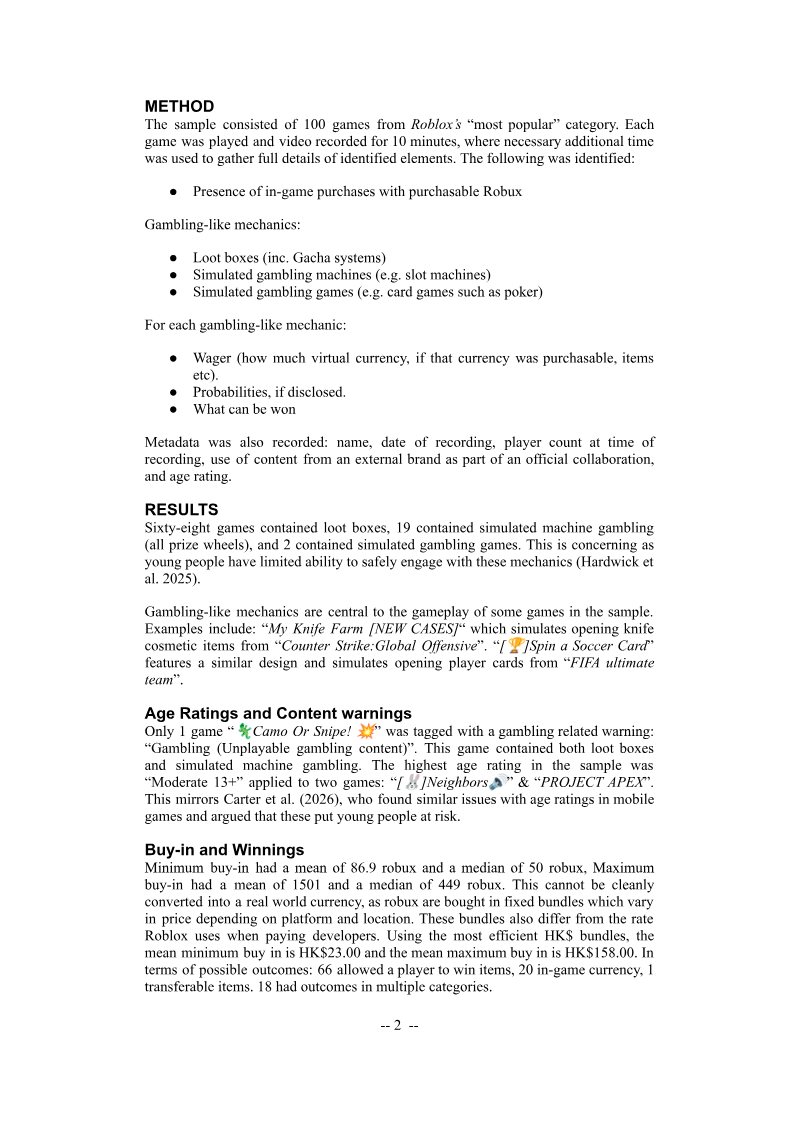
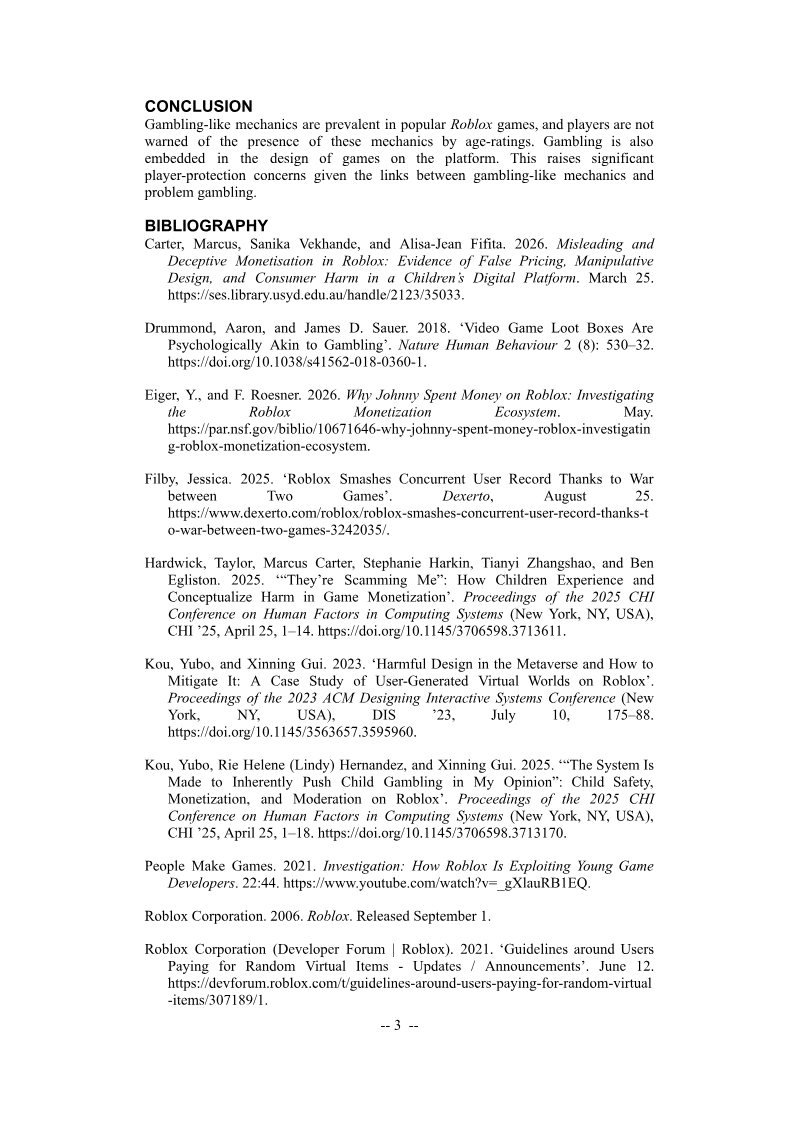
The study's method is qualitative and interpretive. The authors observed and played 104 of the most popular creepypasta experiences on Roblox, selected from thousands of playable versions, in 2022. Analysis combined game-immanent close reading with a content analysis informed by existing scholarship on creepypastas and folklore, focusing on how players were guided through environments, storytelling, and gameplay. Themes identified include creepy technology, glitches, hacking, and surveillance, alongside more familiar lore such as the Slender Man. The scope is therefore limited to a curated sample of popular experiences in a single platform, and the framework is described explicitly as preliminary.
The authors argue that Roblox creepypastas provoke players through questions about whether an experience is too frightening to play, whether a haunting entity is real, or whether their system might be compromised, which connects to broader concerns about cybersecurity and technological unease. The three distinctions are presented as complementary dimensions that together explain why users engage with content they might ordinarily avoid. Roblox is positioned as a significant but under-researched platform, with prior academic work concentrated on educational and heritage applications rather than on player-driven horror culture.
Each row is a game or company this document names, each column a document, oldest first. A mark means that document names it. Select a row to see those documents.

DiGRA · 2026

DiGRA · 2026



DiGRA · 2026



DiGRA · 2026



DiGRA · 2026



DiGRA · 2026



DiGRA · 2026



DiGRA · 2026

DiGRA · 2026



DiGRA · 2026



DiGRA · 2026

DiGRA · 2026