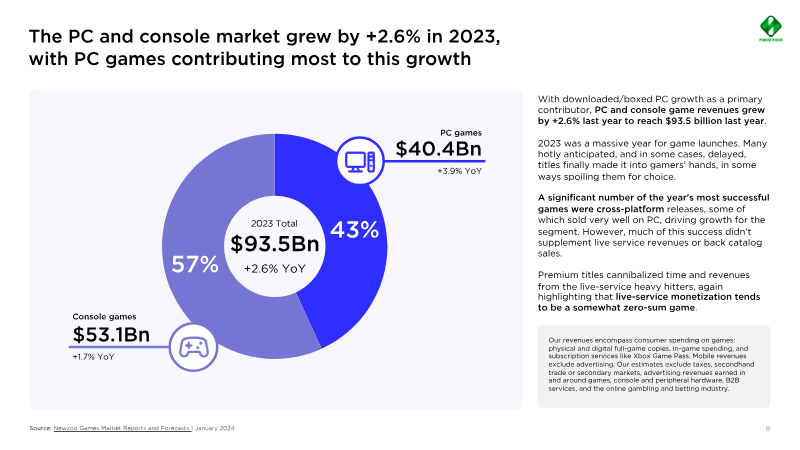
The market experienced a modest 2.6% growth rate.
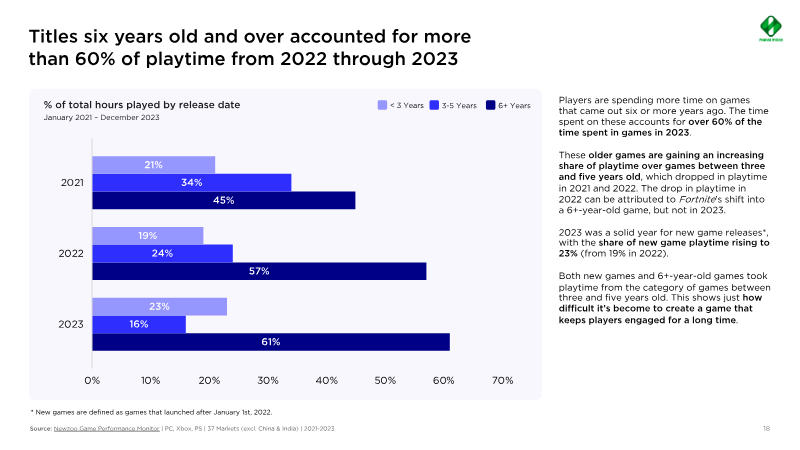
Pandemic-era engagement habits are waning. This decline in playtime creates a challenging structural shift for the industry.
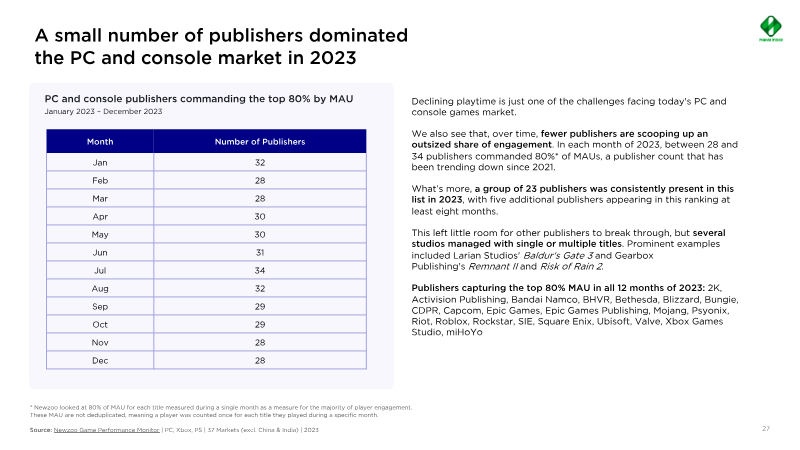
This creates a high barrier to entry for new releases.
It's like a few classic movies always topping the box office, making it hard for new films to get noticed.
It helps compete against established live-service behemoths.
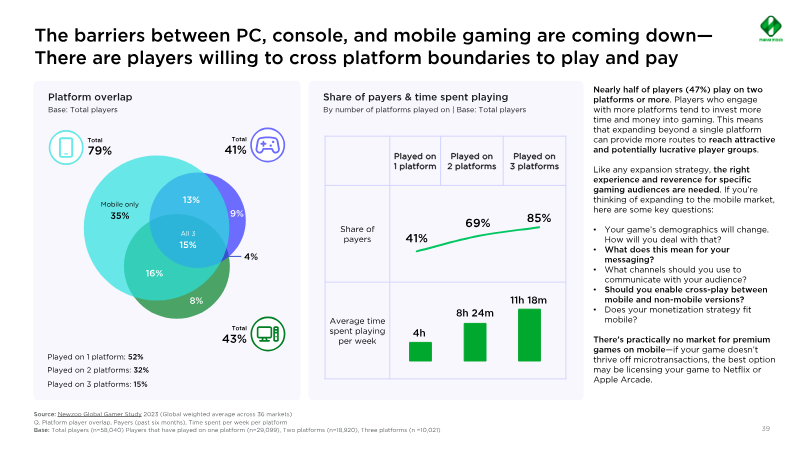
Users who engage across multiple devices show significantly higher levels of financial and temporal investment.
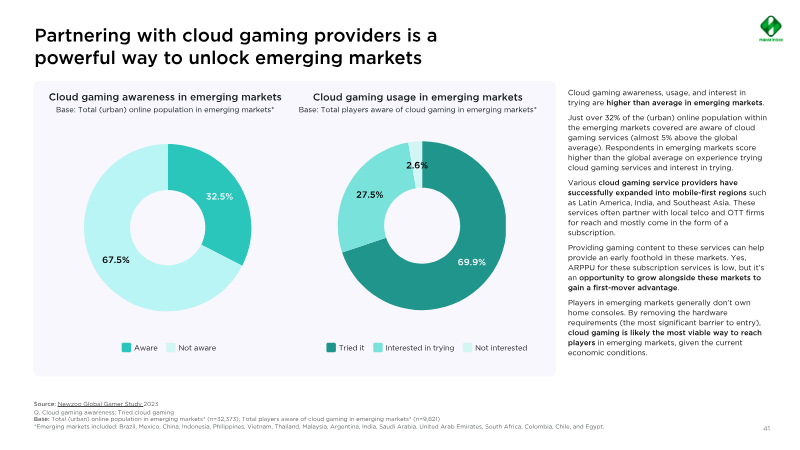
Targeting emerging markets can expand player populations. Cloud gaming helps bypass hardware limitations, increasing accessibility.
The global PC and console gaming market reached $93.5 billion in 2023, reflecting a modest 2.6% growth rate. Despite this financial expansion, the industry faces a challenging structural shift characterized by a 26% decline in total playtime since 2021. As pandemic-era engagement habits wane, the market has become increasingly consolidated, with a small cohort of evergreen titles—many over six years old—capturing more than 60% of total player engagement. This environment creates a high barrier to entry for new releases, which must compete against established franchises and dominant live-service behemoths for a shrinking pool of player attention.
To navigate this saturated landscape, publishers are prioritizing risk mitigation through the development of remakes, sequels, and transmedia adaptations. While the competition for engagement is intense, breakout successes remain possible for titles that effectively leverage community feedback, viral social mechanics, and refined gameplay loops. Furthermore, the industry is witnessing a transition toward cross-platform play, as users who engage across multiple devices demonstrate significantly higher levels of financial and temporal investment.
Future growth strategies are increasingly focused on geographic diversification and technological accessibility. Developers are encouraged to target emerging markets where player populations are expanding more rapidly than in traditional regions. By utilizing cloud gaming to bypass hardware limitations and implementing localized monetization and distribution strategies, studios can reach broader demographics. Ultimately, sustaining long-term viability in the current climate requires a shift away from reliance on domestic saturation toward a more flexible, multi-platform, and globalized approach to player acquisition and retention.