Related Documents
Report
Take Rates in China: Will Quality Development Beat Out Traditional Distribution?
The Chinese mobile gaming market is currently undergoing a significant shift in distribution dynamics as developers increasingly challenge the traditional 50% take rates imposed by domestic Android app stores. While global discourse remains focused on the 30% take rate standard contested in the Epic v. Apple litigation, Chinese developers face a more restrictive domestic environment where smartphone manufacturers and major tech firms consolidate power through the Mobile Hardcore Alliance and the Global Developer Service Alliance. These entities justify high fees by providing integrated marketing and distribution services, yet these costs have become a primary point of contention for major studios. To circumvent these high fees, prominent developers such as miHoYo, Lilith Games, and NetEase are increasingly adopting direct-to-consumer distribution models. By leveraging high-quality intellectual property, substantial marketing budgets, and community-driven platforms like TapTap and Bilibili, these studios can bypass traditional stores entirely. This strategy allows developers to retain significantly higher gross profit margins—often exceeding 95%—compared to the 50% margin typically realized through standard distribution channels. The success of these titles has begun to force concessions, as evidenced by Xiaomi offering reduced take rates to high-profile games like Genshin Impact. The industry landscape is bifurcated, as smaller developers often remain dependent on traditional stores for the reach and infrastructure necessary to sustain their operations, viewing the 50% fee as an acceptable cost of doing business. However, the rise of direct distribution and community-centric marketing signals a broader trend where quality content and brand loyalty are becoming more influential than traditional store placement. As developers continue to prioritize direct engagement and alternative platforms, the dominance of traditional Android app stores in China faces mounting pressure, potentially reshaping the economic model of the global mobile gaming industry.
NikoJan 2025
Report
Guide to Growing Chinese Gaming Apps Overseas
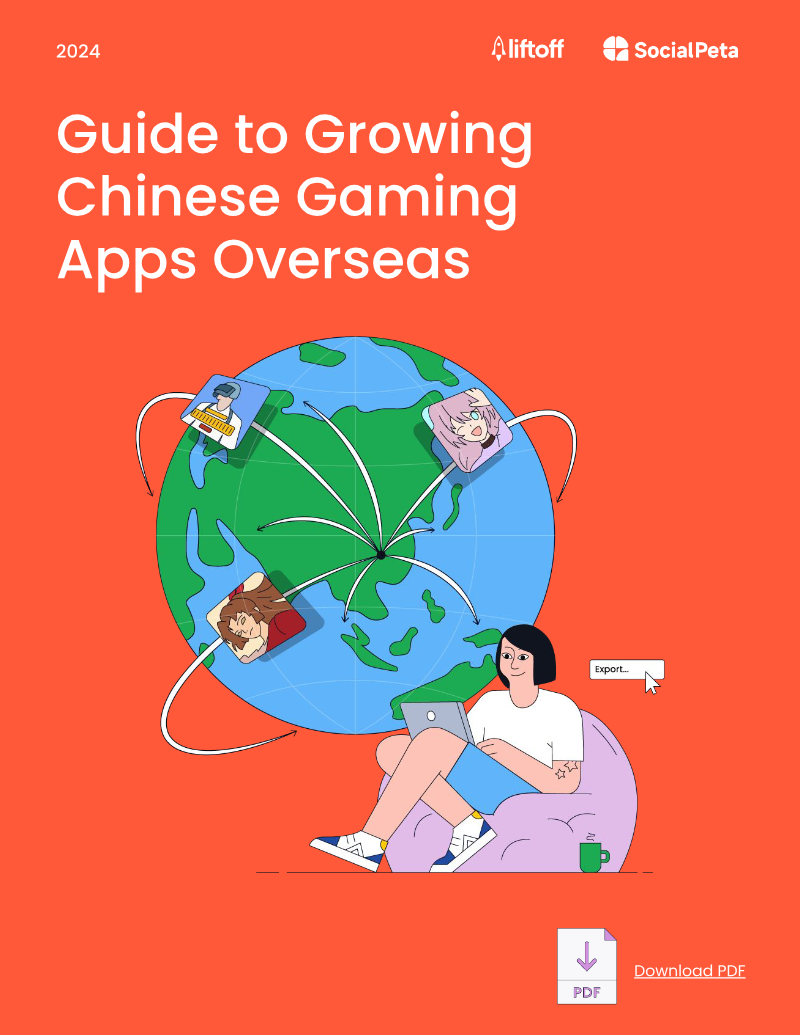
Chinese gaming developers are aggressively expanding their global footprint by leveraging sophisticated monetization models and high-volume, AI-driven marketing strategies. The primary objective for these publishers is to balance the high revenue potential of mature markets like the United States, Japan, and South Korea against the rising costs of user acquisition. By prioritizing video advertising, which currently yields the highest Day 7 return on ad spend at 21%, developers are successfully capturing market share in competitive strategy and RPG segments. Success in these international territories is increasingly predicated on hyper-localization and technological integration. Publishers are utilizing generative AI to streamline the production of localized ad creatives, voice-overs, and performance-tested copy, allowing for rapid iteration and regional customization. Leading titles demonstrate that high-engagement gameplay loops—such as the inclusion of social hangout spaces, customizable home systems, and minigame integrations—are essential for sustaining long-term retention. These efforts are further bolstered by strategic partnerships with local influencers and the implementation of innovative, time-limited gacha mechanics. To maintain consistent growth, developers are diversifying their engagement tactics through gamified live events, including seasonal collections and interactive board-style challenges. These features, combined with trial character systems, allow publishers to cater to varied player motivations while maintaining a steady revenue stream. By synthesizing competitive intelligence with agile content updates, Chinese gaming apps are effectively navigating the complexities of global expansion, ensuring that both monetization and user interest remain high across diverse geographic regions.
EAJan 2025


Report
China Game Industry Report 2025
The China Game Industry Report for 2025 presents a comprehensive assessment of the domestic and overseas gaming markets, highlighting sustained growth driven by youth protection initiatives, technological innovation, and cross‑sector integration. In 2025, China’s self‑developed mobile games generated US$20.455 billion in overseas revenue, a 10.23% year‑on‑year increase and the sixth consecutive year surpassing RMB 100 billion. Strategy games, including SLG, dominated overseas earnings at 49.97%, followed by shooters (9.69%) and RPGs (9.39%). The United States remains the largest market, contributing 32.31% of overseas revenue, with Japan (16.35%) and South Korea (9.15%) also significant. Domestically, mobile games accounted for 73.29% of total sales, with MOBA leading at 19.45%, followed by shooting (18.29%) and RPG (15.10%). The domestic console market expanded sharply, reaching RMB 8.362 billion (US$1.18 billion) in 2025, a 37.38% year‑on‑year rise, driven by both software and hardware sales. Global market projections indicate the worldwide gaming industry will reach RMB 130.17 billion in 2025, with mobile gaming contributing RMB 66.69 billion—a growth rate of 4.93%, slower than previous years but still positive. Methodologically, the report aggregates data from CADPA’s industry surveys and market analyses, covering 2020‑2025 for domestic sales and 2019‑2025 for overseas performance. The findings underscore a resilient Chinese gaming sector, poised to maintain strong export growth while deepening domestic diversification across mobile and console platforms.
Meridian PlayJan 2025
Report
Tools & Services Survey: November 2024
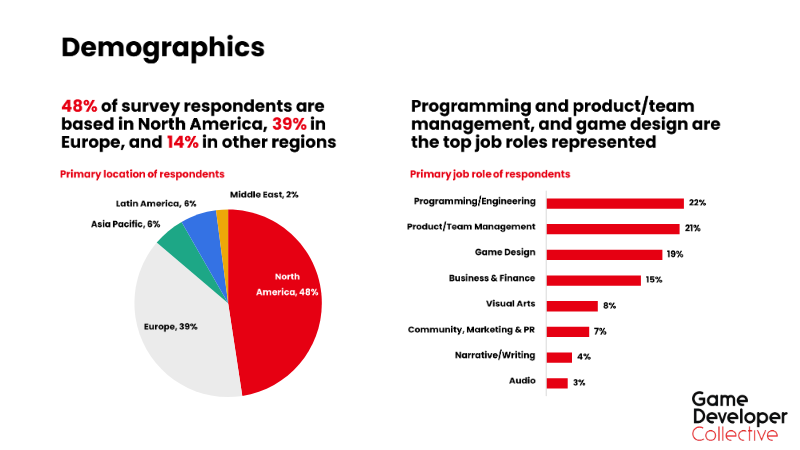
This analysis examines the evolving landscape of game development tools and services amidst a period of significant market volatility. Based on a November 2024 survey of the Game Developer Collective, the findings track shifts in engine preference, cloud infrastructure, and overall industry sentiment. The survey includes a global sample of developers, with 48% based in North America and 39% in Europe, primarily representing roles in programming, management, and game design. A primary focus is the game engine market, which continues to react to Unity’s 2023 "runtime fee" controversy. Despite Unity eventually scrapping the fee, the company has steadily lost market share to Unreal Engine. While the percentage of Unity users planning to switch engines dropped from a peak of 70% in late 2023 to 36% in late 2024, this remains significantly higher than the 14% switch rate seen among users of competing engines. Sentiment toward Unity has moderated, but only 30% of developers report being happy with the company, suggesting a lasting impact on brand trust. The broader industry environment is characterized by increasing financial pressure and underperformance. Approximately 55% of developers now describe market conditions as "bad," a notable increase from 47% six months prior. Business performance has also declined, with 41% of studios reporting they are underperforming against expectations. Consequently, while investment in tools remains steady for most, there is a growing emphasis on productivity and efficiency as the primary drivers for new purchases. AI-powered tools are a rare area of growth, with studios more likely to increase spending in this category compared to traditional services. In specialized segments, Blender has emerged as the leading 3D modeling tool, used by 50% of studios. Cloud platform usage is at an all-time high, led by AWS and non-hyperscaler options, though these services remain highly "sticky" with low intent to switch providers. Conversely, specialist backend platforms struggle with low penetration, as only 38% of studios currently utilize these centralized solutions. Overall, the findings depict a cautious industry prioritizing efficiency and stability while navigating a difficult commercial climate.
Game Developer CollectiveNov 2024