Transcript
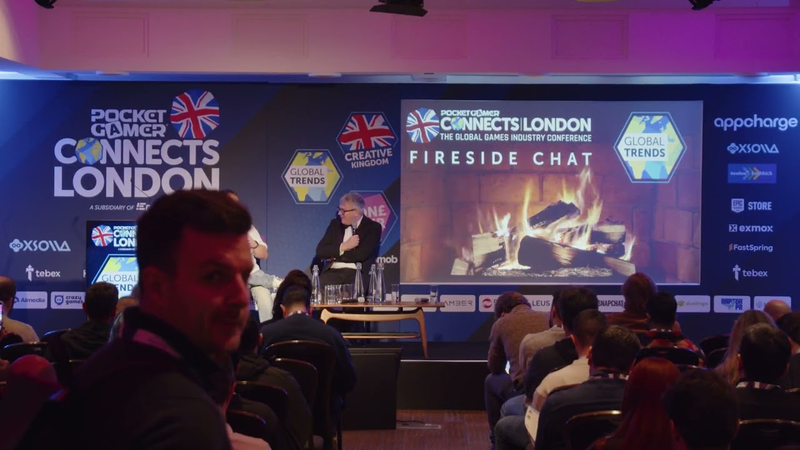
Uh, so up next, I'd like to welcome a very special panel uh that is going to be conducted by the uh the British Columbia delegation that's joined us uh and leading this panel I would like to welcome uh Roda Campbell to the stage and I'll uh get her to introduce her wonderful panelist. So please uh welcome Rooda to the stage as she fights through the crowd.
Hi everyone, thanks for joining us all. Uh my name is Roda Campbell as Charlie said and uh we're all here from British Columbia, Canada. That's on the west
coast. So we have an amazing panel and I think the key aspect of this panel is that we have some serious veterans in the game and some uh in game development and also some new studios. And the aim of the panel really is to let you guys have some insights in playing the long game. And if you've been in the long game for a long time, is to kind of gain some motivation from these very motivated people. Um and uh and continue to feel inspired. Uh BC has had a game industry since the 1980s. Uh it's number two in uh for cluster and industry in Canada and number four in North America. uh that's in across console mobile and in VR. So it's been around for a while uh and that's really it's seen some it's seen the ups and downs of the global
industry. Uh it's seen challenges and it's seen major highs and I think maybe we can start with that. U actually let's start with everyone introducing themselves. Um perhaps we can start with Wilang. If you could let us know your name, what you do, a little bit about your studio, and then pass it on to Karina. Thanks.
Thanks, Roa. Uh first of all, hands up. Who's who's here from London? England. Uh anybody not from London? Uh other parts of the UK, uh the rest of Europe, anybody from North America? A few of you. Awesome. Great stuff. Uh, I'm Wolf Gang Hammond, president, CEO, founder of Cool House Games, and I'm pleased to say that last year we celebrated our 20th year anniversary. Uh, thank you. Thank you very much. It's really a tribute to my team, most who have been with me for over 14 years on average.
Uh, and we started way back when in officially in 2005, unofficially in 2004. Uh and I think the one word that describes cool house and the reason for its longevity is just one word which is diversity. Uh diversity in everything that we do. We got into mobile early uh before anybody else and uh rode that but we are a cross-platform developer uh and in a nutshell that one word really describes us. Thanks for coming. Good morning. Hi, my name is Karina K. Um, I'm a video game industry veteran of about 17 years. Um, my claim to fame is that I've recently won an award for Vancouver for inclusive design leadership and I run a studio called Simply Sweet Games, which is a female-led studio looking to raise the
bar for the games industry. And I can talk about that later in this panel. We are a pre-revenue studio. We're about two years into our journey. So, I'm going to come in with a lot of my uh perspective will be about fundraising and how difficult that journey can be and but to not give up. I believe the future for BC and for Canada is that we are resilient, very highly creative, technology focused games industry. And I I'd love to share that with all of you.
Thank you. Hi. Um I'm Emma Bolan. Um, I am senior director of partnerships and platforms at Hyper Hippo, which is um an idol games studio. We make adventure capitalist a venture communist, which I would encourage you to download if the internet was better. Um, I'm joining you today from BC via Lewisham. Um, I'm happy to be an export.
Uh, my name is Solen Buckolds. I'm the co-founder and CEO of LBC Studios. Uh we are in the mobile freeto play play space uh focusing on simulation and casual
games. Uh we have been around for 10 years. So as Roa mentioned we've ridden the highs, gone through the lows and uh figure out how to come out the other side. Still successful. So happy to share today.
And I'm Taber Voyer, the CEO of a Thinking Ape Games. We make mobile games and we've been a studio for about 16 years making mobile games and we're in Vancouver, Canada, but also fully remote, so all over British Columbia and Canada. Got about 100 employees across the world and um yeah, we've been making games for a long time. So happy to share some insight.
Thank you. So actually want to start with you Solen and Wolf Gang if you don't mind. Um, I want when you started up your studios, uh, what was the what was the wave like that you were riding in the creation of that? Was it an easy wave? Was there a lot of adoption? What was, um, can you draw on how that initial
drive to build it into something that's lasted 20 years, something that's lasted 10 years? what was the high that you were riding if it was or what did you set it up during challenging times in the market um and and how has that created the foundation for what you guys are now? So maybe start with Solen.
Yeah. Um in 2015 part of the reason that we were able to find success was we were clearly focused on the vision on what our game was going to be. We knew exactly what we wanted to build and who we were building it for. The challenge is when you find early success in mobile games is trying to figure out who you are. What's your identity? Uh you find success with a successful game. You build up a studio. You start to scale and then you realize you have to build your next success. And that's hard. Building games is incredibly challenging. In 2020, if anyone was in mobile games at that time, people were stuck at home and they were playing on their phones and it was easy to feel success and feel
like you uh were successful. In 2023, the rubber band effect came into play and people started to change their behaviors and started to change how they spent and we were navigating an ecosystem that was maturing with data privacy laws and and you know the reality was is that it was a tough time to be in mobile games. For us that meant making difficult decisions. You know, people were coming back to work. We had to downsize our studio and really dig deep to understand what at our core made us successful. The reality is it's a combination of two things. It's a combination of good strategy and product and it's also a combination of the right people. And people really matter through longevity. It's not just a matter of having good people, it's having the right people in the right roles and that takes a long process of really understanding who you are. Um, a lot of people talk about culture, but I think I would shift good culture to the word of high performing culture. And the last few years when you're facing challenges and you fall down, you know, as a leader, a big part of that is reminding your team of what
high performance means in your studio, what you stand for in your values and be steadfast in what your products are that drive success.
Cool. Good stuff. Well, I can echo that for sure. So, uh, I have a little funny story that I'm going to try to keep short. Uh, Cool House got started 21 years ago almost by accident. Uh I was teaching part-time uh at a college and uh I was working at Radical Entertainment at the time which was one of uh Canada's largest one of the largest independent developers in North America and uh I was in my class my students got wind that I was leaving Radical and they asked me to come to a meeting uh because they wanted to start a studio. They wanted to start a game studio. So, I went to this meeting uh at the college and there was about 15 of them there and they they they asked me if I could give them some advice uh on
how to start a studio. And I got there and the first thing they said was, "Well, uh we heard that you're leaving Radical and after thinking about it, we actually want to join what you're going to be doing next." And uh I had no investment. I had no money. I told them, hey, you know, that's that's the reality of where it's at. And they said, we don't care. And they said that they had found a room in the college that they could use to meet uh and go through uh you know, some game design ideas and brainstorm, etc., etc. And so those 15 within about a month turned out to be 40 people, uh including pretty much the whole staff at the at the at the college. Uh and that's how we got started. uh and uh there's a lot of passion there. Some of those people are still with me today uh 20 21 almost 22 years later. And I guess the real key to
longevity is having people who really care uh who are really passionate about what your philosophy is in making games and what your philosophy is in in having a company. And it always comes back to that that one word diversity. uh that group of students were from all over the world. Uh we had students I had students from uh Middle East, from Europe, from South America. Uh and it was a special group when it came down to it. So we, you know, from there we found some other places to uh to set up uh at Simon Fraser University. They were kind enough to give us to give us a room. Um, I had a bit of an inn at Simon Fraser University as one of the computer science professors there uh steered me to the best students before anybody else could get could get them. Uh, and we hired all those people. I found an investor uh and put in some
of my own cash, which is the usual thing to get things started and we we just went from there. Um, also what what was a real key to Coolhouse uh and getting into mobile uh was that I hired a bunch of software engineers who had no experience making games. None. So they didn't know the word can't. Okay. The very first demo that we showed uh at E3 years ago when E3 still existed uh was on a an emulator uh a brew emulator on a laptop. I don't know if Brew means anything to anybody today and J to me. And so the publishers were impressed by the demo, but they said there's no way you can do that on a handset. You can't do that. The state-of-the-art in those days was a Nokia 7210, which had like about 64K or something of memory, something really crazy, and a
screen about this big. It was monochrome. Uh, and uh, I took that information back to my my programmers and said, you know, everybody's saying the demo looks great, but you can't render vector graphics on a handset. Well, within a week, they had it running on a handset, right?
And I took it back to all those publishers and and that's how we got our first contract was which was with Square Enix out of Japan. And we were the first developer that Square Enix used outside of Japan. And that's how things got started. And it really came down to a group of software engineers who didn't know the word you can't do this.
Great. Thank you, Wolf Gang. So, what I'm hearing is it's really about focus, motivation, and passion. Um, and so Emma, you have developed you I mean you have HyperHippo has got some major partnerships over the years. Um, but you've also taken a massive shift in how you run your team.
Uh both Solen and Wolf Gang have talked about the importance of team, importance of uh that shared motivation. Um perhaps you could describe a little bit about your setup and and how that's maintained your success um diversified and how you keep maintaining that success in recent years.
Yeah, that's a great question. Um so you mentioned the pandemic earlier and uh the pandemic I think it was you know it's March and we had our last day in office ever and we never went back. Um so we uh we took everything home on the Friday to practice working from home and it went really well. Um and the really nice thing about the uh pandemic really helped us diversify our team across the country. Um so where previously you know we're we're in um British Columbia we're in a quite a small valley um and we would often find in my previous role at Club Penguin um team members would come to join the team but they wouldn't
necessarily stay because their partners either couldn't find a role to do within that area or they missed their family or their friends at home. Um and so as we moved across the country went fully remote we were able to hire people um that had the skills that we needed but were based in different hubs. Um and so now we have a team that is based both in BC but across the country so Toronto, Montreal, uh PEI, uh which really enables us to have this diverse staff. Um and I think they're much more engaged because they're where they want to be. Um which is lovely. So I mean there are pros and cons of working remotely as we all know, but um I find that if you're if you're doing it properly, you can really make the clock work for you. So you have team members that are starting much earlier in the day or much later. Um and that also helps when you're running partnerships because you have people in different regions that are able to talk to people all around the world at different times as well. So it's really helpful. It's it's both helped us diversify but also react quite
quickly.
I love that reaction time aspect of it. Uh that's really key, isn't it? I mean I see that across tech and I think increasingly games uh with all the different sort of solutions that bolt onto games it's really tech related and that responsiveness and agileeness. Karina, you are setting up your new studio. Uh, and I want you to touch if you can a little bit on how the environment of BC and the culture of BC has motivated, enabled or maybe brought some challenges as to why you have the mission you have to divi, to diversify, to be better. Um, why has that created a a sort of a bed for you to even exist and how's that going? What a great question. Thank you. Uh so when I joined the industry that was about circa 2008 so it was roughly around the time where the housing market a bubble had popped.
Uh President Obama was in office at that time. And in in that in this time in in BC we were more AAA driven. So we saw a lot of big AAA studios with longer development cycles in the enter the mix. But at the same time we also saw them start to fold. So from that point we saw new indie experimentation, new storytelling, more grassroots studios emerged like fantastic studios like East Side games started coming up. HyperHippo uh was another great contender in that space. mobile games became a a a wonderful genre, a new niche for game developers to start experimenting, exploring and um for my experience working in that AAA environment. I was always making games for a certain demographic. Um you know, I went out for fun quick story, I went out for a nice dinner last night, uh and there were over a hundred attendees and 11 women in
the room. And so this has been my whole career. And I'm sure Emma maybe you you know what I'm talking about.
She understands. So, and this is this isn't um news to anyone who's trying to build a diverse, inclusive, and equitable studio. The the point that I'm trying to make here is that the industry has evolved since that AAA environment where a gamer is a certain type of person. Um, a gamer now is your gen alpha. Um, with multi- race uh players. Um, in fact, our uh the global games report shows us that about 46% of video game developer gamers all over the world identify as women, but yet there's so few of us making those leadership decisions. And so being in that environment um was kind of like a melting pot for me. making games for a certain demographic, not really feeling like I belonged, entering a room and being uh the underrepresented even
though we're catering to a certain demographic. Um I thought this was time for us to make that change. Um granted at the end of 2023, as you know, we had major layoffs. We still we still do. Funding remains a challenge. Um, so it's a mission that I I I truly do believe in and the vision overall is to show that we can do something a little bit differently and we can be successful.
I love that fire. Um, and I think Salon, you touched on that and I'll come back to you later about really um even in down times um that you still have that fire. Tabar, you run a studio. You've come up through the game industry in many ways, but now you're heading thinking ape. Could you give us a little bit of an understanding as to what's moving forward? H how are you taking your studio forward with all the changes that are one
happening across the industry and a little bit happening globally? Um, as far as keeping your team motivated and keeping your company, keeping your studio growing, just to give a heads up, I didn't give him uh any indication that I would ask that question.
I wish I had a really good answer to that. Wow. Um,
what's ahead for you and how what's keeping you motivated?
Sure. So, it's a challenging time in the mobile gaming industry. Obviously, we all know that user acquisition is difficult. Finding new users difficult, it's really competitive. Um, we're pretty lucky in that we have, you know, some older games that have players who've been playing the games for a long time. So, you know, our games have really, really good live ops and we have audiences that have stuck around with us for a long time. So that's something that we've doubled down on and focused on in the last two years I would say is refocusing on our existing user base and our existing
players and really championing championing the player experience of our existing people. So um we sort of have this idea that if we acquire a customer right so not every player becomes a customer but when we do acquire a customer we want that customer to be a customer for life. And given some of our games are 16 years old with people who have been playing them that whole time, it's not um you know an insane thing to say that these people might be with us for you know playing our games for a really long time potentially for their entire lives. That's the goal. So really making that the vision of the studio means that we mostly focus on our existing IP and our existing games and making them the best that they can be. You know, video games are like dreams held together with chewing gum and snippets of code. The fact that any game ever gets made and people play it is astounding, but it's also a hit-driven business, which when you say those two things together doesn't sound like a great business plan.
Um, so trying to make a business out of that is the thing that keeps me motivated is that I'm I'm a creator. I'm a maker. I am driven by that. And you know, I think I I can't really see because of the house lights, but I think Josh Nelson's in the back over there who used to be, you know, one of the founders and CEO of uh Eastside Games. And my first experience in games was working at that studio. Josh was, you know, kind enough to give me an internship and and I got a job there. And within a few months, we launched a Pot Farm on Facebook and it scaled to hundreds of thousands of users in in like a week. And that was addictive. Like that's exciting when you build something and you see all these people playing it and and there's a whole community that builds up around it. Like I've been chasing that dream ever since. And every time I've launched a game that's been successful, uh it just feeds that desire to make something that people want. And uh very very fortunate to run a studio in a place filled with people with the same passion. And so that's kind of what we're focused on is
continuing to serve our existing customers and find ways to serve the next generation of customers as well.
Amazing. Thank you. That's such a great insight. I I think I'd forgotten a little bit about that drive that that addictive drive of successful business. Um and that's kind of why most of us stay in business or stay in ventures. Uh, Solen, uh,
there's a lot easier ways to get rich than making video
or not or not get rich, maybe just keep making successes. Um, Solen, could you help me understand on on a personal point of view? um your way of staying motivated and and and and how do you you know if you're talking to anybody in this room, we all get up on a on a on a the middle of January on a dark because we're in the UK but in a dark city or town uh and we've got to push forward to to being
creative to driving a team or even if it's not we're not a founder we're still motivating people to to build something that or maintain something. Could you touch on a little bit about your inspiration, how you stay motivated and inspired? Yeah. Um, I mean, listen, it's a privilege to be on this stage. We're all lucky that we're still in business. And uh you know, when I first started LBC, um I was probably pretty outcome focused. Uh I think you mentioned there's a lot easier ways to get rich. Um but we did have success. And the reality is, you know, there's going to be many times as a leader and many times for all of you in this room, if you're in the games business where you probably don't feel like you're winning. And I think we feel it in our teams too. You know, when you I think
you touched on what it feels like when you do find a success. That moment when people are playing with your games and they're engaging with your games, like that is a a very rewarding feeling. And you know, in my game studio, we talked a lot about culture and the downtimes. And to be honest, I got it wrong. Um I thought people wanted to show up by make and these things matter. So let me be very clear. You want to create an environment of safety. You want to create an environment where people feel welcome. Those things absolutely matter for your teams. But your teams also are creative people and they want to create things that make an impact, that people play, that have touched others and they want to win. And when you struggle, you got to dig deep to remind yourself why you show up. So to answer your question, uh my motivation doesn't always come from inside the business. Sometimes it comes from outside. You I'm married. I've got two kids. And the reality is I I get up every single day because they're my why and I remind myself of why I get up and then I remind myself of the people I get
to work with. And we are here, you know, with with the BC government. And I think one last point to that is you mentioned there's a culture in BC of of technology and people. We are very fortunate. There's a lot of fantastic talent in British Columbia that are looking for opportunities to shine. And I think the reality to be able to build a business in BC to provide those talented people with the opportunity to thrive and hopefully build games that allows them to grow and and grow with us uh is motivation enough to build a great business.
That's great. Amazing. Thank you. Um so this is like to spread this across the whole panel. So uh maybe starting with you going um a massive aspect of all you guys is your international outlook. Uh you're all here. You've traveled across the whole of Canada and the whole of the Atlantic Ocean to be here and it's a um you go on many different trips across the world which we support and you partner with people around the world,
different publishers, different teams, different collaborators. Could you touch on a little bit about how first of all a little bit of your your outlook and your strategy to capitalizing on what is available globally to keep your game or your studio going? Um like so to let me summarize that question. What are you drawing on from around the world to make you successful? Do you want to start Wolf Gang?
I'm gonna start with me. Sure.
Yeah. Thank you.
So interesting question. It is a global world. I mean Canada is a wonderful place. Uh Vancouver is a wonderful place. BC's absolutely marvelous. Uh but it's only 2% of the world market. That's the reality. Okay. Uh and this is not just in video games. My background is the record uh business, music business, and it's the same thing for for the music business as well. So we in Canada
have to look outside to have a successful business. I mean you can do it but purely you know having relationships and and and sales etc etc inside Canada but that's really tough when it comes down to it. So, uh, we're fortunate that we're right next to the US and, well, I don't want to get into this, but today maybe not so much, but nonetheless, um, looking at our 20 years, uh, 99% of our revenue has come from outside Canada. And so, we have to look internationally. Uh, we have to be there when it comes down to it. And this is part of my vision for cool house way back when is to have a group of t very talented people who have that background internationally who are all Canadian citizens but their backgrounds are from Asia, from Europe, from elsewhere. Uh
and just to demonstrate how unbiased I am about hiring people, uh as you notice Vancouver White Caps, I'm obviously a football fan. Well, my English team is Liverpool. Awesome. And I hired I hired someone who's a Manchester United supporter here from London. So, uh, we truly are international. We have no biases when it comes down to it. And that's really the key part of the key of what Cool House is about. And hope that answers your question.
Thank you.
Interesting question indeed. Uh so Simply Sweet Games is completely bootstrapped. Um we rely on the support of our government to help bring us to these kinds of conferences to help with our branding positioning and to meet a network with other fine folks globally. Because we're bootstrapped, we're looking to build a sustainable game studio that embodies trust, longevity, and clarity in what we do.
So I'm not here to chase trends. I'm here to chase clarity. I'm here to understand the global market from a cultural intelligence perspective. Every place that I go to has a unique culture and I'm very curious about what types of players dial in to the types of games that we want to make. I'm very customer forward and focused. So all the players that I get to meet at different booths around the world, super enlightening. So for Simply Sweet Games, this is about broadening our horizons as a newish form studio and trying to understand what makes this part of the world tick. Eventually we will grow and when we do, I'd love to make more connections here because there could be someone out here that I would like to hire in the future.
It's a lovely answer. Um, I think when I think internationally, um, the biggest thing to bear in mind for us is that we
can't do everything ourselves and we can't know everyone, you know, as well as other people do. Um, and so I think it's mostly looking for partnerships with people that are able to say, I really know this region. Um, myself, I've been outside of London for 16 years. So I I always say to my team, I couldn't advertise to British players because I don't know them anymore like I used to, you know. So, I think that's it's really important to look for people that do know that audience really well. Otherwise, you can get really bogged down in researching and trying to find out who your players are. Um, but you can really cut through the noise if you're looking for somebody else uh to help speed you up.
Yeah. So, maybe about five years ago, we were acquired by um Embracer. So um we have um studio connections all over the world and as part of that we work really closely with Deca games which is headquartered in Berlin um and we partner with them on the entire portfolio and so we have people that we work with across the world. So um we
also have hired people through DECA in other parts of the world. So we have staff in Bulgaria, Berlin, London, um China. So all over the world we have uh people that we work with and be being remote means um you know in 2026 it's pretty easy to have people working all over the place and um you know video games is a very collaborative uh type of activity but a large majority of the work you spend by yourself making stuff so it's actually really really good type of business for remote work at least I believe that um and so yeah we we're able to work with people all over the world and we go visit them. And um one thing I've found that is the same everywhere when it comes to video game developers is people make a choice to make video games. Like I said before, there's easier ways to get rich. Um and recently I was in Beijing and I was meeting with a team and they were all
young women who are in games and they all told me my parents don't want me to make video games. They want me to be an accountant but I believe in video games. And that passion, I think, is everywhere in games. Like that's what drives people. You don't get into video games because it's like going to be an easy career and it's going to be comfortable. It's going to be hard, but you are driven by a passion to make things. And everywhere I go, whether it's Beijing, it's here in London, it's in Vancouver. Uh it's in Bulgaria. We went to Sophia, Bulgaria, and met all these amazing people there. And everybody is in this industry because they believe that it's worth it, that we're making something that's important and it's just entertainment, but it's also video games and and it's very cool.
Yeah, I love the answers. Um, you know, I think the reality is wherever you work, you know, if you're a small studio or a big studio, you often think pretty internally about your people and that can be local or provincial or for us, you know, nationally. But when you think about globally and I think about the industry we're in, you
know, I think a lot about relationships, you know, this business is really based on relationships, especially in tough times. You'll be surprised how many people outside of this room in their booths uh that you've fostered relationships over the years that are going to help you out. They're going to help you out with data. They're going to help you out with whatever it is that you're looking for. And it isn't always driven by transactional relationships. It's often just by showing up, having conversations year-over-year. Um, and you'll find out how much support is really out there. you know, this industry lives and dies together and everybody in that room out there wants to take care of each other to see this industry survive. Um, you know, I just came back from an education week and one of the things I thought about was the word uncertainty. It's mentioned five times more this year than last year and I'm sure everybody in this room feels it. And the reality is uncertainty is just something you can't actually define. And us as leaders, our job is to define strategy and manage risk. And you know, if you think about the world globally, how we manage risk is make sure that we foster our relationships with everybody work with.
Yeah, thank you so much for that. Um, from a personal point of view, my job is to foster relationships for the studios in Europe when they're not here. Um, and so I can totally echo that. and having sort of led the delegation of game developing studios from BC for the past 12 years. I am you're older than I look. Um I would say touching on your point um is that I do the follow-up for all these companies over the years and how they succeed. And one of the things I absolutely love is that they tell me that they randomly met somebody that was doing something fairly random or had figured something out or was developing a new something and it popped up in their radar in their thinking later on. So I guess what my point is to kind of
summarize a little bit our panel one they've they've been there done that and they're still doing it. um they're open and curious and courageous and and they're here to meet everybody. So when you're having chats during the rest of the sessions um at the different functions, have a conversation with a little bit more of openness. You don't that conversation doesn't need to be what you're selling or what you're trying to achieve, but just be open, be curious, make the connection in a real per with the real person behind the project. And you never know what that will stem from, what will stem from that. And hopefully it will bring you to British Columbia, to Colona, to Victoria, to Vancouver. And I certainly like to, you know, welcome you on that journey of yours. So thank you so much everyone.
Thank you.
Thank you. Thank you.
Thank you.
Auto-generated captions from YouTube — names and numbers may be misheard.
Key insights
Distilling the key insights…
Ask AI about this video
Cite this video
Citation
Generating citation…





















Comments