1 free read left. Create a free account for unlimited reading + AI research.
Create free account
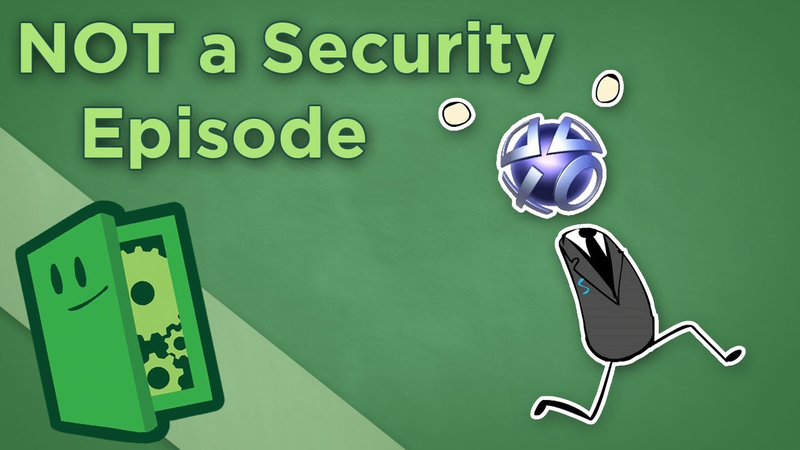
NOT a Security Episode - Trading Privacy for Service in the PSN Hack - Extra Credits
Key insights
6 takeaways- 01Because personal data collection is a functional requirement for platforms like the PlayStation Network to enable features like digital storefronts and age verification, some level of security risk is inevitable.
- 02In the modern digital economy, corporations must shift from viewing customers as adversaries to treating them as partners by prioritizing transparency and mutual trust.
- 03Corporations must proactively explain the specific reasons for data collection and the methods used for protection to maintain consumer goodwill.
- 04The 2011 PlayStation Network hack serves as a primary case study demonstrating that while companies cannot always prevent cyberattacks, their subsequent crisis management determines their long-term integrity.
- 05Sony’s response to the 2011 breach was criticized for being opaque and utilizing 'free' service trials that functioned more as marketing upsells than genuine consumer restitution.
- 06When a breach of trust occurs, companies that fail to prioritize genuine restitution over promotional tactics risk losing their customer base as users re-evaluate the value of services against the risks of data exposure.
Ask AI about this video
Transcript
In the wake of the whole PSN mess, there's been a lot of discussion on the topic of internet security. And it's a topic worth discussing, but I don't think we're the ones to be talking about it. None of us have a background in internet security, and there are plenty of very qualified experts who said a lot of smart things on the subject. I don't think there's a whole lot we could add to the dialogue. But that said, the PlayStation Network outage has gotten us thinking, and there is something we'd like to talk about, the world we're moving into. We live in a strange time. I'm not sure the human psyche was built to handle the amount of change our world now undergoes in the passing of a mere handful of years. I was born without internet, without cell phones, at really the nativity of the home PC. Today, I comfortably talk to my phone and ask it where to go to get the best cup of coffee in walking distance, and it politely draws me a map. That was literally science fiction during my formative years. But watching the response to the PSN outage on both sides made me realize how poorly mentally prepared for this reality we are. Now,
people were totally in the right for complaining about Sony's response to the mess. They could have handled it much better than they did, and you better believe we'll get to that in a second. But then I keep seeing people demonizing Sony for getting hacked in the first place. That isn't reasonable. Literally, if one steps back and looks at it, it does not coincide with reason. Every now and then, banks get robbed. No matter how good your security is, it happens. And when it does happen, do you blame the bank, or do you blame the robbers? There's no sense in hating on the company that got hacked just because we don't have anybody else to hate on. But there's another argument I've been hearing that I think is far more interesting in terms of how we think about the world we're moving into, that they should have never stored our data in the first place. Now, I'm as big a proponent of the first, fourth, fifth, and 14th amendments as you can get. I'm an ardent supporter of free speech, and I actually wish our right to privacy was better spelled out in the United States. It's not actually in our Constitution. It's just been justified through a mishmash of the amendments I listed. In fact, I actually wish the government would enact laws regarding a citizen's right to privacy in relation to corporations, because right now there really aren't many restrictions in the US on what companies can do with your personal data or who they can sell it to, even though it would turn making an MMO for the US into even more of a
nightmare. European viewers, you are so much better off in this department, even if it does mean you sometimes don't get games or other internet services we do. But that doesn't mean that I agree with the idea that Sony shouldn't have been storing your data. The PSN could not exist without storing your data. To use the PSN or the XBLA, one has to come to terms with the fact that these entities might get hacked, and your personal data might get compromised, because there's no way around it. I had this realization when hearing about how Apple was storing but then I asked myself, do I really want to have my phone re-triangulate every time I use something involving my GPS? And the answer is, no. Data has to be stored, or I simply can't have the functionality I do now. The same holds true of PSN data. On the most basic level, you don't want to have to fat-finger in your name, address, birth date, and credit card information every time you try to purchase something over the PSN. And while it would have been nice for Sony to give us that option, simply not storing data would make the PlayStation Store so unwieldy as to be unusable for most people. But that isn't even the depth of it. There's a host of legal issues in various countries regarding age and the use of services
like PSN, many of which require that the user validate their residence and date of birth. Without that data, PSN legally couldn't exist. Many of our viewers in places like Brazil will be well acquainted with these sort of local legal hassles. Now, why they can't check your location via IP address, I'm not entirely sure of, and none of my lawyer friends had a good answer. If any of you guys know, shoot us an email or post it in the comments, because that's been bugging me. Now, we can talk all we want about quitting these services and becoming Luddites living off the land, but realistically, most of us aren't going to. It's just like how many of us use credit cards or cell phones, even though both of those devices are rife with invasions of privacy and carry the immense risk of personal data loss. Unfortunately, to say that we want these massive technological services but refuse to accept the risks inherent in them, doesn't make much sense. To say, I won't use PSN because they store my data, that's perfectly reasonable. But to simply say, PSN shouldn't store my data, just isn't true. This trade of privacy for service is something we're going to have to think very carefully about over the coming century. Where do we draw the line? When isn't the service good enough for the privacy we lose? But we can't simply start asking for these services to be provided to us risk-free
because it can't happen. But in the world we're shambling into, where companies need to demand that we put large quantities of our private data into their hands in order to provide us with the services we desire, corporations have to view their customers as their partners rather than their enemies. What does this mean? Really, it means a little more than open communication. Take the iPhone tracking we mentioned earlier. Now, Google does the exact same thing with the Android, but they told everybody up front and they destroy the data after it ceases to improve the device's functionality. They said to their customers, "Here's what we're doing and here's why we're doing it." In essence, they said that they'll make giving up data as pain-free as possible. But in return, their customers have to understand that they're going to need some personal data to make this thing work. And here's where Sony failed. Sony showed its 20th-century mindset when it came to this crisis. They tried to keep their customers in the dark until it became absolutely impossible not to do otherwise. They thought they'd get bad PR for telling their customers rather than for not telling them. Now, you could argue that a company like Sony doesn't turn on a dime, but the immense hubris of not having a go-to plan in case PSN got hacked is just as unforgivable. Someone should have cracked the glass case,
taken out the emergency protocols, and read step one, mass email. And all this email had to do was simply admit to the possibility of compromised data. And then Sony did something that really bothered me, something that galled me as a customer. It's not their initial response, which I might have just chalked up to being bungled. Rather, it was something they said later on about how they were planning to make amends that made it really hard for me to see Sony's side in all this. They announced they were offering customers 30 free days of PSN Plus service and considering reimbursing banks for the cost of replacing credit cards. Now, I own a PS3, I've bought many things from the Sony store, and Sony still has a lot of goodwill built up with me from the PS1 and PS2 era. But trying to give their customers a free trial account, which is clearly an upsell, instead of credit on the store, which would be an actual reimbursement, while deciding to randomly give money to banks who are not their customers for the cost of credit card replacements, which is something most banks in the US don't charge the customer for. That's a dick move. Fortunately, Sony later wised up and threw in some free games as well, but that's not something that should have been added later. Now, this may very well have happened because Sony feels like they're over the barrel with the banks. I mean, if banks don't let the credit cards work on PSN because they're
worried about security, PSN is done. But, good lord, shouldn't you feel more over a barrel with your customers who hold those credit cards right now? It's like they're saying, "We know you chumps are coming back, but the banks, they might not really need us." Sony, please, we're not rubes. That was not a good time to try and throw a one free month on a service that you initially advertised as free forever. A free trial offer is not the way to make everything right with your consumer base. It's tacky and transparent. That initial offer showed a contempt for your customers that you cannot afford in a world where you ask your customer to share so much with you. Yes, I know you sweetened the deal later with that selection of free games, and it is an improvement over that pathetic original offer, don't get me wrong. But, really, when most of the games on that list are early installments in franchises which already have sequels out that you're hoping that people you give the free copies to will buy, the gesture still feels like another promotion instead of a genuine welcome back to your customers. We're not dumb. We see what you're doing here, and you have to do better than that. Now is not the time for promoting your products and services. Now is the time for winning back your customers' trust and goodwill. Customers and businesses alike have to look to the future with a different
mindset, one of trust. And when that trust is breached, the consequences will be catastrophic. If that trust can't be established, consumers will have to take a long, hard look at how much those services are really worth to them. And know this, platform holders. If this console cycle has taught us anything, it's that it is arrogant to think we are always going to come back. See you next week. Woo! Woo! Woo! Woo!
Summary
The central thesis of this analysis is that the modern digital landscape necessitates a fundamental shift in the relationship between corporations and consumers, moving toward a model built on transparency and mutual trust. In an era where personal data collection is a functional requirement for most online services, the expectation of risk-free digital interaction is unrealistic. Instead, the focus must shift to how companies manage data, communicate during crises, and demonstrate respect for their user base when security breaches inevitably occur.
The analysis highlights that while data storage is essential for the functionality of platforms like the PlayStation Network—enabling features like digital storefronts and age verification—it inherently introduces security risks. Using the 2011 PlayStation Network hack as a primary case study, the discussion argues that while it is unreasonable to blame a company solely for being targeted by cybercriminals, the subsequent corporate response is a critical test of integrity. Sony is criticized for its 20th-century approach to crisis management, specifically its lack of transparent communication and its initial attempt to offer "free" service trials that functioned more as marketing upsells than genuine consumer restitution.
The analysis concludes that corporations must treat customers as partners rather than adversaries. By contrasting Sony’s opaque handling of the breach with more transparent data-handling practices, the discussion emphasizes that companies must proactively explain why data is collected and how it is protected. Ultimately, the document warns that in a digital economy where consumers trade privacy for convenience, a breach of trust is catastrophic. If corporations fail to prioritize genuine goodwill over promotional tactics, they risk losing their customer base, as consumers will increasingly be forced to weigh the true value of these services against the inherent risks of data exposure.
























Comments