1 free read left. Create a free account for unlimited reading + AI research.
Create free accountArticle gamevironments
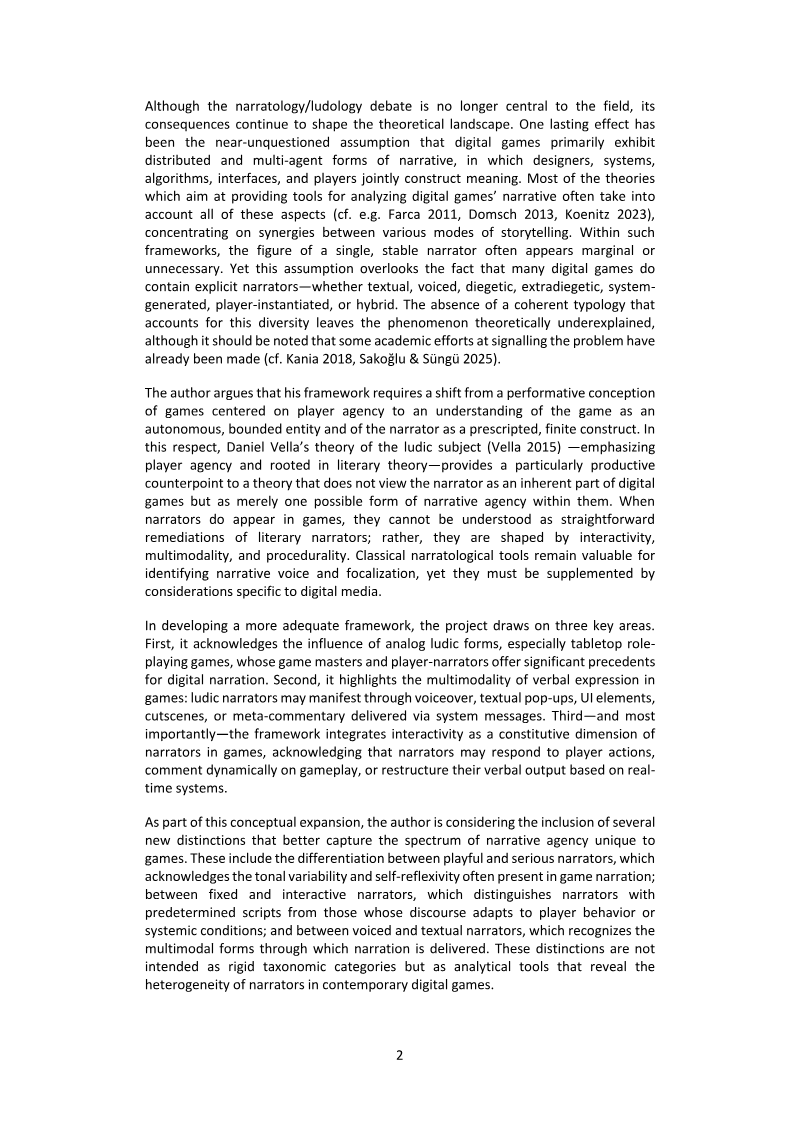
1 free read left. Create a free account for unlimited reading + AI research.
Create free accountArticlegamevironments
The sample is drawn from roughly one thousand Christian titles and focuses on the family-friendly segment of the market.
Vincent Gonzalez's essay argues that the long-running debate over video game violence has stalled between critics and defenders, and that a more productive approach is to examine the enemies that these debates tend to overlook. Using a bounded sample of fifty Christian video games with enemies, drawn from roughly one thousand Christian titles, the author asks how game culture determines which forms of in-game force are acceptable even for children. The study spans 1982 to 2016 and focuses on the family-friendly segment of the market, where the design of opposition is shaped by explicit moral commitments.
The analysis situates the modern "gamer/enemy dyad" in the early 1980s, when the terms "enemy" and "gamer" became standard in manuals and popular discourse. Drawing on Georges Bataille and Giorgio Agamben, the author proposes that gamer and enemy are mutually constituted, and that the destruction of masses of expendable, "nearly human" opponents reflects a biopolitical logic in which heroes achieve sovereignty. Lineage from early film standards such as the Hays Code and MPAA guidelines is traced to show how impersonal, bloodless violence came to seem normal and family-friendly.
The enemy catalog classifies opponents as conceptual, natural, mechanical, animal, human, or quasi-human. Christian games frequently allegorize enemies as vices, humanize natural threats, and destroy machines in ways that avoid visible human death. Animals are often pacified rather than killed, humans are typically converted rather than destroyed, and demons, mutants, and hybrids are almost universally eliminated. The sharpest finding is this division between humans and near-humans, which the author interprets through Mary Douglas's concept of anomaly and ambiguity. The study reports no significant diachronic shifts in enemy type, though changes in gamer-enemy relations are noted, and it leaves the destruction of artificial enemies as an open question. The author acknowledges limits in the lack of systematic comparison with secular titles.
gamevironments · 2026
gamevironments · 2026
gamevironments · 2026
gamevironments · 2026
gamevironments · 2026

gamevironments · 2025

gamevironments · 2025

gamevironments · 2025

gamevironments · 2025

gamevironments · 2025

gamevironments · 2025
gamevironments · 2025
DiGRA · 2026