PresentationMicrosoft
Microsoft Windows Azure Gaming Summit: Overview of and Future Outlook on the Global Games Market
40 pages~11 min full read
Key insights
6 slides
Market Size
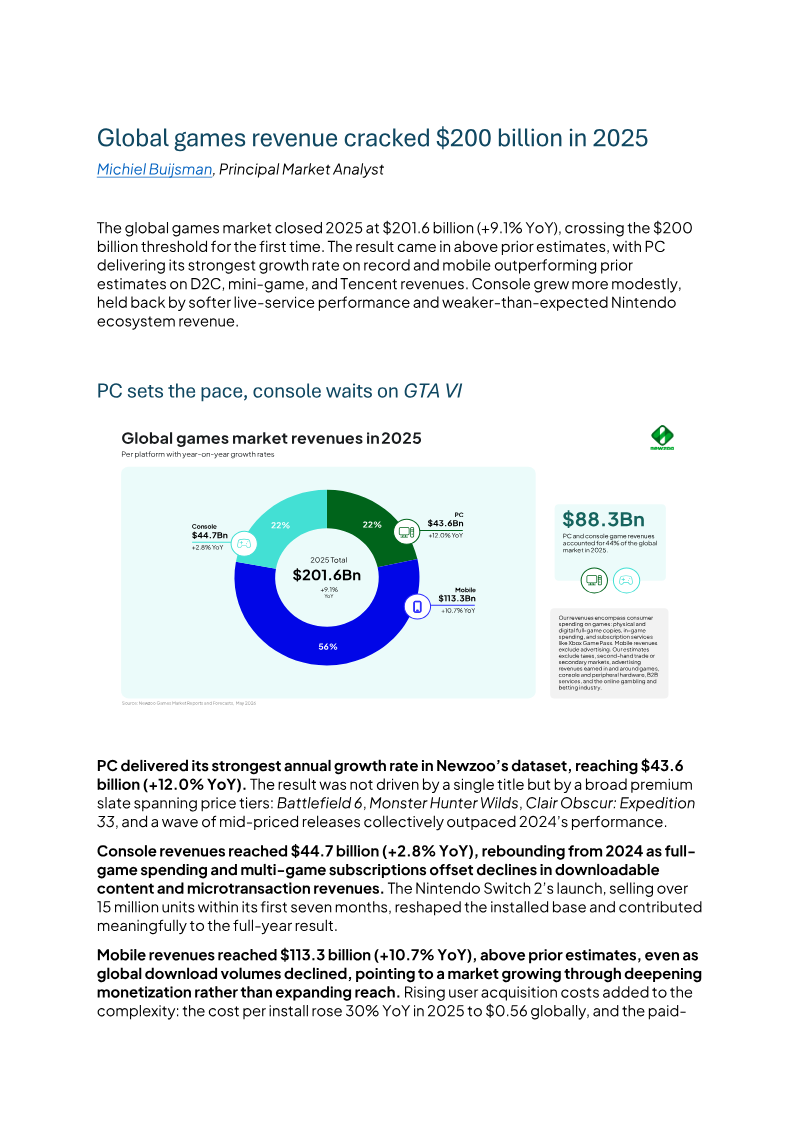
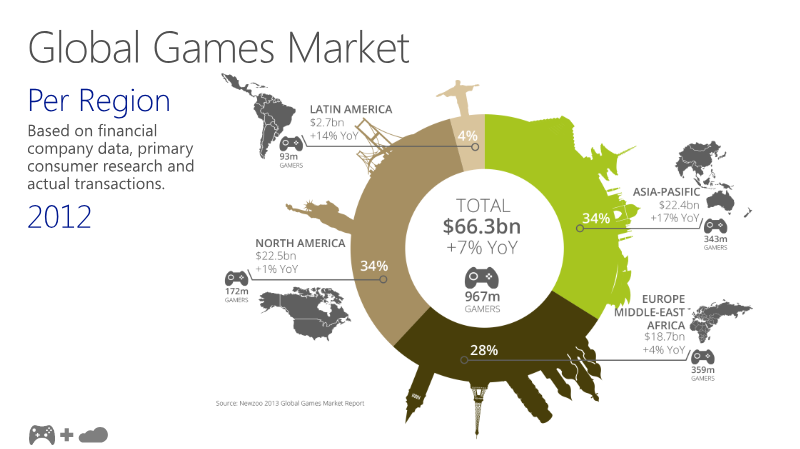
The global games market generated $66.3 billion in 2012.
This revenue was generated from a global population of 967 million gamers. The market is undergoing a fundamental transformation.
Regional Performance
North America led regional revenue with $22.5 billion.
The Asia-Pacific region closely followed with $22.4 billion.
Page 14 of the report$22.5 billion
North America's regional revenue.
- Asia-Pacific regional revenue
- $22.4 billion
- Europe regional revenue
- $18.7 billion
Business Model Shift
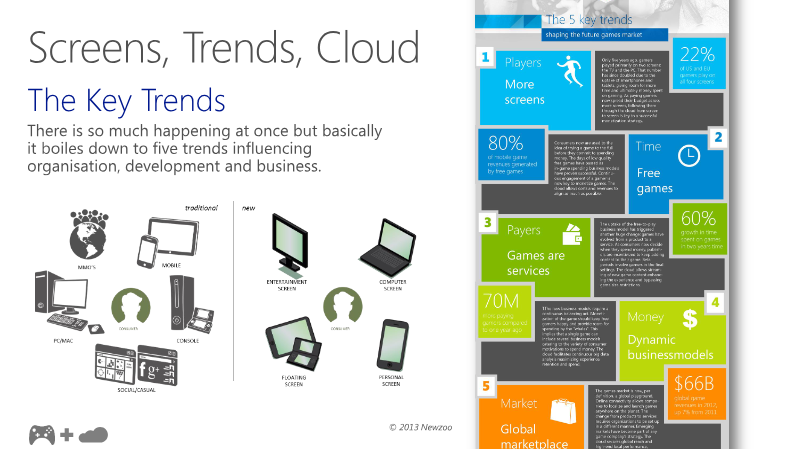
The industry is shifting from a product-based to a service-oriented ecosystem.
Free-to-play business models now account for the majority of revenue across mobile and digital platforms. This transformation is fundamental to the market.
Like a subscription service replacing one-time purchases, games are moving to continuous engagement.
Enabling Technology
Cloud infrastructure is the essential backbone for the industry.
It enables developers to bypass hardware limitations and stream content. Cloud infrastructure also allows for managing games as live services.

Player Engagement
Modern commercial viability depends on a multi-screen strategy.
This strategy supports simultaneous engagement across television, PC, tablet, and smartphone devices.
Developer Priorities
Success requires developers to prioritize continuous player engagement.
Real-time data analysis and sophisticated monetization strategies are also essential. These strategies must balance free and paying users.
1 / 6
Ask AI about this report