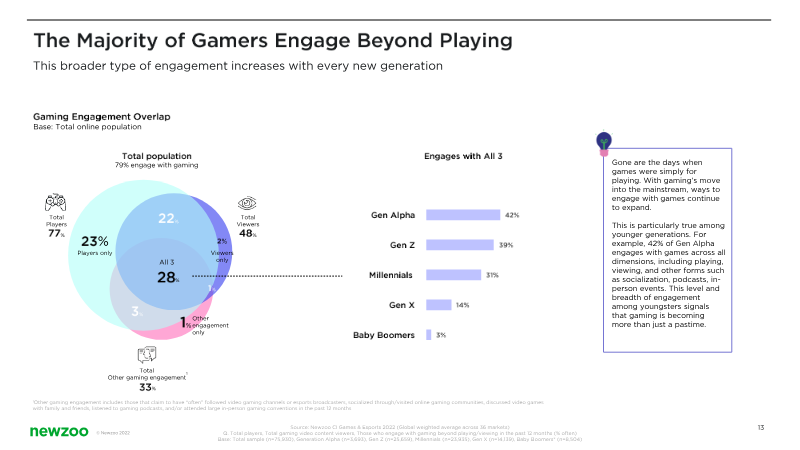
79% of the global online population engages with gaming in some capacity.
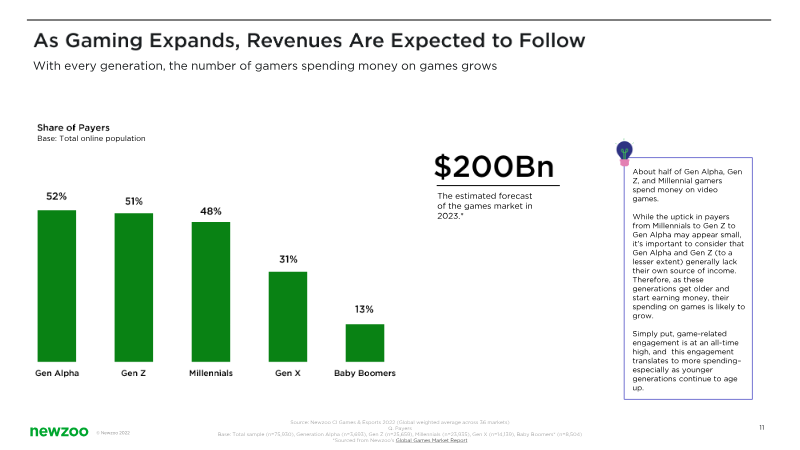
Spending is driven by active purchasing habits across key demographics.
This presents a significant market opportunity for non-endemic brands.
It's like finding a highly receptive audience that is already predisposed to liking what you offer.
Player motivations and demographics vary significantly, even within the same game genre.
Trying to fit everyone into the same shoe size just doesn't work anymore.
This segmentation should be based on specific behaviors, social habits, and motivations.
The 2022 Global Gamer Study provides a comprehensive analysis of the evolving gaming landscape, establishing that gaming has transcended its traditional definition as a solitary activity to become a primary, multi-dimensional entertainment platform. The central thesis posits that because gaming now encompasses viewing, socializing, and community participation, a nuanced understanding of diverse gamer personas is essential for developers and brands seeking to engage effectively with modern audiences.
The research is based on a robust methodology involving Computer Assisted Web Interviewing (CAWI) of 75,930 respondents across 36 global markets, conducted between February and April 2022. The study covers a representative online population aged 10 to 65, tracking variables across demographics, psychographics, spending habits, and brand preferences. Key findings indicate that 79% of the online population engages with gaming in some capacity. Notably, gaming has become the primary entertainment source for Gen Alpha, and approximately 28% of the total online population engages with games through a combination of playing, viewing, and social interaction.
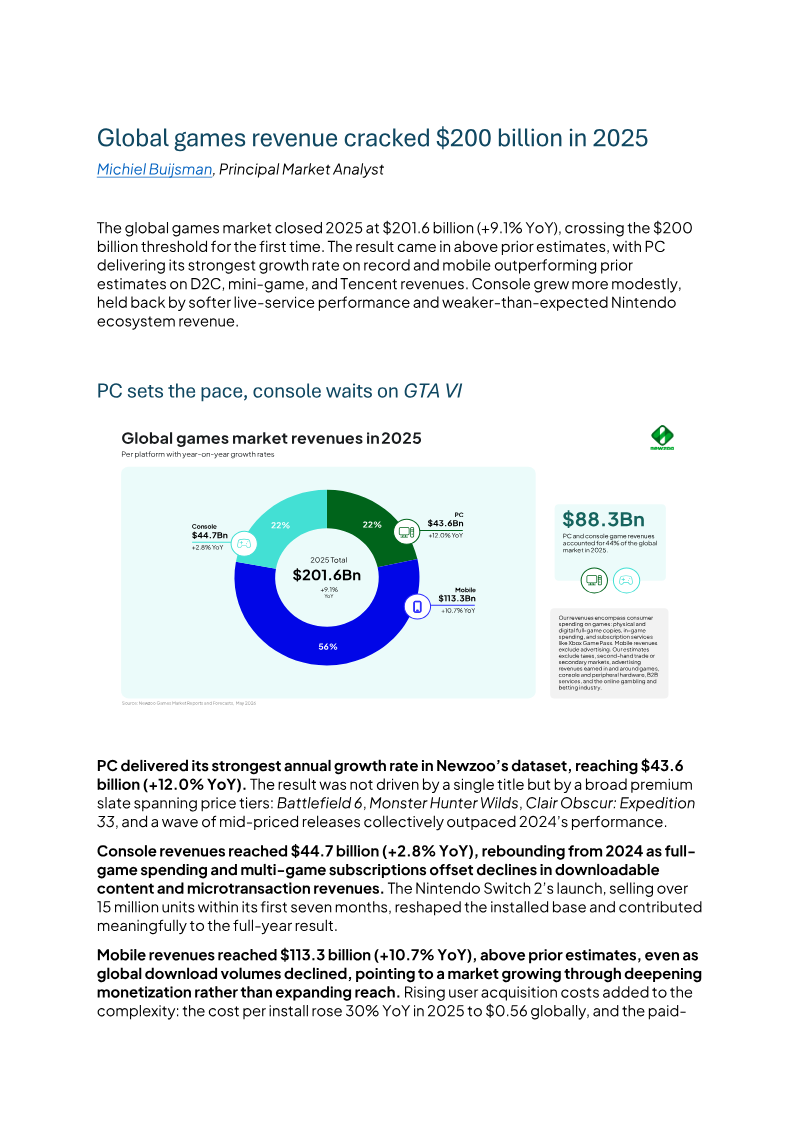
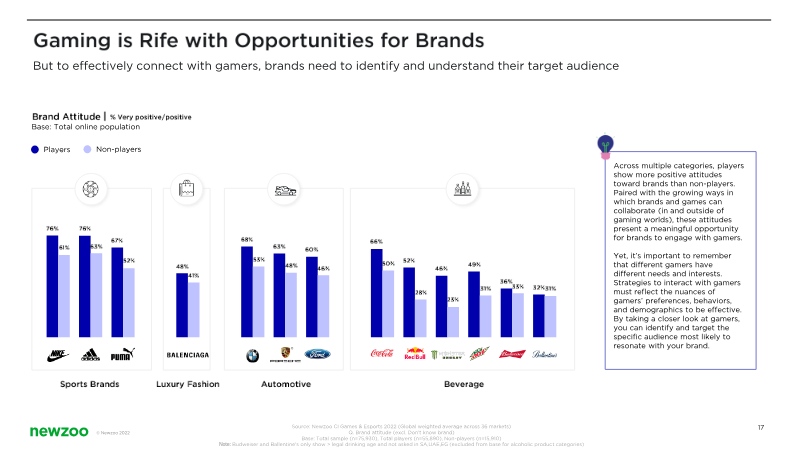
Economic data highlights the growing commercial significance of the sector, with consumer spending on games projected to exceed $200 billion in 2023. This growth is supported by the fact that nearly half of Gen Alpha, Gen Z, and Millennial gamers spend money on gaming-related content. Furthermore, the study identifies a significant opportunity for non-endemic brands, noting that players exhibit 36% higher positive attitudes toward brands compared to non-players.
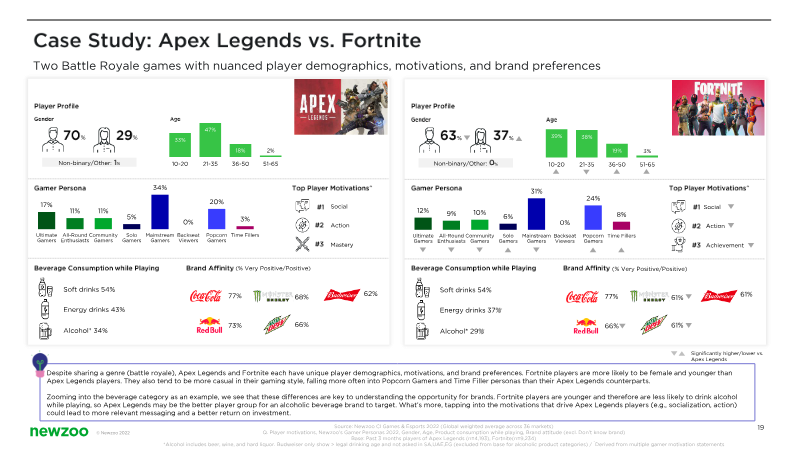
The analysis concludes that the "one-size-fits-all" approach to gaming audiences is obsolete. Even within specific genres, such as battle royale, player motivations and demographics vary significantly between titles like Apex Legends and Fortnite. Consequently, successful engagement requires granular segmentation—moving beyond simple player counts to understand the specific behaviors, motivations, and social habits that define different gaming communities.