
Microsoft’s financial performance for the third quarter of fiscal year 2020 reflects a period of significant operational resilience amidst the onset of the global COVID-19 pandemic. The company achieved total revenue of $35.0 billion, representing a 15 percent increase compared to the same period in the previous year. This growth was primarily driven by the accelerated digital transformation of enterprise clients and a surge in demand for cloud-based services, remote collaboration tools, and gaming infrastructure as global stay-at-home mandates took effect.
The Intelligent Cloud segment emerged as the primary growth engine, generating $12.3 billion in revenue, a 27 percent increase year-over-year. Azure revenue growth of 59 percent underscored the critical reliance on cloud computing for business continuity. Simultaneously, the Productivity and Business Processes segment grew by 15 percent to $11.7 billion, bolstered by strong adoption of Office 365 Commercial and LinkedIn. The More Personal Computing segment contributed $11.0 billion, with notable strength in Windows OEM and Xbox content and services, which benefited from increased consumer engagement during lockdown periods.
Operating income rose to $13.0 billion, a 25 percent increase, while net income reached $10.8 billion. Despite the macroeconomic uncertainty introduced by the pandemic, the company maintained a robust liquidity position, ending the quarter with $137.6 billion in cash, cash equivalents, and short-term investments. These results demonstrate the efficacy of a diversified business model that balances enterprise-grade cloud infrastructure with consumer-facing software and hardware. The findings highlight a pivotal shift in corporate spending toward scalable digital platforms, positioning the company to capitalize on long-term trends in remote work and digital connectivity.
Microsoft · 2026

Microsoft · 2026

Microsoft · 2025

Microsoft · 2025

Microsoft · 2025

Microsoft · 2025

Microsoft · 2024

Microsoft · 2024

Microsoft · 2024

Microsoft · 2023

Microsoft · 2023

Microsoft · 2023

PitchBook · 2023

Ubisoft · 2026
Sony Group Corporation · 2026

Enthusiast Gaming Holdings · 2026

Aream & Co · 2026

Drake Star Partners · 2026
Capcom · 2026

Modern Times Group · 2026

Bandai Namco · 2026

Aream & Co · 2026
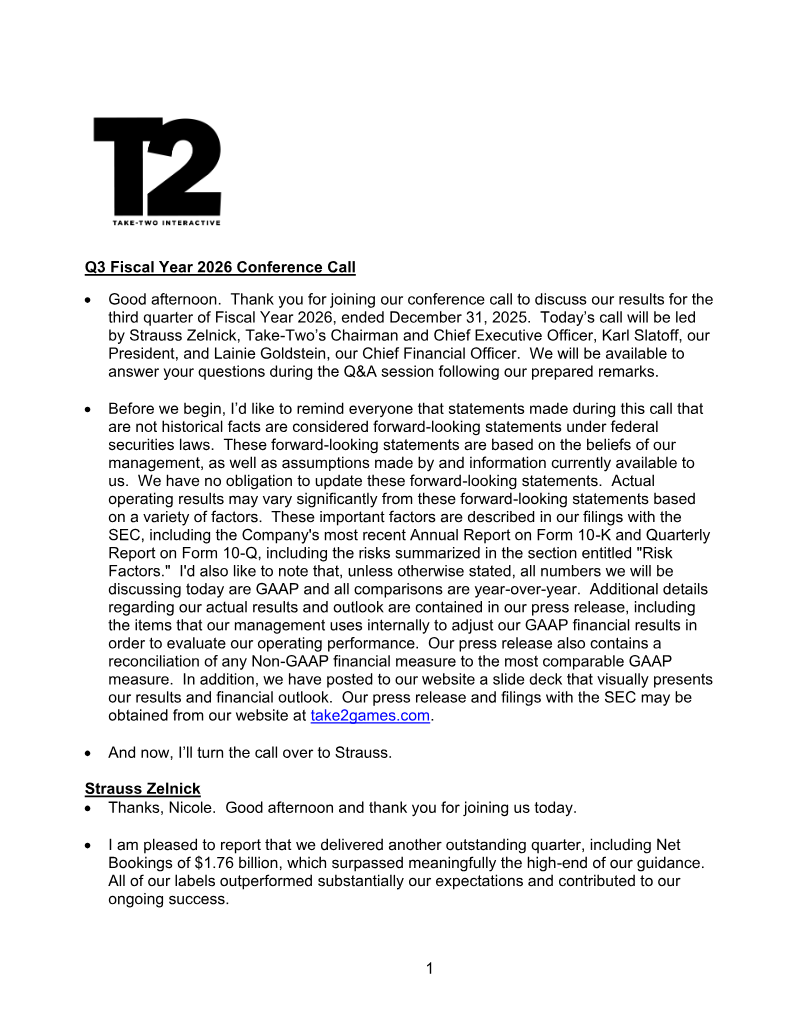
Take-Two Interactive · 2026
Take-Two Interactive · 2026