1 free read left. Create a free account for unlimited reading + AI research.
Create free accountWhitepaper European Conference on Games Based Learning (ECGBL)
1 free read left. Create a free account for unlimited reading + AI research.
Create free accountWhitepaperEuropean Conference on Games Based Learning (ECGBL)
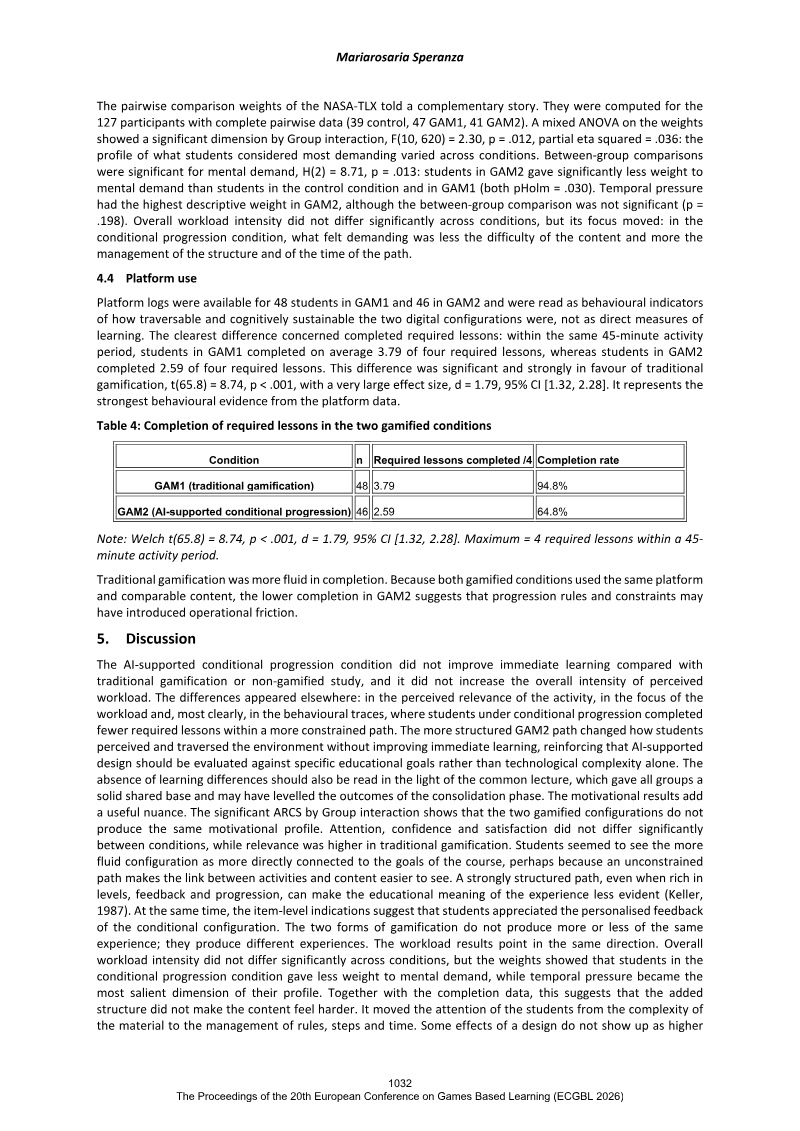
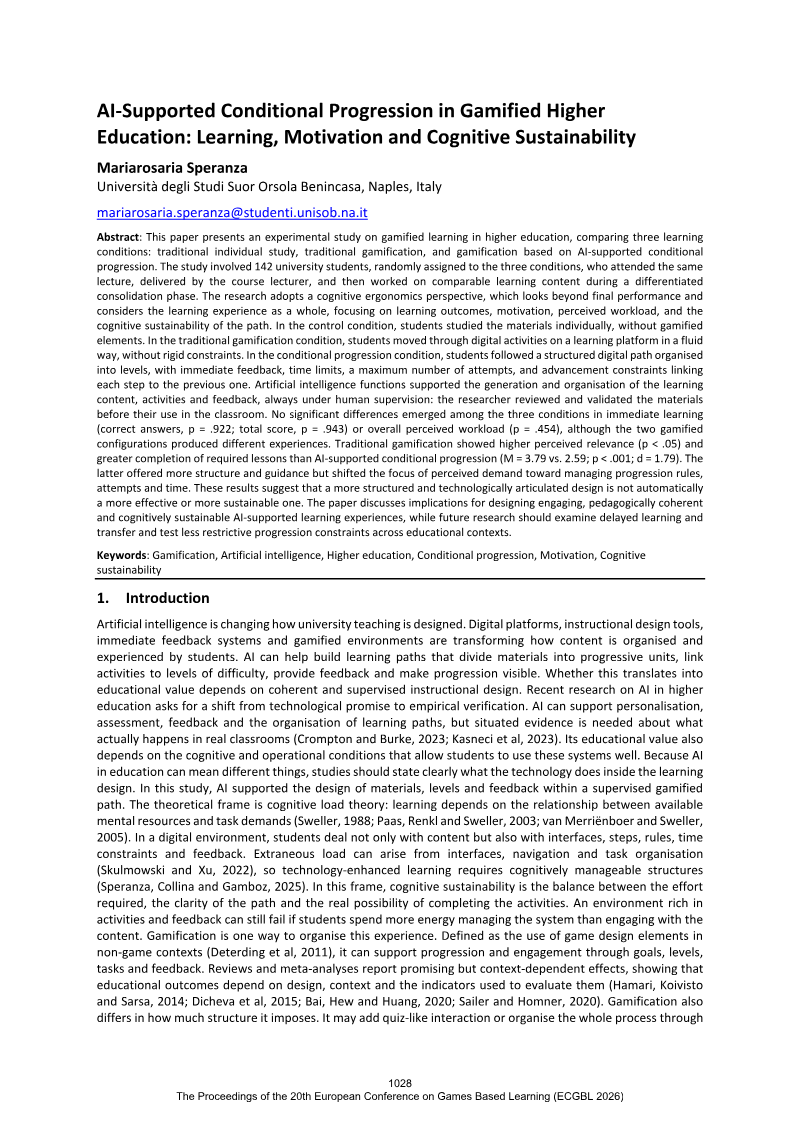
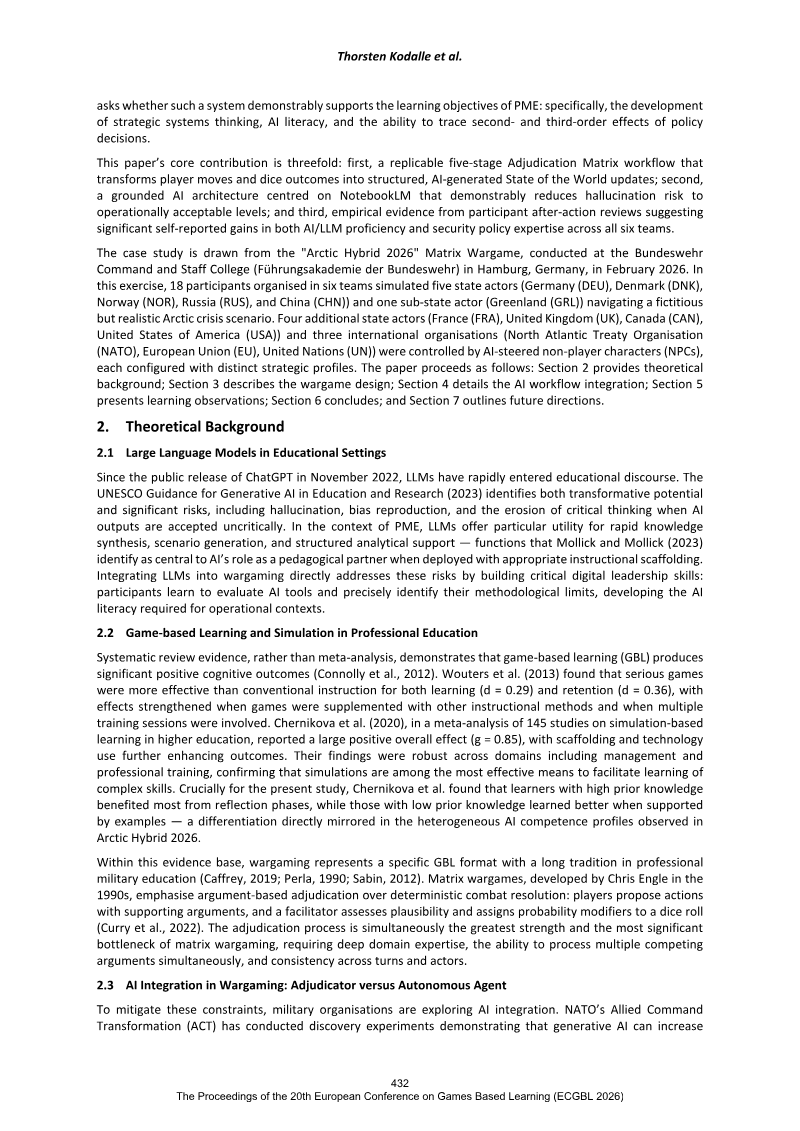
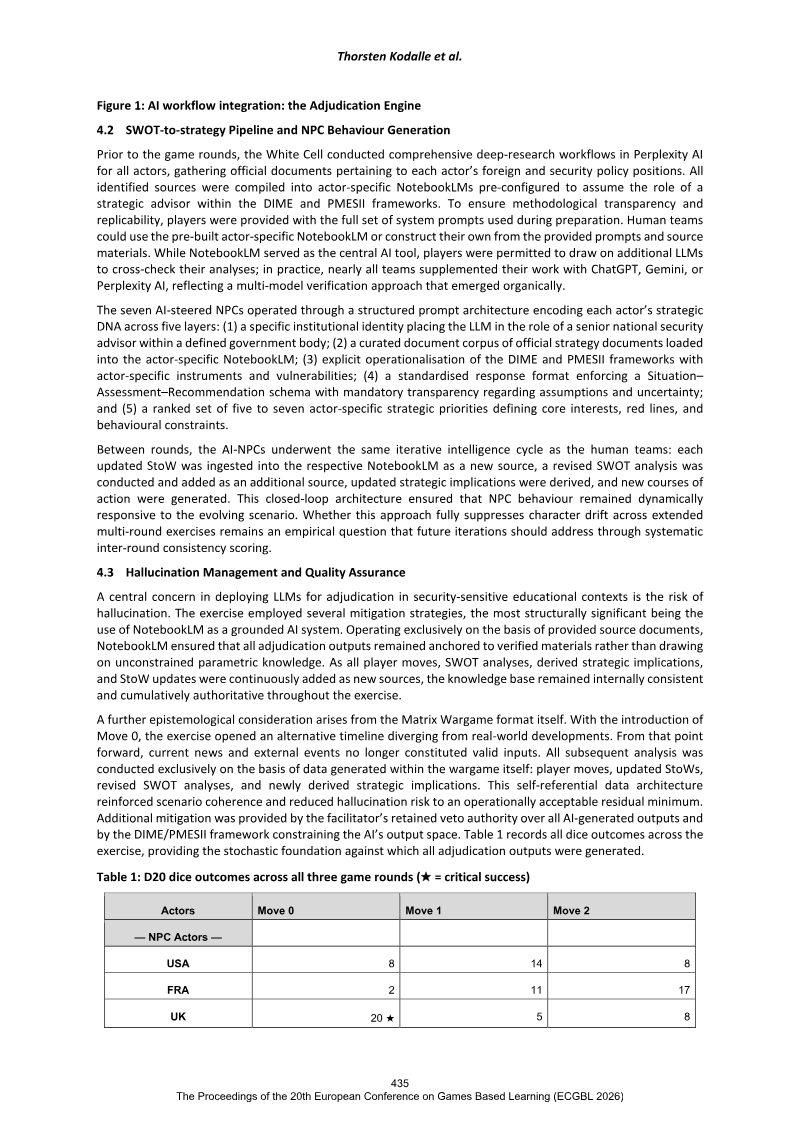
Students split into seven teams to negotiate the price of a Chinese-manufactured digital device for the U.S. market. Participation counted toward final grades.
Castillo Moreno and Caudillo Melgoza, both affiliated with Tecnológico de Monterrey in Mexico, present a study arguing that large-scale immersive simulations, or "mega-games," can deliver deeper experiential learning than lectures and case studies in higher education. Their central case is "谈判 Tánpàn," a negotiation exercise in which 21 International Business students, divided into seven teams, negotiated the price of a Chinese-manufactured digital device for the U.S. market. The game's design draws on Jesse Schell's framework of game design lenses, and participation counted toward students' final grades. The authors situate the work within prior mega-game applications in fields such as climate negotiation and political science, while noting that research on this approach in Mexican higher education remains limited.
The study's evidence is qualitative and modest in scale. Working within an action research design, the authors conducted group interviews and applied thematic analysis to student responses. They report a 5% improvement in student satisfaction relative to the previous course format, along with creative, "out-of-the-box" negotiation outcomes such as long-term contracts and supply chain alliances. Negotiations were conducted entirely in English under role-based information constraints, which the authors position as a means of developing negotiation, English communication, and teamwork skills simultaneously.
The authors acknowledge important limitations, chiefly the small sample size and the constraints imposed by class time. Their conclusions are therefore suggestive rather than definitive, pointing to experiential mega-games as a promising pedagogical tool for business education instead of a proven replacement for conventional methods. The work is scoped to a single course, a single exercise, and a single national context, with its broader applicability left open to future research.



European Conference on Games Based Learning (ECGBL) · 2026



European Conference on Games Based Learning (ECGBL) · 2026



European Conference on Games Based Learning (ECGBL) · 2026



European Conference on Games Based Learning (ECGBL) · 2026



European Conference on Games Based Learning (ECGBL) · 2026



European Conference on Games Based Learning (ECGBL) · 2026



European Conference on Games Based Learning (ECGBL) · 2026



European Conference on Games Based Learning (ECGBL) · 2026



European Conference on Games Based Learning (ECGBL) · 2026



European Conference on Games Based Learning (ECGBL) · 2026



European Conference on Games Based Learning (ECGBL) · 2026



European Conference on Games Based Learning (ECGBL) · 2026



European Conference on Games Based Learning (ECGBL) · 2026
European Conference on Games Based Learning (ECGBL) · 2026
European Conference on Games Based Learning (ECGBL) · 2026