1 free read left. Create a free account for unlimited reading + AI research.
Create free accountWhitepaper American Journal of Play
1 free read left. Create a free account for unlimited reading + AI research.
Create free accountWhitepaperAmerican Journal of Play
Lancy and Grove argue that rule-governed, self-directed play such as marbles, hopscotch, and jump rope builds alliance-building, negotiation, and strategic influence. They call the resulting competence "gamesmanship."
Lancy and Grove argue that children develop Machiavellian intelligence (MI), the social skills of alliance-building, negotiation, and strategic influence, through rule-governed, self-directed play such as marbles, hopscotch, jump rope, and make-believe. They term the resulting diplomatic competence "gamesmanship" and contend that as adult-managed activities and video games displace free play, children lose a key training ground for social intelligence. The argument draws on evolutionary theory, which holds that human intelligence evolved in response to the demands of group living, and on Piaget's developmental account of how children move from motor play to an understanding of rules as conventional and negotiable.
The evidence is largely qualitative and drawn from ethnographic and historical sources across many cultures, including Mayan, Kpelle, Aymara, Swedish, and North American play groups, as well as Australian preschools. Examples show older players handicapping themselves to include younger ones, children renegotiating rules mid-game, and girls modifying hopscotch and jump rope to preserve group harmony. The authors contrast these with Little League, where negotiation with umpires is discouraged and characterized as unsportsmanlike, and with solitary or scripted video play, which offers little room to alter rules.
The paper's scope is broad in geography and historical depth, spanning ancient Rome to contemporary schools, but the conclusion that adult management measurably erodes gamesmanship rests on inference rather than direct measurement. The authors acknowledge that comparable data on unsupervised peer play are lacking. They nonetheless point to emerging remedies, including recess coaches, the "Tools of the Mind" preschool program, and calls for greater childhood freedom, as evidence that the trend can be reversed.
American Journal of Play · 2025
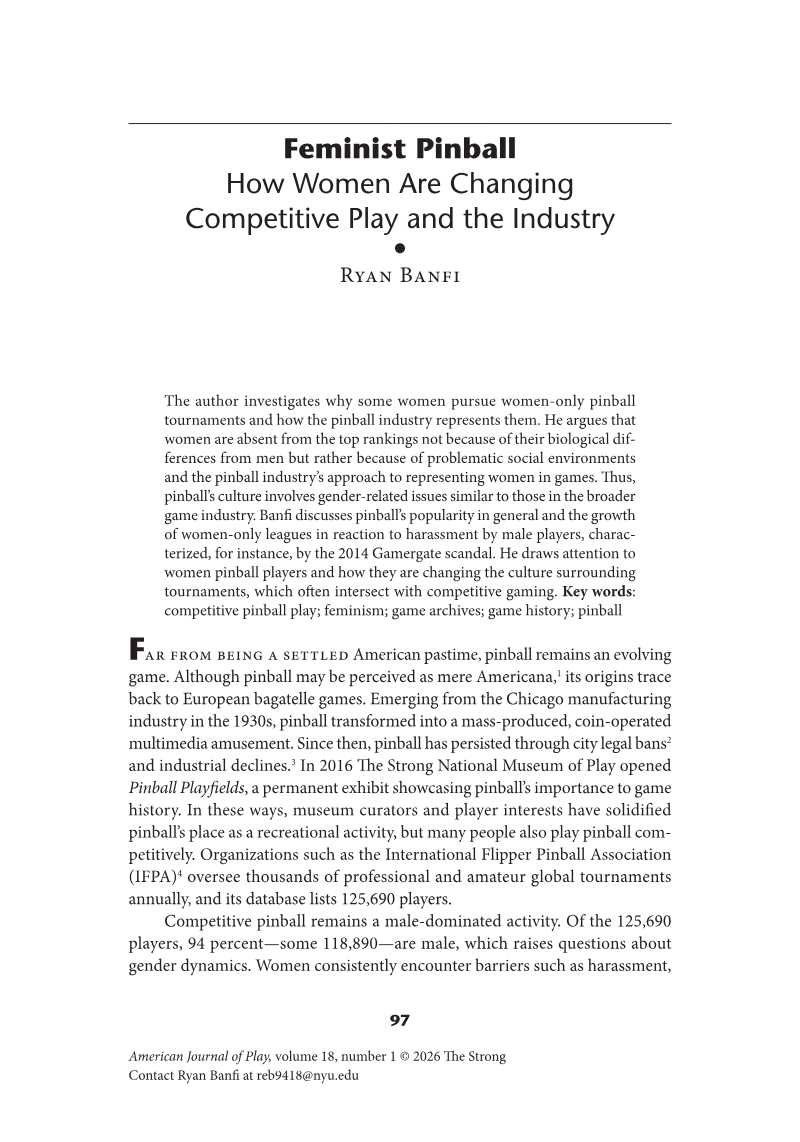
American Journal of Play · 2025
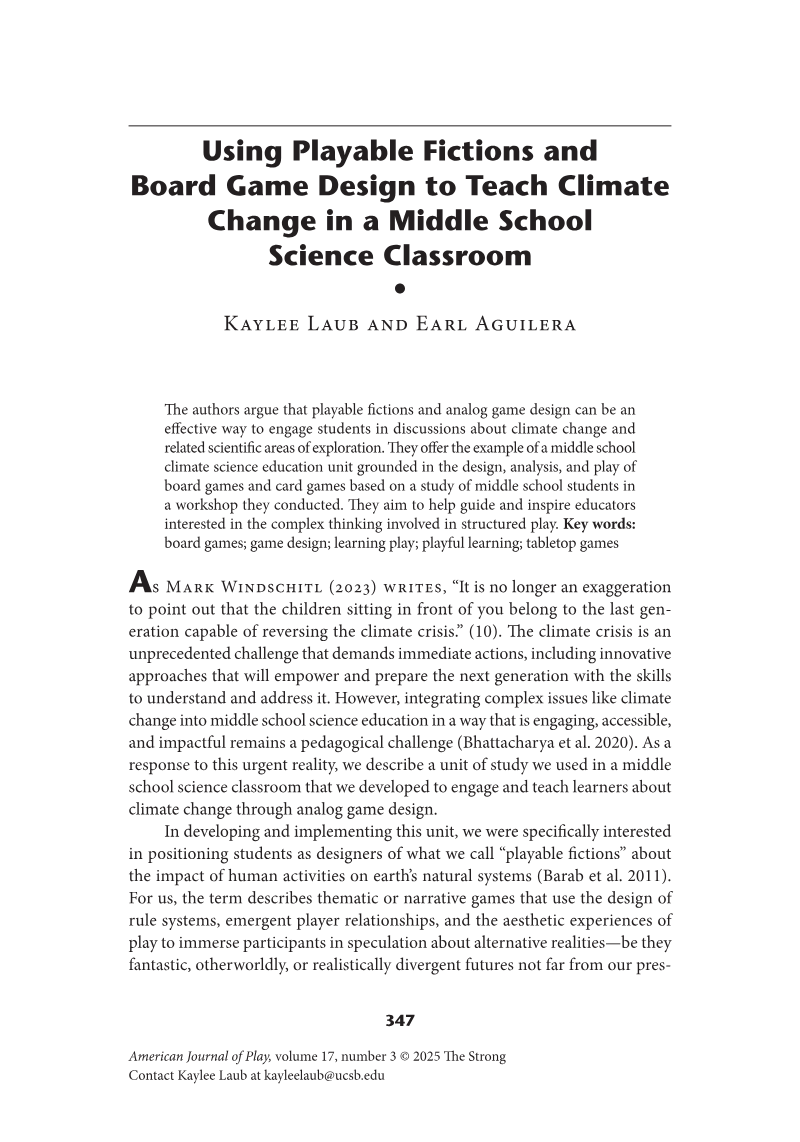
American Journal of Play · 2024
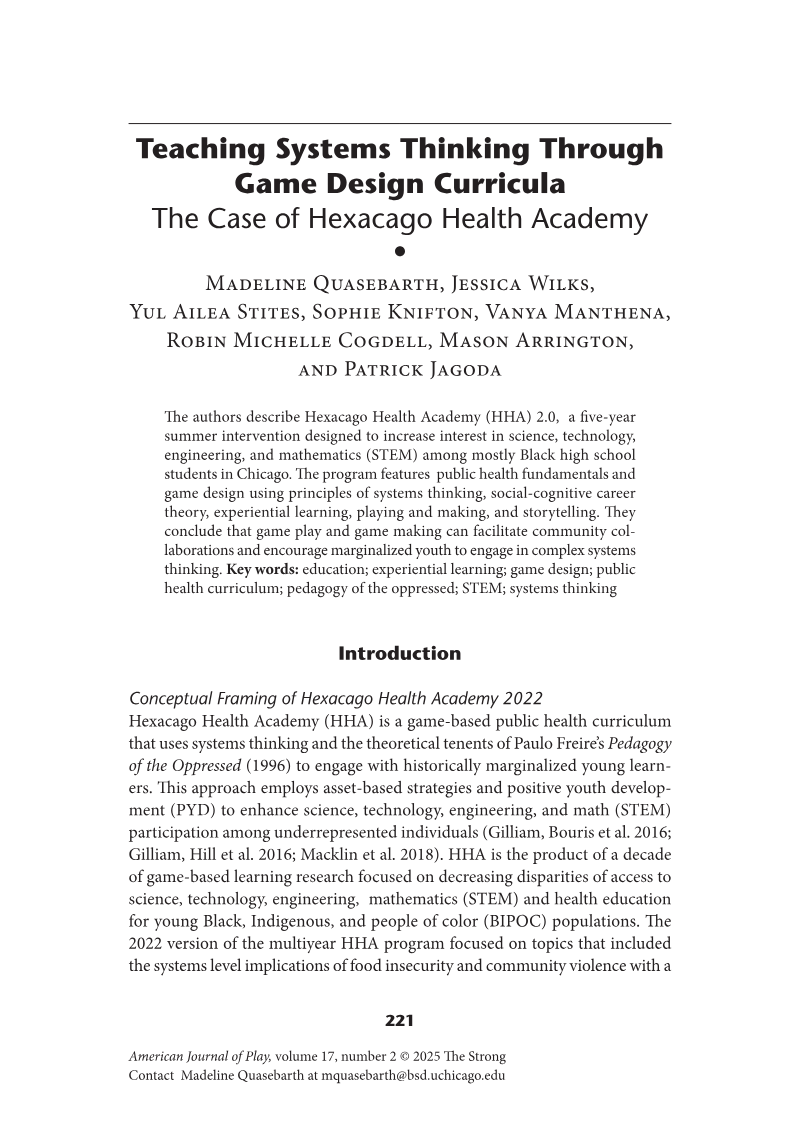
American Journal of Play · 2024
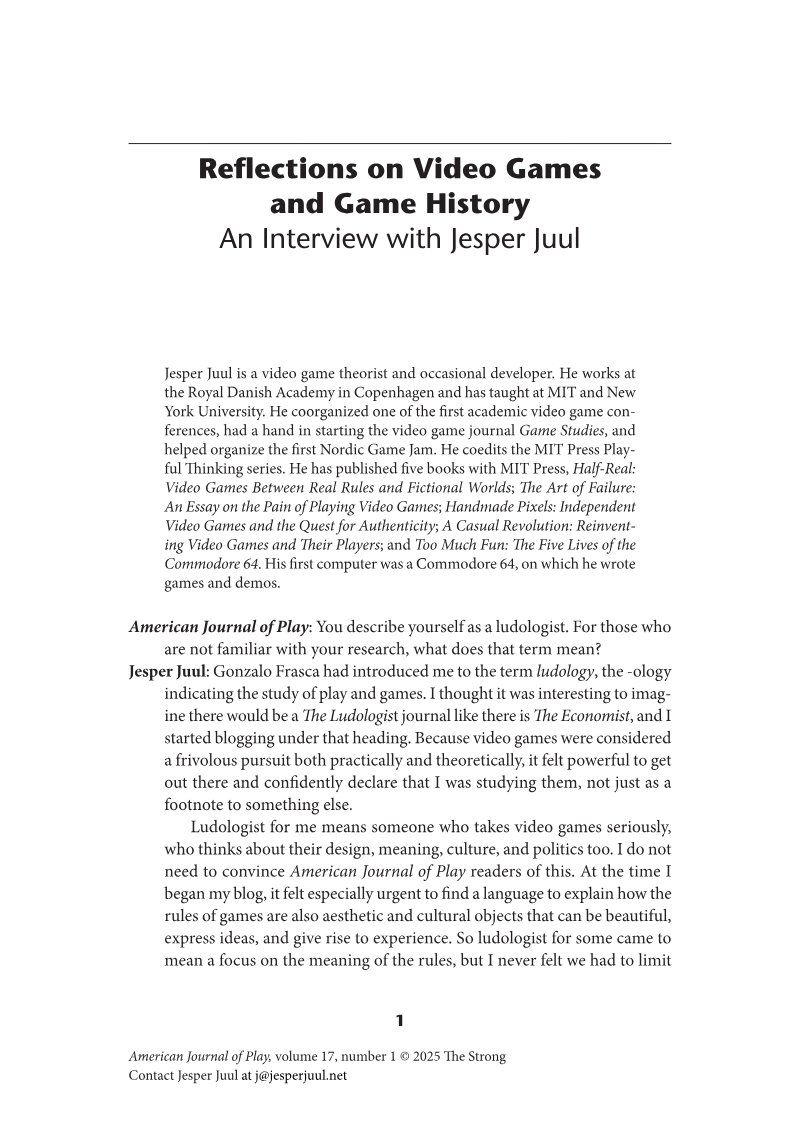
American Journal of Play · 2024
American Journal of Play · 2023
American Journal of Play · 2023
American Journal of Play · 2022
American Journal of Play · 2022
American Journal of Play · 2021
American Journal of Play · 2020
American Journal of Play · 2020
International Journal of Role-Playing · 2026