1 free read left. Create a free account for unlimited reading + AI research.
Create free account
Making girly games that aren’t patronising
Key insights
6 takeaways- 01The industry's systemic devaluation of femininity originated from a 1983 market shift that pivoted exclusively toward teenage male demographics, cementing a long-standing bias against female-oriented content.
- 02Games marketed toward women are frequently relegated to low-quality shovelware, creating a self-fulfilling cycle where poor design reinforces the stigma that feminine themes lack artistic merit.
- 03The perceived inferiority of 'girly' games is a result of poor execution and a lack of respect for the audience, rather than an inherent limitation of the subject matter itself.
- 04Developers can break the cycle of patronizing content by conducting rigorous research and treating feminine interests with the same level of intellectual care as traditional competitive gaming genres.
- 05Future industry growth depends on treating femininity as a valid pillar of game design that prioritizes community, relationships, and creative expression alongside traditional conflict-based mechanics.
- 06High-quality titles like Style Savvy, Mystic Messenger, and Toca Hair Salon prove that traditionally feminine themes—such as fashion and social simulation—can support complex, deep, and well-designed gameplay mechanics.
Ask AI about this video
Transcript
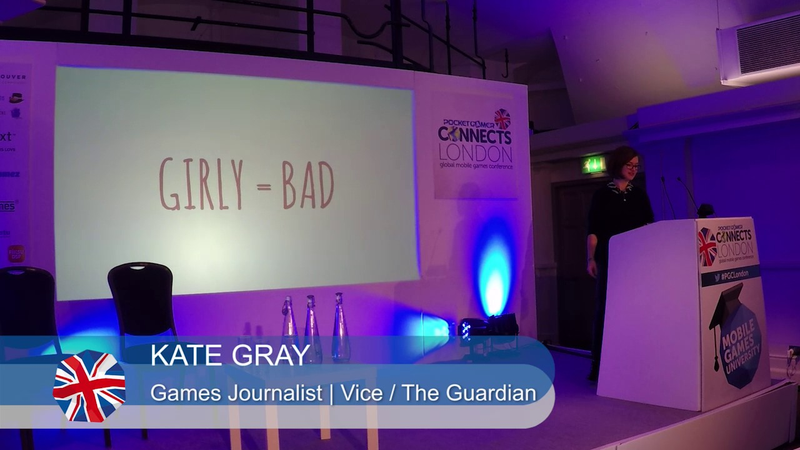
[Music] right here we go hi i'm kate i'm a game frozer I also dabble in game development and i'm here today talk about making girly games that aren't patronizing out second bit is the important bit you may have seen my work on The Guardian waypoint / rice Rock Paper Shotgun you're a gamer a bunch of other places and you can also follow me on twitter which is where it's been roughly one hundred and fifty percent that's me okay I'm going to talk to you about girly games are good yeah I kind of things that in cinema question to answer and I'm kind of every time I've pitched this is but a bit later I'll feel so
uncomfortable when we talk about girly game so historically juice have been considered the or less serious you can see here when you remember that historically embroidery hasn't been taken seriously as a medium because it's women's work doesn't mean we're not talking about me and syd fine move on there's a reason why some of the most successful people in things like fashion and cooking and beauty are men can take it they which is a huge problem some people were pink which is why when i'm buying toothbrushes by think toothbrushes because I know my housemates who are guys won't you some I'm taking advantage of that it's the reason why twilight and fifty shades of grey everyone says they're terrible there's a lot of terrible fish that's because they are written for women oh lala land now i think near the calls are
great but people tend to think they're bad they're bad films because they're more musical because think that the women go to and so to say yeah when you see something like lava and come out and everyone goes wow it's really good for a musical and you're kind of like well why does that make it bad typically anything that is popular with women people tend to think it's less important yes the most games the market of men this wasn't me looking for adverts about boobs but it kind of came up with being a butt about group you've probably seen at least one of these at some point then the one on the bottom right that is Kate Upton who was hired to be in this campaign and they said no it's okay she's a character in the game so we're not we're not promoting her as a person we're promoting her as a character and the character she turned out to be was like the shopkeepers not really a
character for sure and you know you have this PlayStation Vita advert at the top the plea seeking feature not even that long ago and it's got an effort like that which is bit machine yeah most games as you can see a marketed of men it didn't used to be that way in fact it used to be the game to mark said that everyone the same as like toys or films or books but then in the video game crash of 1983 after that people started marketing games for boys so they try to tap into that teenage market and it worked and that's why like 30 years later people are still trying to tell us the games are for boys they weren't always for boys so when games are created for girls people tend to turn up their noses now this isn't particularly helpful screenshot I I searched on Google games for girls and it came up with a bunch of terrible shovelware I haven't checked through all of those but you can probably see most of them are sort of just make up games and they look
kind of one-dimensional and they're not very well designed and they're a bit creepy really but it's a problem that feeds into itself women they want to be told that they only like things like fashion and makeup and heartbreak is apparently another thing we like and the reason that we feel bad about liking those things is that we're told that they're bad because they're popular with women so it kind of keeps feeding into itself we get told things like women must stay in the kitchen so we go over now I don't like cooking I'm not I don't want you to tell me to get into the kitchen we get told that fashion is stupid you know that it doesn't mean anything that it's just clothes everyone wears clothes who cares if you're interested in fashion so we feel bad for liking it and we're constantly told that makeup is vain and wearing makeup is deception and the naturally pretty girls don't need make-up so then we feel bad for for liking makeup even though like makeup artists is a job where it is an
actual art you know making people look different and even like when you make like a makeup where you make yourself look like a zombie I don't know if you've seen those like cupboard talent and the problem other side feeds into itself so we get told that things that are popular with women are less important because their heart filled with women and then women feel like if they like those things that they're just playing into that and it's really it's a cycle that I want people to break out of the problem isn't necessarily the girly games are oh this is so skipping ahead this is business as an example this is someone saying Taylor Swift is pretty without makeup she's wearing makeup she's very very obvious makeup in that but people are saying she looks pretty without makeup I want on the bottom left is fashion that's not the most fashion picture I could find parenting that South fashion and then I just really like the top left stock photo from flying on a kitchen counter with a tomato I don't know it doesn't really
illustrate that people think cooking it for women but I just pretty much istockphoto so people people think that the girliness is bad we think that femininity is lesser but its weak uninteresting or unworthy and I'm here to tell you that it's not some of the teams i like best involves things like dressing up characters like you see in the sims in the top left going on dates as you can see in the top right that part of a smooth decorating my house these two games at the bottom that one on the left is and we're crossing happy home designer and the one on the right is again listen to Susannah these are all very very popular games it's obvious that these games on lesser because they tap into that market and liking them doesn't make you less of a game of these these aren't less gamey than the Triple A games to the market of men just
because they tackle something that's different the reason people think these are casual games is because they're trying to undermine the fact that women like them so here's the problem that we're having at the moment is that developers think even while making games for girls that girliness is lesser that we're all caught up in this cycle of thinking femininity is bad there were all you know stupid creatures that you know when you're making a girly game does no need to have any respect for your market and so then that's why they end up making huge piles of shovelware and we just have better than that you know women and girls deserve games that are good it's possible to create games about femininity and about activities that interest women without having to just crank out another games that relies on tied stereotypes without out engaging with what they're about so these are you soft imagine series the only one is not real one that's called imagine staying thin on the top bro the rest of them are real so the imagine series is about jobs
it's aimed at women and it's got some great things in there it's got imagine teacher it's got imagine fashion designer MasterChef you know actual jobs but it's also imagine cheerleader imagine baby clubs imagine babysitters which is I mean babysitter's isn't a job like if you're a child minders that would be a thing that a baby sister is something you do in your a teenager and requires no raining apparently anyone could look after no so yeah it's an interesting series because it's aimed at women and because it can do so much good but in the end it ends up just relying on on the same stereotypes that women aren't smart there's one called imagine journalist which I haven't played but a friend told me about imagine journalist what you do is you go to a crime scene and there's an old woman sitting on a bench and she looks up at you and you're a woman and she goes oh are you my son
and you go no but apparently you realize that she is a witness to the crime you come back the next day dressed as her son because that's what judges to appearances and you know that they have such potential to be great role model for women in saying like hey you can do this too but yeah like I say they rely on the negative stereotypes and they don't try to actually engage with their audience in a meaningful way so an interesting experiment about all of this is Rachel Simone wild Famicom museum project which is on the right side so what she does is she imagines an alternate history where games have always been marketed at women first and foremost so here as you can see in the screenshot this is on the Guardian you can read that after this it's a room that's designed to be like a girl's room in the 80s or 90s but in an alternate
history where came from Archie to go so you've got an NES in the room but instead of being sort of a gray and dark gray thing it's a sort of purple and dove gray so it's like a slight difference but you can imagine that like that's how it would be and there's the Barbie gamester it has games that exists already so it has things like kirby and mario but they're just sort of like you know color palette changes that kind of thing and you can see on the left there it imagines if the mario games were hello kitty instead so again a palette change and rather than using Mario's mascot a fellow kiss you which authority super popular by that time so the interesting thing about this project is it doesn't just imagine a world where games are girly or where they've always been girly it imagines a world where people actually care about girliness where girliness is the default and girly isn't an insult the reason the girly games are
so often terrible shovelware games is that their makers don't care about their market or about their subject matter because as I said already they just have that mindset the girliness is lesser and you know it's ok that girls like things like fashion and horses but to then go let's just make a game where just get some horse and you put Pat's on the horse I don't know you know you're not actually engaging with why women or people in general like horses and like fashion and when it comes to that you have to actually do some research into the matter you find out why girls like fashion and horses and you don't just rely on the same lazy tired tropes because you'll end up making a game that's patronizing and kind of glad now there are some really good James on the market now at the moment these games are all relatively recent so the one on the left is talker hair salon it's not marketed specifically at women it's marketed at children in general but most
the people that I know to play this on my age because it's just a good game it takes the subject matter hairdressing that would be typically aimed at women and it makes it available for everybody by being just a good game with good mechanics and it gives you the freedom to kind of dye the hair curl the hair do all these different things it's not just a game way you've cut hair and it goes good one hundred percent it doesn't actually marked you for how well you've done the hair I don't think the one in the middle is mystic messenger which is marketed as women it's about date you out of my boys those are the cute anime boys so it's a really really interesting game I can't figure out how it works oh it's got played on your phone and what happens is you text a bunch of boys you've apparently found this phone and you get access to this mystery messenger service and which is great apparently because if I happened
in real life the boys wouldn't want to date you they want to find out where you were and take the phone back but with mystic messenger you're talking to these boys and you're finding out about their lives and it's always orrible and the game of the right is throw booty on the cs and 3d it's a series that's been going for a while now and it's surprisingly good because it actually cares about a subject matter which is fashion you run a fashion boutique and people come in and they say what they like and the difference with that as opposed to most fashion games is that the clothes actually look good I find it amazing that so many people can do fashion games where the clothes are ugly and they're saying I'll make me a fashionable outfit and you go I can't with what I've got sorry you're just going to have to wear a bin bag out there so these are examples of games that don't patronize their audience that actually care about their subject matter the research and engage with the community and that's how you make a good golly game so it's possible to make a
good game for women marketed at women you just have to care about what you're doing thank you very much let's take it yes I don't know any questions yes so my question is is obviously the thing we keep spending in subject matter in a designer but our price marketing is at four girls isn't something that just intention general people more practice yeah this is the thing I was worried about actually when I was wrote this talk that there's it's like a minefield talking about gender & games but the thing I keep coming back to you is that at the moment game of the marketed at men and no one really seems to mind that this there's an interesting experiment I saw recently where people took to Lego adverts released at the same time once the boys and one for
girls and they swap the audio and the audio for the guys one is all like yeah pirate ships and explosions and then the girls one is are like how are we going to talk my face then they're so nice and like I think if you compare the vocabulary and and the the general tone of how things are marketed at women in cville it's super patronizing and like I think it's okay to market things of women like that's how advertising works it works on stereotypes that's not great but that's how it functions you just have to make sure that it's not talking down to your audience like I think it's okay to say hey you might like this like come over here you might like this and you know painting and broad strokes is is never going to be great but that's how you get people involved so yes I hope that answers the question another question yeah what I will be getting new believe our movie or maybe get for many people on
those that will give them their mechanics I don't know if this is Murphy to America yeah I was you there's a lot of us about the gospel there's a unification or shooting here I mean this is something I kind of wanted to avoid tortoises this very house but stereotypes that have been like proof through research where women tend to not like the as you say the compass the competitive side of gaming not to say that they don't but games that women tend to like more are about relationships and community and engagement and that kind of thing and I think just having more games that move away from the competitive side of gaming is also super important because it's more representative of how different people play games like I don't particularly like playing competitive games whether that's because I'm a woman
hostage because I hate conflict is is up for debate but yeah more ways to play games i think is important so yes [Music] you
Summary
The gaming industry suffers from a systemic bias that devalues femininity, leading to a cycle where games marketed toward women are often dismissed as inferior or relegated to low-quality shovelware. This cultural perception stems from a historical shift following the 1983 video game crash, when marketing strategies pivoted heavily toward a teenage male demographic. Consequently, activities traditionally associated with women—such as fashion, beauty, and domestic interests—are frequently treated as trivial or unworthy of serious design effort. This creates a self-fulfilling prophecy where developers produce patronizing, one-dimensional content, which in turn reinforces the stigma that female-oriented games lack depth or artistic merit.
To break this cycle, the industry must move beyond lazy, stereotypical tropes and treat the female market with genuine respect and intellectual rigor. Successful examples, such as the Style Savvy series, Mystic Messenger, and Toca Hair Salon, demonstrate that games centered on traditionally feminine themes can achieve high quality when developers invest in deep mechanics, aesthetic care, and meaningful engagement with their subject matter. These titles prove that interest in fashion or social simulation does not preclude a desire for complex, well-designed gameplay.
The core argument is that "girly" games are not inherently lesser; rather, they are often poorly executed because their creators do not value the audience or the themes they are exploring. By conducting proper research and avoiding the condescending tone prevalent in much of the current market, developers can create inclusive, high-quality experiences. Ultimately, the industry should strive for a landscape where femininity is not viewed as a niche or inferior category, but as a valid and respected pillar of game design that offers diverse ways to play, emphasizing community, relationships, and creative expression over traditional competitive conflict.