Loading the document
1 free read left. Create a free account for unlimited reading + AI research.
Create free accountWhitepaper Georgia Institute of Technology
1 free read left. Create a free account for unlimited reading + AI research.
Create free accountWhitepaperGeorgia Institute of Technology
Extracting game logs from complex titles like DOTA2 using CNNs requires substantial computational resources.
Key Problem. CNNs present significant computational barriers for real-time video parsing in e-sports.
Convolutional Neural Networks (CNNs) present significant computational barriers for real-time video parsing in the e-sports sector, particularly regarding the extraction of game logs from complex titles like DOTA2. The primary objective of this research is to democratize access to these analytical tools by optimizing model training and execution for standard, consumer-grade hardware. By evaluating various acceleration strategies, the study establishes a framework for balancing high-fidelity event extraction with the practical constraints of limited GPU memory and processing power.
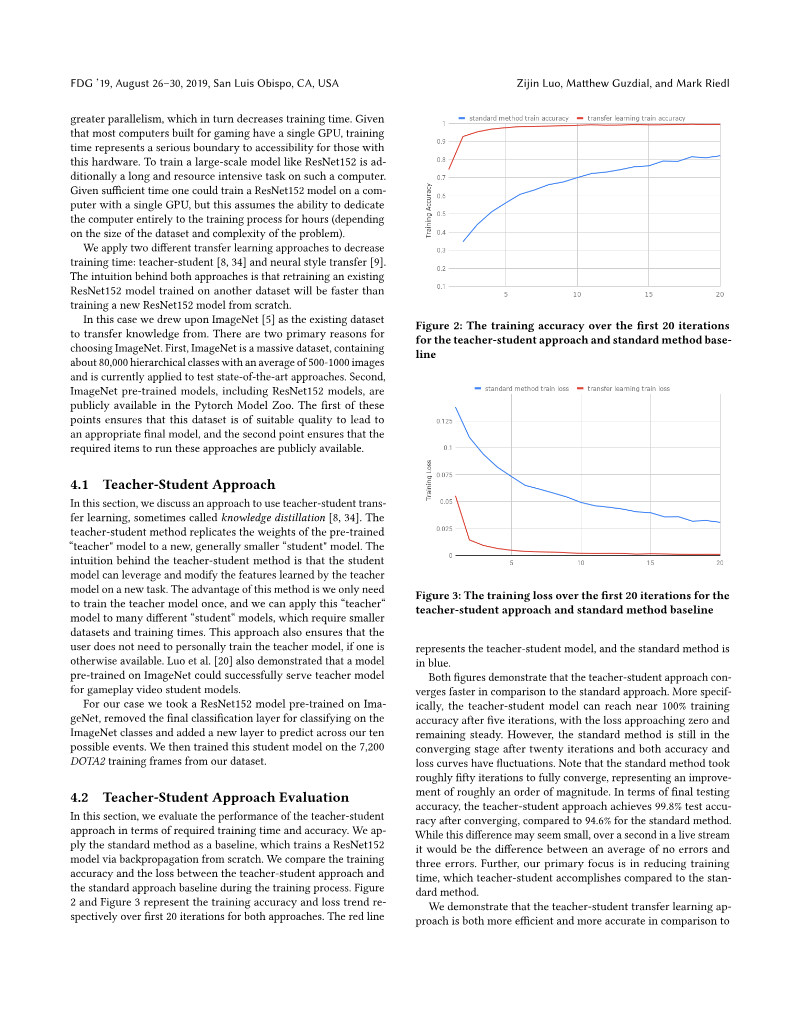
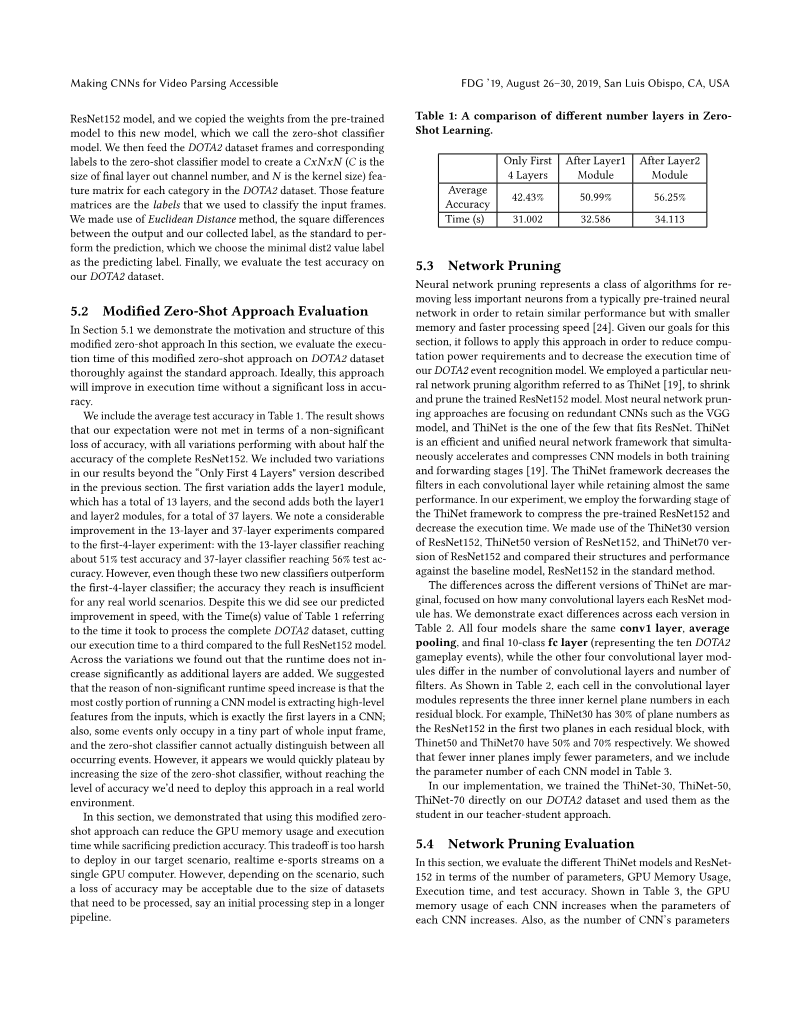
Transfer learning emerges as a highly effective strategy for accelerating model development, with teacher-student architectures demonstrating an order of magnitude improvement in convergence speed compared to standard training methods. While alternative approaches such as Kernel Neural Style Transfer proved ineffective for this specific application, the implementation of neural network pruning via the ThiNet framework yielded substantial benefits. Pruning successfully reduced parameter counts and memory overhead while preserving the high prediction accuracy necessary for reliable gameplay analysis.
Conversely, zero-shot learning techniques, while successful in minimizing execution time, currently lack the precision required for robust real-world deployment. The findings suggest that a combination of teacher-student training and structural pruning provides the most viable path forward for developers operating in resource-constrained environments. By shifting the focus toward these optimized methodologies, the research provides a scalable foundation for automated video parsing, enabling more accessible and efficient data extraction from competitive gaming footage.
University of Central Florida · 2021