
Georgia Institute of Technology
Georgia Institute of Technology is a public research university. It publishes reports on human computation games and video parsing.
Documents
Age Matters: Age-Differentiated Playtesting for AI Educational Games
Age Matters: Age-Differentiated Playtesting for AI JARED ORDONA LIM, Georgia Institute of Technology, USA XUERU YU, Georgia Institute of Technology, USA BRYAN EARL WALLACE, Georgia Institute of Technology, USA SOLYANE BERGE, Georgia Institute of Technology, USA JANE AWUAH, Georgia Institute of Technology, USA JUDITH ODILI…
- Age-differentiated playtesting is essential for AI educational games because cognitive development dictates how students interact with and evaluate game mechanics, narrative, and pedagogical scaffolding.
- Feedback quality varies by cohort: middle and high school students prioritize aesthetic and narrative elements, whereas college students provide sophisticated critiques on AI instruction, pedagogical companions, and generative AI transparency.
- Prior AI knowledge acts as a primary mediator for feedback depth, requiring designers to structure playtesting sessions that account for both developmental maturity and subject-matter expertise.
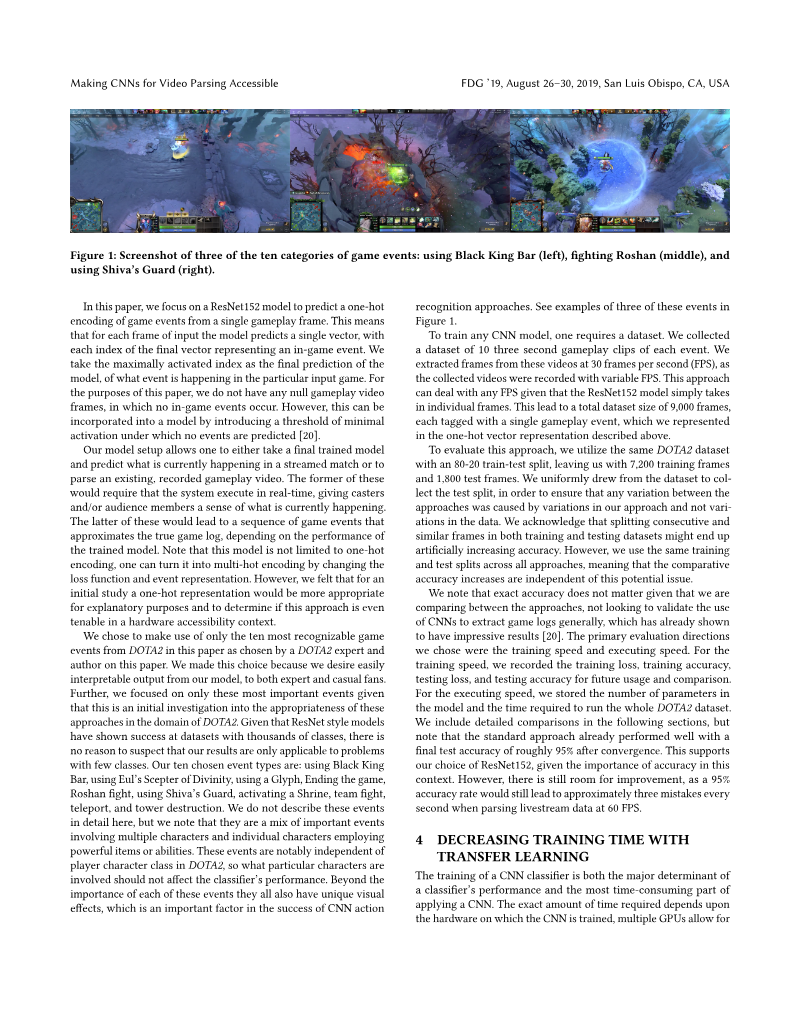
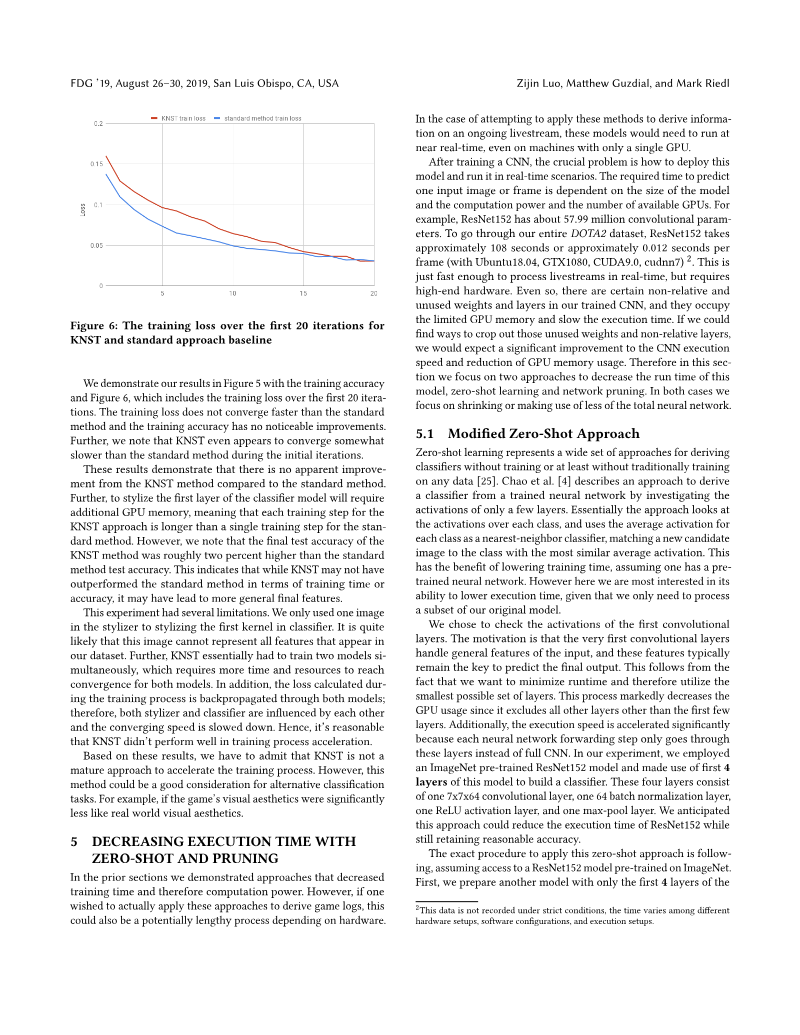
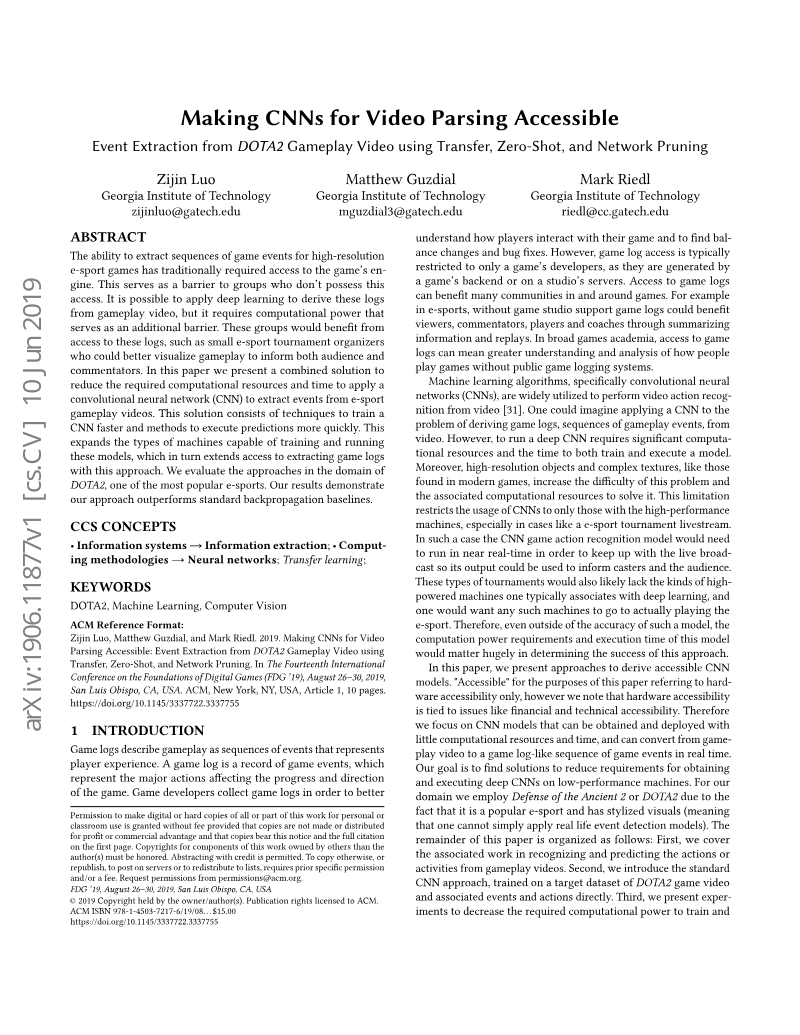
Making CNNs for Video Parsing Accessible: Event Extraction from DOTA2 Gameplay Video
Convolutional Neural Networks (CNNs) present significant computational barriers for real-time video parsing in the e-sports sector, particularly regarding the extraction of game logs from complex titles like DOTA2.
- Combining teacher-student architectures with structural pruning is the most effective method for deploying high-fidelity video parsing on consumer-grade hardware.
- Teacher-student architectures improve model convergence speed by an order of magnitude compared to standard training methods.
- The ThiNet framework for neural network pruning successfully reduces parameter counts and memory overhead while maintaining high prediction accuracy.
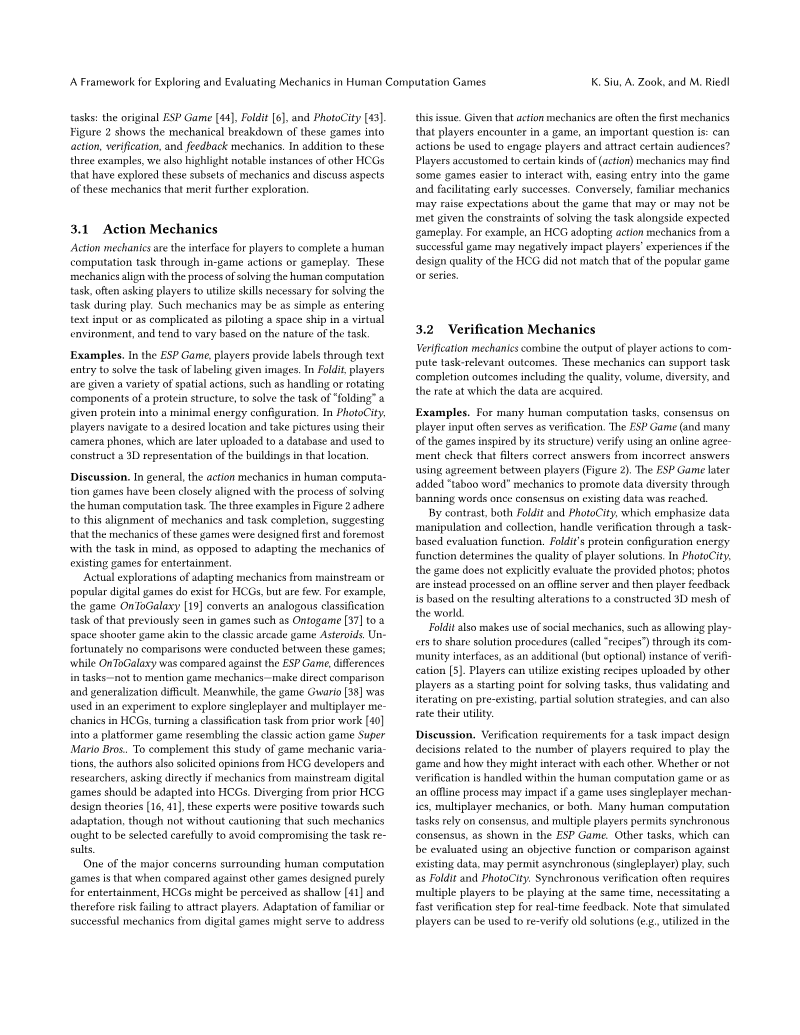
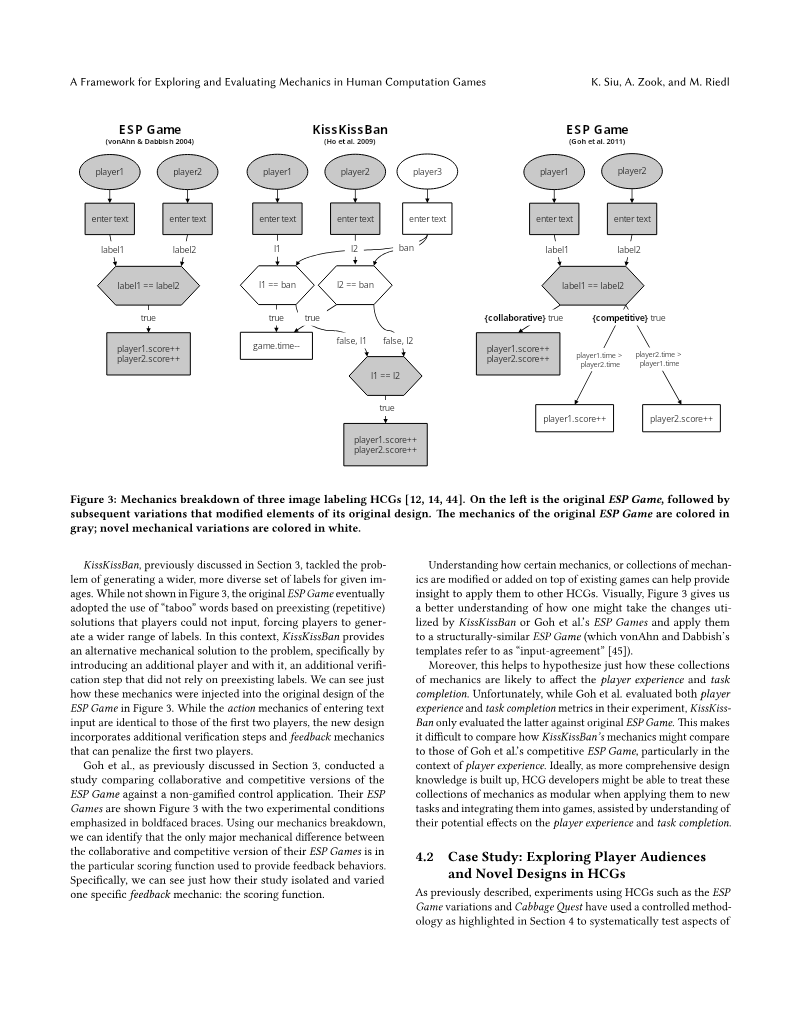
A Framework for Exploring and Evaluating Mechanics in Human Computation Games
Human computation games represent a specialized intersection of game design and crowdsourced data processing, where the primary objective is to balance player engagement with the successful completion of complex computational tasks.
- Human computation games can be standardized into a modular framework consisting of three core components: action, verification, and feedback.
- Developers should treat game mechanics as variables in a controlled system to systematically isolate their impact on both user experience and data quality.
- The effectiveness of game mechanics should be validated through A/B testing against tasks with known solutions to measure player retention and task performance.
Do you work at Georgia Institute of Technology? Get a free report of how these documents are read and cited here.