1 free read left. Create a free account for unlimited reading + AI research.
Create free accountArticle Board Game Studies Journal
1 free read left. Create a free account for unlimited reading + AI research.
Create free accountArticleBoard Game Studies Journal
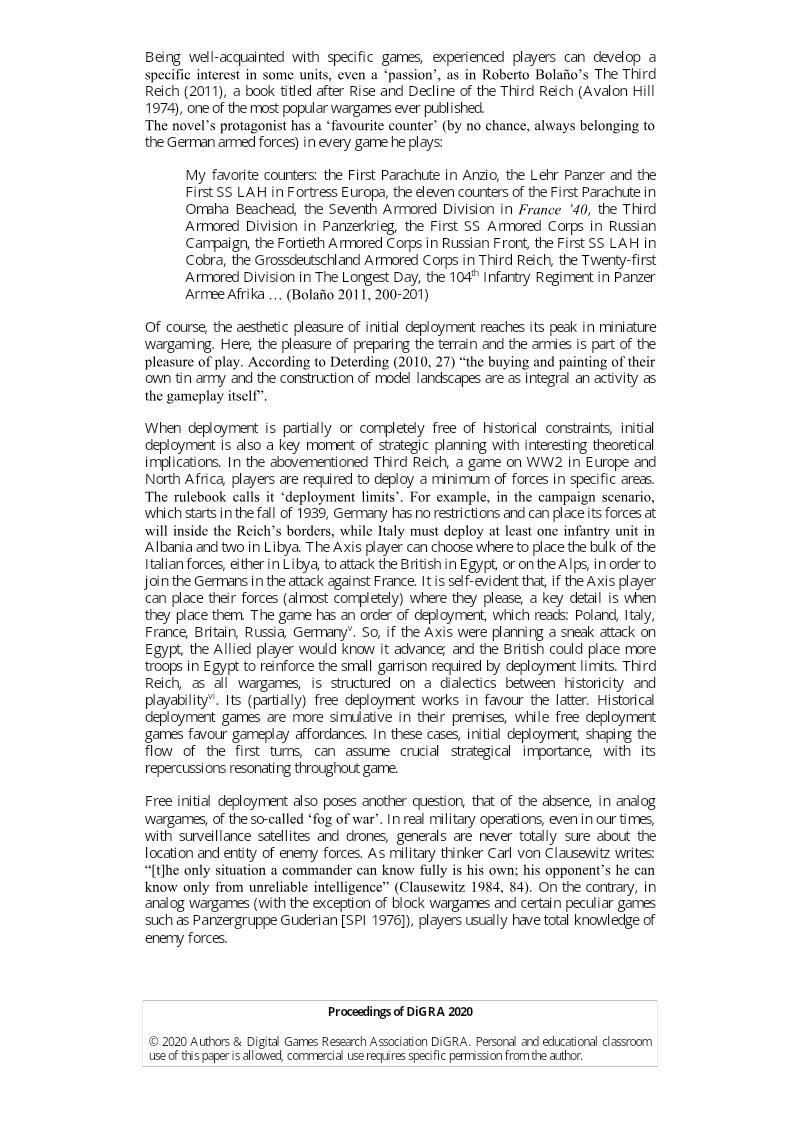
The article follows the wargame from early chess-like games through the eighteenth- and nineteenth-century Prussian Kriegsspiel. It then moves to twentieth-century board wargames with counters and hex maps.
This article by Goria and Hardy, published in the Board Game Studies Journal, examines how historical and business wargames can be designed and facilitated as pedagogical and strategic-analysis tools, with particular attention to the target audience that shapes every design decision. It traces the lineage of the wargame from early chess-like games and the eighteenth- and nineteenth-century Prussian Kriegsspiel through twentieth-century board wargames with counters and hex maps, and then to its modern transformations into role-playing wargames and serious games. The authors position the board wargame as a low-cost, transparent and adaptable medium, particularly suited to training contexts where digital simulations may be unsuitable.
The article's central methodological contribution is a three-phase design process of exploration, prototyping and exploitation, in which a minimum viable product is iteratively playtested against four balancing criteria: historical realism, player skill, the role of chance, and playability, including game duration. Map types, counter size and information visibility are discussed as trade-offs to be calibrated to the players' experience, with larger components recommended for novices. The authors also note that women constitute only about four percent of wargame players, and that historical wargames tend to attract older, highly educated audiences, while fantastical titles target younger players.
For business applications, the article describes how a trainer co-designs a tabletop wargame with employees, clients and suppliers. The market becomes the board, value-chain elements become pawns rated on numerical strength and projection attributes, and rules encode competitive dynamics. Obstacles are scored numerically, and turns follow administration, movement, combat and exploitation phases. The trainer acts as facilitator, managing disruptive participants and recording decisions through concept maps for debriefing. The authors conclude that business wargames offer an effective, relatively inexpensive means of building organizational knowledge and revealing competitive strengths and weaknesses.
Board Game Studies Journal · 2025
Board Game Studies Journal · 2025
Board Game Studies Journal · 2025
Board Game Studies Journal · 2025
Board Game Studies Journal · 2025
Board Game Studies Journal · 2025
Board Game Studies Journal · 2024
Board Game Studies Journal · 2024
Board Game Studies Journal · 2024
Board Game Studies Journal · 2024
Board Game Studies Journal · 2024
Board Game Studies Journal · 2023
European Conference on Games Based Learning (ECGBL) · 2026