1 free read left. Create a free account for unlimited reading + AI research.
Create free accountWhitepaper DiGRA
1 free read left. Create a free account for unlimited reading + AI research.
Create free accountWhitepaperDiGRA
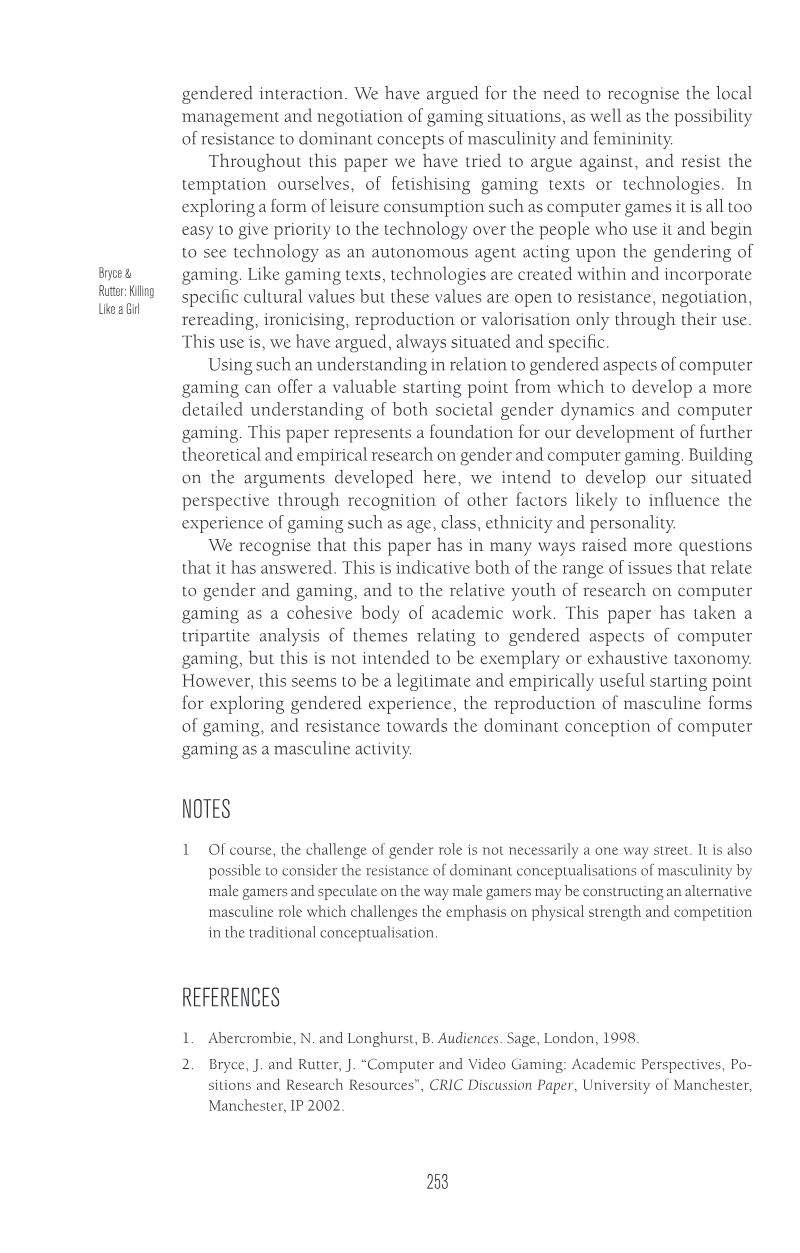
Bryce and Rutter argue this framing overlooks substantial female participation in both academic and industry discourse.
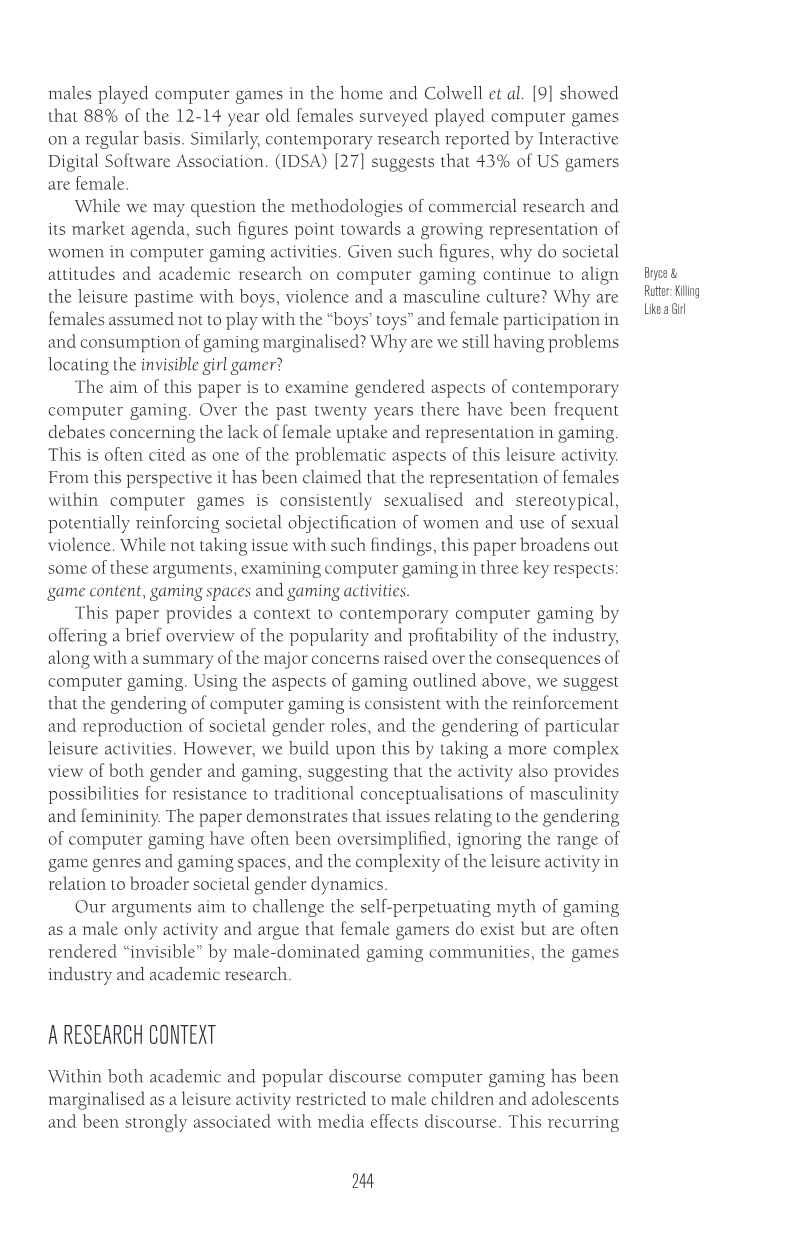
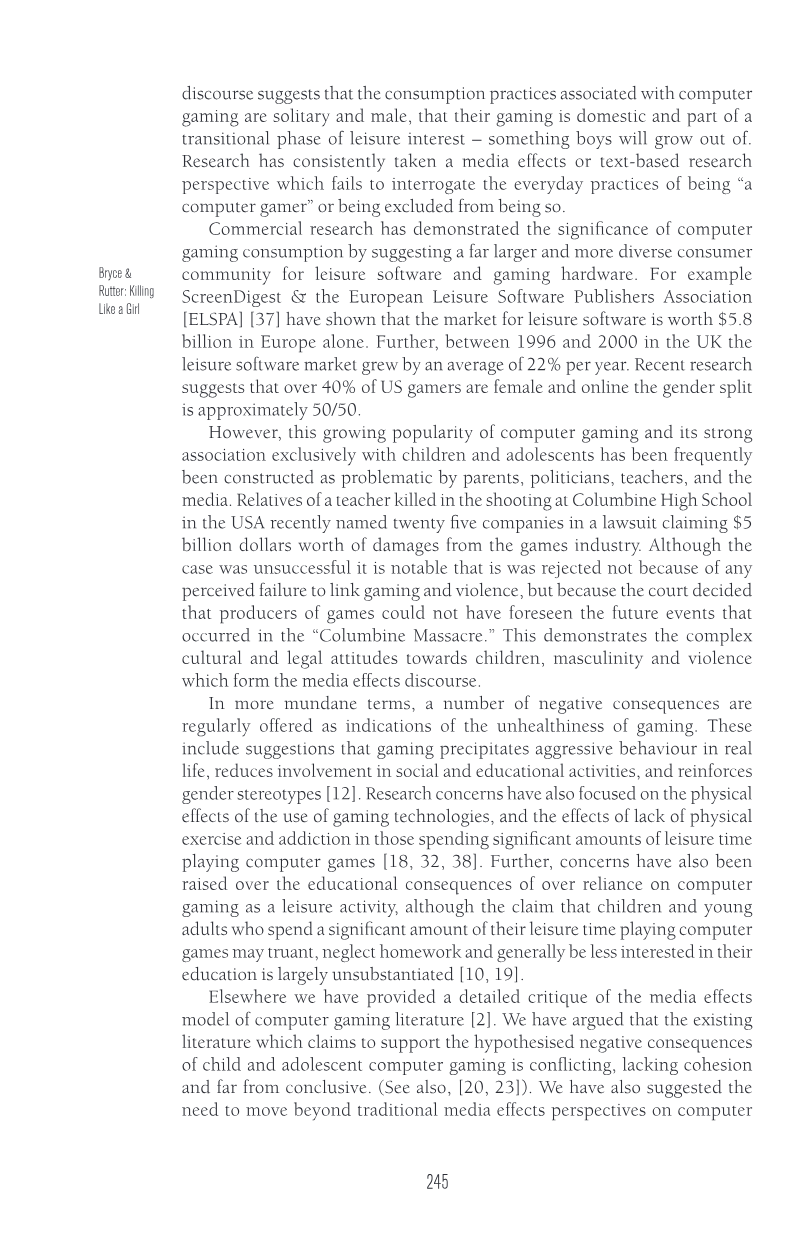
Bryce and Rutter's paper challenges the widespread framing of computer gaming as a male, violent, and antisocial pastime, arguing that female participation is substantial yet systematically overlooked in both academic and industry discourse. Drawing on survey data from the 1990s and 2000s, including Interactive Digital Software Association figures showing that 43 percent of US gamers were female and European Leisure Software Publishers Association estimates of a market worth roughly £5.8 billion, the authors contend that women's presence in the gaming population has been largely invisible.
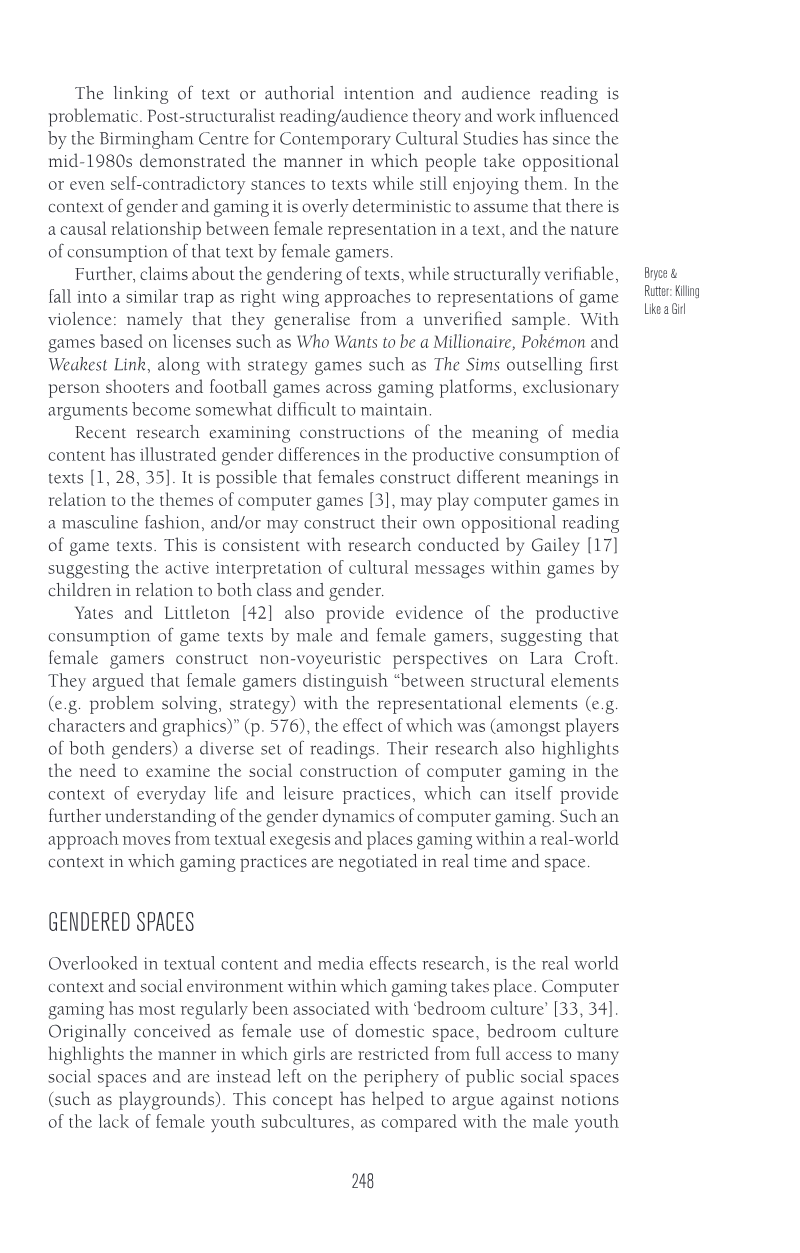
The paper's central methodological claim is that text-based content analyses, which label games as stereotypically gendered, overgeneralise from unrepresentative samples, neglect genre diversity and audience reception, and presume a deterministic link between representation and consumption. In their view, gaming must instead be examined through players' everyday practices, social spaces, and activities, where women's participation and resistance to conventional gender roles become visible.
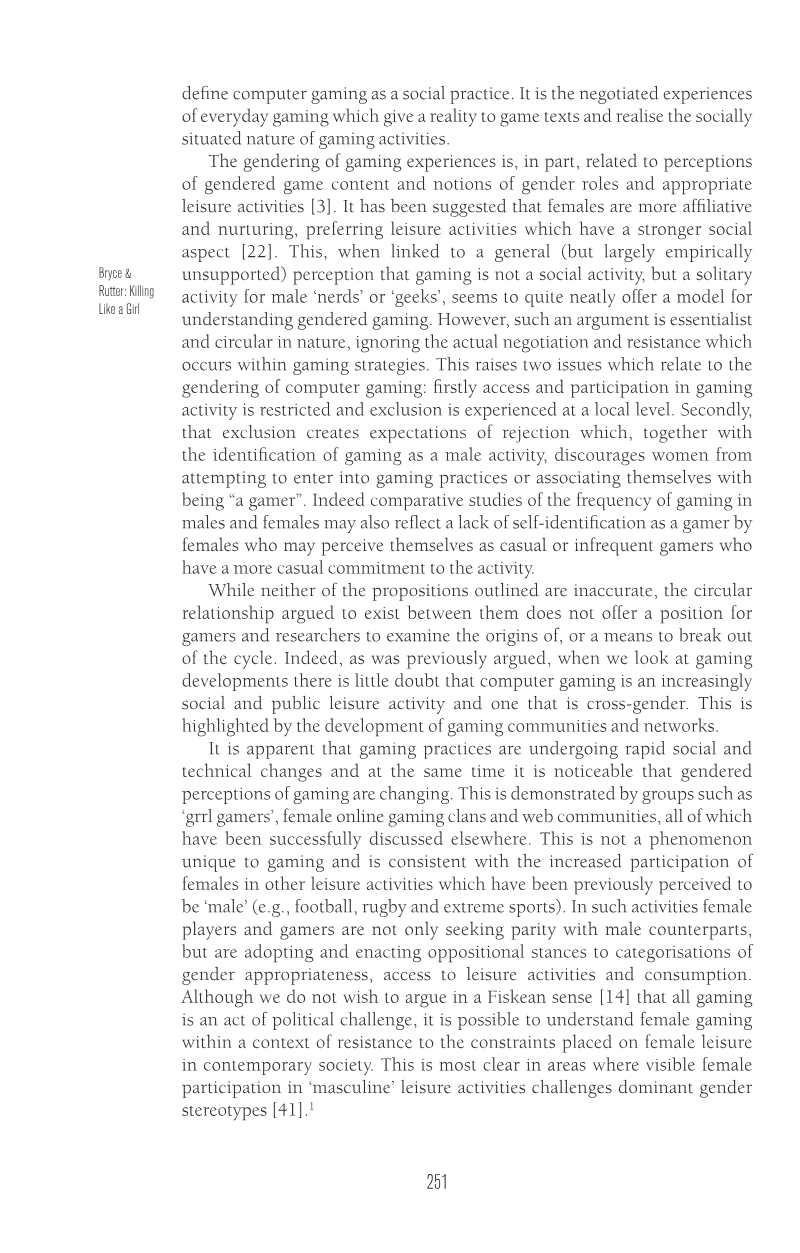
Empirical attention then turns to the social contexts in which gender is negotiated. The authors observe that public gaming environments such as the UK Console Championships and LAN parties remain male-dominated, tending to relegate women to supporting roles. By contrast, IDSA data reporting that women make up 53 percent of online gamers suggest that online and domestic spaces may offer greater female participation. Gendered exclusion, anticipated rejection, and the masculinisation of technology nonetheless continue to constrain women's visibility. The authors conclude that gender-gaming relations are complex, locally negotiated, and open to resistance.
The paper positions itself as a useful but non-exhaustive starting point. It acknowledges that the field is young and calls for future research on how age, class, ethnicity, and personality shape gaming experiences. It also notes that gender-role challenge operates in both directions, with male gamers potentially constructing alternative masculinities less centred on physical strength and competition.
DiGRA · 2016
DiGRA · 2016
DiGRA · 2016
DiGRA · 2016

DiGRA · 2016

DiGRA · 2016



DiGRA · 2016

DiGRA · 2016

DiGRA · 2016

DiGRA · 2016

DiGRA · 2016

DiGRA · 2016
GameMakers · 2021