1 free read left. Create a free account for unlimited reading + AI research.
Create free accountArticle DiGRA
1 free read left. Create a free account for unlimited reading + AI research.
Create free accountArticleDiGRA
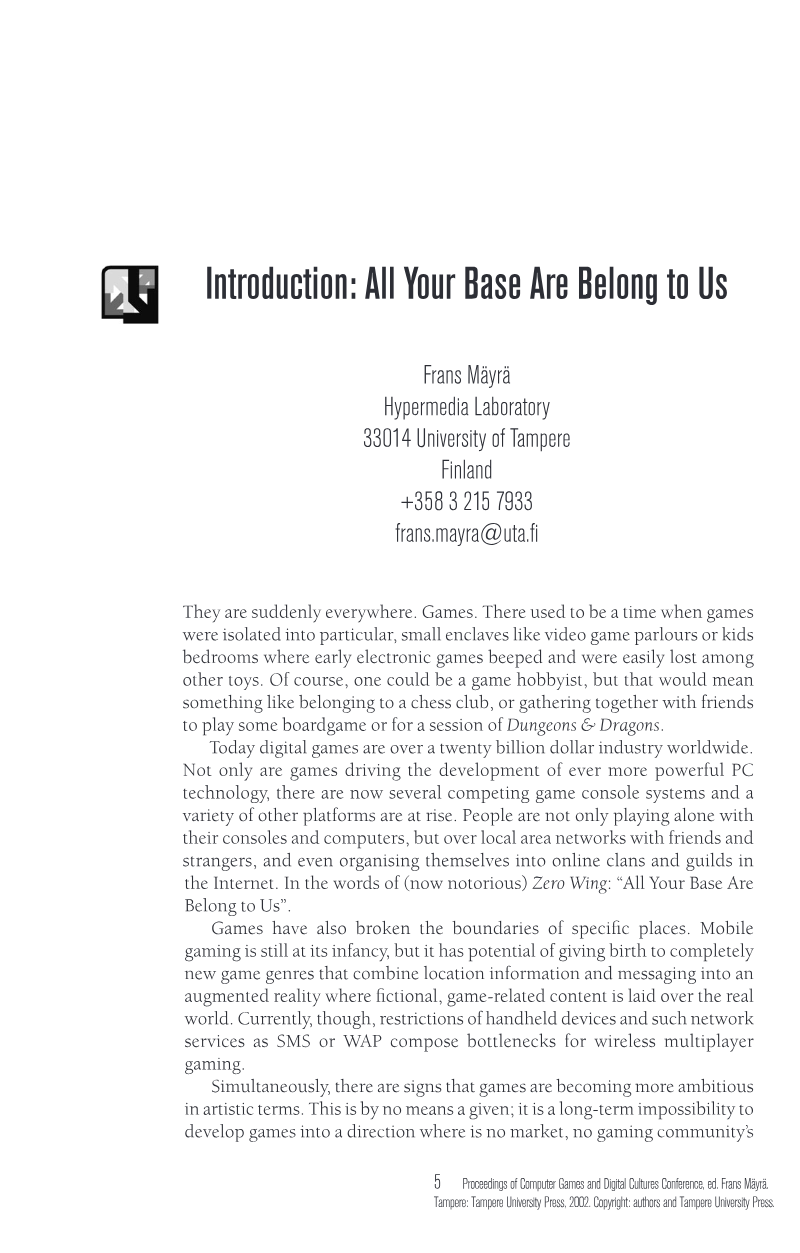
The author uses this scale to argue that games have moved from marginal enclaves into a mainstream cultural form.
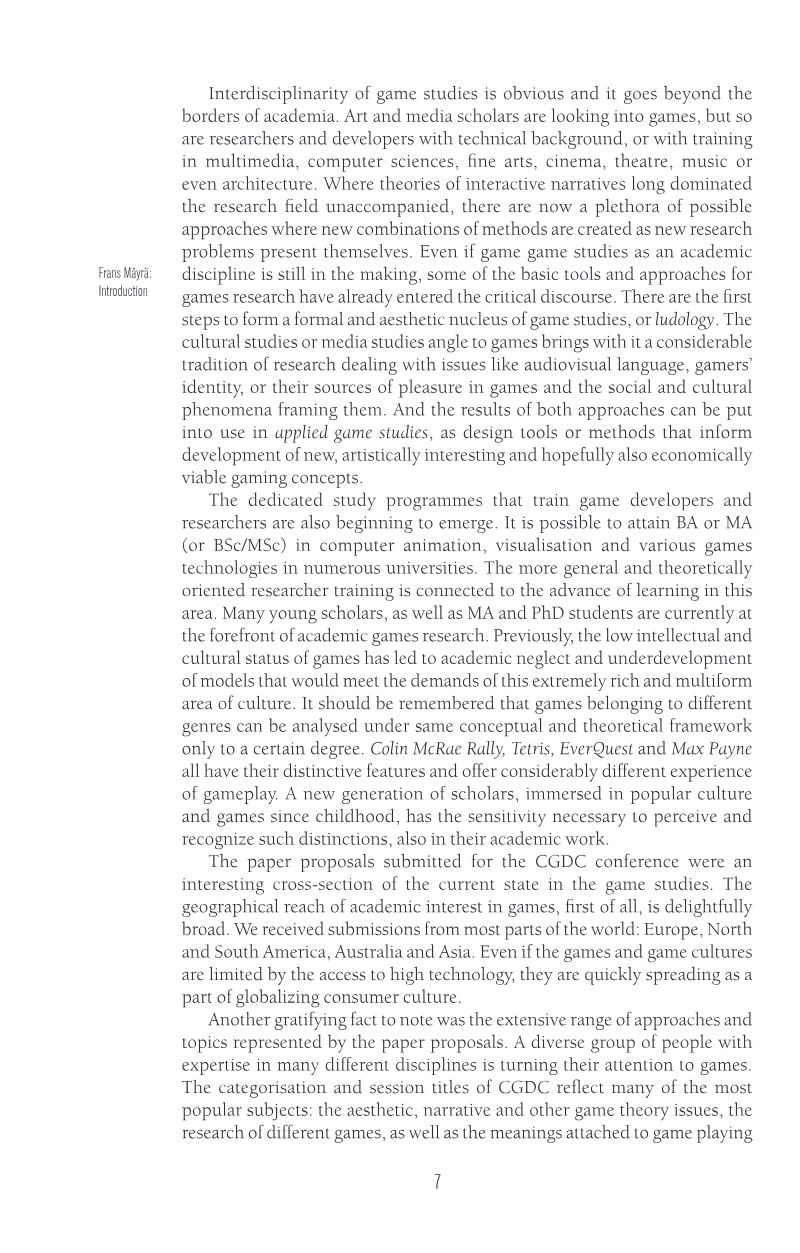
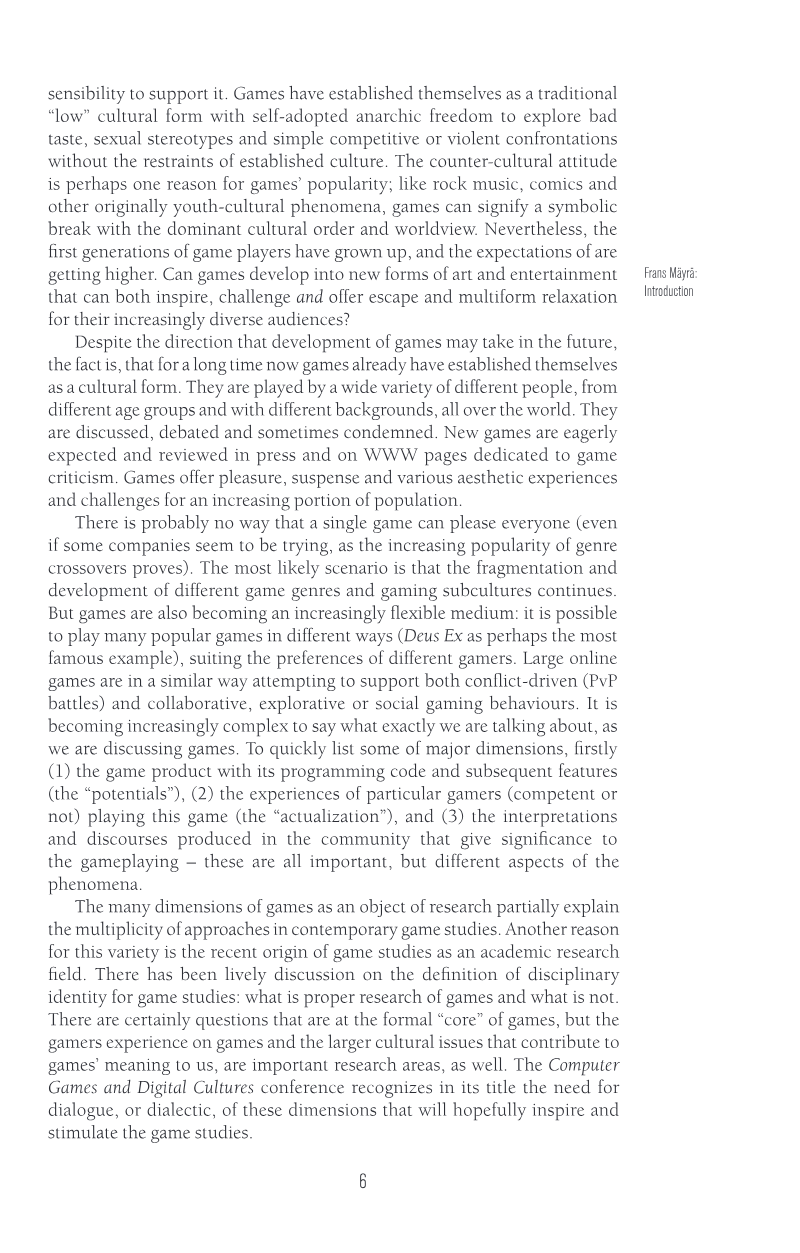
See it on page 1This introduction to the Computer Games and Digital Cultures (CGDC) conference proceedings, written by Frans Mäyrä of the University of Tampere, argues that digital games have moved from marginal enclaves into a mainstream cultural form worth serious scholarly attention. It cites digital games as a twenty-billion-dollar worldwide industry and points to the spread of multiplayer networking, mobile gaming, and augmented-reality concepts as evidence of their expanding reach. The text also suggests that games are becoming more ambitious artistically, even as they retain a counter-cultural, "low culture" character that has contributed to their popularity.
The piece frames game studies as a young, interdisciplinary field still defining its identity. It distinguishes three dimensions of games for analysis: the game product and its programmed potentials, the actual experiences of players, and the community interpretations and discourses that give play meaning. It also notes the tension between ludology, with its formal and aesthetic focus, and cultural and media studies, which examine identity, pleasure, and social context. Applied game studies is presented as a bridge toward design practice, and the growth of university programs in games technology and research is noted as a sign of the field's maturation.
The author reports that the conference's paper submissions came from Europe, North and South America, Australia, and Asia, reflecting a broad geographic spread of scholarly interest. Submissions covered aesthetics, narrative theory, specific titles, social meanings, massively multiplayer online games, education, and production economics. The conference was structured in three sections, a design-oriented workshop and Finnish-language public programme on the first day and academic papers and keynotes on the remaining days, aiming to bring together researchers, developers, and general audiences.



DiGRA · 2023

DiGRA · 2023



DiGRA · 2023

DiGRA · 2023
DiGRA · 2023



DiGRA · 2023



DiGRA · 2023



DiGRA · 2023



DiGRA · 2023



DiGRA · 2023



DiGRA · 2023

DiGRA · 2023

Deconstructor of Fun · 2026









Comments