1 free read left. Create a free account for unlimited reading + AI research.
Create free accountReport gamevironments
1 free read left. Create a free account for unlimited reading + AI research.
Create free accountReportgamevironments
Issue 11 of gamevironments, edited by Lisa Kienzl and Kathrin Trattner, frames games as a medium where identity is constructed, contested, and sometimes subverted.
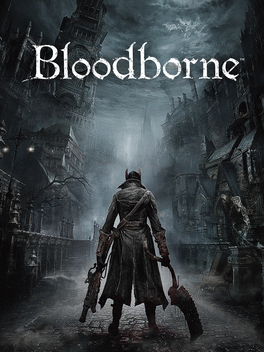
The document is a special issue of the academic journal gamevironments (Issue 11, 2019), edited by Lisa Kienzl and Kathrin Trattner, examining how nationalism, identity, and cultural narratives are shaped by and expressed through video games. Its contents span scholarly articles on border games and American cultural representation, a research report on cultural heritage in the game Bloodborne, roundtable discussion, reviews, and interviews with developers from Indonesia and Togo. The issue frames games as a medium in which national and cultural identity is constructed, contested, and sometimes subverted.
The sample section included in the excerpt is an interview with Déyfou-lah Sani Bah-Traore, a programmer and developer from the Lomé team behind the Togolese game Origin - the Rise of Dzitri (2019). The team formed in 2017 through Enter Africa, a network of 15 Goethe-Institutes across sub-Saharan Africa that connects interdisciplinary creative teams to produce geo-localized smartphone games addressing urban change, borders, and African history. The interview describes Togo's colonial past under German, British, and French rule, and its multi-ethnic population of roughly 7.8 million, with about 2 million living in Lomé.
Origin follows a young expatriate avatar, Edoh, through five chapters of historic and landmark sites in Lomé, blending African myth with exploration and puzzle-solving to counter declining local historical knowledge. The developers present the work as both an effort to recognize a nascent Togolese and sub-Saharan gaming industry and as evidence that games can effectively teach history, cultural heritage, and identity to young audiences.
Each row is a game or company this document names, each column a document, oldest first. A mark means that document names it. Select a row to see those documents.
gamevironments · 2026
gamevironments · 2026
gamevironments · 2026
gamevironments · 2026
gamevironments · 2026

gamevironments · 2025

gamevironments · 2025

gamevironments · 2025

gamevironments · 2025

gamevironments · 2025

gamevironments · 2025
gamevironments · 2025
European Conference on Games Based Learning (ECGBL) · 2026
European Conference on Games Based Learning (ECGBL) · 2026
Jason Schreier · 2026