1 free read left. Create a free account for unlimited reading + AI research.
Create free account
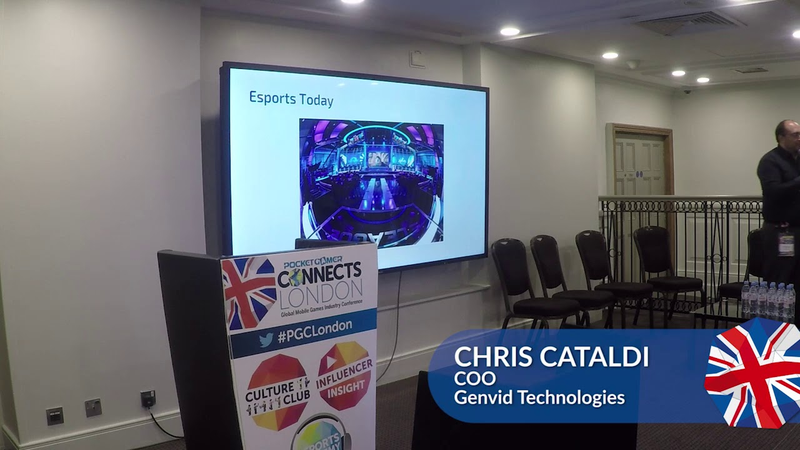
Interactive livestreaming and the future of esports
Key insights
6 takeaways- 01Genvid Technologies, which has raised $20 million in venture capital, provides developers with the infrastructure to create Twitch extensions that offer personalized, data-rich experiences for viewers based on their level of expertise and interest.
- 02Interactive streaming tools, such as those provided by Genvid Technologies, allow viewers to influence gameplay in real-time, effectively blurring the line between passive spectators and active participants.
- 03The industry is moving toward a model where games are designed to accommodate a spectrum of engagement, allowing non-skilled viewers to interact with and influence the game alongside skilled players.
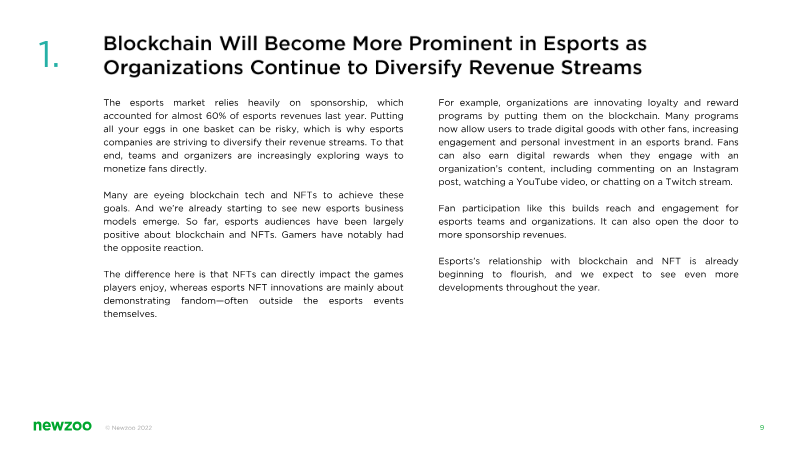
- 04Game developers are shifting from viewing streaming as a marketing cost to treating it as a primary revenue-generating opportunity through interactive broadcast rights and monetization.
- 05Monetization in esports has historically lagged behind traditional sports because developers focused on player retention and microtransactions rather than building a dedicated, monetizable ecosystem for the massive spectator audience.
- 06Current esports spectator modes are often underdeveloped because they are designed from a player-centric perspective rather than a viewer-centric one, failing to provide the third-person data and UI needed for a high-quality broadcast experience.
Ask AI about this video
Transcript
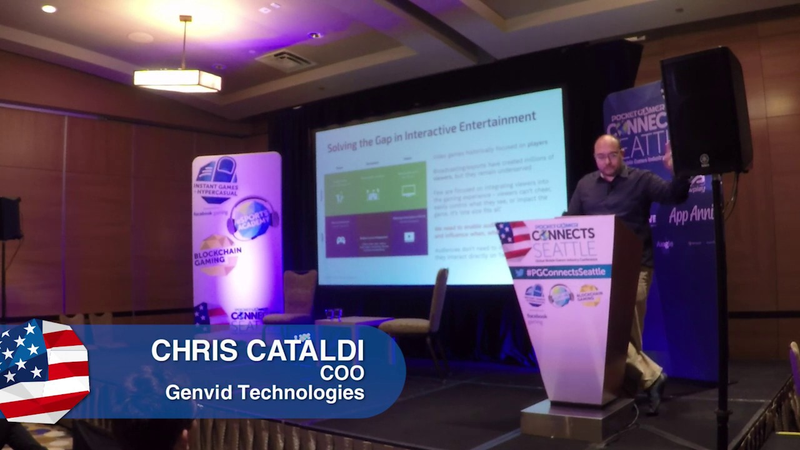
[Music] cool okay so my name of the company's generated how many of you have heard of us cool I'm coming a year ago it'll be less than that that's great if you haven't heard of us you probably have heard of some of the things we're doing I'll explain what that is the title of the talk is interactive streaming the future eSports I'm from New York and Yorkers speak very quickly you'll notice this if at any time I'm speaking so quickly that you can't understand what I'm saying please raise your hand and tell me to stop and I will try a little bit about background a co-founder of gen ed we've been around for three years we're the only one making game developer tools for live streaming and I'll show
you what that means in a second we started with four people in a PowerPoint those four people came from a company called Shanghai technologies how many of you have heard of Shinra how many played Final Fantasy seven so you all heard of Shannara Shinra was the evil company from Final Fantasy seven that was trying to take over the world by joining the world of Mako it was technologies with Square Enix is cloud gaming platform hours that had a business development strategy for them that's me with the former CEO of Square Enix my boss that time and Tim Sweeney of Epic I spent 11 years in Japan going from public sector to private finally winding up in games and a lot of what I'm going to talk about is informed by that background jennife it is a small but growing company we have four offices throughout the world headquartered in New York our main office in terms of development is in Montreal my office in LA Tokyo we also have people in Seattle and we are growing we've raised twenty million
dollars in venture capital from some names you've probably heard of like horizons ventures makers much capital in OCA ventures we have 35 people there are only 30 people on this slide because we just hired three people today I'm just join the company we are growing probably substantially and if you are a member of the twitch developers mailing lists which there are hundreds of thousands of people you probably got an email about us from twitch last month saying that if you're going to make an extension for twitch and your developer should probably use gen vid so I'll show what that means in a second we are also at twitchcon on the in the keynote where we talked about or rather they talked about our counter-strike csgo major pimp-ass how many of you have heard of the premium casts on Twitch Cole did you buy it okay if you haven't you probably haven't seen what we can do so I want to show you what that is and for that I
have to go I'm the speaker that no one likes the guy who wants to do on day demos that's why I will show you so where's my mouse there it is so we're watching a live stream of counter-strike this is actually a demo file from the major you've all seen counter-strike before probably nothing special there but you've probably never reached out on Twitch and touched it so with my cursor I'm going to the upper left hand side I'm clicking on the map by amarice so I think I'm at any of the players avatar areas I can click on them get all the information about the player what their live KD is the flash stats etc when you're watching a broadcast and they bring up the scoreboard and you miss it how do you watch it you have to wait for it again not with this called score bar on the bottom bring it up whenever you want live and customize what for each viewer and if you want to see where the players are what gun they're holding
what direction they're looking where they're firing that's all there and this is for each viewer I was watching them so the first time that torch had ever sold a extension as part of the description service other than overwatch league but that was its own special premium league pass this is just for the weekend so there are a whole bunch of things you can do if you start thinking as a developer so jennife it is all about game developers seeing video games that's not just something you play with but something you watch and we give them the tools to make their games interactive on Twitch so when I just showed you now you could probably fake with some real-time API calls when you're watching like a fighting game and you're new to the fighting game and you've never really played it or you haven't played it for a while and they're new characters coming out you
don't know what the moves are you don't know any of those things so what if you were able to turn on remove lists while you're watching and what if you're able to turn on the hitboxes you're watchin so you can finally understand what's going on and feel more confident about what's you're watching this is an example of game Coleman of sorrow it's a ps4 launch exclusive made by trains typical a1 games they created this for their tournament at Evo and we broadcast this live an example of again by the way each viewer is able to turn all the hitboxes the input that's coming on the left hand right hand side and turn off the interest of time and your attention I will not show other videos for a moment but you will see there are a whole new genre of games where game developers are seeing their game as a interactive piece of media that viewers
which is a non skilled demographic are interacting with and they're really cool games like chicken made by a developer called catapult or they created this arena mode where these two a eyes are attacking each other and you as a viewer can select which animal is being put in the arena cheer for it power it up all on twitch right and be able to feed it in between rounds to buff it up and all during this time you have a streamer who's ranting about it and telling the extreme what to do what they're not listening if you any of you guys heard of a crazy VR game called blitz freak it's ace in Japan it's a 3v3 arena and VR or viewers are like sure other players are bunging around like spider-man and viewers are able to throw in bombs in real time and effect what's going on so one of the core gameplay elements was players trying to get the viewers to support them pretty crazy stuff and again there Cathy says that games and media coming together and what's plunging them
together is Interactive streaming lots of people are watching games game generating game content generation is getting bigger and bigger but we're still focused on the eSports physical stadium trying to get people there and there's a lot of this ecosystem that's being built around the game developer as opposed to being both by the game developer and the game developers is an ex game developer or starting to change their mindset and start turning seeing there is a market opportunity to you know make content for viewers and so cool things are happening why is this transition happening now because game in term Forte's grew as a community driven event right there's people who like the game a lot gathered together in hotel rooms basements and watched each other the best players in the world try to decide who is the best player and kind of steel techniques from them then in 2000 enough of them get together that they create a professional
broadcasts and then now we're getting these huge events but it still has this DNA of being a player community organized event it's fun really different in sports real world sports right because no one owns football no one owns baseball right games are owned by game developer and so the streaming of that the the viewing of that experience is fundamentally controlled by them as well and how in Santa buys those game developers are to create cool experiences for viewers will directly affect how awesome those experiences are heard of these lots of people are watching these games this is where most people are watching game so now watching it in the game and I watch it in spectator mode if you are a viewer of eSports on one of these platforms up until today unless you are player of that game you have no idea what you're watching because it's just not made to be consumed by a non player audience that's changing as game developers realize that they can cater to viewers
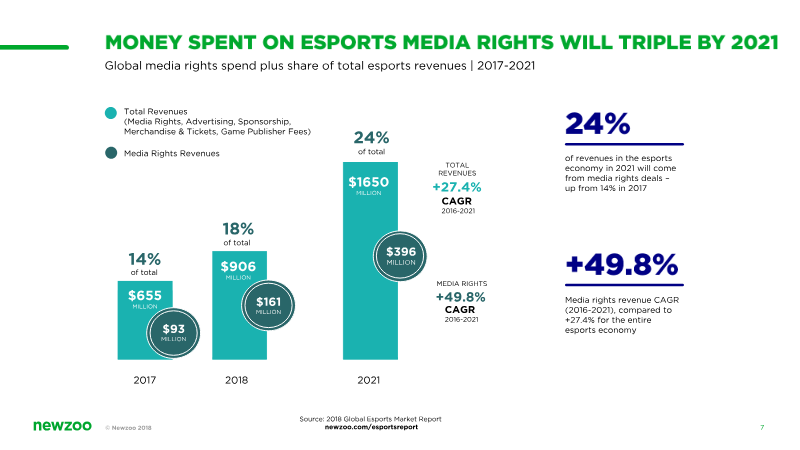
how money is coming we talked about that lots of money is going into investments you know that and broadcast rights are now coming into play right so think from a game developers perspective something that you used to do for marketing purposes this is a cost that you're putting out is now being turned into a revenue generation opportunity right so there are two things the game developers I think care about I'll be a little bit capitalist about it entertainment and money right broadcast rights or it's so entertaining that there's money to be had so game developers are seeing an opportunity and eSports is by my spectating so hundreds of millions of people are watching they're not being monetized correctly if you look at them compared to other like sports or other spectating experiences and the reason is is that the NBA the NFL all of these sports to come
conglomerates leagues have invested decades and billions of dollars into creating the best spectating experience possible right whereas the game developers are still just starting to get this and again are more successful than NFL NBA etcetera right and so up until now him developers have had a forced dichotomy of choosing between players and non players and your game developer your entire ethos is to try to make everyone in the lore of the player of the game a consumer of your product right games are created especially longer-term games are created to capture attention take your time usually develop some sort of skill that is relevant to that and then create that loop that keeps you in there right now games are no longer just competing with other games are competing with
everything else they're competing with Netflix are competing with your son they're competing with your work and games went from arcade to console to monthly subscription to micro transaction what happened is game developers started thinking about lengthening lifetime retention and driving lifetime value what that means is they want to see as much time as possible from their consumer right and so what are they doing they're patching the game they're making it harder and harder when you're watching a game that's changing every month how do you keep up if soccer changed its rules fundamentally every year and you didn't watch for two years and he came back and everything was different he had a really hard time finding what's going on I had this choice of serving their customer their player or going after this like amorphous non player no that's the mainstream audience and they're never
gonna choose a latter because you serve the customer that's how you say successful with interactive live streaming you can make that kind of Faustian bargain or you can keep your game as it is and inform your viewership outside of your game about what's going on so think of a good example of this is poker and the mid-2000s right up until then people didn't watch poker because the poker isn't that difficult just statistics behind a card counting there are a lot of mechanics that make it difficult for mainstream audiences to approach the rules don't change but it's not the most conducive when we started having ultra camera angles we started having stats on the screen you have people who feel as though they're semi-competent yelling at the screen telling them telling the professionals what to do they don't know what but there they feel as though they know what to do why because there there's enough information there for them to feel competent right and when we have a core level of competence you feel as
though I mean not even competence if you have a core level of understanding you feel like you're more this done or Kreuger I'd like you you feel like no more than experts so eSports the court here is that it's the first wave of monetizing viewership but by developers this is key and it's a sign of greater change for the game industry one thing that's changing a lot right now a spectator mode of games for the most part is the least invested part of the game why because if you have a person who's in spectator mode of your game a lot what does that mean it doesn't mean your spectator mode is amazing it means your matchmaking is awful because that person is probably dying way too early and you know they're probably gonna churn right so you know for those of you who are in triple-a development you know how much inspector mode is the dev build that and you have all these grand plans and then you're golden and you don't ship that and you make something basic right that spectate so for the most part
your camera angles everything is from a player perspective because I didn't always play it was using spectator mode for the most part its players and engine viewers need third-person view they need parts of the advantages that players don't have they need more that's happening and why that without that streaming is just a person or the customer of the developer streaming their experience to viewers with interaction you can have this is where it gets kind of crazy people who are not playing the game effect in a game and so this is where a transition from traditional eSports to an interactive experience that game developers are in the center of that non skilled players can can influence the game so this is pink twitch plays Pokemon but on steroids so taking a step back there is a huge gap in entertain me when we look between
the physical and digital world so let's use sports as a metaphor from left to right player participant viewer that demographics are the least players more participants more viewers what does that mean so say football the population of people playing football in America is not very high and it's actually the wind lling because of various reasons but everyone in America is early age so they have a core common and see what's going on some of those people keep that and when they older when they stop dreaming of becoming athletes in professional athletes they retain that affinity and they go to stadiums that have these awesome experiences this immersive live experience and then for every one of those there are many many more who watch that it at home they can't go to the stadium right and so for each level of this football has created an experience and in a way football is incentivized
for you to transfer over from player the participant to viewer right get them early get them playing the game get enough that people will cycle up to participant cycle up to viewers a very few stays players same thing with football same like it's not going something everything and as you go from left to right there's a lot more money there I think of broadcast rights think of sponsorships for they're not necessarily there for the players therefore therefore the in stadium and more importantly where all the viewers are for games you've got the people playing the game so think of these as the players right and any of the people watching on twitch but the game developer up until now isn't involved with that and there really is nothing in the middle it's binary so that's changing so participant in viewer for ports are non skill-based interactions into a scale based experience which is
sports what's the digital corollary to that for games that's coming so there's a huge opportunity whether you're converting X players into interactive viewers or spectators or where you're going mainstream it doesn't matter because there's a huge population of people who used to play your game but still like your game but don't have the time to remain good at your game so it's not about convincing you know my mother's generation to watch League of Legends that's about convincing me am i my cohort who played it three years ago but there's no way we're playing it again because who has the time right these the people who are the opportunity when we start thinking about eSports we start thinking about how the broadcast experience is there's a whole bunch of really good case studies in traditional entertainment so fighting games aren't like for example you know see it's a very different kind it's more like badminton and and then UFC when you're watching it and there are lots of examples but an interesting
time although you start we need to start thinking about UI UX and what it means for viewers as well and where we're eventually gonna get is there's no bifurcation there's no delineation between player and viewer there is a spectrum how much you interact is really based on your level of interest your level of time and you know again capitalistic how much money you have what is the front row experience for that that Digital participant how is that differentiate from the back row experience right is that yelling why do people go to Madison Square Garden and get the front row seat is it for the best view partially the best views at home right they're there because they want to share that experience and they want to maybe yell and they want to feel as though their favorite singer or whatever has heard them all right that doesn't happen to the people in sound booth so the game has to be the medium
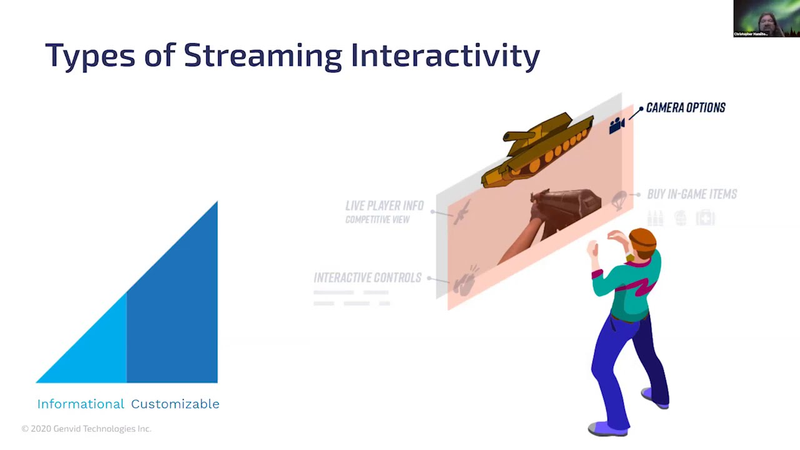
for that but what is the game version of cheering and so I'll wrap up by talking a little bit about various tiers that we've been fied interactivity going from the lowest to the highest lowest being informational again core competency understanding what's going on feeling as though you understand the game understand the match understand the players understand the play-by-play right this is displaying that customizable is you have different people different demographics watching your stream why do you have got people who are new you have people who are trusting you know old hats people who have watched every single game they're professional players and people in Spain you have people in New York different languages all watching giving each of them a customized experience that is catered to their level of familiarity and the level of interest and lasses influence influential and with influential there are two sub categories first passive participation and active influencer so passive is cheering something that influences potentially the mindset of the player again this is a huge value
add for both the player and the viewer because it changes the dynamic there's this co-creation of spectacle and then above that is influenced literally it's the kill button it's throwing the health in the middle of Hunger Games right as you grow up you're going from eSport to whatever the hell the crazy next game genre is from customizable because influential customizable influential and all three tiers are monetizable by game developers all right because these don't exist today people want to be entertained there's a very high curtain that's keeping us from being entertained I can talk more about what these are consigned these even if you want and in terms of how much workers required to make these again informational you already have the data it's trapped in the game it's trapped in your databases and trapped in your the user accounts right like you know what people in lost history is you know what people's stats are it's quarter monetization you can use that to create these rich overlays that people can turn on and off right
you can yeah this is we've all heard the the transit latency server-side render is getting interesting it's I come from a cloud gaming background so as processing goes from client to cloud there's a whole bunch of really cool things you can do I'll save that for another time and so we are really focused on that participant whether they're they're coming back to your game as a player or whether they're staying as a participant for the rest of their life or whether they're feeding into a more mainstream viewership that you can now start monetizing by having more linear sponsorship of broadcast rights those are all possible and it's really a design challenge for game developers now interactivity is there and as latency comes down there was a whole flood of cool things that you can do and we Jennifer they're really looking forward to seeing what you guys do
[Music]
Summary
Interactive livestreaming represents a fundamental shift in the gaming industry, moving beyond traditional esports to create a new category of spectator-driven experiences. The core thesis is that game developers must transition from viewing their titles solely as products for players to seeing them as interactive media platforms. By leveraging developer tools to integrate real-time data and viewer participation directly into streams, developers can monetize the massive, often untapped, audience of non-playing viewers who possess an affinity for a game but lack the time or skill to participate actively.
The industry currently faces a dichotomy where spectator modes are often neglected, resulting in broadcasts that are difficult for non-players to follow. By implementing customizable overlays—such as live player statistics, hitboxes, and move lists—developers can lower the barrier to entry, similar to how enhanced data and camera angles transformed poker into a mainstream spectator sport. This evolution moves the industry toward a spectrum of engagement rather than a binary choice between player and viewer.
Key findings suggest that interactivity can be categorized into three tiers: informational, passive participation, and active influence. Informational tools provide viewers with data to foster a sense of competence, while passive and active influence allow audiences to affect gameplay directly, such as through cheering or triggering in-game events. This shift turns the broadcast experience from a marketing cost into a significant revenue-generating opportunity through enhanced sponsorship models and premium content.
Ultimately, the future of esports lies in the hands of game developers who design for this broader audience. By bridging the gap between the digital and physical worlds, developers can capture long-term value from both active players and former players who remain engaged as spectators. As latency decreases and cloud-based processing improves, the potential for real-time, viewer-influenced gameplay will continue to expand, creating a new genre of interactive entertainment that transcends traditional competitive gaming.