1 free read left. Create a free account for unlimited reading + AI research.
Create free account
Integrate Web3 With Ease: The Tools you Need for Seamless Player Experiences
Key insights
7 takeaways- 01Developers must prioritize Web2-style onboarding features—such as social logins, credit card on-ramps, and gasless transaction relayers—to eliminate the technical friction that currently hinders mass Web3 adoption.
- 02The industry is transitioning to all-in-one developer platforms that utilize account abstraction to simplify wallet creation and blockchain interaction for the end user.
- 03Adopting the ERC-1155 token standard enables more efficient and scalable management of diverse in-game assets like skins and trading cards compared to older standards.
- 04To avoid vendor lock-in and ensure long-term flexibility, developers should prioritize building on EVM-compatible networks.
- 05The core value proposition of Web3 integration remains the facilitation of true digital ownership, interoperability, and shared network value between players and creators.
- 06Sustainable Web3 gaming models are shifting away from 'pay-to-play' structures toward free-to-play, skill-based economies that foster community-driven value.
- 07By offloading infrastructure management to specialized third-party tools and automated node gateways, studios can refocus resources on core game design and content creation.
Ask AI about this video
Transcript
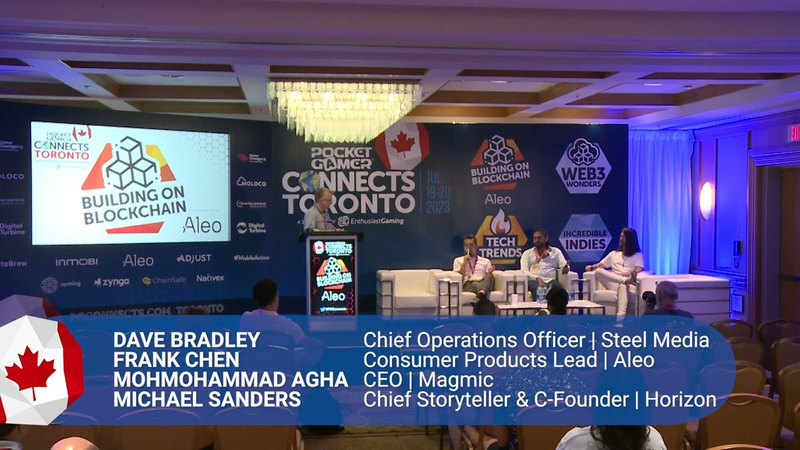
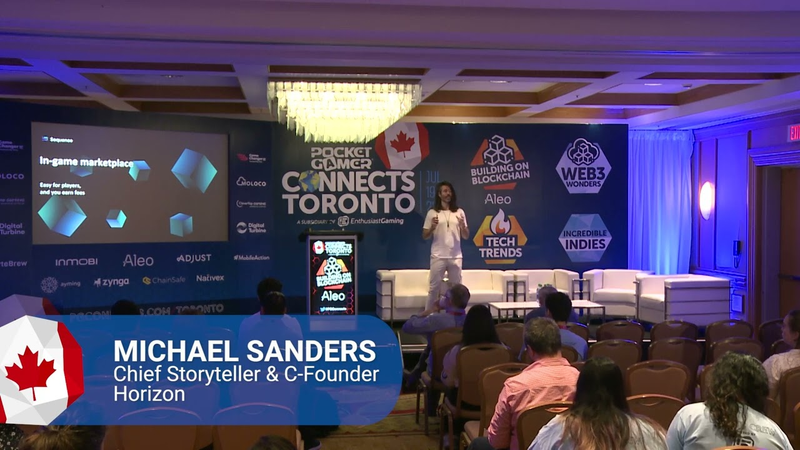
[Music] thank you [Music] and we're going to start with a talk about how to integrate web 3 with ease the tools you need for seamless player experiences so a round of applause please for Michael Sanders from Horizon so come on up Michael there you go and I think you should have everything you need there's a clicker there awesome thank you hey everyone my name is Michael Sanders I'm co-founder at Horizon and we're the creators of skyweaver which was named 2022's best blockchain game and sequence which is an all-in-one developer platform and smart wallet that makes building web 3 games and experiences
easy today I'm going to talk about the technical challenges of integrating web 3 and how you can overcome them to get to Market faster and deliver an amazing experience to your players we started building skyweaver nearly six years ago and it was really important to us to make the game accessible to anyone with the desire to play regardless of how much they knew about crypto or blockchain today it's an open Beta with hundreds of thousands of players a passionate Community streamers around the world and a healthy competitive scene and as I mentioned it was named 2022's best blockchain game in fact we have professional Hearthstone Pokemon and Magic the Gathering players who tell us we have the ingredients for what could become the greatest trading card game ever so we're working very hard to realize skyweaver's potential we've taken a thoughtful and novel approach to game design and a patient Innovative and sustainable approach to economy design that we continue to evolve most of skyweaver's players had never had a web 3 or crypto experience
prior to playing the game but in order to build a web 3 game that's accessible to anyone we had to overcome a ton of blockchain infrastructure and user experience pain points so now I'll dive into what those technical challenges we faced were how we solve them and how you can do the same to deliver an amazing experience to your players and get to Market quickly over the years we identified seven major hurdles to building a seamless web3 experience and these range from wallet creation and onboarding to payments and gas fees to working with and displaying blockchain data to integrating digital Collectibles and enabling the seamless trade of those Collectibles and lastly you need to think about what network will you deploy your game on as a spoiler we solved all of these challenges and we productized our Solutions into sequence which is the all-in-one developer platform and smart wallet to help you build these web3 games so to dive into each of the challenges individually let's start with wallet
creation which really has been brutal up until very recently players have had to figure out what seed phrases are download extensions and try to understand what a wallet even is when they're just trying to play a game it's a ton of friction and it drives people out of your ecosystem so to solve this issue we have created the sequence smart contract wallet also known as account abstraction wallet which means your players can sign in with social email or your existing authentication system so that in one or two clicks your players have a seamless secure and robust wallet that connects them to your game and to web3 sequence offers a variety of wallet Solutions depending on your needs we have a universal wallet application specific wallets and wallet as a service which range from non-custodial and self-custodial to semi-custodial semi-custodial so if you don't know what solution you need that's totally cool just come talk to us we can help you figure out what will work for your game and Community what I simply want to impress upon you is that you can deliver
your players a seamless onboarding experience into web3 with the sequence wallet Solutions okay now that we've taken care of the wallet and the initial onboarding let's talk about gas fees for those of you that have interacted with a blockchain you may have noticed that anytime you transact or push data to the network there's a gas fee associated with it and someone needs to pay that gas fee and it's denominated in a crypto token such as ethermatic or avax the problem with this is that for users who are new to web3 they don't own any of these tokens so they couldn't pay the gas fee even if they wanted to if we take Sky Weaver as an example imagine a new player comes into the game and they want to trade a card in the marketplace but in order to do so there's a one cent fee denominated in the Matic token well this player doesn't have havematic now they have to figure out what it is how to go acquire it it's just a really bad user experience especially for a cost of only one cent to solve this issue we've created something called a transaction relayer
this allows you as a game developer to sponsor transactions on behalf of your users so that they never need to think about or pay for gas it really enables seamless onboarding with these gasless transactions and welcomes more money and purchasing power into your ecosystem plus if you've ever wondered about throughput or scalability when it comes to the blockchain sequence the sequence relay actually allows you to batch and parallelize transactions so that you can send thousands at once and pay only one small fee essentially we've made web 3 transactions as easy as web 2. now that we've taken care of transactions and gas what about players being able to buy your game items easily in the first place it's been a challenging problem to solve because the typical solution is that players need to own crypto in order to buy your nft or digital collectible but as we talked about earlier most of these players don't own crypto or at least they don't have it handy when they come to your game so to solve this issue we've embedded
checkouts and on-ramps right into the sequence wallet so that your players can buy Collectibles and nfts directly with credit or debit card you can even allow them to purchase crypto directly with credit or debit if you'd like so essentially we've made the purchasing experience as familiar and intuitive as a web 2 shopping experience and your players don't need to learn about any new technologies now that your players can own these and buy these in-game items what about displaying them so of course you want to be able to display player inventories in real time to your users so that they know what they own but this requires that you query the blockchain and and and you need to do it in real time which is challenging due to things like chain reorganizations and finality thresholds so we needed to figure out a way to enable this that wasn't too computationally intense and we invested a number of years into solving this and what we came up with is the sequence indexer and this allows you to quickly
and easily query all blockchain token and nft data and serve it to your users in real time so that they know exactly the items they own what they can play with and what they can trade plus sequence ensures that your game is always up and running now every game that leverages web 3 will need to interact with a node in some manner but the issue with nodes is that on occasion they go down and when they do your game goes down as well for both you and your players which is definitely not what you want so to solve this issue we created something called the sequence node Gateway which Aggregates various node providers and in the event that one of them goes down it automatically switches to another node to ensure that your game is always up and running okay now we've taken care of blockchain data and ensuring your game is always up and running let's have a conversation about tokens now I'm guessing everyone in this room has heard of nfts in other words non-fungible tokens which means
that each and every item is totally unique from all others now nfts are awesome for things like original artworks avatars or unique pieces of real estate but they're actually not that well suited for most video game items because if you think of most video game items they have multiple copies like trading cards skins weapons Farming tools all kinds of materials they all have multiple copies and the nft standard does not allow for this in an intuitive or really scalable manner so to solve this issue we created the ERC 1155 semi-fungible token standard I.E sfts now sfts allow you to have multiple copies of a game item and we needed to do this for our game skyweaver so in the top left after there's a volcanic blast card from skyweaver and we needed to have an arbitrary number of copies let's say ten thousand so you can do that with the sft standard and many in fact a lot of web 3 games now have adopted this standard and you can use it too you know
it's free it's open source and it'll allow you to whether you want to create millions of copies of an item or even if you want to create a unique one of one you can actually leverage this standard as well and it'll make your transactions more efficient another great thing about sfts is that you can actually have liquidity for them which means that market formation and price Discovery becomes easier which in effect means that trading becomes easier it makes it easier for your players to trade the game items which brings us to the next Point around marketplaces so the default solution in web3 to date has been to drive players to a third-party Marketplace to trade your game items this is unfortunate for a couple of reasons first you've invested all of this time and energy into bringing players into your game in the first place and now you're going to send them to a third party where you don't control the user experience secondly players might feel sketched out by this they don't understand the third
party it looks totally different they don't understand what connect a wallet means it's just a ton of friction and it can feel untrustworthy so we've built a better way by having an in-game Marketplace you can tailor the experience for your users and keep players within your ecosystem we created something called a Marketplace engine that makes trading instant easy and secure for your players so you get to deliver them a seamless trading experience and at the same time you can earn transaction fees royalty fees from the trades from the economic activity that occurs in your ecosystem this is exactly what we do in our game skyweaver so this front end is it's easy to as easy to navigate as the best web to shopping experience and yet it's equipped with web3 superpowers and digital collectibles and you can do the same you can build your custom branded web3 Collectibles Marketplace by leveraging our no code white label solution and you can tailor it so that it's perfect for you and your gamers okay now that we've you know we've taken
care of wallet creation and onboarding payments and gas fees uh buying game items in the first place working with the blockchain data and ensuring that your application is always up and running we've discussed tokens and how to enable the seamless trade of those tokens with the marketplace as a final technical consideration let's talk about picking a network which we know can seem like a daunting task because there are so many chains out there and yeah they're making a lot of noise some of them anyway but to make your life easier choose an evm compatible chain evm stands for ethereum virtual machine and it's the underlying architecture that the chains leverage so if you think of networks like ethereum polygon arbitrum optimism binance Avalanche immutable zke evm Oasis and many many others they all are evm compatible which means if you choose one of these networks and something were to happen to that Network you can relatively easily Port over to another evm compatible network now this protects
you against the vendor lock-in that exists with a non-evm chain if you're on a non-evm chain and it goes down then you're kind of stuck or at least it's going to cost you a lot of time and energy to re-architect and Port over at which point you're probably going to choose an evm chain so you might as well just skip that step and start with evm plus evm it's the most mature ecosystem most number of users applications developer most liquidity as well so it's just a really robust ecosystem and the good news for you is that sequence is compatible with all of the evm compatible networks which gives you optionality and peace of mind while making it easier to build on these Networks here's a look at the entire sequence stack so you as a Game Dev you can use it as an all-in-one solution or it's modular so you can pick and choose specific tools that are right for you and they play nicely with other web 3 tools as well they're all standards compatible um so you know we're obsessed with and Incredibly passionate about building the
best developer experience and solving for the blockchain infrastructure and user experience pain points whether it's onboarding and playing to buying and trading and whether you're building on mobile web Unity or Unreal Engine plus all the tools they come together nicely in our Builder which is a no code dashboard to launch and manage web3 games and projects empowering both non-technical and Technical teammates with this entire Suite of tools so that you as game developers you don't need to think about or worry about web3 technology instead you get to focus simply on making amazing content and a great gaming experience for your players yeah so we we currently have about 70 amazing projects that leverage sequence for their web3 experience and this ranges from some of the leading web3 video games and game Publishers to Magic Eden which is a leading digital Collectibles Marketplace that uses sequence in addition to Consumer Brands
and professional sports teams that leverage sequence for things like loyalty programs and gamified experiences to deepen engagement with their users these projects range from startups to some of the largest gaming Tech and consumer companies so if you're building a web 3 experience or looking to integrate web3 into an existing or new game we'd absolutely love to help you solve all the web three issues that you don't have to think about them and allow you to get to Market faster to deliver this amazing game or experience to your players you can visit sequence.xyz to learn more you can join our Discord Community chat with the community speak with product experts and devs yeah we'd absolutely love to help you so thank you for your time and I have it looks like I have a few minutes in case there are any questions from the audience [Applause] for about five minutes so if there are any questions in the audience we can we can run a mic to you
uh oh there's one over here actually I was I've got a couple on my own but there's someone got in there first thank you great presentation um I'm kind of curious very new to web3 but like what do you think the pitch is for why someone would choose to build a web 3 game versus just a traditional mobile game yeah so there's a lot of reasons you know I think the transition to web 3 is analogous to the move from single player games to multiplayer games it's just opening up an entirely new dimension of games it's a new paradigm and if we think so I think there's kind of three categories with which you can look at why to build a web 3 game and they you know a lot of it revolves around items there's also this notion of user generated content in addition to the game design uh possibilities that it opens up so if we think about items in the first place right like why do players buy items in web 2 games I think it's for three reasons it's for utility
status or the pleasure of collecting now if you add web 3 into the mix players will still buy for these same three reasons in addition to it least five more so there can be value associated with the game item resale ability and not necessarily for profit right like I don't think that's the goal it's just more about ownership so if you buy something you get tired of it you can sell it later and just recoup some of your costs right like you truly own it um there's this notion of cross brand and cross-game interoperability that really adds value to players so if you may have seen like Nike and EA or Nike and fortnite or just imagine like NBA 2K right like if you could have web 3 digital shoes in the game and imagine their Adidas shoes right and then like Adidas the brand could look at the blockchain and see like oh all these players own Adidas digital kicks so we're gonna gift them airdrop them something and maybe it's uh like a glowing version of those Adidas shoes or maybe it's a voucher for physical merchandise in the real world um so that that interoperability is a
cool thing um there's also this notion of persistence right like if you own a web 3 game item it's going to exist forever and other folks can build build experiences around it or add value or utility to it like you could create lending systems or build a new game around those items and folks who own them could bring them to that game in addition to like collection history and Universal profiles that you can actually bring and potentially display in various Virtual Worlds so I think that's around the item front and then if we look at ugc user generated content I think there's a ton of opportunities here so like imagine um I'll just use skyweaver as an example so it's a trading card game we could allow the community to actually create some cosmetic items and you know maybe there's a community vote as to which items like get into the game and then those items could actually be for sale in the sky River Market and then every time that one sells a royalty could go to the creator of the item and perhaps a
transaction fee goes to skyweaver as well so it really creates win-win you know the game is getting more content and not needing to make it themselves and then it's supporting creators and they're monetizing that so I think that's really cool and then um yeah in terms of like game design possibilities I think it's really Limitless and like we're just starting to scratch the surface I think like just as an example like imagine um I don't know imagine you're playing a game and there are factions like maybe there's like five different factions created all competing against one another and they're determined by what items you own like maybe there's five categories of items let's say or maybe you know if you own a particular web 3 item you unlock new DLC new downloadable content or um I don't know like you're playing a game and maybe maybe there's a mechanic around the trading of that item so let's say like you're a spy and you're going into um you've got to have some like I don't know fancy dinner or whatever and you need a brand new suit right but then later on you need to like walk through
the streets and like get into a sketchy area so you need to have a more tattered suit so that you blend in like maybe there's a trading mechanic that if you trade it three times your suit evolves from like this dope suit to like all beat up right so you can blend in and I mean those are just like some super high level examples and like I'm also not the like the greatest game designer or anything so I'm sure that we're gonna uncover just a ton in the coming year so yeah yeah I think there's tons of reasons and honestly like I think there's way more than I'm even um able to articulate or think of at the moment that's a great question and you know uh in about half an hour's time we're going to be on a panel in here talking about some of these exact things yeah so you're gonna get you'll get some more from some other perspectives too but that's great a really comprehensive answer there as well and yeah there's it solves a lot of problems around particularly around trading which was happening anyway right in website totally people trying to swap items and it's it's solves some problem there do we have we maybe got time for another another question we go oh one at the back perfect thank you oh the one at the front back and forth we'll try and get both in uh
um I've been closely like watching like the development of like um web3 in general and um just uh blockchain Technologies and I was just wondering uh to get another perspective what is like web3 to you and like uh like what do you like yeah just what is web32 yeah yeah so I just think web3 means that you're leveraging the blockchain in some Manner and you're enabling the decentralized ownership of items and web3 of course extends Beyond just gaming but what I think it really enables is more symbiotic ecosystems where both users and creators share in the value of the networks and the applications and the experiences that they participate in thank you thank you great I think Well what we'll do is we'll take one more question we've got to Mike at the back hi uh first of all I'm a huge fan skyriver I apply for the beta but not there yet uh my main question is regarding how you guys are trying to avoid the pitfall that 90 of the
blockchain games or nft games fell to like pay first and play later how Sky River is is dealing with this aspect yeah so skyweaver is a free-to-play game um so you don't even you don't need to buy anything to it like you can actually just grind and level up and earn uh cards that are they're called base cards and they're not on the blockchain they're not tradable but then if you want like the Cosmetic benefits of silver and gold cards or like hero skins you can buy those and they're tradable or you can actually win them through competitive gameplay so it's skill based which you know helps protect against botting and like you know unsustainable economies and just infinite printing of currency we also don't have like a fungible token like a like a currency in the game because well I just think no one has cracked the code yet on that there's also like regulatory concerns around it and it's just you know it's hard to build like an economy it's kind of like building a nation's economy and so a lot of considerations need to go
into it um but yeah to your point I think we've really seen thus far like the first generation of web 3 games and a lot of them have really had to concern themselves with the technology itself which has eaten up a lot of their time whereas now we're entering this generation two where the tooling the technology can be taken care of by things such as sequence and other developer platforms and tools so that game makers can just focus on like actually making amazing content great thank you well we have to move on but Mike will be back on stage in a few minutes actually so round of applause there and we'll um and we'll get you back in for the panel shortly [Music]
Summary
The integration of Web3 technology into gaming presents significant technical and user experience hurdles that often impede mass adoption. Developers face seven primary challenges: complex wallet creation, high friction in onboarding, prohibitive gas fees, difficult payment processing, the complexity of displaying blockchain data, the limitations of existing token standards, and the risks associated with network selection. To address these, developers must prioritize seamless, intuitive interfaces that mirror traditional Web2 experiences, such as social logins, credit card on-ramps, and gasless transaction relayers, to ensure that players can engage with digital assets without needing deep technical knowledge of blockchain infrastructure.
The industry is shifting toward a second generation of Web3 gaming, characterized by robust, all-in-one developer platforms that abstract away blockchain complexities. By utilizing account abstraction wallets, developers can enable social authentication, while the adoption of the ERC-1155 semi-fungible token standard allows for scalable, efficient management of in-game items like skins and trading cards. Furthermore, implementing in-game marketplaces and automated node gateways ensures that developers retain control over the user experience while maintaining high availability and security. Choosing EVM-compatible networks is recommended to provide flexibility and protect against vendor lock-in.
Beyond technical infrastructure, the value proposition of Web3 gaming lies in true digital ownership, interoperability, and the creation of symbiotic ecosystems where players and creators share in network value. By moving away from "pay-to-play" models toward free-to-play, skill-based economies, developers can foster sustainable communities. Ultimately, by offloading infrastructure management to specialized tools, studios can focus on core game design and content, enabling the delivery of high-quality, engaging experiences that leverage the unique benefits of decentralized ownership without the traditional barriers to entry.