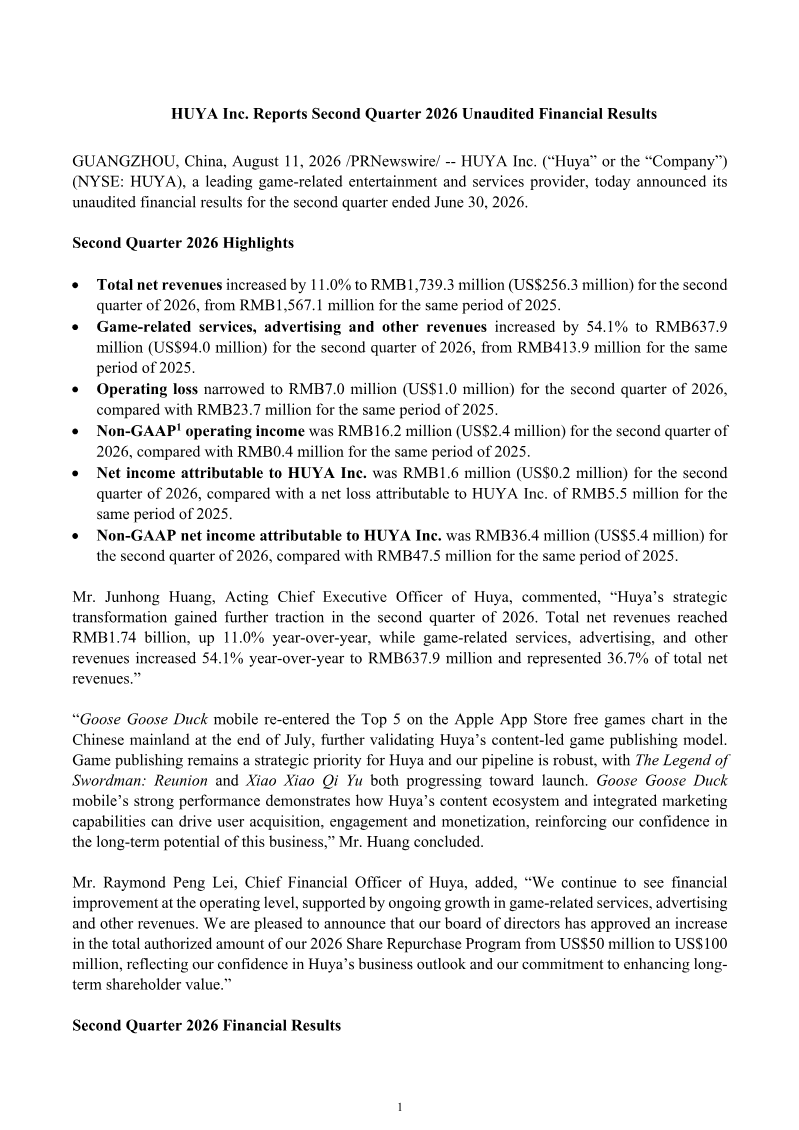
Huya Inc., a Cayman‑Islands entity headquartered in Guangzhou, operates China’s leading live‑streaming platform through a variable‑interest entity (VIE) structure that accounts for roughly 97 % of its revenue. The company’s 2022 financials show a sharp decline in net revenues to RMB 9.22 billion (US$1.34 bn) and a net loss of RMB 486 million, reversing a 2021 profit. Gross margin collapsed to 6.6 % as revenue‑sharing fees with broadcasters rose to 81.7 % of net sales, while operating expenses fell 22 % but were offset by higher content‑licensing costs and rising e‑sports fees. Cash balances dropped to RMB 659 million, with operating cash flow negative and capital expenditures concentrated on land use rights and IT infrastructure. The company retains earnings for growth, with no dividend policy in place.
Regulatory risk dominates Huya’s operating environment. Complex VIE contracts expose the firm to enforcement challenges under China’s Foreign Investment Law, potential license revocation, and CSRC oversight. Tightening rules on real‑name registration, content moderation, virtual gifting, and data security impose significant compliance costs and could curtail user engagement. Cyber‑security incidents, third‑party payment platform changes, and evolving advertising regulations further threaten revenue streams. Tax exposure is heightened by potential reclassification as a resident enterprise, triggering higher withholding rates and 25 % worldwide income tax. Governance constraints under Cayman law limit shareholder rights, while Tencent and JOYY’s controlling stakes concentrate voting power.
Geographically, Huya’s operations are confined to mainland China; its global footprint is limited to content licensing and advertising partnerships. The company’s competitive landscape includes other domestic live‑streaming platforms, talent agencies, and e‑sports organizers. Financially, the firm’s liquidity is constrained by inter‑company financing rather than dividend income, and its profitability hinges on securing exclusive game rights, retaining top broadcasters, and navigating a rapidly tightening regulatory regime.