1 free read left. Create a free account for unlimited reading + AI research.
Create free account
How to design games for optimal IAP
Key insights
6 takeaways- 01Shift from finite project cycles to a service-based model that treats the game as an evolving amusement park to ensure long-term retention and engagement.
- 02Integrate monetization strategies into the core game design from the outset to support years of content expansion and live operations.
- 03Replace one-time premium purchases with annuity-based models, such as recurring currency subscriptions and gacha mechanics, to encourage sustained player investment.
- 04Monitor in-game currency flow rigorously to prevent economy dilution and inflation that could undermine the game's financial stability.
- 05Prioritize key performance indicators including Day 2 and Day 7 retention rates and conversion metrics to guide development decisions.
- 06Balance quantitative data analysis with qualitative creative intuition in art and thematic design to create rewarding, long-term purchasing experiences.
Ask AI about this video
Transcript
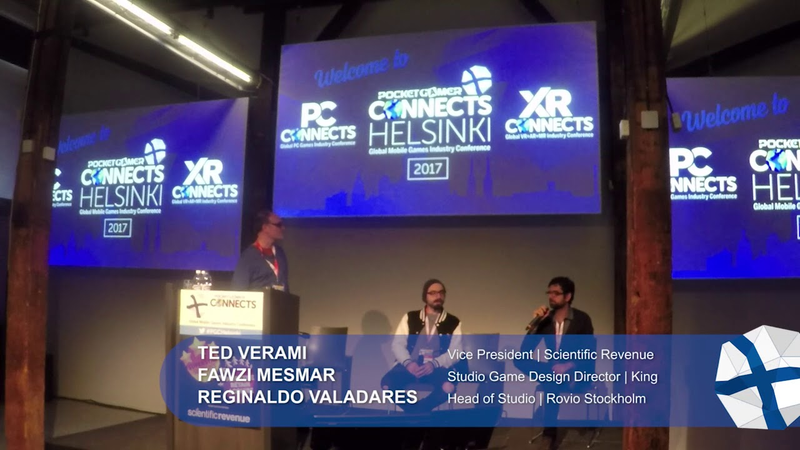
Hello, my name is Ted Verani. I am head of business development for Scientific Revenue. Uh what do we do? We do dynamic pricing for in-app purchases. So, what we do is uh using machine learning technology, um we are able to segment players in real time as you come into the game, and we deliver targeted prices in order to maximize revenue. So, in effect, we're delivering the right price at the right time for the right player. And generally, as long as there's enough data as we need we need data for our algorithms to work well, um we can price increases of in-app purchase revenue probably monthly basis between 20% and 40%. So, it works. Um but we also so despite being a
machine learning technology, we actually spend a lot of time thinking about pricing and monetization in general. So, highly encourage you and if we we put our content out there for, you know, education purposes. So, uh our CEO Bill Grosso publishes in Gamasutra. You can come to our website um where we also put our blog post there. And um and if you're around at 12:00 actually, uh Bill is here also. He's going to talk about um what makes the right price a good price. So, that should be pretty interesting. But what we did so you know, before we get into that, so really this session is not about pricing um because um we want to talk about how to design a mobile game for optimal IP. Cuz really before I can help you with pricing, um in order to make more money, you really need to have a game that works, right? You need to have uh you know, you know, people need to want to enjoy the game and playing the game and want to make a purchase cuz frankly, if they don't want to buy anything, if they get enough enjoyment for free, the problem's not price. So, um with that, I think we're we're lucky because um it's a
great challenge to uh create a game that works and uh it takes deep understanding of player psychology, um virtual economy tuning, and indeed UX design. So, uh we have a couple experts here. Yes. Experts. Um I'll introduce you just to cuz we can get right into some of the the questions too, but um you know, both work with uh top games, top companies, and but also have a lot of experience through years even early days mobile working with premium too. So, um we have uh Veli Valadares who's the um head of studio for um Rovio in their Stockholm office. And he um you know, Angry Birds 2 is your title there too. So, you know, highly popular game there too. Um then Fatih Mesmar, um studio design director for King um in their Berlin studio. And so, Candy Crush uh Jelly Saga is his game. So, another very popular game we have too. So, so let's go right into it. So, what um you know, we you what makes a game game work you
know, in terms of you know, IP but so but you know, free-to-play clearly big revenue driver. Um what you know, as it we think about how it's evolved from premium to now and how it's different, you know, maybe give us a start with sort of um how is free-to-play IP different for uh mobile than um say designing for PC or or premium games? Fatih? Um And if you any like uh you know, what you've learned along the way in terms of designing free-to-play you know, mobile games. Um the I guess the most important thing is uh when you when you're designing any game, you're really designing for the system that the game is running on and like how the people are interacting with that system. So, that's definitely the biggest um change when it comes to designing free-to-play games on mobile than in moving away from premium on PC and console and that and that kind of stuff. And uh with that uh the way people interact with their devices, um there's the habits of users that comes with that. And um we keep that in mind when we're designing free-to-play
aspects of the with the game is that how how the people want to consume that content, how often do they want to consume that content within that day, and uh what is the pace that uh that is relevant to most of our most of our players within that day. Any anything you want to add to that or does Fatih kind of covered it in your mind? Um I wanted to add as well that uh when you're designing a free-to-play game, and now the we've seen that reality uh on the King games uh and many other examples as well, is that the those games they they pretty much last forever. Mhm. Right? We we have games like Candy Crush for instance that's staying on the top for a very long time, years years. And um and you have to think of your game in a different way. Um normally uh the premium development, uh you see this as as a sprint, uh while in free-to-play it's more like a marathon. Mhm. Like you have to uh like going live is the the beginning of a very very long
run. And you have to design your game from the get-go with the principles that your game needs to be deep enough and expendable enough that support gameplay uh for years to come. And that's a a very particular challenge that you have to take in consideration when designing a game. It also takes a a particular mindset uh from your team as well. Um normally uh most people are used to this kind of be- behavior that you have a project, you work on it, you deliver it, you move on. In free-to-play, you work years very hard to get a game out, and that's just the beginning. So, you have to have a different kind of stamina to keep going on after that. And you know, think about your game uh as an amusement park instead uh a different attraction. The attractions are inside your amusement park. You don't build an amusement park, and after you build it, you say, "Okay, this is good. I'm going to build a new
one right next to it." No, you keep working and adding rides and attractions to it for a long period of time. Okay. Any um for Fatih, you mean you any so same as picking same idea. So, it's like you know, tips you have for maintaining as Regi pointed out, it's a marathon not a sprint, but you know, you're rolling out a game, you're adding new features, you know, Candy Crush obviously been around for a long time. Even your game Jelly, right? It's been out for a while. So, what kind of tips do you have for maintaining an IP-oriented game going forward? Um the one of the most important thing is that uh we think of a game as it's becoming um when you think of a game as a service, I guess you think of it becoming a part of people's everyday uh life and how it can incorporate with um with people's habits and play time. So, we think really um closely of our of our users. Um what are they like? What are they interested in and what are they playing habits? When when are they best like to enjoy our game? And as we're as we create a content production plan or um
our our plan for the for maintaining game in live ops, uh we need to make sure that the game is always fresh for our users. That um that the game is always presenting new challenges, it's always presenting new features, and it's always presenting something different. So, um one of the key aspects that are working really well for us in all of our Saga games, um in addition to that we handcraft every level that we make, it's made by people that uh really really like what they're doing, um is that we also constantly present our users with new gameplay modes or new blockers, and we also present them with new um uh live ops. And uh those live ops, they're time-limited events that happen for a small period of time that really engage the the users. Um and they they're gone for a while before we present something new really adds to uh something new is an exciting is happening in the game and we'd really want to check it out. Okay. Anything So, I know you Angry Birds 2, right? You guys came out then you know, I think I read an article somewhere that
was talking about like different things you added over time. And any of you I guess you didn't develop the first version, but then you came in and took over the studio. So, can you give us an example or some tips of sort of a maybe a change that you led with when you took over Angry Birds 2 and you know, things that you added that was helpful? Yeah, absolutely. Um I love to talk about this game, of course. Okay. Um We'll talk about some other games but go ahead. Um So, it's a very interesting story what happened to Angry Birds 2. We released the game, and uh you know, as you know, Rovio uh has been around for a long time, and we came from a premium uh foundation that that the the original Angry Birds 2 or Angry Birds was a premium game. And and then we have these strong uh uh processes in place that it's makes the process of releasing a game very strong at Rovio. So, we got Angry Birds 2 uh very well positioned after we released it. But we noticed that it wasn't behaving uh or progressing as like as like as exactly as we wanted it to.
So, we started making deep changes particularly in the meta game, adding mid-core elements to it uh that uh gave us actually very good results. Uh some of them were we started moving more and more away uh from the Saga map, and moving the players to experiment more uh events inside the game, and multiplayer features inside the game So, we moved our players to encourage them to interact much more with the other players in the game. And we offered them uh things to do every day differently. So, imagine when you're building uh a game that is based on a Saga map, uh you build a very nice and fancy and super cool new level, that's the level 1,455. And only 1% of your players are always
ever going to see that. So, uh we were creating super cool content that a lot of people were not seeing. And instead, we started to offer those levels in what we called the daily challenges. Daily challenges. And every day we were presented with a set of new challenges uh that were progressively harder. And in all in order to be able to reach to the last level, you had to beat all the previous levels without a defeat. And it became incredibly uh increasingly harder to get that. And And that played with loss aversion uh emotions on our players, and they reacted quite well to that. So, but the most dramatic change that we've made was to make the game about the birds. So, it's it's Angry Birds. And uh we emphasized in the beginning a lot
the levels and the map. So, the players were playing the game to see how far they could progress in the map. Uh instead, we made the main menu, the starting page of the game, not the map anymore, but the birds and your collections. And we made the game about collecting and improving and enhancing your birds. And that had a significant impact in the economy of the game. So, just staying with you just quickly. Um Sorry. Just staying with you just quickly. Is there any list of, you know, you kind of touched on already, but if you had a list of say do's and don'ts in terms of designing an IAP game, what would be your list? Uh I'm going to ask that question for Fatih so he can answer. All right. So, I would start with don't assume your players are stupid because they they can be they can have trouble understanding your system sometimes, but they're quite smart when it comes to uh spending money, right? Um
when you design your game and you prototype your game, you should prototype depth first. That's what we do. So, your game needs to be deep and expandable enough uh from the get-go to allow itemizations and long-term retention. Then, um we always try to uh think about uh our storefront as a $1 million storefront. So, if a player wants to spend $1 million in your game, uh they should be able to do so in in a meaningful way. You should never cap your economy or your store uh lower than that, actually. Then, the other mantra that we have is that spending in a game needs to be fun. So, it needs to be a very rewarding experience. When you spend money in your game, not only the feedback that you give to players that you're they're getting something cool or awesome, needs
to be like a super rewarding, but also the use they're going to do of that uh purchase needs to be extremely rewarding as well. So, some those are some of the do's and don'ts. Same question. Any specific specific for the audience, any specific do's and don'ts that you have when you're designing a free-to-play game? Um first first thing um I always encourage the designers I work on to uh keep in mind is that um any in-app purchase that we offer to our users, we make sure that that purchase has value. That um whatever whatever purchase that the users would done is going to be an added or incremental value to their own experience or added fun to their experience without taking um the trademark challenge that the games provide. And this is why I constantly um urge all of our designers to to play a lot of other games for inspiration at time as a paying user as well so that they can see um how it feels like as a spending user
if that experience is rewarding or not. Uh because I believe um when it comes to a purchasing the the purchasing experience that itself needs to be rewarded. It should be something that you will tell your friends about like, "Hey, I spent money on that game because it just made my experience a lot better." Or like as we saw maybe in some of the previous presentation, people actually filmed themselves on YouTube making an in-app purchase. This is definitely how we should design that that the the purchasing itself should be a positive experience. Otherwise, from a game design point of view, we would probably did something wrong there. Any don'ts? And one uh yeah, one one don't probably is that um uh as game developers, we often want to reward our players as, you know, game design principles that reward will drive engagement. And but I I urge designers not to be to be careful, I'd say. To be careful when it comes to how you reward the the users. Um because um if you don't do that in moderation, you might dilute your game's economy and
then you're going to have to be playing catch-up and how to, you know, store the restore the balance. Cool. Um I want to add one thing I forgot that maybe it's an old one, but it was always fun to remember that back in the days when we were uh them for, if you're lucky, for $10. So, many designers they thought it would be a very good idea to add an item to the game that was a super powerful like a sword for like $500. And what whatever happens after that, you don't really care because the player already spent uh 500, right? So, it would be uh much better than the $10 you had before. But the reality is this this is capping your economy. It's you're telling your player this is how much you have to spend in your game uh to end it. And they're never going to spend more than 500. Not only that, but they're going to end the game like that with that one-hit
kill sword. So, never sell uh an OP item in your store. It's just not worth it. Yeah, how do you So, just picking on that. So, you know, I mean, Rovio obviously hugely successful with Angry Birds premium game when it first came out, right? And I think everyone played it. But then, you know, you guys people would argue that, you know, you guys were slower to sort of adapt to free-to-play, but then also we'd all agree that you guys did a great job recently, right? So, going to call public even, right? So, you know, because you guys are doing a really great job now in terms of free-to-play. What internally, any sort of, I don't know, any nuggets or interesting information that you can share about the sort of the process of trying to shift from this premium mindset to the free-to-play? Um it's a quite painful process. Um it is uh sometimes it can even be a handicap when you're moving from uh a premium development to a a pure free-to-play development. Uh because just the way you think needs to be different. And uh there are some people who just don't want to do free-to-play. And that's all right. Uh there are plenty of opportunities to
do something else. Um and and we had that situation that some people didn't want to do free-to-play. And unfortunately, some people decided they that was not what they wanted to do and stay at Rovio. Um but that was quite a painful process, but uh I would say it paid out tremendously. And there are huge opportunities uh in in design in designing free-to-play games. And and the people who are there fully embraced that idea at Rovio. And I think at the numbers that we released, they they they show that result. Good. Let's switch gears a little bit from uh you know, your experience your games to just Fatih starting with you. Just curious if you have is any games out there that you've been blown away that you think are on the cutting edge of design that you've just were really impressed with out there? Some two or three examples to maybe share with the audience. Um most recently I guess I should add probably with a lot of people in the audience could be Pokémon Go and Clash Royale just because
of the impact they had on the the mobile industry in general and like the the inspiration that they gave to a lot of um a lot of other games out there. Um in Pokémon Go specifically is that I I really like some of their monetization techniques. Some of the items you buy, they don't just benefit you, they benefit people around you like in the lure. And I And I think that's really cool. And I that's definitely driven a lot of uh maybe a little bit social or peer pressure like, "Hey, buy us a lure. We have a good time." or something like that. I thought I thought that was that was pretty neat. Cool. Any Reggie, any any other games out there that you were impressed with in terms of you thought were how they designed it? Well, I mean, the game I'm very impressed by is the Tencent's Arena of Valor. Sorry? Arena of Valor. Okay. Uh the game uh it's a beast really in terms of revenue. It's uh it has huge potential. And uh even even though uh the core gameplay
is not very innovative, uh the fact that you see a game with that kind of console-like experience on mobile being hugely successful um in the Eastern markets, it gives me some you know, glimpse of maybe that's what's going to happen to uh our children when they're playing. The way I see this is that uh I might be completely wrong here, but it seems like the because the PC and console uh gaming was never extremely strong in China for instance. And so, therefore, they don't have this uh experience to relate and compare to. So, playing those kind of experiences on mobile feels natural if you don't have this pre-existing background, which is it would might be the case for our children that uh are experiencing and exposed to mobile gameplay since they're so small, right? But, uh in terms of uh Western development, I would also highlight Playrix with the
the match games like Gardenscape. I think they have offered some very refreshing innovation in terms of meta game and they're doing quite well as well. Okay. Any um Here's what I guess Fausi's trying to what what monetization trends or sort of new things that maybe you've seen in the last year that you're you're looking at or trying to incorporate your games or just think is interesting. Oh, it's I think it's interesting cuz like um the talk just before us about the gotchas like nodding my head nonstop throughout the whole time. Um It's something I found like um uh especially maybe biased here because I had some experience working in Asia before and I've very much inspired with the Asian market, especially the Japanese one. Uh it seems like um we kind of like catch up to where where those guys going when it comes to trend. They they were doing free-to-play way before we did and then in a matter of time we kind of started catching up. Um gotcha was blowing up on Mixi and then their social networks and then um as the previous presentation was saying like
it's it's all over our top grossing right now. And um I think the upcoming trend which has really been starting to show uh success for us is in live ops. Um live ops as it comes to Asian games, specifically Japanese games, is the vehicle in which content is delivered, right? It's no longer just a content update. It's or just adding items to the gotcha. It's also using those live events uh daily, monthly, bi-weekly um to kind of deliver content to the user and to have that added value. It's time limited, it's fresh, it's it's happening constantly. And um uh we've been trying to uh we've been adapting that to a lot of our live games. It's it's been showing a lot of success and appreciation by our users. And I think um this is a trend that um it's going to pick up more and more in the future. Mhm. Yeah, I agree. Um I think the Eastern uh developers, they're uh pioneers in free-to-play and uh we are still playing catch-up games with them in many aspects. So,
uh they uh created and developed gotcha systems that uh are now becoming so popular in the in the West. Uh pretty much the the foundation of the free-to-play design economies uh we are important from them, including the live events. And last year's GDC was all about live events. Uh so, I guess everybody is uh is investing a lot on those now. Uh but uh still we are we're behind them when it comes to that. Uh I'm looking forward to seeing more innovations in terms of gotcha mechanics as well. And I think uh there is a lot of untapped opportunities for uh monetizing with ads and IAP together as well in games. Okay. So, you both mentioned about how you know, Eastern companies the game companies done sort of ahead. Were any maybe Western games you've seen that sort of incorporated some of those elements to particularly good effect? Uh well, I could start like I said I don't I don't want to echo a lot what's been said in the presentation before us, but like a lot of the games in the top
10 grossing right now Clash Royale, Pokémon Go, yeah. uh Dragon Ball, they all Galaxy of Heroes, they all incorporate some form of gotcha and live events within their structure. And um that that was almost unheard of maybe a couple of couple of years ago Mhm. on the top 10 grossing chart. Um I think Legendary is a very good example. Network is quite smart on their uh the way they they assemble their team and the influences they have from the Japanese developers. Um I also um also like some older examples like um Galaxy of Heroes is doing quite well. The Dragon Ball Z games also a very good example of games that are doing it right. I would say. Cool. All right. So, we have 6 minutes left. I have some more questions I can ask, but I also would like maybe just pause to see if there's any questions that you guys have for either Fausi or Reggie or for both.
Going once. Going twice. All right. Um So, you one one trend that we've seen actually that we've been and I'm curious to hear your thoughts on it too is annuities, right? So, um we've been encouraging a lot So, again, we do pricing, we help extreme of monetization, right? So, we've been encouraging a lot of our our clients to actually incorporate annuities. And if you know what it How many people know what an annuity is within the game? Some. All right. So, the idea is selling a fixed amount of of virtual currency for a set amount but a very very steep discount and then we deliver it slowly over a period of time, too. So, we've seen kind of great effect with that. I don't know if you guys have also seen that within your game or incorporated in any of your games or not. You you're talking about subscriptions, right? No. No. I mean, kind of So, it plays similar to subscriptions, but it ends. And that's the beauty of it. Is So, if you already have like a free you know, you know, a lot of free you know, login bonus, right? So, if you already have that built in your game, you're already
halfway there. But it is just it's basically tapping into player planner behavior. So, you most of the purchases are kind of geared towards impulse buy. Mhm. But some people just they don't want to buy impulse, right? But they really really like a good deal and they have the money to spend. And you know, we identify people who might want to get a really really good deal. So, but the beauty is that it ends. So, hopefully by then they get in the habit of spending, you know, of buying currency, spending currency, and then we want to drive them to make a regular purchase within the coin store. Um this is a trend I saw I saw maybe a couple of years ago when I was working in Japan as well. So, like some of some of the RPG games were utilizing it. And this is also one of the trends that I would also that I would suggest it depends on the game you're running it at. Um in in some of the games it actually um reduces the monetization. Like it's a it's a very strong convergent tool, but it it could affect your overall monetization trend over the month in some of those games. You're
absolutely right. And that's what we see. So, you know, and that's kind of what we do. We do we segment players and identify. So, it's only showing annuities to certain players in the game. So, it does take a lot of deep learning and understanding of the players and and then having it go away. You know, and not having them, but then knowing if they don't buy anything regular price, then oh, there it is again. You know, I want to buy that again, but not immediately having it after cuz you don't want to make them into like a subscriber. when it when it's applied to the right game, it's a very very strong tool to be used. All right. Um How about like so what you know, let's talk about KPIs. So, so we talk about do's and don'ts. So, um what KPIs are you looking when you first launch a game send soft launch to you know, tell you that you help inform you that maybe you're on the right track. Yeah, we um I mean, there is this old equation of uh your LTV needs to be higher than your CPI. Mhm. So, uh this is still valid uh to some extent. We we tend to look more at the LTV of the the paying users really and the CPIs
of them as well. But all the KPIs that you need to measure those like retention, um conversion, RPPU, those are necessary and those are things that we keep a close eye on. Um in terms of CPI, of course, uh we we look this in a in a daily even more frequent basis. And we uh tend to keep uh to plan this ahead of time by being smart about the theme that we choose, the art style, uh the positioning of the game. So, and also the uh the value proposition of the game, how fresh the idea is, and how innovative it is, and how easy is for the player to understand the core mechanics of the game because those fact those uh you know, elements, they have a very direct uh influence on your CPIs. So, we look into these before we release the game, after we release the game.
Um when looking at LTV, then we we try to get uh as high conversion as we can. Uh and normally we use a lot of live events to drive conversion as well. Um but if you take those KPIs away, the the second things that we look more often are the the game's economy of the game. What is the the influx of hot currency and the the output of hot currency in the game, how fast the players actually spend their money is uh is a KPI that we keep a close close eye on because that's a very good indication of the health of our economy. Okay. Fausi, any key different KPIs maybe look maybe receive Uh covered it. I think I covered covered a lot of this stuff. But um I think for us the the day two and day seven retention are critical. We need to The most important part for us is we need to know if our users like the game we're putting out there and they're coming back for more. Okay. Cool. Um one more minute. So, so one
more chance I can ask another question or does anybody else have a question you might like to ask? No? All right. Okay. Then fast question. You know, so like okay, we talked about you know, KPIs and kind of data you look like. You know, when you're designing a game, is it data driven? Is it gut feel? Cuz I remember I met with a Chinese developer and they really successful and they were like, "Don't even believe in analytics." Which I kind of was blown away by. What? Cuz I'm an I'm American. But um so, but how about you? Any thoughts on that subject? You know, designing for gut feel, data mix? I think um there are some things you have uh to trust your gut feeling. You can't really test everything from the get go and as I mentioned the the theme the art style of the game how it connects to your core feature set that that that needs some instincts but in
the end of the day if you don't measure your progress or how you're going I think you're doomed. We're out of time do you need to invest you in it or? No I totally agree it's a healthy mix of both for sure. Good. We're out of time thank you. Thank you. Thank you. Thank you Tim.
Summary
Modern free-to-play game development necessitates a fundamental shift from traditional, finite project cycles toward a sustainable service-based model. By treating a game as an evolving amusement park rather than a static product, developers can foster long-term player retention and consistent engagement. This approach requires that monetization strategies be woven into the core design from the outset, ensuring that the game economy remains robust and capable of supporting years of content expansion through live operations, daily challenges, and complex meta-game systems.
To maximize revenue, developers must move away from premium-style sales, such as one-time purchases of overpowered items that artificially cap player spending. Instead, the industry favors annuity-based models, such as recurring currency subscriptions and gacha mechanics, which encourage sustained investment. These strategies are supported by a rigorous focus on key performance indicators, specifically Day 2 and Day 7 retention rates, conversion metrics, and the careful monitoring of in-game currency flow to prevent inflation or economy dilution.
While data-driven analysis is critical for optimizing these financial and engagement metrics, creative intuition remains a vital component of the development process. Successful titles balance quantitative rigor with qualitative design choices, particularly regarding art style and thematic elements. Ultimately, the most effective games integrate these analytical and creative disciplines to create rewarding purchasing experiences that keep players invested over the long term, ensuring the game remains both profitable and engaging throughout its lifecycle.















Comments