1 free read left. Create a free account for unlimited reading + AI research.
Create free account
How to acquire quality gamers from social media
Key insights
5 takeaways- 01Treat user acquisition as a direct-response marketing discipline that balances technical platform performance with the emotional resonance of the game design.
- 02Achieve scalable growth by maintaining a rigorous, iterative cycle of testing, data analysis, and funnel refinement to identify and retain high-value users.
- 03Combat ad fatigue and maintain audience engagement by continuously developing and testing five to ten new creative assets every week.
- 04Utilize app event optimization to target users based on specific in-game behaviors, such as tutorial completion or initial purchases, to acquire higher-quality players.
- 05Prioritize Lifetime Value (LTV) and Return on Ad Spend (ROAS) over total install volume to ensure marketing efforts drive long-term profitability rather than temporary traffic spikes.
Ask AI about this video
Transcript
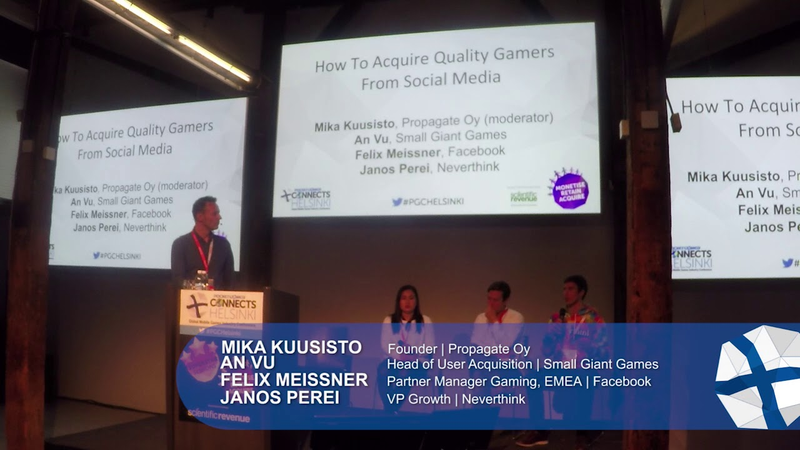
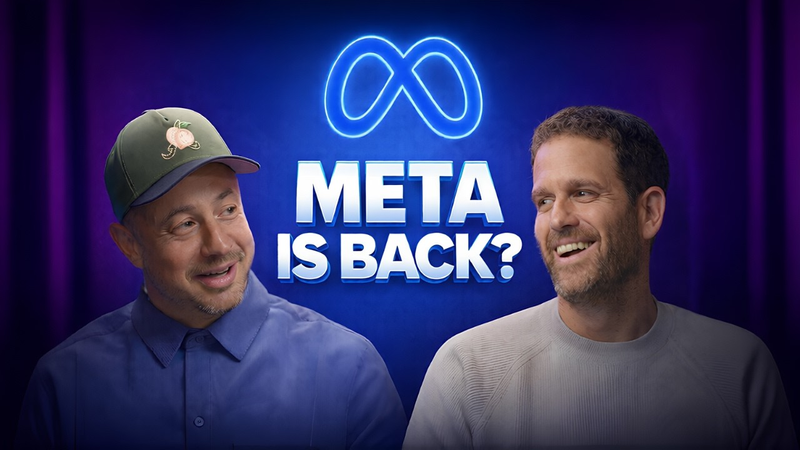
[Music] [Music] so my name you come so I'm here you know the drama panel about social media and behalf of smartly and let me first introduce our panelists so on from small-town games Felix from Facebook and then Janos from everything with the hoodie everybody will remember I still almost want to say Armada but that's all old news right so welcome guys thanks for being here so just before we dive in so how many of you know smartly oh yeah great few guys
you might want to check out poletik you know if you've read finished this morning there's some news about funding so smartly basically is one of the the fastest growing facebook marketing partners helps basically companies like eBay to automate and scale their Facebook marketing and including Instagram now what smartly also does they work quite a lot with with games companies games companies like space at games nor those people like that they use you smartly for automating their Facebook and Instagram marketing and also scaling the marketing so that's why you wanted to take the stage and just you know discuss with some of these like right minds about like acquiring users and social me not only acquiring with them but acquiring in like smart way before going there may be a brief introduction hi my name is Ann vu and I am currently
the director of UA at small giant games I've been working in mobile games for eight years now and five of those years have been in mobile you a nice to do here hi guys I'm Felix working with Facebook I'm three and a half years with Facebook part of the global gaming team so we're a team and Facebook that works with mobile and and RMG real money gambling advertisers I'm particularly focused on mobile gaming in amia and working with a bunch of companies who are here today and with me on stage so awesome to be here hi my name is Josh I just recently joined everything but I actually had a background also mobile gaming specifically working in different capacities dominantly around user acquisition thanks guys so you got an idea there's a huge platform this Facebook and there's a couple of very very seasoned experienced user
acquisition experts so that's how we want to play this so but first of all and and and sorry Felix this is not for you but considering social media like and jános what do you conjure like where would where do you where have you been acquiring users if you talk about social what is social for you guys social is a platform where you can reach a lot of people through engagement in their product so for for me social media channels would be Facebook Twitter snapchat Pinterest tumblr these are pretty popular social media platforms that you can also reach via advertising all right to further ends point pretty much I think what is the interesting part especially for user acquisition is the depth of the demographic data that's something that in a normal scenario you
would not be able to get out from any other type of ad network you can always target by technical specifications but platforms like Facebook are the ones that are allowing us to essentially fine grained target for the demographic profile that you are literally after is that is that the main difference if you compare this kind of social media platforms so sorry the main difference for different social media platforms would be the capabilities of each I really like working with Facebook particularly because it has the most granular data the insights are the data transparency is really really awesome it has also diverse at placements which i think is really important when you're reaching a diverse audience for for many verticals from gaming to e-commerce to travel and and beyond yeah that's interesting so feels so like how do you
see this like from Facebook perspective how do you like what what's your like I don't know commitment contribution investment in terms of you know helping game developers to grow I saw as a minima have the biggest you know social media platforms yeah totally I mean interestingly you guys forgot Instagram to mention and so I also want to throw this out there so I mean how we usually I mean Facebook is a self-serve platform so you can actually start tomorrow or today to create campaigns small campaigns to test performance so I think it's it's a tool which enables you to reach your audience on the platform and I don't want to spoil you with like big numbers or something like this but I mean imagine there's two billion people on Facebook seven hundred million on Instagram and like what we believe is that you can reach your target audience on our platform and this is how I would
position us and how we can help gaming companies or professional apps or all the verticals that you mentioned to reach their customers which for it suitable for their product that's very interesting so let's let's let's go into like some of the specifics a little bit later agon is still gonna set the tone maybe maybe each of you can share an example of like what you think it can be your campaign or just something from the market that like just successful very successful you know games marketing campaign in general like in social media do you have any examples sure maybe one quick example that I had the fortune to work with the wood for instance be the boom bid games in close cooperation actually with Felix's team we were looking to actually acquire users at good squeal but also with a high quality and for instance the app event optimized campaigns were a great asset to us partially also using the
smartly tool to refine green targeting making sure to define different audiences and again as Felix mention essentially what we are after are the audiences and we need to follow where the audiences go to be able to acutely and precisely acquire them and bring them into the game and make sure that they are engaging with it yeah for me I find it hard to boil it down to like specific examples and I also believe in like performance marketing in general it's like if you don't you wouldn't call out any campaign because it's an ongoing campaign so it's different from like the branding world where I don't know there's Burberry and they would run like a big campaign for the new back I would say for example you a nose or even you a small giant games you are working on going Li on a great performance campaigns where you are a choir user which are out our I positively and and this can be either a big player which
from the guys were already here or from from the people who are in the audience from like Rovio supercell but also for like smaller developers who can run really great campaigns which are our positively on our platform and I think this is this something which I I'm really excited about sure yeah so like I said I've been working in mobile games for a really long time so I've worked across many different types of games and Facebook has always been a really important partner as an in really important strategy from casual to made core to social casino which I've worked in and one of the success stories is actually when I worked in social casino it's a very niche audience and so Facebook was a very crucial part of identifying people who are social casino players and so the budget was proportionately distributed to to Facebook that way this is interesting I
think like personally and I know like my my ad network friends will kill me after this I used to run unity ads global BD back at the days and move on the games company and I'll help you smartly but I think what's really impressive if you look into performance marketing or user acquisition managers and and game studios today so the again coming back to Crandall arity of the Facebook that would be Naples back at the base and I remember you know when we ramping up actually amplify them sold to unity which is no the unity s and it was gonna pick back box right you know yeah you work with an advertiser you you get their idea of like these are the users you would like to acquire it said it but it's still at the end of the day a little bit like lot less control I mean obviously ad networks have been developed a lot a tetrad set but you know what truly impresses me when I'm looking into something for example would be honest what you were doing at the Armada using smartly and how our planet
granular you can actually go really trying to find exactly those users who will eventually not only not only spend their money on the game but also in gates and you know going really really really heavily off the exactly quality user you need have is it that it's always great to hear like it examples there's always actually people learn a lot more from the mistakes anything you think you should not be doing on Facebook let's say you are starting your games more again on Facebook I mean what are their like don't do this don't go there anything like just one one one one one thing you want to say so I think maybe there as always it starts with the objective if you're not clear about what you would like to reach it will be very very difficult to get there so I think quite a number of times especially when I was talking with sometimes peers we would all like to get sustainable traffic over a longer time period but
the problem is if we don't actually specify the goals and the objectives that we were trying to reach you not be able to measure them and you will not be able to optimize for them so to me that's always kind of the starting point and it's pretty much irrelevant whether it's a Facebook user acquisition or social channel or let it be any generic ad network we do need to know what we try to reach so basically what you're saying is that if you if it's not clear what you are after in terms of objective you probably should not do it right you go back do your homework first all right so if you're talking about user acquisition if you don't really know what you would like to achieve from such a direct response campaign spend them on your App Store optimization it will be paying off way better for you yes yes yes a good example yeah for me it would definitely be don't be don't be afraid of the platform I think that is a pretty complex platform but there are so many great resources out there to can help you understand the algorithm the
API all the different products and how it works and so often I actually talk to developers who say oh well you know I heard from this person and I'm trying what there's trying but it doesn't work for me and why I would encourage developers to do is educate themselves as much as possible and then experiment and kind of try to craft your own strategy I totally agree with you I mean if we talk about social or other platforms I think it's hard sometimes to get it working and I mean otherwise I wouldn't have my job so I'm helping companies to get this done and working for them but I mean what we are somehow preaching is like this test learn iterate approach yeah so for example I don't know when andrew comes to me and says like Felix is not working I'm now spending my money somewhere else then I'm saying like hey come on let's test it let's get it right so you would to
another test you would learn what are the arrows the arrow sources and you try to eliminate them and then you continue actually iterating on your strategy so this is how it would usually go so test learn and iterate if you ask me specifically I know tons of arrows which could potentially go wrong and the the goal would be to eliminate them I mean I I want to throw out there like for me creative is still one of the most important things on in social or on Facebook / instagram / messenger because it is has such a big impact on performance of your campaigns next to bidding structure or whatever but I think the creative aspect is really important I'm a performance marketer you can give me hundred creatives and I find you the five which are working or you find like Janos will find you the five which are working but the quality of the
creative needs to be really high and you shouldn't underestimate it I compared Facebook always to a newspaper and if I would show you everyday the same newspaper you would start throwing tomato at us yeah so and that's why you need to create new exciting content that actually makes people click and engage with your with your brand and so I'm just throwing creative out there if you have more I do agree perfectly with that so one of the the biggest things that I have also seen that people unfortunately don't care enough about the creative optimization itself creative optimization is also an iterative process so it does take time it does take resources to produce to give you a general rule of thumb and an ideal scenario you would be testing somewhere between five to ten different new creatives every single week to try to find the one or two that is performing and then keep iterating even further from them that's how you can sustain the
performance and again I do know that sometimes it does have a cost call at the road you don't need an in-house marketing artist you need an agency who would be doing this for but yet again this boils down to the point are we reaching the objective if you are reaching the objective we need to make sure that we deck the resources and deploy the capital to make sure that it really generates a return on investment there is very little use as far as I'm concerned in trying to start out a bigger marketing campaign but essentially failing on the last five meters of the run and kind of feeling yeah a new person makes perfect sense I mean when I was the CRO for 57 I think you're gonna learnt the hard way that I mean it's typical and whether you're big or small claims company you easily fall in love love with the stuff you do so when we started probably gonna structure the like apps to optimization so you have an idea of like this is the breast best logo of this app forever like it's like so great so these screens screenshots when we actually did proper testing they were
okay but they were never the winners like if you do a PCD test these guys were like two or three it was always somebody who was like performing better again you know goes through the iteration goes to testing but the to change the team a little bit so un mentioned something important like interesting in the beginning about the placements of Facebook now just for the for the audience here like there are different placements on Facebook where you can kind of place your stuff like how do they differ from like from like games marketing perspectives there's something which is more valuable something which you shouldn't use based on your experience okay so with respect that I think placements at least as far as I'm concerned are usually secondary to media buying especially on Facebook because at the end of the day what you are trying to achieve is a specific direct response a specific results so the question that I would pose back does it really matter to you whether your audience you are following and engaging with them on the Instagram platform on
the Facebook blue app on the I don't know messenger platform as far as we are able to reach and engage with those audiences I think the point of contact should be relevant because again please don't forget you are the one who needs to follow the audience the audience will not follow you that's a good point yeah I'm just gonna talk about it from a user's perspective so I am an avid social media user I am on everything and I really love social media and for me the different placements of Facebook it's it's it's done so well that you don't really notice that being intrusive product so you know one year as an advertiser you can kind of feel confident placing ads in Facebook because like you know the way that it's integrated organically into the experience kind of helps it perform a lot better than say other you know other social media platforms or other ad
networks where it's like very intrusive and people don't want to interact with it you have created that Felix yeah I agree with both I would say you mentioned a really interesting point with like it doesn't really matter where the people are coming from I think that is true to a certain extent but I mean it's also important to monitor performance of each placement I mean and I'm not only talking about like Facebook Instagram I'm also talking about like other other social media platforms I mean you need to know what is the costs that for the person that you acquire on your individual platform and the beauty is that you can break it down like with with with smartly or Facebook you can actually see the the performance of each placement broken down / / channa yeah so you could see how much was the app in store in on Instagram or on Facebook and with like other measurement partners such as adjust or apps flyer
you would also see it from different channels so I think that's important and on the acquisition side of things I also believe that I mean when let's say when your media buying gets too big I also believe that you should see it as different channels because the performance can also be different so maybe there's a team that only works with Facebook and only a team with Instagram and an TV and out of home or something like this so then at one point you would split it actually up yeah raise your hands how many people are managing billion dollar budgets like that [Laughter] apparently I forget smartly manages about 1 billion dollars here so well the client this actually leads nicely the two meatrix figures kind of brings back a memory of another Pocket Gamer panel a few years back when actually I met and for the first time you mentioned something about it was somebody asking
about what's the difference for a you a manager when you know if you're an indie company or like a very big established company you were then running the the Rabia stuff like and you you mentioned something that you trust numbers when you're big you you have to trust numbers right so so then you know that enables you to scale now talking about numbers of meatrix like like what are the needs which you follow just for the so those guys in the orders who are not necessarily spending every day and every second for you a what are the meatrix I'm practically of course from the Facebook perspective for me everything is a metric only a few are KPIs and for me KPIs would be on the back end on the product end it starts on the product so if your product has amazing KPIs and it has good LTV I definitely would kind of launch that into you know Facebook and the ad networks and and run that but if your product has below average KPIs then
you know you're not gonna find success on Facebook you're gonna constantly be underperforming so when we're talking about campaigns I would always optimize the cohorts to kind of perform up to the standards of the product so looking at things like LT CTR would be important for actually reach and delivery on Facebook conversion optimizes your success and then there are relevant scores on Facebook which is really important and that is tied in to what these guys were talking about with creative so the better the creatives you have the more the more often your ad is shown and the more people interact with your ads because it's it's an organic experience for them but ultimately you owe us what's all right yeah so like I said the the product LTV is gonna be the guidance to how much you can spend on Facebook and
and kind of your strategy with Facebook so arroyos is really important or return on adspend to add to this a little bit I personally always prefer to monitor the whole funnel so from the impression all the way to the post install events and you know picking the metric as on very well mentioned the key performance indicators that you are optimizing for will be the cornerstone of your strategy so once you know the objective you monitor the funnel and you focus on the critical points that you need to optimize for and that's what is going to help you to build a sustainable portfolio all right next perfect and this leads nicely to the app event optimization we've been speaking a lot about that with you Felix and and do my understanding you know there's more and more game developer spinnaker and using Facebook they're kind of heavily depending on their like you know structure based on up events and I think you know starting from something simple like you know just a you know purchase in a game it's an event you want to find those users but like what are you
typically seeing you know Felix with your kind of you know parties you work with like what kind of events they follow you know basically after the install yeah I would say like I don't know if everybody knows but a parent is an innovation in the app space so it's coming from EECOM so people place a pics on a website and you can target people who did a certain event on your website so you would optimize for let's say Add to Cart or a purchase on a website this is now possible in an app yeah so this is a game changer and the industry in my opinion and gives opportunity but also challenges to others who might not be using app events because I mean it's interesting I mean if a company would optimize for appearance they're willing to pay a lot for a user and if you're just going for like volume like the $2 install in the u.s. you
would get that but you would probably miss out on the value customers and I think what I'm seeing in the industry is like that this is changing everything unlike how you structure your campaigns how you acquire user how you would look at results differently and you guys can back me up here I think yeah I mean tell you some example and were like what are the events you're opting optimist against yeah well join games at small giant games we have a really great game that monetizes amazingly and it has really good metrics so it makes it really easy for us to kind of identify the points in the game where players make a purchase or perform an action so if a face if a user connects to Facebook to kind of register their game that's really a KPI for us because it indicates that a player's more than likely to engage with the game for a long time and they're more likely to make a purchase
at some point in their lifetime if they finished a tutorial that's also an indication that they're engaged with the game as well as we pay for users who make purchases just because then we pay an high upfront cost but then they make purchases regularly or they make multiple purchases and it definitely pays off when we're looking at return on adspend I can just pretty much echo what has been said so whenever we are optimizing for events I think ultimately as we pointed out a couple of times LTV or return investment will be the ultimate goal after all this is to a certain degree investment management for the company having said that identifying the critical earlier or maybe a little bit later engagement events that are a good proxy to the profitability metrics is going to help you to massively find you and again the previously mentioned funnel and can add something to that so I would say believe it depends on which
states you are so when you look for example at the soft launch stage of a game you would probably try to acquire you early users for the game and then look at retention metrics from this users and so you would look at like I don't know Canada Indonesia and like smaller countries which are very similar to big markets you would try to acquire them and then you would move into the launch phase and the launch phase is like the volume type of face and then you would go for in-store but when you then it's comes a really important changing point when you'd switch to actually making money and then why do you acquire installs when you could actually acquire paying customers and that's also the the interesting part yeah it comes down to the point with a prevent optimization that it kind of keeps you the indication where to bet your money like in a way like you know don't spend it here I mean this these guys went to like you know tutorial for example they are most likely more
valuable the people who kind of got stuck before that right so kind of you know simplify then there's tons of other events of course you can follow me you can you can basically use any event that you want as long as you use a like like a you know partner to kind of fit that data back to the Facebook right we have like a couple of minutes and there's a couple of things I wanted to kind of kind of just you know dick you know if they take the boxes one is that like just going back to this but not necessarily scaling to Gillian's in terms of you know marketing spend on Facebook but like starting and willing to scale I mean what are typical problems I mean particularly you and you you've gone through like different companies I mean from social point we're spending tons of money then do emotive startups and and stuff like that and so you and as well so you kind of have this experience from like but you know very different organizations now what are the key challenges like for you a manager and actually you know I want to start Facebook I want to scale II you know so
I would actually recommend saying one step before one of the earliest challenges is actually getting the good budgets because as much as I would like to say that you can make such a system work at lower spend you do need to collect a certain amount of data points for the systems to be able to effectively work for this at event optimization in stopped amuse ation depending whatever your objective is to hit those targets and there is a learning curve and a learning cost to that I think that would be the initial step and the next step after that is again trying to find the right path of iteration I think that's always the most critical once we seen the funnel where do we break it is it App Store optimization is it the creative optimization is it maybe the onboarding funnel the early tension or early engagement and once we know that's when we know how to step forward perfect anything that yeah one of the challenges is that you a in general it's very
intimidating especially Facebook is very intimidating but before small giant games had have a UI team of me and my colleague auntie we we had our CTO who is doing all the Facebook campaigns and it's something that you can pick up very quickly understand how it works so you just have to get in there and get your hands dirty and then you kind of teach yourself by doing so it can be intimidating but it can be done any of these tools like you know smartly I mean there's other guys as well like you know at what-what moment that becomes useful just put it this way you know bluntly honest yeah bluntly honest something like smartly would definitely be something when you have either no knowledge of it and you can kind of use it as a guidance and and kind of someone holding your hand or if you're very sophisticated and you have a
lot of budget and you need it to kind of really kind of push it to the next level all right all right kind of scale scale and kinda like you know automate to need to create manual stuff which actually takes quite a lot of time we got us where you actually buy it users from all right I can just like you're full of it all right we've got a running out of time but there's still one more last advice first and last advice for game developer willing to start their Facebook marketing acquiring users for games one advice um like we're limited to one I think I would just pretty much tilt back to my original point no your objective I know your objective you will be able to sort out how to set up the campaigns what will be your critical points to measure what will be the critical points to focus on yeah you know obviously support from Facebook and help you know for smart whatever so as long as you kind of got clear what you actually want then you know it's not a problem the guy now you know build it up
right and number one advice yeah definitely use the app event optimization if you don't know what you're doing Facebook is doing it for you is automated it you tell it to find people who spend money in your app and based on the extensive data has on users on Facebook it will find people who spend money in your app Oh Felix my last one has just tried out test learn and iterate so yeah thanks guys I'm not sure if you have any time for questions so if anybody wants to ask anything you always want more this is the thing I learned about maker is always more out of it always boss go for it weirdly lunch next so let's go for any any questions for anyone else in the room I mean we're but this is your chance it's question right here hello you look at it from my rubber games I had one question about terminal terminology that a bit disturbs me we came people tend to
talk a lot about buying users when we actually talk about marketing I would like to ask why we do that I think that requires like like like a six-pack of beer to kind of go through the philosophy I think it's these isn't it mean it's we use a lot of language like whales and minnows and stuff like that which is really offensive to people but we don't mean it that way because we have to have a shortcut because otherwise we're gonna spend an hour talking about what we mean whereas if we say by user we're just saying we're gonna go through the marketing process which is direct response which means that we can have this particular audio in this particular segment in this particular demographic and therefore we get that and that's buying users not so nice stories about about back in the days when there was there were in Asia
some factories that really users we're bored to play a game and and and nowadays we want to sort of like keep that memory up when we use the term in my opinion I mean I like do I have an idea now I think that is like because game camp at game developers are just like me speak direct like we don't we don't want to spend our time on finish marketing is plenty spending money trying to find user so you bite them right by finnish people speaking directly i can't imagine them sometimes they do a deeper theory to it which i have which is we used to ten years ago be behind the curve with respects to gambling companies who were really good at this stuff I think we're better now than they are but that's just me and they've got a very specific audience and if you work from that audience that background then it was the natural language to use because the actual
emotional connection between the player and the experience was negligibly important whereas I think for us as designers in particular we love what we make and we want people to love it too not just cash it is that fair guys sorry you can't you put the microphone in my hand without me talking [Music] [Music]
Summary
Mobile game user acquisition hinges on the strategic utilization of major social media platforms, which provide the granular demographic data and diverse ad placements necessary to scale campaigns effectively. Success in this competitive landscape requires a shift away from vanity metrics like total install volume toward a focus on product-level key performance indicators, specifically Lifetime Value and Return on Ad Spend. By prioritizing these financial benchmarks, developers can ensure that marketing efforts translate into long-term profitability rather than mere temporary spikes in traffic.
The core of a sustainable growth strategy involves a rigorous, iterative testing cycle. Industry best practices dictate the continuous development and testing of five to ten new creatives every week to maintain audience engagement and combat ad fatigue. Furthermore, the implementation of app event optimization allows marketers to target users based on specific in-game behaviors, such as tutorial completion or initial purchases. This data-driven approach enables developers to identify and acquire high-quality players who are more likely to remain active and contribute to the game’s ecosystem over time.
While the technical complexity of platform-specific ad tools can be daunting, mastering these systems is essential for developers of all sizes. The process of acquiring users is fundamentally a direct-response marketing discipline that requires balancing technical performance with the emotional resonance of the game design. By maintaining transparency in data analysis and consistently refining the user funnel, developers can successfully bridge the gap between technical acquisition tactics and the creation of a loyal, high-value player base. This ongoing cycle of testing, learning, and iterating remains the most reliable path to achieving scalable and profitable growth in the mobile gaming sector.












Comments