1 free read left. Create a free account for unlimited reading + AI research.
Create free account
How F2P allows designers to make better games
Key insights
6 takeaways- 01Free-to-play design should be treated as a service-oriented framework for long-term engagement rather than a simple monetization tactic.
- 02Successful design shifts from linear progression to a 'meta-game' where real-world context and social interactions are integrated into the core gameplay loop.
- 03Designers should focus on creating 'meaningful moments' that players are naturally inclined to share through integrated gameplay recording tools.
- 04The future of game design is defined by 'games as a service,' where titles evolve as living products that respond to player behavior and data over time.
- 05Developers should view player choices—such as spending money to accelerate progress versus grinding for rewards—as a form of customization that increases player satisfaction.
- 06Effective games prioritize accessibility and audience empathy by accounting for diverse player needs across mobile, console, and PC platforms.
Ask AI about this video
Transcript
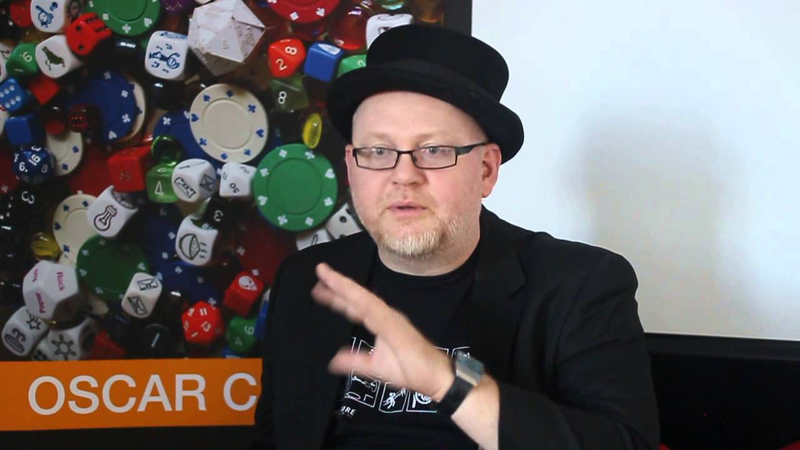
hello so it's pocket gameer where we're out in London at the Yuki offices and we're with Mr Oscar Clark who's got a got a book launched so um this is Oscar there's his book um Oscar games as a service is what your book's called absolutely yeah uh tell us tell us all about it I'll tell you all about it so games as a service how freet to-play design can make better games uh it's came I have a a whole kind of uh series of presentations I've been doing uh talking about free to play for last three years or so and I basically got bored of the argument about whether it's morally right or evil or manipulative it's kind of funny because as soon as you we think that argum got away it kind of somehow it's like a zombie com back it just keeps coming back in fact that that was the very presentation so I did this presentation where I I had me chased by my friends and family of zombies and I said the phrase Immortal line if you're making a premium game you're the living dead and I got so much grief and and good comment as well but so much grief because it really is highlighted that we're we've got this
bipolar kind of conversation going on you got to be free or paid basically it's only talking about the money and I'm fed up of just talking about the money I actually think we should be talking about what the the new models can bring us in terms of improved gameplay in fact I'm bored of looking at people who are just going to say oh this great retro game I'm going to bring out and nothing wrong with retro games I get me wrong but we're living in a century where we can do so much more we have connected Services we have multiple devices devices even as like my watch you know the Galaxy Gear out here but you know the so many things where we've got interaction that's going on that we should be taking advantage of as game designers and instead of focusing on how much more brilliant games we could make we're talking about how much money we can I think I think that's actually the the radical kind of change here is we' never really we've heard lots of I guess what call traditional game designers saying about how they can't make a good free-to-play game how freet to- playay kind of kills gameplay but you your kind of argu
the book is actually no EXA so actually freeto playay does does actually why to gives you bigger audience until you can actually make better games than you can make with with and that's that is absolutely my argument that we can make better games by taking a step back and thinking about not just the monetization side but the fact that we can now reach out to a wider audience for the first time in gaming history we have a mass Market media and that's that's an amazing concept beyond that we also can still do Niche products we can actually address and target people incredibly effectively which means that we should stop worrying about how we squeeze different things into different models and instead think about what is delighting an audience and I know this is a conversation we've had a few times and the use of the word delight gets overused but the fact is if we step back and think about repeatable mechanics why people come back and play and build on that to create context that people care about you know purpose and and sense of progression and really valuable things which should come out of free toplay design
and instead of just locking ourselves up and here's a game just done we can say hang on a minute here's a series of experiences where you as a player start to become as important as the game design itself and this is why I use the phrase recently I've started using it the idea of Designing to the negative space I talk about a meta game in this but I I kind of evolved that conversation littleit so I still talk about the metag game but the way to help designers think about the metag game is not to think about it as being some kind of crazy weird extra game that layers on top it's about the devices people use it's about the real world interacting with the game itself you know we've all got lives if we're sat waiting for a bus there's a certain style of gameplay that suits our needs if we're sat in our living room with a massive TV and a console there's a different style of game design yeah but the fact that we can deal with connected experiences means that we can break down a lot of these barriers and deliver experiences which will blow people
Minds if we're not soate yeah yeah I do kind of Wonder like games I've been playing recently stuff is a lot of them I think the problems have been because they've taken existing franchises so particularly to plon zombies and Dungeon Keeper and particular been playing Dungeon Keeper quite a lot and I found actually that's quite a good game if it wasn't called Dungeon Keeper and people didn't have an idea how Dungeon Keeper should be and actually the design was actually quite interesting because it kind of It kind of spins The Clash of Clans on its head you're not building kind of up you're building kind of into the Earth and that's it's so s but it's been quite good game I was playing is it the mighty quest for Epic Loot or something the Ubisoft game that's to me what this Dungeon Keeper game could have been I I really like it because it's got this three to three element but what it does is it creates a service experience I've I'm creating my uh defenses I'm invading my friends defenses I can always beat my friends at the same level but it it then becomes about how I'm creating how I'm using the tools to be able to create a bigger and wider experience whereas this Dungeon Keeper doesn't give that sense of me using the tools there's no emergent properties in
the design Fact one of the things I learned from working with every player I'm still you know I'm Advantage for every Play Still quick explain every play so every play is a gameplay recording SDK so you put it into the game and then there's like 270 OD games at the moment it's grown vast in the last year we've gone from nothing to 270 games um you know vast you numbers of things like Dead Trigger 2 for example if you play Dead Trigger 2 whether on Android or on iOS you can play it and record yourself playing it so you record the gaml also allows you to record your face as you're playing it think about what that means so here is a way that players can show off what they do whether it's stupid whether it's funny whether it's awesome whatever it might be they're sharing naturally what they love about your game if you don't design your game to have meaningful moments where people can genuinely Delight in what they're doing then you're missing out a massive opportunity to be able to share that experiences with other people so what I've learned from doing that is realizing there's a massive way there
for people just to step through is to to say think about way you design a game how it engages an audience how it helps them it responds to the way that players change their needs over time so I have a bit of an advantage because I've been doing games and service for about 15 years um you know to say bleeding edge is probably an understatement uh you know and a lot of there's no Edge there was no Edge when us there was no Edge we were the edge yeah uh I mean so wi play which is an online gaming service back in like 9899 uh we were doing Quake service we were beaten by m player being the first online Quake type Service uh by two weeks so I I wasn't part of the company that I joined later but I ended up running kind of vision ter I had a fantastic title marketing Vision but the whole point was we were thinking about how to build communities and experiences and the same thinking happens now think about PlayStation home where I also played home architect uh dealing with all the requirements from all the different regions and trying to find ways to help make platform level was as
engaging and supporting of developers being creative as possible that whole experience is the same we're trying to find ways people could connect and have experiences in terms of entertainment that were more deeply engaging and rewarded yeah so I've got this massive Advantage I've seen countless games even through my time at three was uh the I was in charge of the three platform for five years we we basically did 10 times the revenue per user of any other operator probably in the world time but don't ask me to prove that Europe I can prove but but um Japan the world it's hard to tell Japan probably not but you know we did pretty pretty darn well but the point is that when you look at thousands if not tens of thousands of games and you see what what behaviors happen and people people respond to them in terms of you know the Cho choice to download that game to play that game to to buy extra Goods in those games the the engage over longer period of time you see patterns appear and you see life cycle the most important thing and so by
saying free to pay isn't the answer but service is that doesn't mean I'm saying free to pay is not a good idea but it's like a free to play is a subset of I think it's it's interesting what you're kind of saying because I think sometimes the problem with game designers when they get hooked up hooked up on this problem is they want to kind of still have quite a linear progression through the game and actually what they need to realize is the players are actually the gameplay style of the player whether you want to spend and go faster or grind is actually as much as a customization option as buying a hat and they need to build that into the experience exactly and I think the thing is is who whose game is it yeah in fact there an article I wrote uh remember I wrote an article on the very subject whose game is it anyway uh when actually you've got to stop thinking about you as being the audience and and I think this is what separates truly great designers from people who just want to make games um and there's nothing wrong with just wanting to make games but I think they really truly great on about the audience and the
thing is the audience has changed it's not the same guys like me sitting in a room anymore we're still there by the way you know don't get me wrong we still love our games um but actually uh look at the way uh hardcore gamers are playing puzzle games on their phone you know the things that we thought were predictable turn out not to be and actually if you sit there and you try and think about how to make the game accessible that really matters in fact we had um a session I think was the teni guys had an event uh which were talking at and we had Barry me froming about to and I got him on the user acquisition panel I was moderating and he he said something I I think is really important one of the reasons why I wanted him on that panel was because he could say well when we made the game we thought about how the audience would feel and we tried to make it as accessible as possible now that's a paid game taking advantage of this idea of Engagement leg design and that really
makes a difference okay good so book again what's us so game of the service how free toplay design can make better games it's out now on Amazon it's on U uh iTunes books uh it's the Kindle version uh it's also available on focal press uh and it's a good read um there are some great posts got pictures I show the pictures my wife is the illustrator and um it takes a certain uh style it looks like me other thing to point out is the which I was quite impressed with is the exercises as well so there yes and there's a companion website as well so um yeah I very much believe in the idea of delivering things as services so I've gotone and done what I've said on the tin so there is a companion website games asass service.net and you can go on and you can fill in the exercises online obviously the book's useful because it'll give you some background material you don't have to buy the book to go and use the exercises the idea is I want to create a space for designers who want to be able to share about their ideas way they think I don't expect
anyone to put up ideas they want to heat precious what I want to try and get you to do is to put up ideas you don't think prees are you're going to throw away that you're going to have fun with because you want to see how your thought process is working and you want to engage with other designers and learn from them in fact hopefully that way we can all work together and come up with crazy stupid Amazing Ideas that then lead the way to the next generation of games time cool Oscar thanks very much thank you very much
Summary
The core thesis of this analysis is that free-to-play (F2P) design should be viewed not merely as a monetization tactic, but as a framework for creating superior, more engaging game experiences. By shifting the focus from transactional mechanics to service-oriented design, developers can leverage connected technologies and cross-platform capabilities to build deeper, more meaningful relationships with a mass-market audience. This approach encourages designers to move beyond linear progression and instead embrace the "meta-game," where the player’s real-world context and social interactions become integral components of the gameplay loop.
Key findings emphasize that successful F2P design relies on creating "meaningful moments" that players naturally want to share, such as through gameplay recording tools. Data from industry experience suggests that when designers treat player behavior—such as the choice between spending money to accelerate progress or grinding for rewards—as a form of customization, they create more flexible and satisfying experiences. The analysis notes that the most effective games are those that prioritize accessibility and audience empathy, moving away from the traditional, insular developer mindset to one that accounts for diverse player needs across various devices and environments.
The scope of this perspective spans the evolution of online gaming services from the late 1990s to the present, covering mobile, console, and PC segments. The methodology is rooted in long-term industry observation, including the analysis of thousands of game titles, user engagement patterns, and revenue-per-user metrics. Ultimately, the conclusion is that the future of game design lies in "games as a service," where the game is a living, evolving experience that responds to player needs over time, rather than a static, finished product.



















Comments