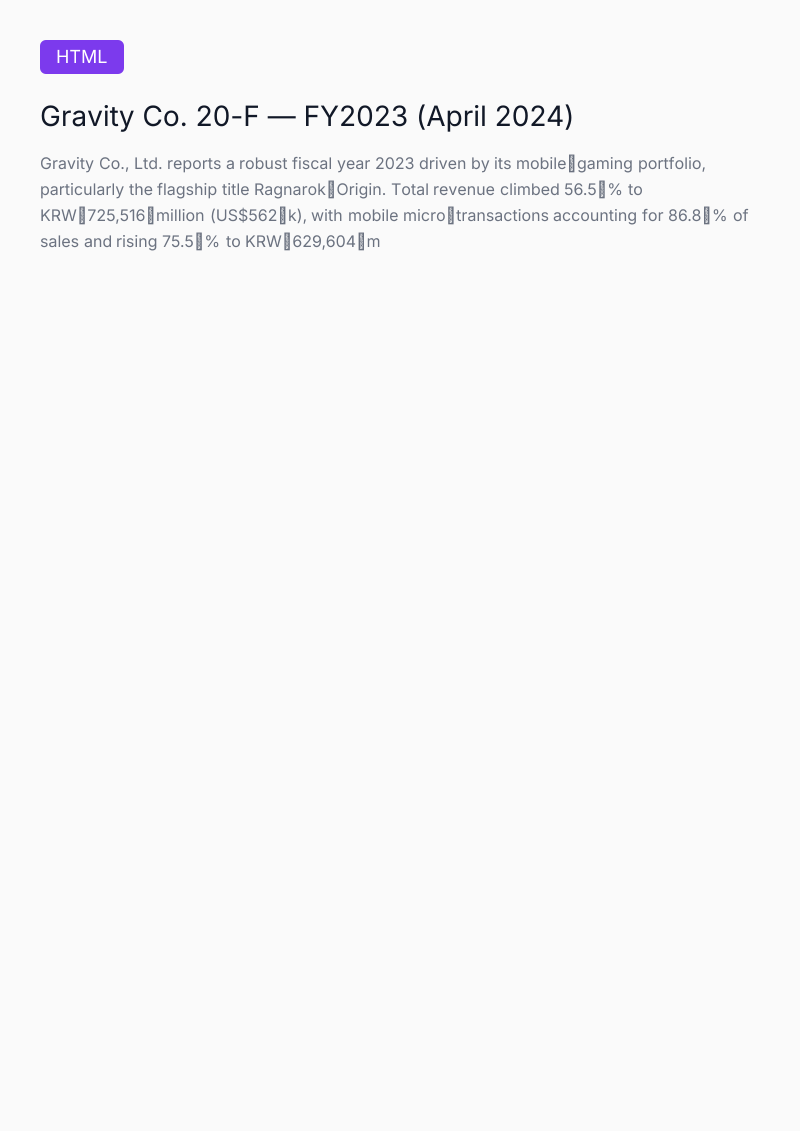
Gravity Co., Ltd. reports a robust fiscal year 2023 driven by its mobile‑gaming portfolio, particularly the flagship title Ragnarok Origin. Total revenue climbed 56.5 % to KRW 725,516 million (US$562 k), with mobile micro‑transactions accounting for 86.8 % of sales and rising 75.5 % to KRW 629,604 million (US$488 k). The surge is largely attributable to the Southeast‑Asian launch of Ragnarok Origin, which alone contributed 62.3 % of revenue, while U.S. and Japanese markets contracted sharply. Gross profit rose 22.6 % to KRW 240,558 million but the margin fell from 42.3 % to 33.2 %, reflecting higher platform and royalty costs.
Operating profit increased 53.2 % to KRW 160,367 million (US$124 k), supported by a 45.8 % rise in finance income and favorable foreign‑currency translation gains. Cash and cash equivalents reached KRW 184 billion (US$142 k), sufficient to fund capital needs through 2025, though the company remains exposed to significant foreign‑currency risk—approximately 88 % of revenue is earned in non‑Won currencies, and no hedging contracts are in place. Intangible‑asset impairments of KRW 1.531 billion and a potential impairment of net deferred tax assets highlight sensitivity to profitability swings.
Governance is anchored in Korean corporate law, with an eleven‑member board and three independent committees. GungHo Online Entertainment holds 59.3 % ownership, providing strategic direction but also raising minority‑shareholder concerns. The company’s American Depositary Shares trade on NASDAQ under “GRVY,” but ADR holders face limited voting rights, Korean withholding taxes, and potential dilution from large‑shareholder sales. Regulatory exposure spans Korea’s Game Act, Taiwan’s CPA, Thailand’s PDPA, and U.S. securities law, with penalties for non‑compliance ranging from fines to imprisonment.
Overall, Gravity Co. demonstrates strong liquidity and revenue growth concentrated in mobile gaming, yet its financial performance remains highly contingent on maintaining the Ragnarok IP, managing foreign‑currency volatility, and navigating a complex regulatory landscape across multiple jurisdictions.
Gravity Co. · 2026
Gravity Co. · 2025
Gravity Co. · 2023
Gravity Co. · 2022
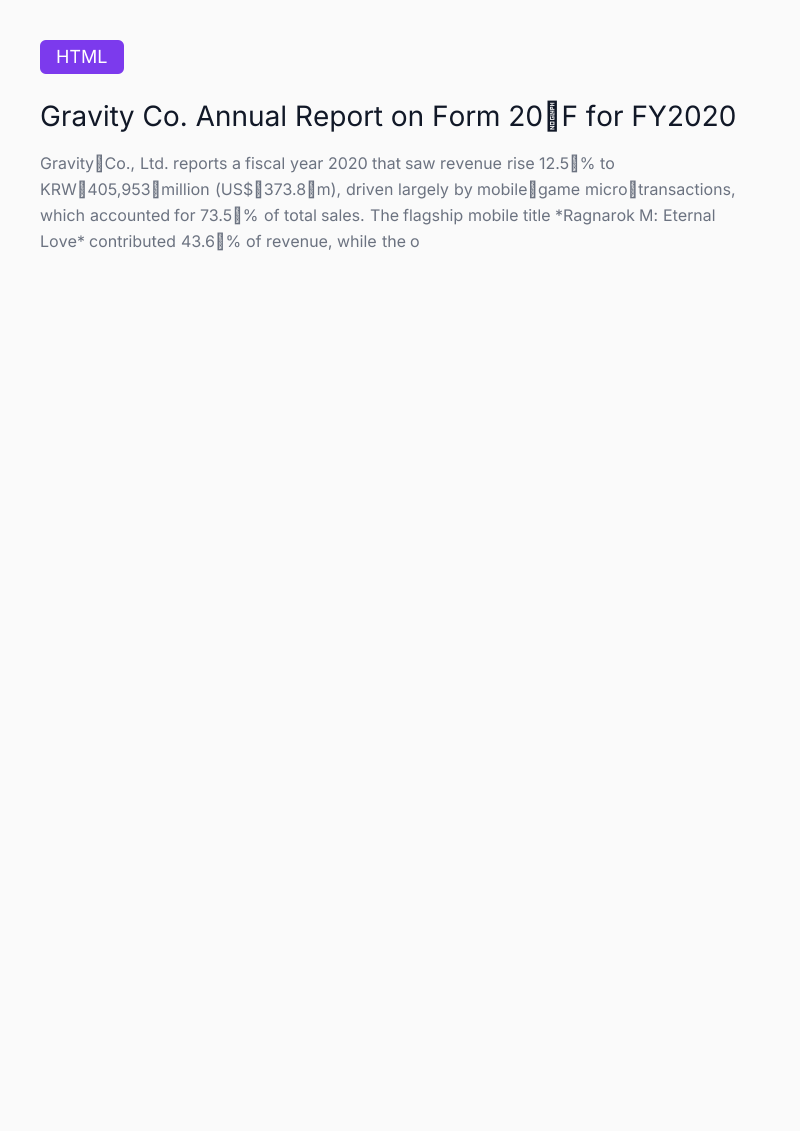
Gravity Co. · 2021
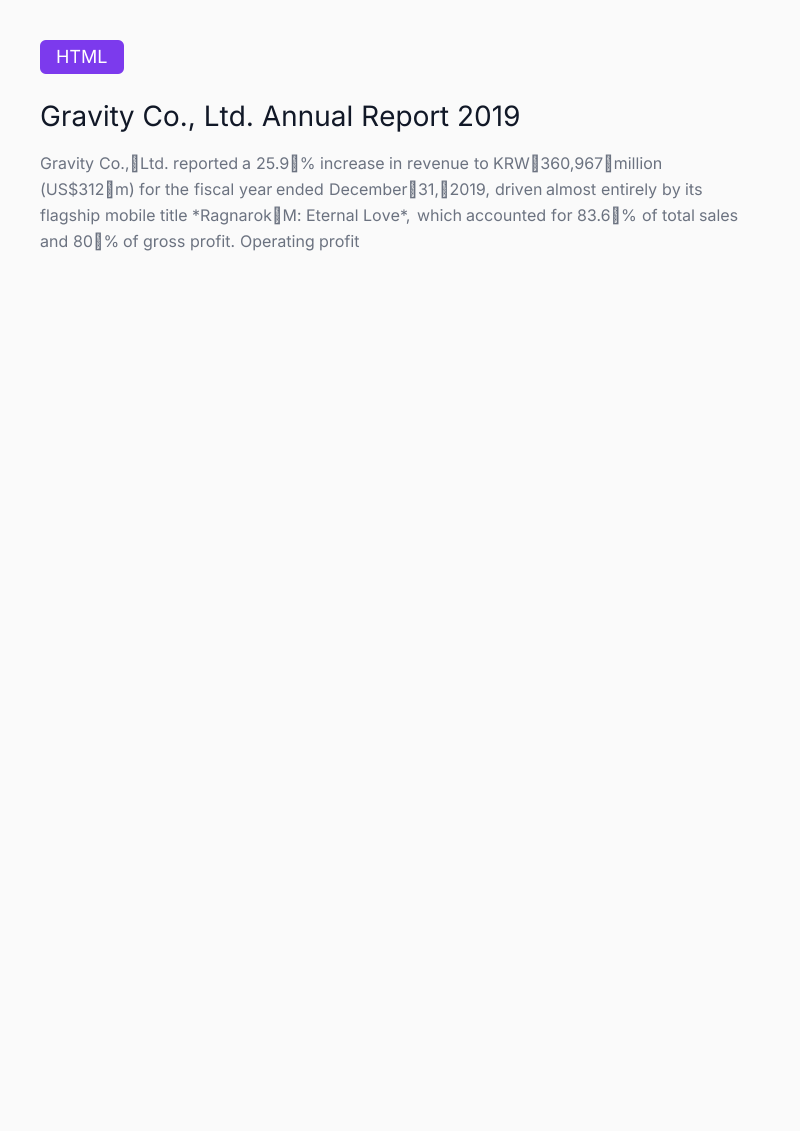
Gravity Co. · 2020
Gravity Co. · 2019
Gravity Co. · 2018
Gravity Co. · 2017
Gravity Co. · 2016
Gravity Co. · 2015
Gravity Co. · 2014
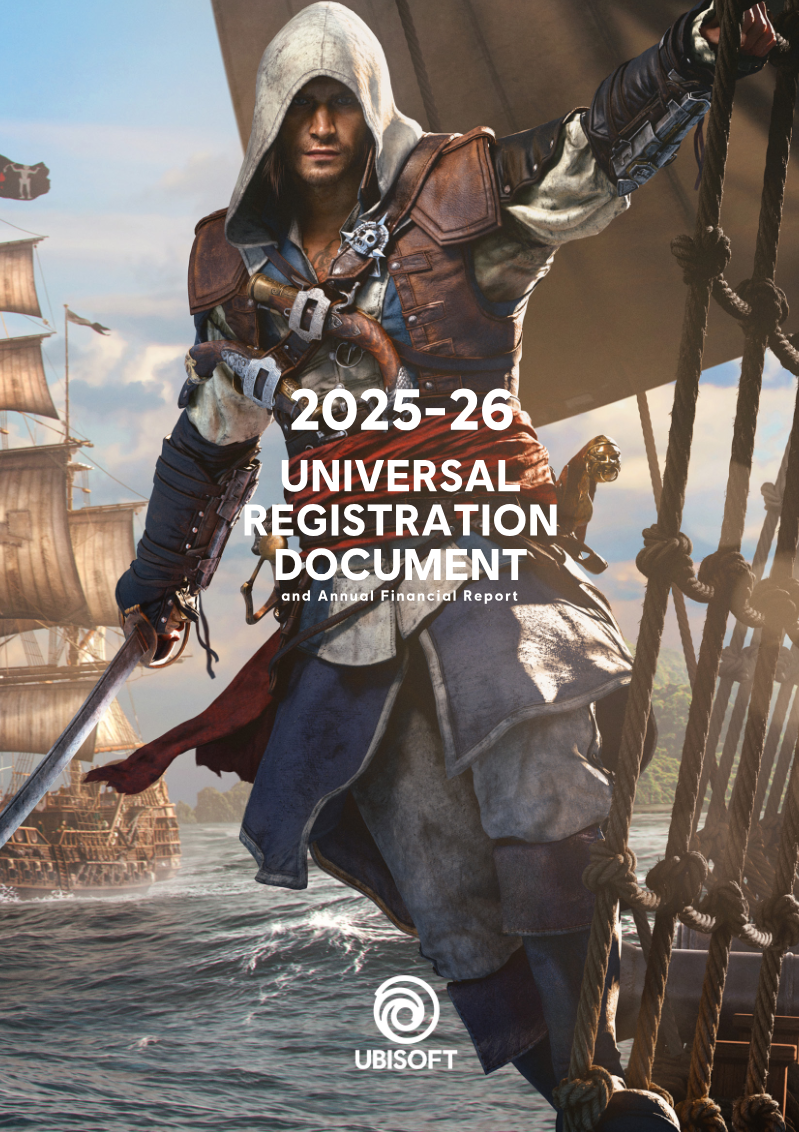
Ubisoft · 2026
Sony Group Corporation · 2026
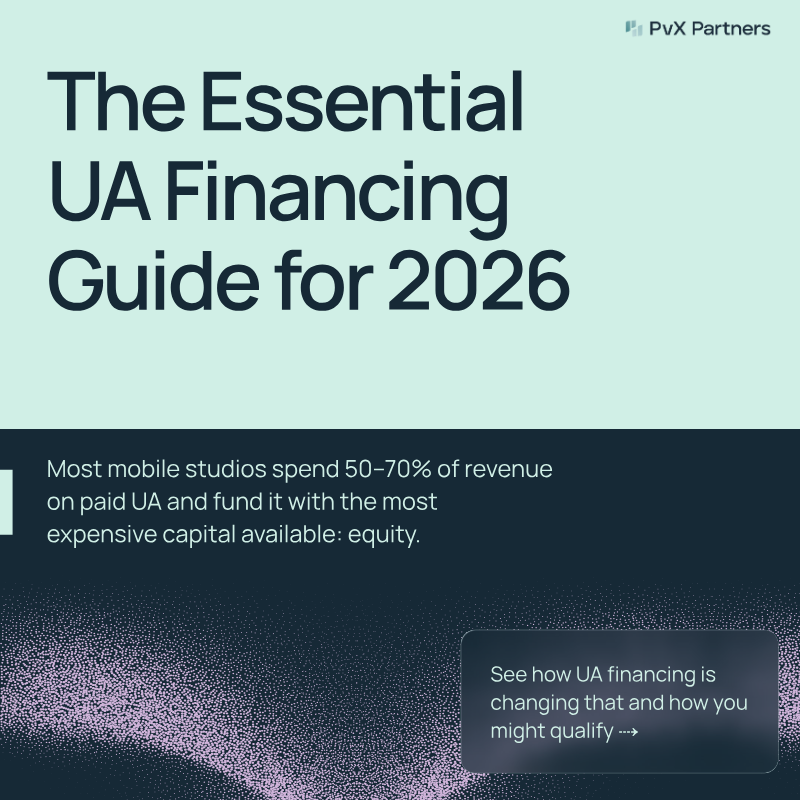
InvestGame · 2026
Enthusiast Gaming Holdings · 2026
Aream & Co · 2026
Drake Star Partners · 2026
tinyBuild · 2026
Capcom · 2026

Modern Times Group · 2026
AppLovin · 2026
Bandai Namco · 2026
Aream & Co · 2026