LegaltinyBuild
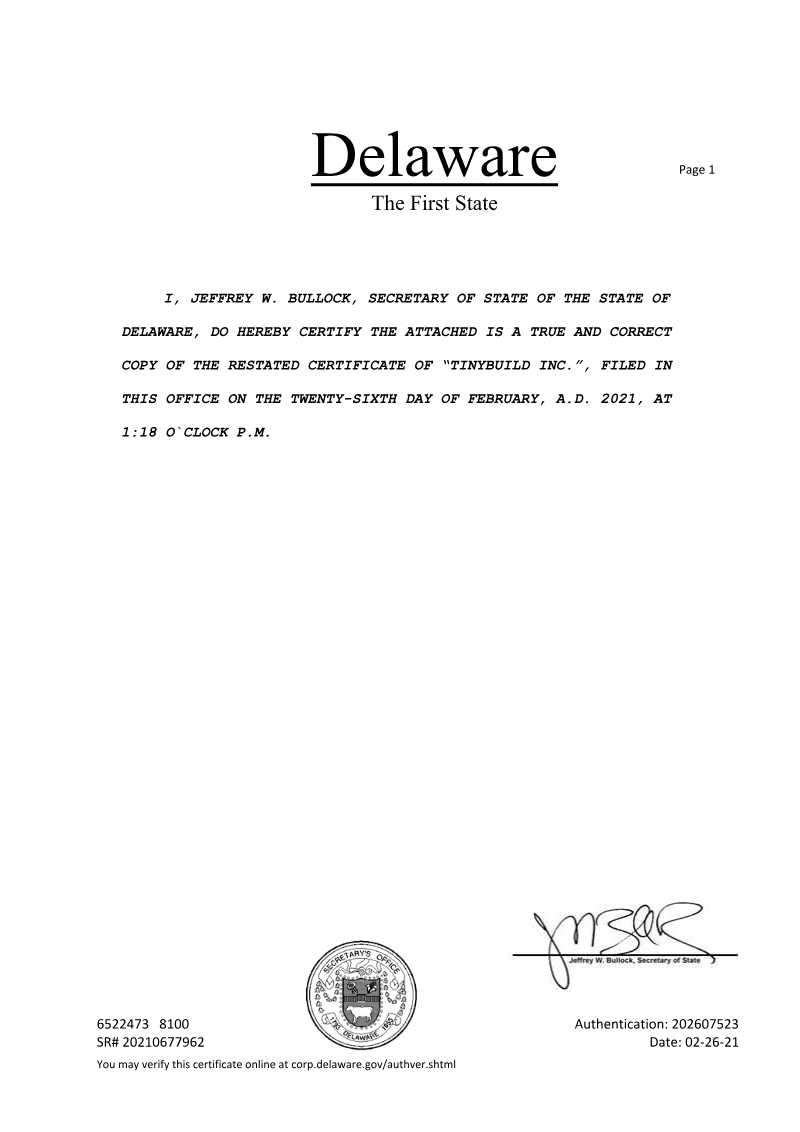
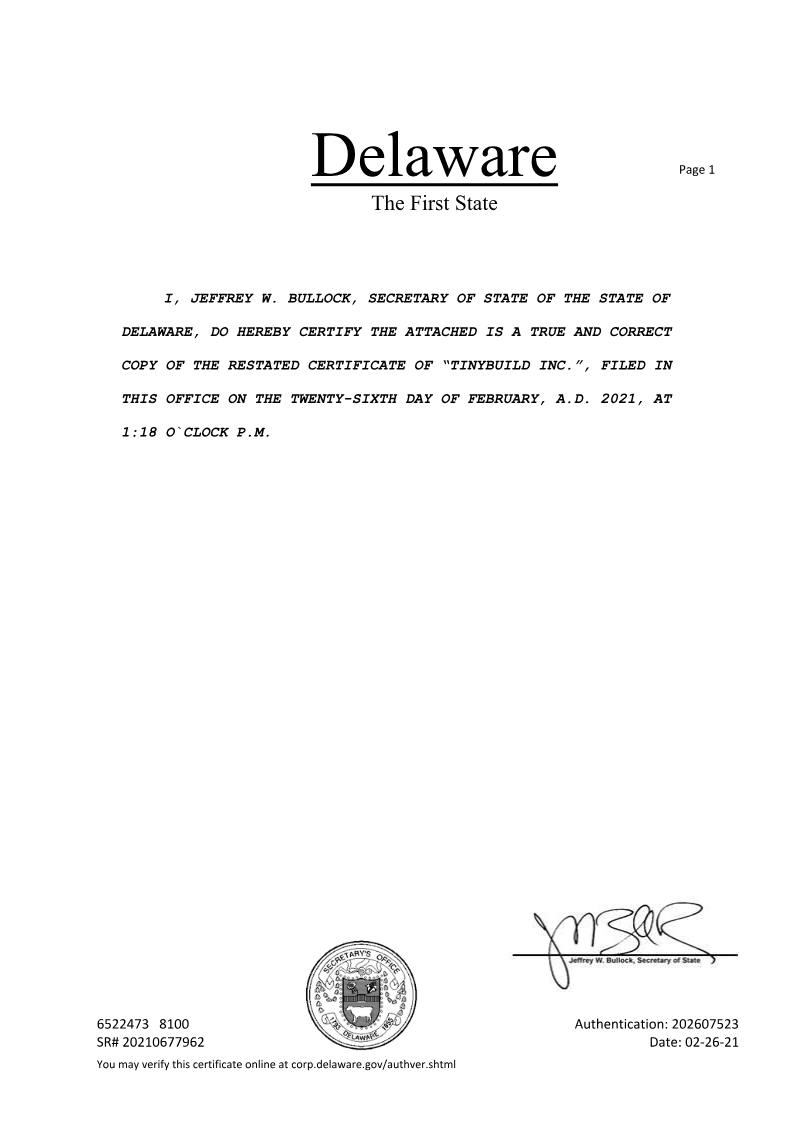
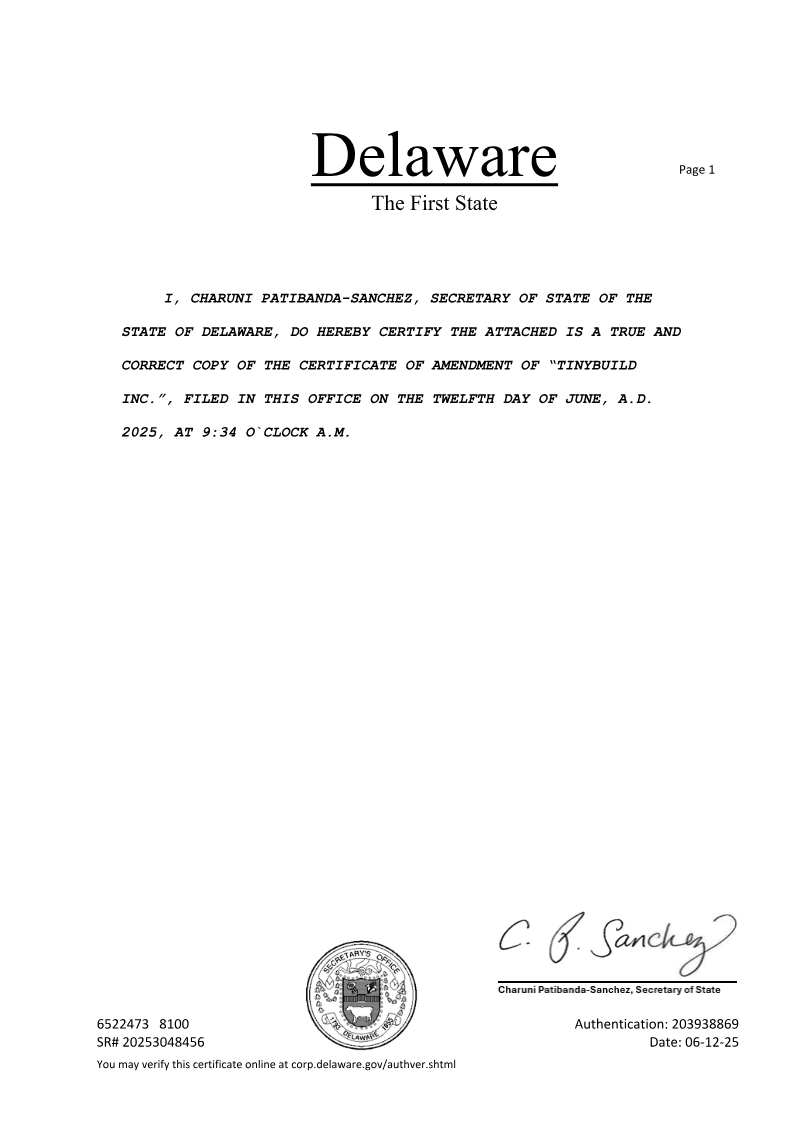
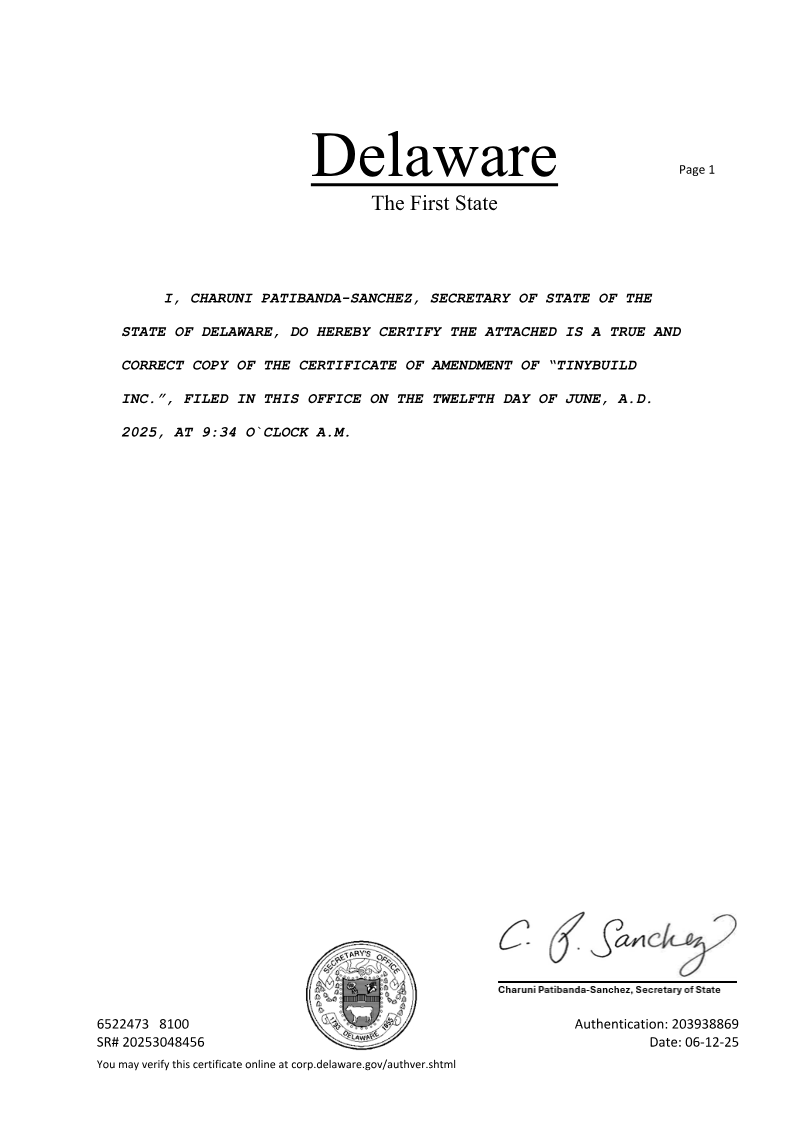
Third Amended and Restated Certificate of Incorporation
26 Feb 202121 pages~53 min full read
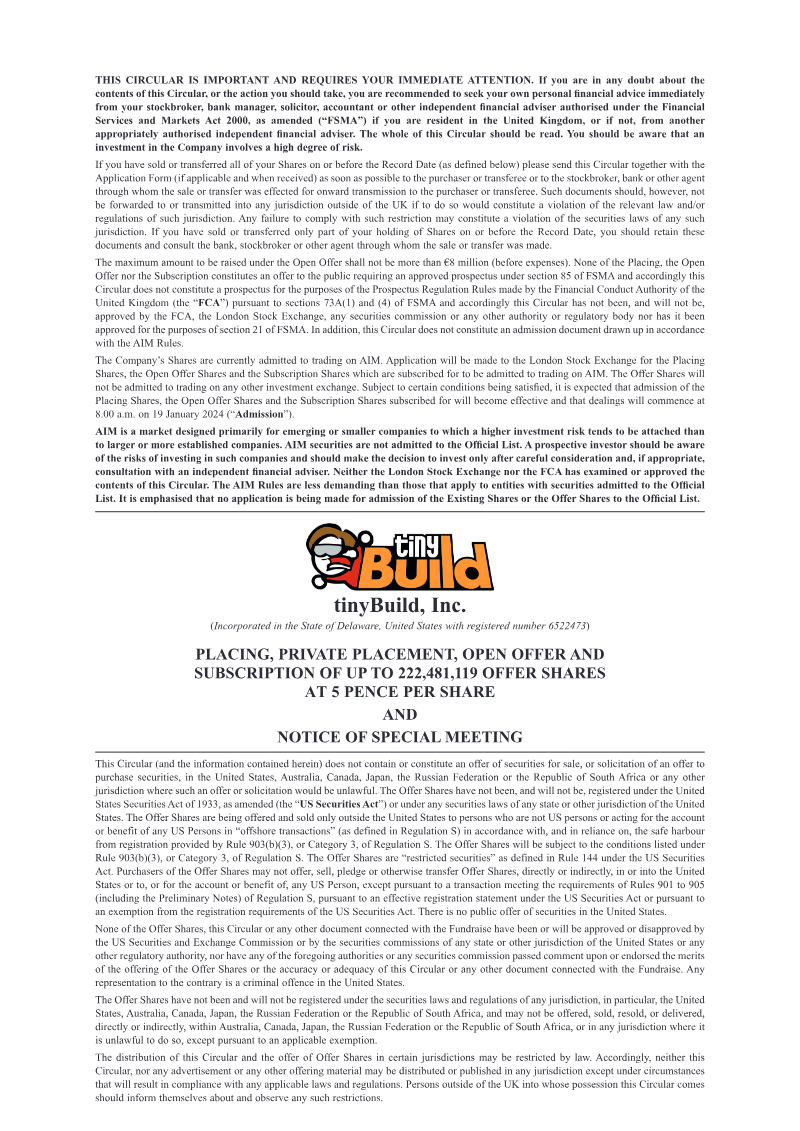
TinyBuild Inc. established a comprehensive corporate governance framework through its 2021 recapitalization and incorporation in Delaware, coinciding with its listing on the London Stock Exchange’s AIM market. The company authorized 800 million shares of common stock following a significant 1:129.826 stock split and the conversion of all preferred shares. This structural foundation prioritizes long-term stability and protection against hostile takeovers by implementing a classified Board of Directors with staggered three-year terms. Directors are shielded by robust indemnification clauses and can only be removed for cause by a supermajority 75% stockholder vote, which is the same high threshold required for any amendments to the corporate bylaws or voluntary delisting from the exchange.
The governance model incorporates rigorous transparency and regulatory compliance measures tailored for public listing. Stockholders are legally obligated to disclose beneficial ownership interests starting at a 3% threshold, with subsequent reporting required for every 1% change. Failure to meet these disclosure requirements within 14 days empowers the Board of Directors to impose severe sanctions, including the suspension of voting rights, the withholding of dividends, and the restriction of share transfers. These provisions ensure the company maintains a clear understanding of its ownership structure and can respond effectively to rapid accumulations of voting power.
Furthermore, the framework includes strict "Article XII" provisions regarding mandatory offers and control. Any entity acquiring 30% or more of the voting rights triggers specific disclosure rules, while reaching a 50% threshold necessitates a mandatory cash offer to all remaining stockholders at the highest price paid by the acquirer in the previous year. To protect minority interests, the Board maintains broad enforcement powers to penalize non-compliance, including the forced sale of securities. By designating Delaware as the exclusive legal forum while adhering to FCA and AIM standards, the company creates a dual-layered regulatory environment designed to balance director autonomy with stringent shareholder accountability.

tinyBuild · 2026
tinyBuild · 2025

tinyBuild · 2025

tinyBuild · 2024
tinyBuild · 2024

tinyBuild · 2023

tinyBuild · 2022

tinyBuild · 2021

tinyBuild · 2021

tinyBuild
tinyBuild
tinyBuild
State of Delaware · 2026
PCF Group · 2022
PCF Group
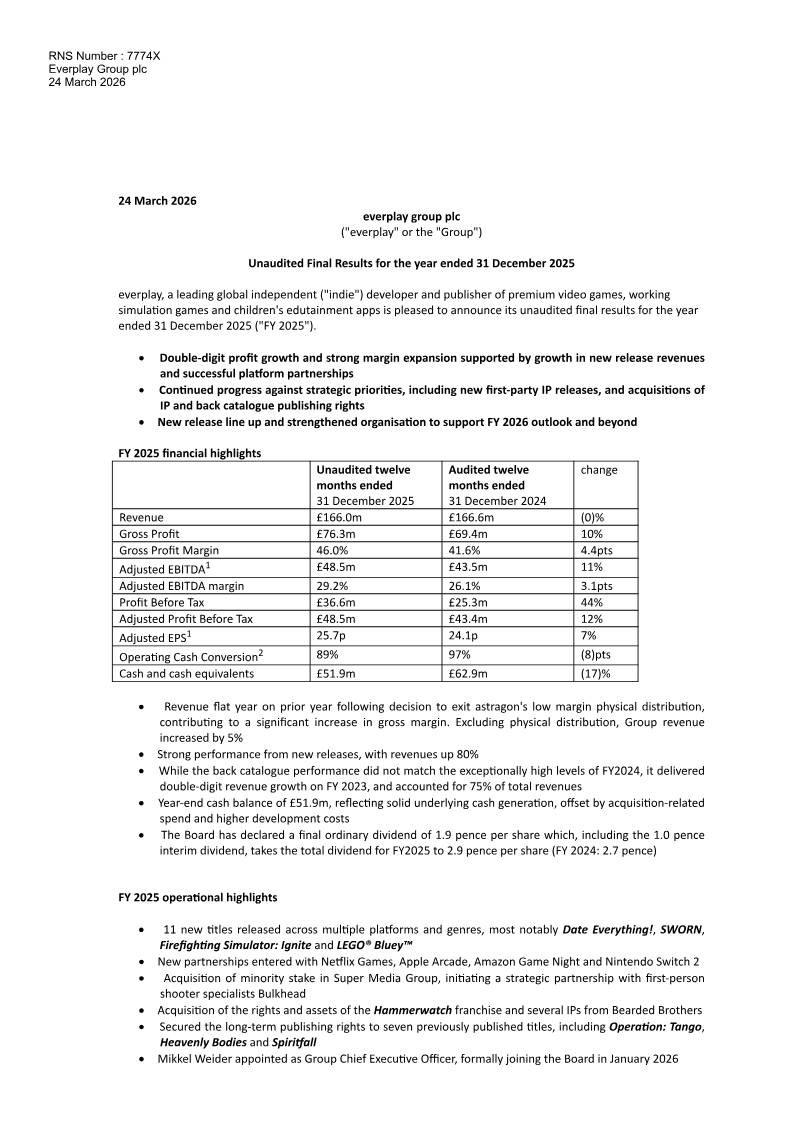
Everplay Group · 2026
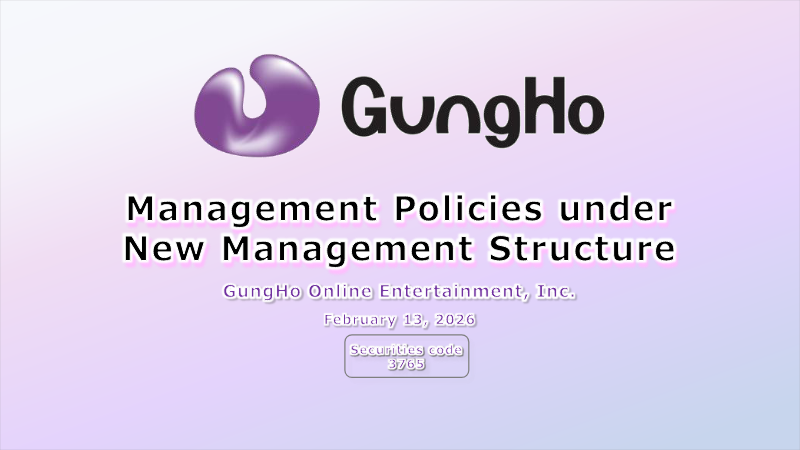
GungHo Online Entertainment · 2026
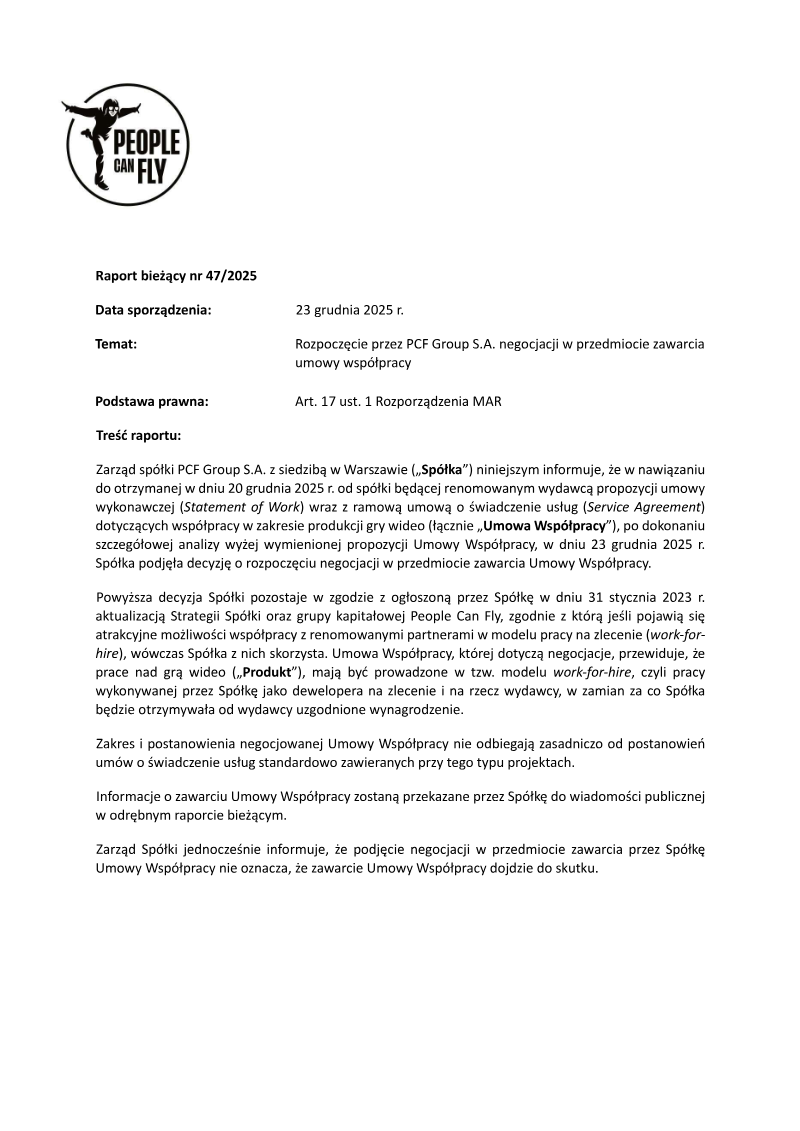
PCF Group · 2025
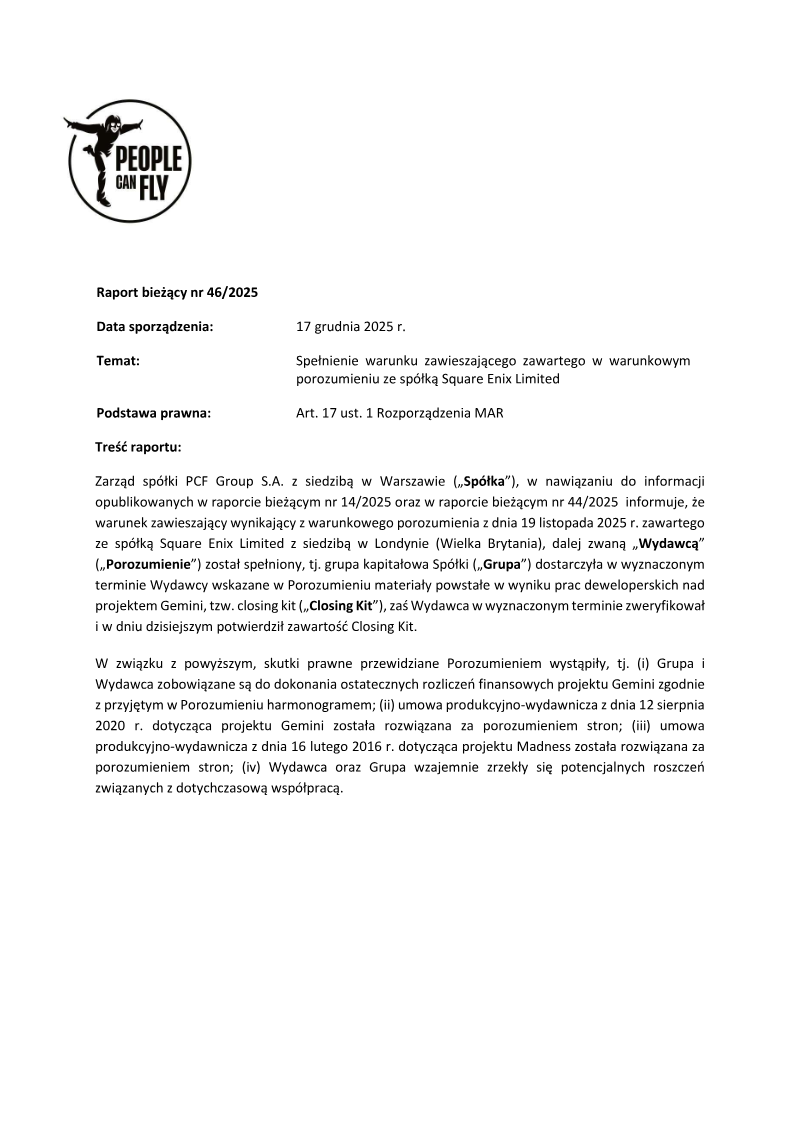
PCF Group · 2025
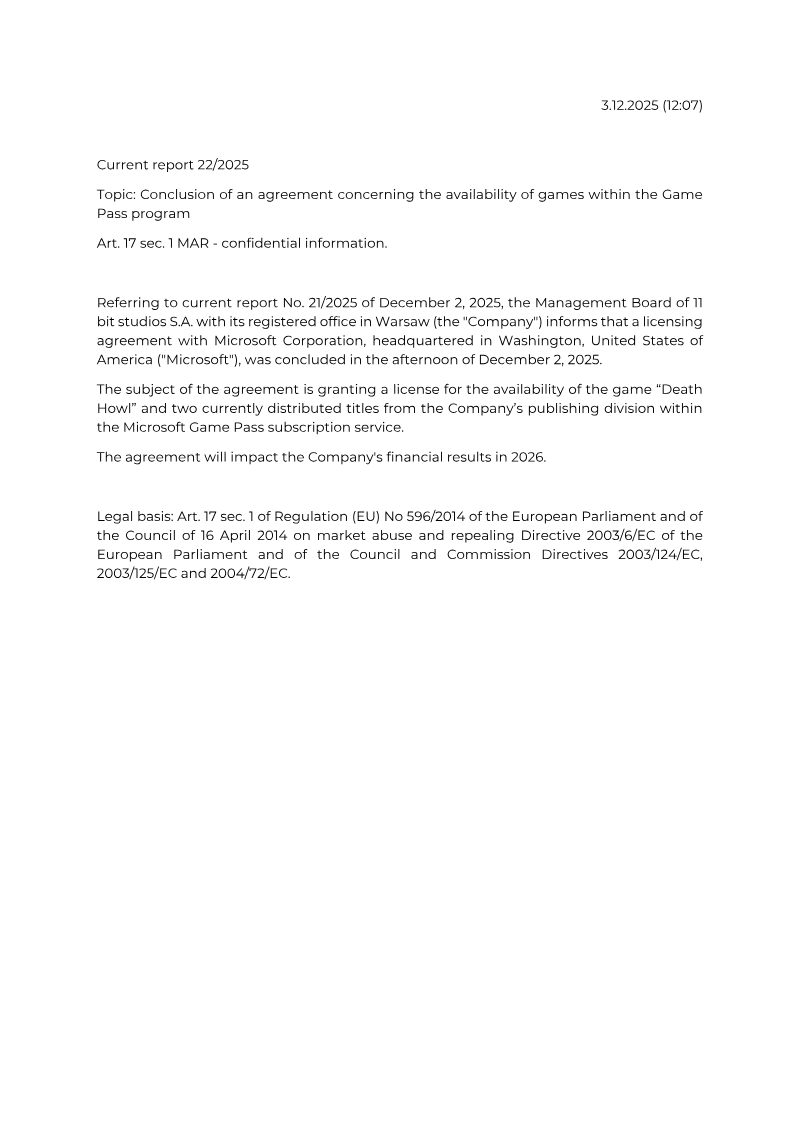
11 bit studios · 2025
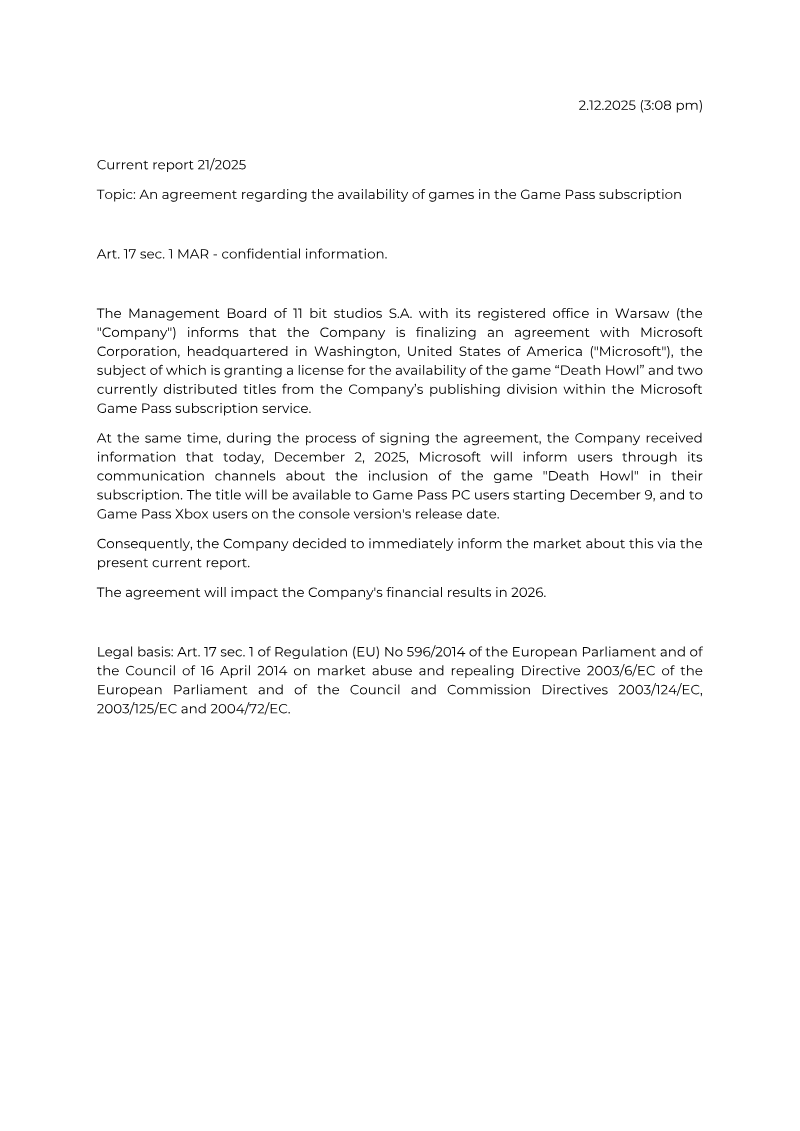
11 bit studios · 2025
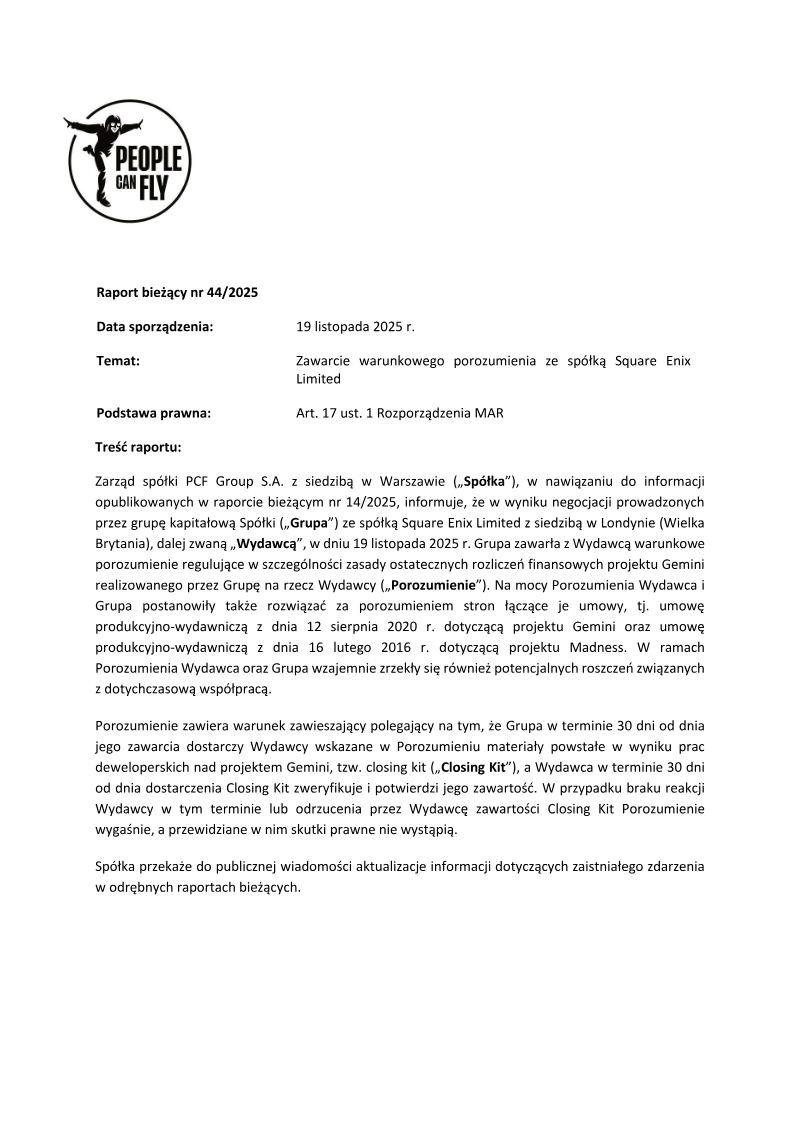
PCF Group · 2025
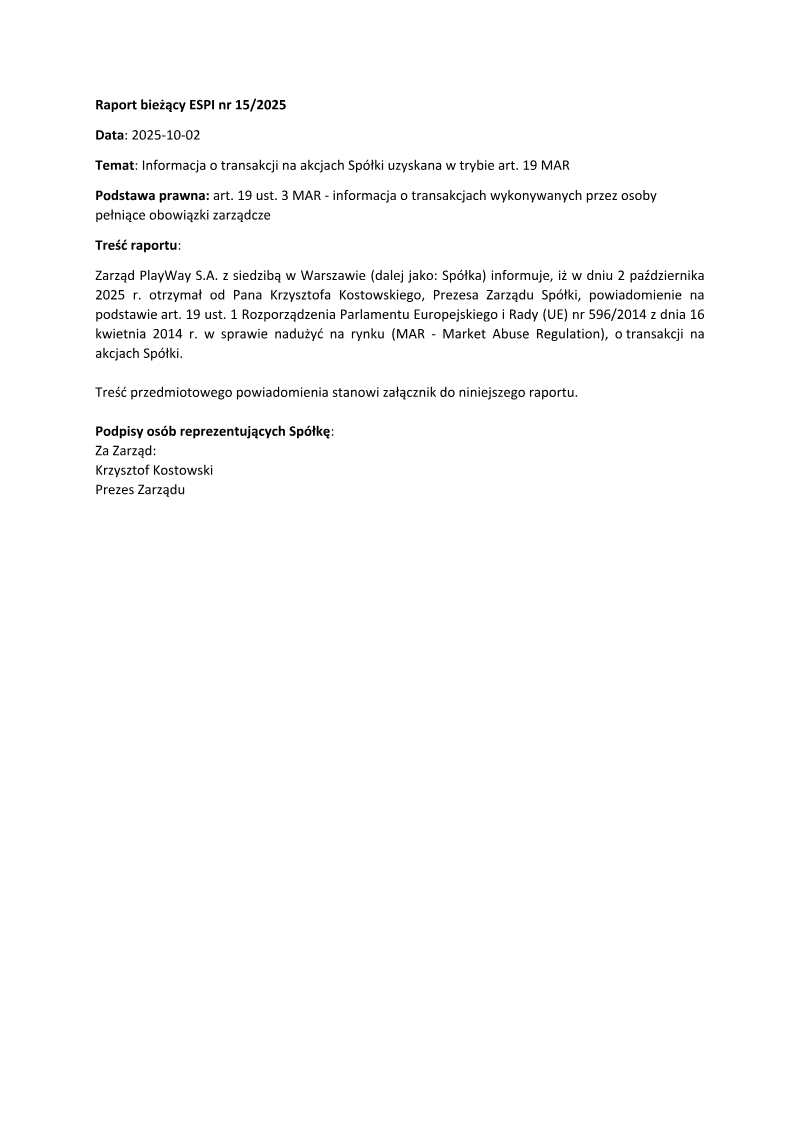
PlayWay · 2025
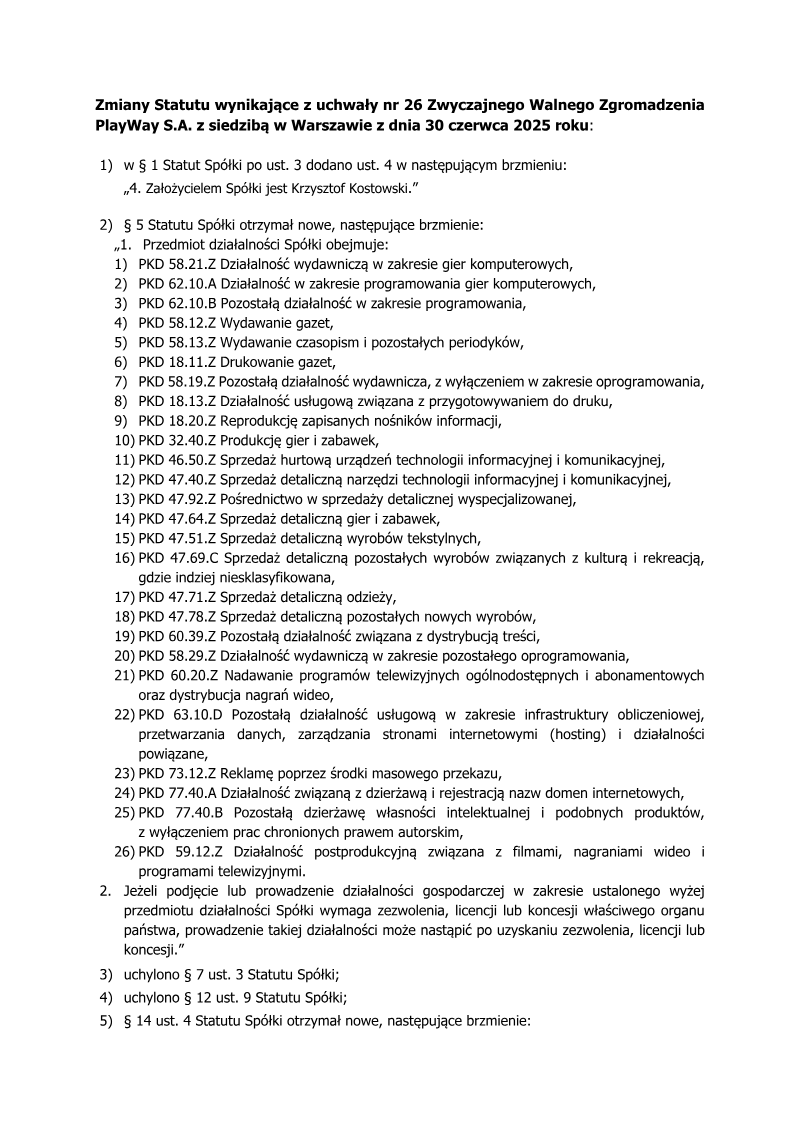
PlayWay · 2025