1 free read left. Create a free account for unlimited reading + AI research.
Create free accountWhitepaper DiGRA
1 free read left. Create a free account for unlimited reading + AI research.
Create free accountWhitepaperDiGRA
The report addresses a gap between games research and industry practice: the absence of a shared language for describing and designing games.
"Game Design Patterns" by Björk, Lundgren, and Holopainen addresses a gap between games research and industry practice: the absence of a shared language for describing and designing games. Rather than framing games around narrative, the authors propose a model centered on interaction. This model pairs a structural framework, organized around game instances, sessions, and components grouped into bounding, temporal, and objective categories, with a collection of reusable interaction patterns. The work draws on interviews with nine professional designers and a five-step harvesting method that produced over 200 pattern candidates.
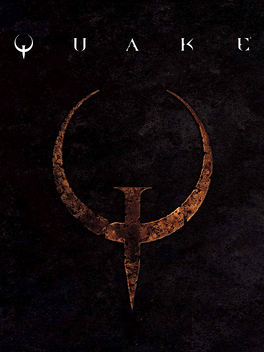
The patterns are structured with a name, description, consequences, relations, examples, and references, and they are deliberately presented as creative design tools rather than only as problem-solution templates borrowed from architecture. Paper-Rock-Scissors serves as a worked example, illustrated with examples drawn from titles such as Quake and Drakborgen. The authors identify several practical applications, including idea generation, pre-production justification, analysis and genre categorization, and problem-solving. They also acknowledge unresolved challenges, notably how to validate patterns, how to help users navigate a large pattern collection, and where the boundary lies between a pattern and a variant.
Drawing on Christopher Alexander's architectural concept, the authors argue that patterns offer a useful vocabulary for analyzing, comparing, and designing games, and they reject the concern that pattern use produces formulaic or uncreative work. Much of the collection derives from documented mechanics and concepts in other fields, and initial testing indicated practical value. The authors position the work as a contribution toward a common ludology language rather than its final form, with continued pattern research expected to clarify the nature of games until a more complete shared vocabulary emerges.
Each row is a game or company this document names, each column a document, oldest first. A mark means that document names it. Select a row to see those documents.

DiGRA · 2026

DiGRA · 2026



DiGRA · 2026



DiGRA · 2026



DiGRA · 2026



DiGRA · 2026



DiGRA · 2026



DiGRA · 2026



DiGRA · 2026

DiGRA · 2026



DiGRA · 2026



DiGRA · 2026
DiGRA · 2026