1 free read left. Create a free account for unlimited reading + AI research.
Create free accountWhitepaper European Conference on Games Based Learning (ECGBL)
1 free read left. Create a free account for unlimited reading + AI research.
Create free accountWhitepaperEuropean Conference on Games Based Learning (ECGBL)
The study is motivated by the recognized difficulty teachers face in integrating game-based learning effectively. It also notes the scarcity of empirical evidence on how to prepare teachers for it.
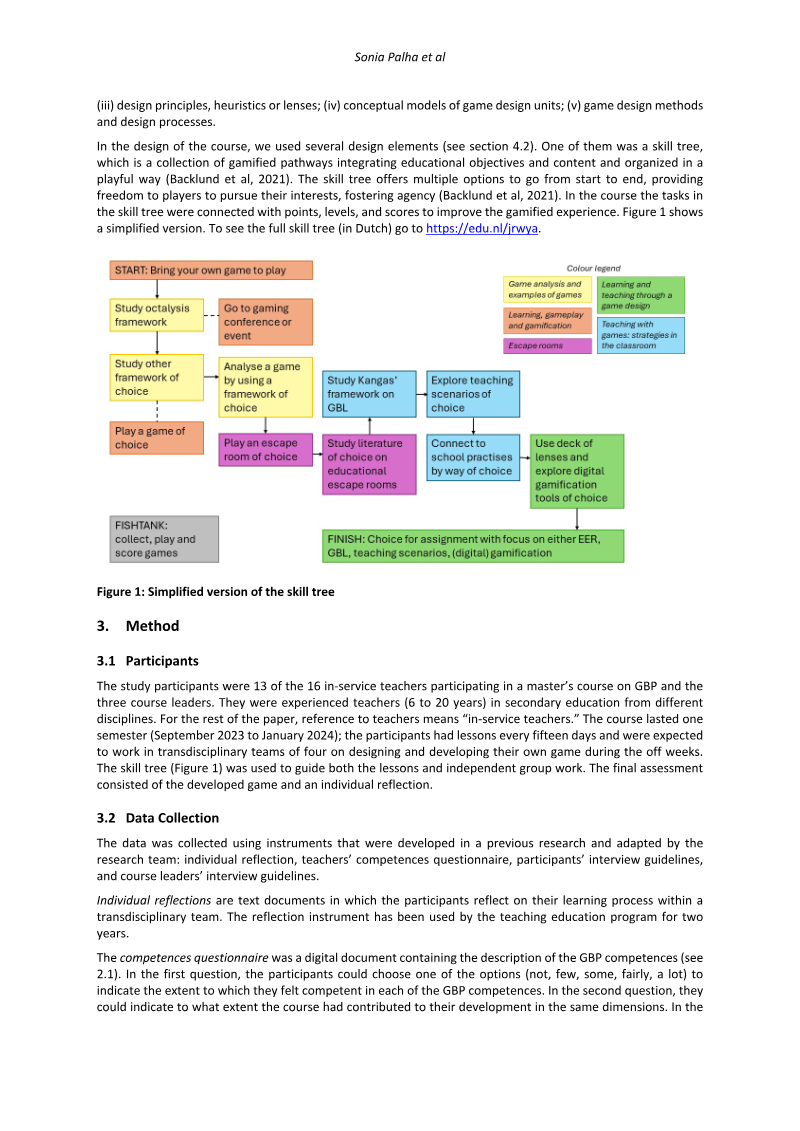
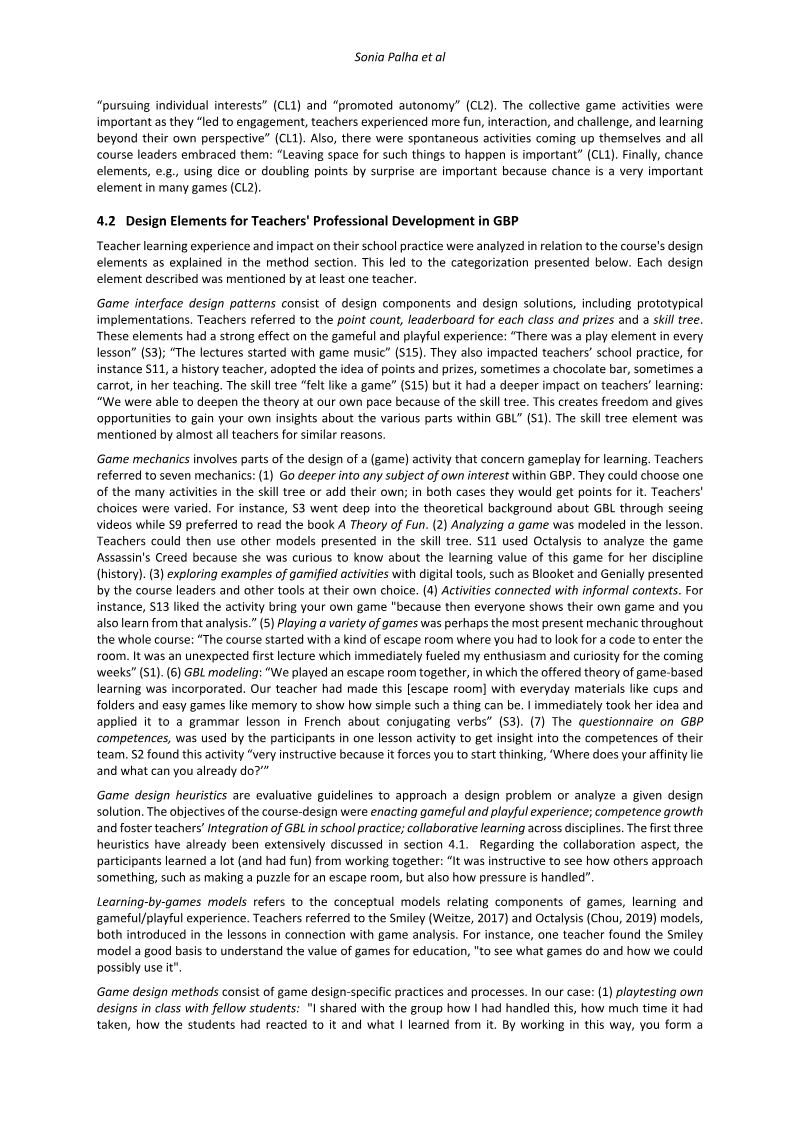
A pilot course on game-based pedagogy (GBP) for teachers, delivered at the Faculty of Education of the Amsterdam University of Applied Sciences in Fall 2023, is examined to identify which design elements shaped in-service secondary teachers' GBP competences and classroom practice. The study is motivated by the recognized difficulty teachers face in integrating game-based learning (GBL) effectively, and by the scarcity of empirical evidence on how to prepare teachers for it. The course, a fully gamified one-semester program, was built on prior guidance from Foster and Shah and on the competence framework of Nousiainen and colleagues, and it used a skill tree, points, levels, and collaborative game-design work in transdisciplinary teams.
The study involved 13 of 16 participating teachers, along with three course leaders. Data came from individual reflections, a competence questionnaire (ten respondents), and interviews with five teachers and the course leaders, collected between January and April 2024 and analyzed through a combination of quantitative and qualitative methods. Results indicate that teachers reported growth across all four GBP competence areas, with the strongest gains in tutoring game activities, adopting a playful stance, and analyzing games and tools. Growth was weakest in flexible ICT use and collaboration beyond the school, which participants attributed to these skills being underrepresented in the course. Many teachers adapted game activities for their own classes, and some created new games with colleagues.
The authors identify a set of design elements organized across five levels, including interface patterns such as the skill tree and point systems, game mechanics like playing varied games and GBL modeling, design heuristics, learning-with-games models such as Octalysis, and design methods such as playtesting. They argue these elements sustained motivation, perseverance, and socialization. The authors acknowledge limitations: the small, self-selected sample, a teacher-educator group already experienced in GBL, and the need for future mixed-methods research with more representative participants.



European Conference on Games Based Learning (ECGBL) · 2026



European Conference on Games Based Learning (ECGBL) · 2026



European Conference on Games Based Learning (ECGBL) · 2026



European Conference on Games Based Learning (ECGBL) · 2026



European Conference on Games Based Learning (ECGBL) · 2026



European Conference on Games Based Learning (ECGBL) · 2026



European Conference on Games Based Learning (ECGBL) · 2026



European Conference on Games Based Learning (ECGBL) · 2026



European Conference on Games Based Learning (ECGBL) · 2026



European Conference on Games Based Learning (ECGBL) · 2026



European Conference on Games Based Learning (ECGBL) · 2026



European Conference on Games Based Learning (ECGBL) · 2026



European Conference on Games Based Learning (ECGBL) · 2026
European Conference on Games Based Learning (ECGBL) · 2026
European Conference on Games Based Learning (ECGBL) · 2026