1 free read left. Create a free account for unlimited reading + AI research.
Create free accountWhitepaper DiGRA
1 free read left. Create a free account for unlimited reading + AI research.
Create free accountWhitepaperDiGRA
The introductory course on simulation gaming ran from 2011 to 2015 for third-year BBA students specializing in Media & Entertainment Management. It aimed to help future creative-industry managers recognize when simulation games might or might not help solve real-world problems.
This paper reflects on the design and evaluation of a short introductory course on simulation gaming taught from 2011 to 2015 to third-year Bachelor of Business Administration students specializing in Media & Entertainment Management. Its central argument is that games can serve as a productive space for learning from failure, and that the paradox of engaging in enjoyable play for serious professional ends can be deliberately harnessed in higher education. Drawing on Juul's work on the pain and pleasure of failure in games, Statler and colleagues' concept of the paradox of intentionality, and Dweck's research on learning orientations, the author positions mistakes as a valuable resource rather than something to be avoided.
The course aimed not to train game designers but to help future creative-industry managers recognize when simulation games might or might not help solve real-world problems. The author reports that student reception varied across years. Early iterations offered non-mandatory sessions and weak incentives for preparatory reading, while later versions added incentives, classic games such as the Dollar Auction and the prisoner's dilemma, and competitive paper-prototyping exercises. The author notes a trade-off: these structured changes reduced students' freedom to work at their own pace but produced different patterns of thinking, assignments, and reflections.
A key conclusion is that strategy development requires a mindset of possibility rather than certainty, which games support by allowing exploration of multiple outcomes. The author also argues that conventional assessment struggles to distinguish mere imitation of desired behaviour from purposeful, understood mastery. Tasks containing deliberate "sand in the machine" push students to engage with underlying problem-solving dynamics, but only when learning from mistakes is strongly encouraged. The paper is reflective and qualitative in nature, offering practitioner insight rather than systematic empirical measurement.
DiGRA · 2020
DiGRA · 2020
DiGRA · 2020
DiGRA · 2020
DiGRA · 2020
DiGRA · 2020
DiGRA · 2020
DiGRA · 2020
DiGRA · 2020
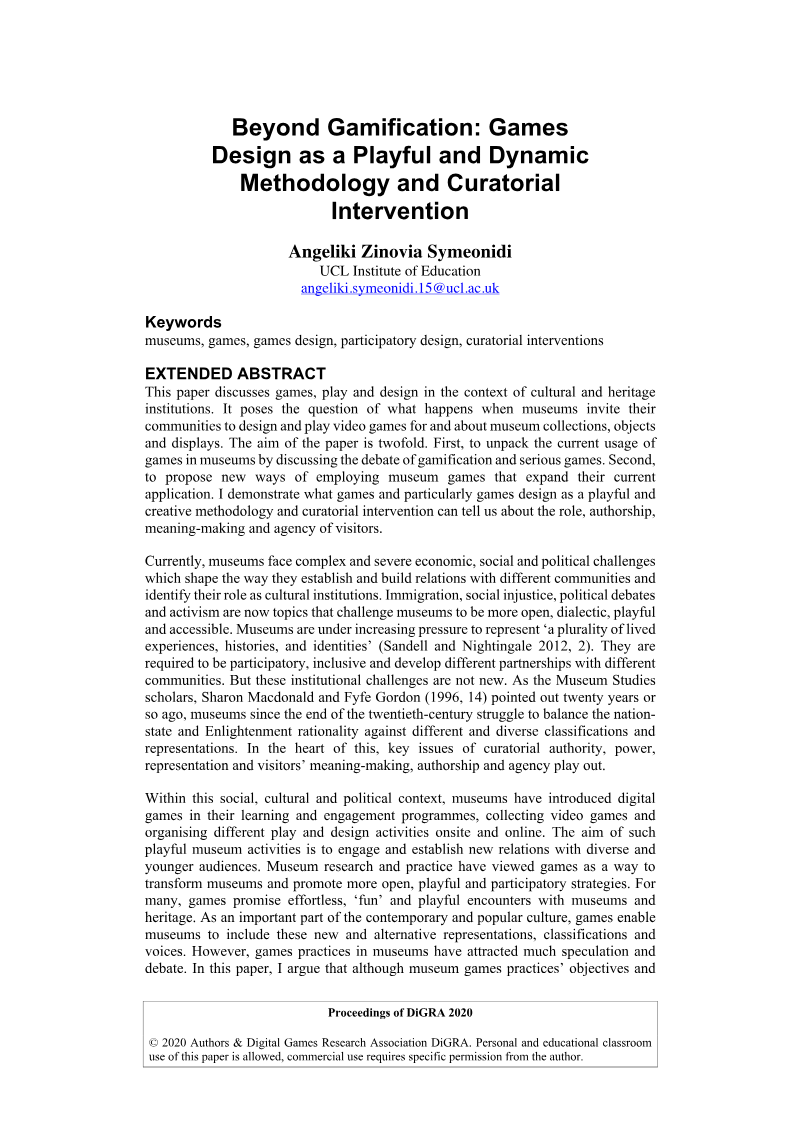
DiGRA · 2020
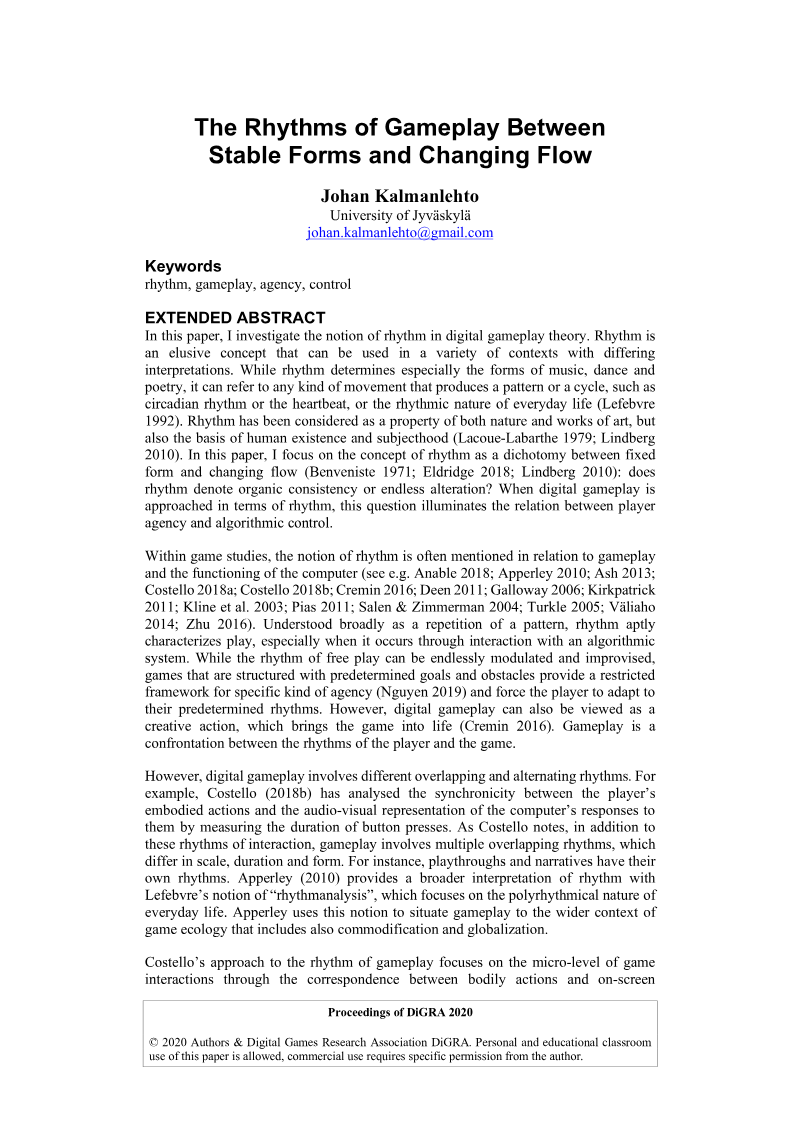
DiGRA · 2020
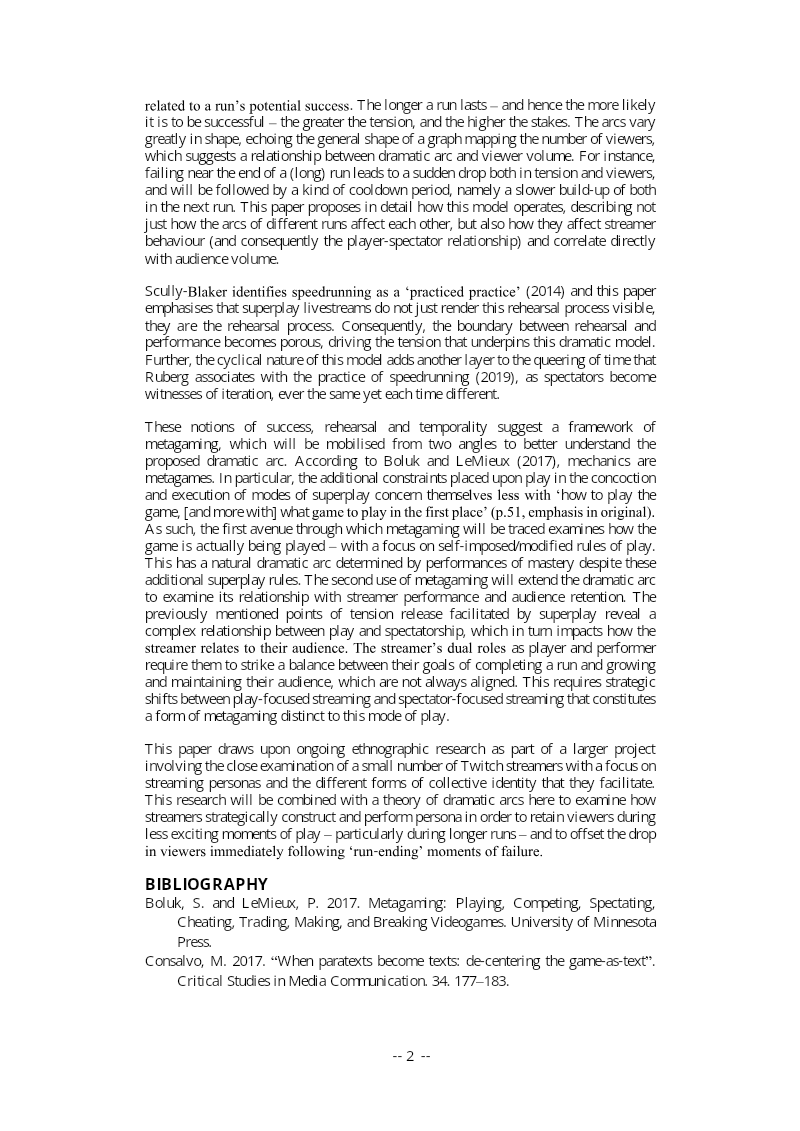
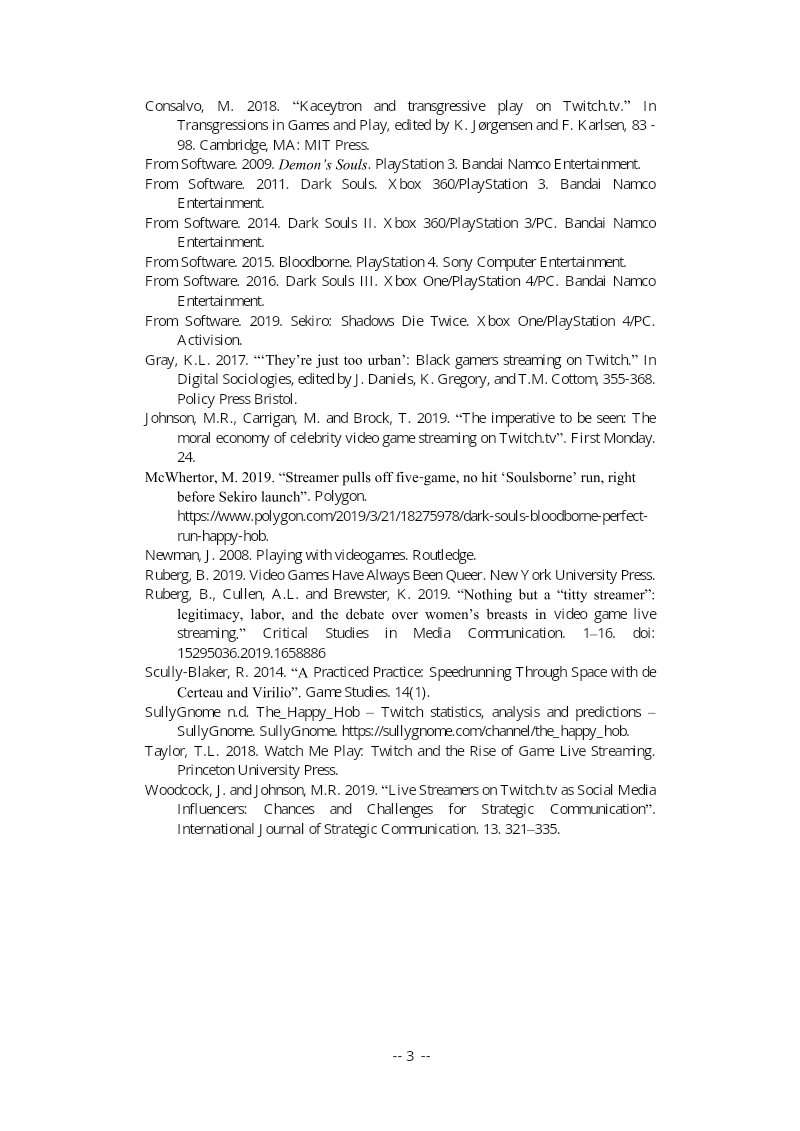
DiGRA · 2020
DiGRA · 2005