1 free read left. Create a free account for unlimited reading + AI research.
Create free account
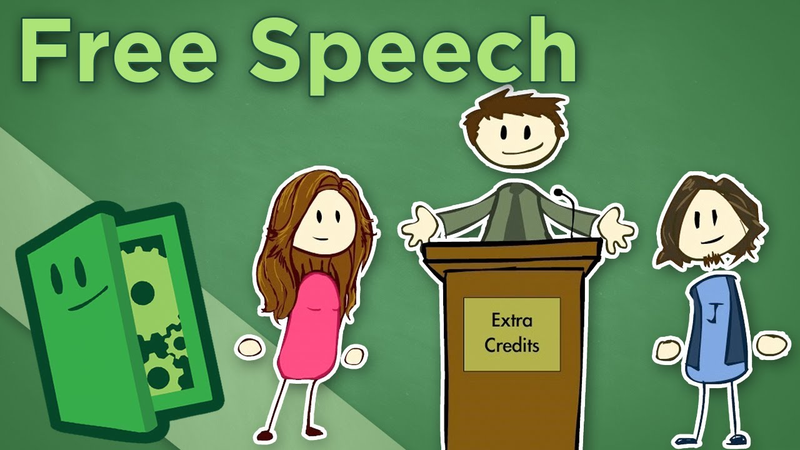
Free Speech - The Supreme Court Case Against Violent Video Games - Extra Credits
Key insights
6 takeaways- 01The Supreme Court case Brown v. Entertainment Merchants Association determined whether video games qualify as a protected artistic medium under the First Amendment.
- 02California attempted to criminalize the sale of violent video games to minors by shifting legal arguments from obscenity to the alleged psychological harm caused by interactive media.
- 03The state’s legal strategy failed to meet the Miller test for obscenity because video games possess inherent artistic and literary value.
- 04A ruling against the industry could have legally reclassified video games as controlled substances or adult content, effectively stripping the medium of constitutional protections.
- 05A loss in this case would have likely triggered widespread state-level restrictive legislation and forced major retailers to stop carrying mature titles, stifling creative development.
- 06The industry’s defense, led by the Entertainment Software Association and the Entertainment Merchants Association, argued that the responsibility for content consumption rests with consumers rather than the government.
Ask AI about this video
Transcript
Well, it's public service day here at Extra Credits, and we got something to talk about. Something important. It's not sexy, it's not fun, but we really, really need to talk about it anyway. Today, we're going to talk about free speech and video games. Yeah, I know. We shouldn't even have to talk about this. If BP and Walmart's money-spending decisions are protected under the First Amendment, why is anyone even questioning whether or not games should be? It's ludicrous, but there it is. Apparently, some people still just aren't completely convinced. The reason we're dedicating an episode to this subject is because gaming is about to face a huge milestone in the coming year, and perhaps the biggest threat it's ever faced. For all intents and purposes, this year, the Supreme Court of the United States will decide if video games are, legally speaking, an art. But first, a little background. A few years back, California made it a crime to sell interactive entertainment with violent content to minors. Terrible,
silly, yes. But really not that big a deal, right? I mean, we've seen laws like this pop up dozens of times all over the country, and every time they get crushed in court. And for the last several years, the same thing happened with this new California law. Court after court threw it out. But this year, out of nowhere, the Supreme Court of the United States, the ultimate last word, decided that they would hear the case. What? That's never happened before. The Supreme Court only hears maybe a hundred cases a year, and they're supposed to be for the really tough decisions, not ridiculous politically motivated laws like this one. Any first-year law student could tell you this thing's unconstitutional. So, what happened? Well, the argument changed. You see, in the past, any law coming after violent video games has tried to claim that these games are obscene. For those of you who aren't First Amendment buffs, obscene materials don't enjoy free speech protections and can be regulated by law. But to be considered obscene, a work has to fail something called the Miller test. The Miller test requires three things. One, that the average person in the community would find the work objectionable. Two,
that the work describes in an offensive or objectionable way sexual content as defined by law. And three, that the work as a whole lacks literary, artistic, political, or scientific value. As you can imagine, trying to restrict violent video games always fails this test. Even if you ignore number two, the one about sexual content, it's impossible to argue that the medium as a whole has no literary, artistic, political, or scientific value. That would be like saying TV as a medium lacks those qualities. I mean, what would that even mean? Besides, even if we ignore artistic value, we could do a whole show on what this medium's done for science and it's Stay on target. What? I'm just saying that Stay on target. All right, all right, all right. Okay, first amendment. So, clearly the violent video games are obscene thing doesn't cut it. But this time around the state of California has found a new argument, one that's much harder to dismiss with a cursory glance. They're arguing that violent games do harm to minors. Remember all those silly studies you read about on Kotaku or Joystiq or The Escapist saying that violent games harm kids? Those studies that we always
grumble about but then dismiss because they're funded by evangelical groups and semi-political organizations? Well, those studies just got a lot less funny. They are the firepower behind this argument and they're apparently strong enough to get the Supreme Court to listen to the case. Now, I know it's pretty hard to imagine but what happens if we actually lose this case? Remember that the sale of games to minors might be restricted isn't the real issue here. The real worry is that games might be legally declared as having no First Amendment protection. What happens if the Supreme Court decides games are more like a controlled substance or softcore porn than an artistic medium? Well, first you're going to see all the states that already lost this fight reviving their anti-game laws. Next, you might see major retailers like Target and Walmart stop carrying titles that the government deems mature. And if that happens, you're going to see fewer developers creating games like BioShock and Fallout because for all of their artistic merit, they fall under the restrictions of this law. If this law passes, it really could mean the end of this medium as a means of artistic expression. Games really will be a child's plaything and nothing more. Working under the watchful eye of people
who don't understand the medium or its true potential. But don't worry, it's not all doom and gloom. There's another part to this argument that California has yet to justify, which is why minors can't choose for themselves what games to play. And that's a bit harder to justify, to the point of being pretty funny actually. The great state of California is trying to argue that those of its citizens under 18 years of age lack the mental ability to make reasoned choices. Therefore, for their own good, the government must decide for them what games they can buy. I kid you not, this comes straight from their merits brief to the Supreme Court. This precious right, the First Amendment, presupposes the capacity of the individual to make a reasoned choice as to whether to consume specific speech. Minors lack such capacity, and their liberty is best protected when the government reinforces parental authority. Seriously, go look it up. That quote isn't even out of context. Honestly, California, improve your schools or something. On the brighter side, there are also organizations fighting for us, the Entertainment Software Association, the Entertainment Merchants Association, and the Entertainment Consumers Association. These organizations have put up hundreds
of thousands of dollars in the fight against this law. They're full of dedicated people who want to see games regulated by the people who make and understand them. Which leads me to why I'm saying all this. We love this medium. We think it can do incredible things for humanity and can allow us to explore parts of the human experience that have only been dimly accessible to the arts until now. We will fight as hard as we can and every way we know to ensure that game makers can continue to make games that push the bounds and let us discover new things about ourselves. But does that mean that I believe all interactive experiences are good simply by their nature as games? No. The industry should have the good taste not to put out certain games. We as consumers should have the good sense never to buy them, to punish the industry for putting those games out there. But most of all, it is we who should be making those decisions. We who love games and want to see them become something more, something better. Not some bureaucrat in a back office waiting for the clock to strike six. I'll leave you with this. Once, long ago, a great man said this to his colleagues to remind them that killing an idea was as much a sin as killing a man.
Books are not absolutely dead things, but do contain a potency of life in them to be as active as that soul was whose progeny they are. Nay, they do preserve as in a vial the purest efficacy and extraction of that living intellect that bred them. Lest wariness be used, as good almost kill a man as kill a good book. Who kills a man kills a reasonable creature, God's image. But he who destroys a good book kills reason itself, kills the image of God as it were in the eye. If that's true of books, can it not be said tenfold regarding games? Thanks for listening. See you next week.
Summary
The Supreme Court case Brown v. Entertainment Merchants Association serves as a critical focal point for the legal status of video games as a protected artistic medium. The core issue involves a California law attempting to criminalize the sale of violent video games to minors. While previous legal challenges to similar state-level regulations were consistently dismissed, the Supreme Court’s decision to hear this case signaled a significant shift in the judicial landscape. The state’s legal strategy moved away from traditional arguments regarding obscenity—which consistently fail the Miller test due to the inherent artistic and literary value of games—toward a new focus on the alleged psychological harm violent content inflicts upon minors.
The implications of a potential ruling against the industry extend far beyond retail restrictions. A loss could result in video games being legally categorized similarly to controlled substances or adult content, effectively stripping the medium of First Amendment protections. Such a precedent would likely trigger a wave of restrictive state legislation and pressure major retailers to cease carrying mature titles, thereby stifling creative expression and limiting the development of complex, narrative-driven games.
The industry’s defense rests on the principle that individuals, including minors, possess the capacity for reasoned choice, challenging the state’s assertion that government intervention is necessary to protect youth from interactive media. Organizations such as the Entertainment Software Association and the Entertainment Merchants Association have mobilized significant resources to defend the medium’s status. Ultimately, the argument posits that the responsibility for content consumption should remain with consumers and creators rather than government bureaucrats, ensuring that video games continue to evolve as a legitimate and impactful form of artistic expression.