1 free read left. Create a free account for unlimited reading + AI research.
Create free accountReport Neogames Finland
1 free read left. Create a free account for unlimited reading + AI research.
Create free accountReportNeogames Finland
Companies now pursue scalable growth, sustainable profitability, or creative autonomy.
The Finnish game industry is currently navigating a significant structural shift characterized by the saturation of mobile markets and intensified global competition. This environment has necessitated a move away from a singular, linear focus on hypergrowth toward a more nuanced understanding of entrepreneurial paths. The industry now encompasses three primary business archetypes: scalable growth-oriented companies, studios focused on sustainable profitability, and indie-led developers prioritizing creative autonomy. Each model requires distinct approaches to funding, team structure, and market validation, and failing to align these elements early in a studio’s lifecycle often leads to strategic misalignment and operational instability.
Research indicates that successful entrepreneurship in this sector is rarely a straightforward path to maximum scale. Instead, it is a process of recalibrating risk and business strategy based on evolving market signals and founder expertise. While the ecosystem provides a robust support network—including incubators, mentor hubs, and diverse funding sources ranging from public grants to venture capital—many early-stage companies struggle due to a lack of commercial understanding or delayed market validation. Founders frequently face the challenge of transitioning from hands-on development to management, a shift that can conflict with original creative motivations if the chosen business model is not clearly defined from the outset.
Ultimately, the findings emphasize that sustainable success depends on the intentional integration of production scale, financial logic, and market potential. By identifying their specific business archetype early, founders can better navigate the industry’s complexities and avoid the pitfalls of unrealistic growth pressures. The Finnish game ecosystem is encouraged to provide more targeted support that recognizes these diverse paths, ensuring that studios can make informed decisions that prioritize long-term viability over generic growth metrics.
Neogames Finland · 2025
Neogames Finland · 2024
Neogames Finland · 2024
Neogames Finland · 2022
Neogames Finland · 2022
Neogames Finland · 2022
Neogames Finland · 2021
Neogames Finland · 2020
Neogames Finland · 2019
Neogames Finland · 2019
Neogames Finland ry · 2019
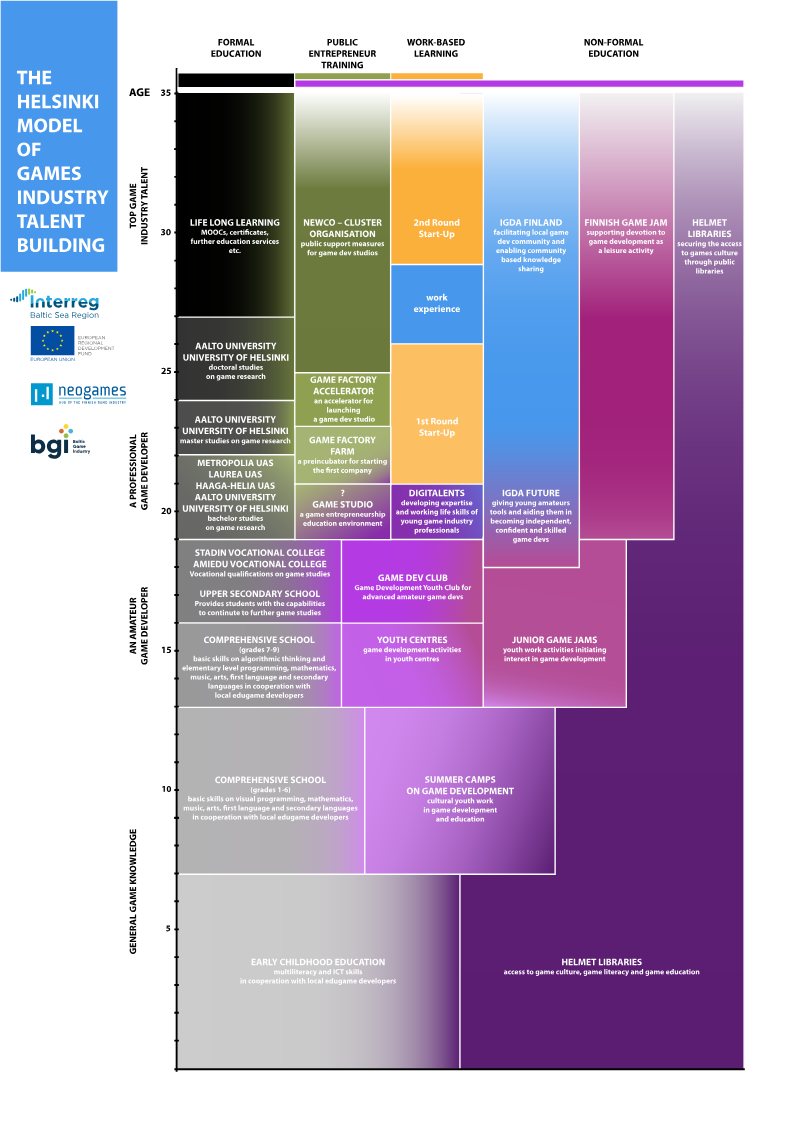
Neogames Finland · 2018
The Game Business · 2026