1 free read left. Create a free account for unlimited reading + AI research.
Create free account
Fireside Chat: Creating Games & Monetizing in Asia as an American Publisher
Key insights
7 takeaways- 01Asian markets exhibit distinct stylistic preferences, with a strong cultural affinity for anime-style art, whereas Western markets historically favor a 'Toy Story' or Disney-esque aesthetic.
- 02Localization for Asian markets requires more than translation; for example, word games in Japan face significant challenges because the language structure relies on complex character recognition rather than word-for-word reading.
- 03Working with local influencers, particularly via TikTok, is a primary strategy for navigating cultural nuances and gaining market traction in Asia.
- 04Asian markets are more receptive to diverse ad formats, such as lock-screen advertisements, which are often considered taboo or less common in the U.S. market.
- 05Regulatory changes can have immediate, drastic impacts on performance; for instance, Chinese government restrictions on gaming hours for minors led to a 60-70% overnight drop in DAU for some publishers in September 2021.
- 06While Japan, Korea, and Taiwan remain top revenue-generating regions, Southeast Asian countries like Indonesia, Malaysia, and the Philippines are major drivers for daily active users (DAU).
- 07The Middle East, specifically Saudi Arabia, can be a high-revenue market for mobile games, with one publisher reporting it as their second-largest revenue source behind the U.S.
Ask AI about this video
Transcript
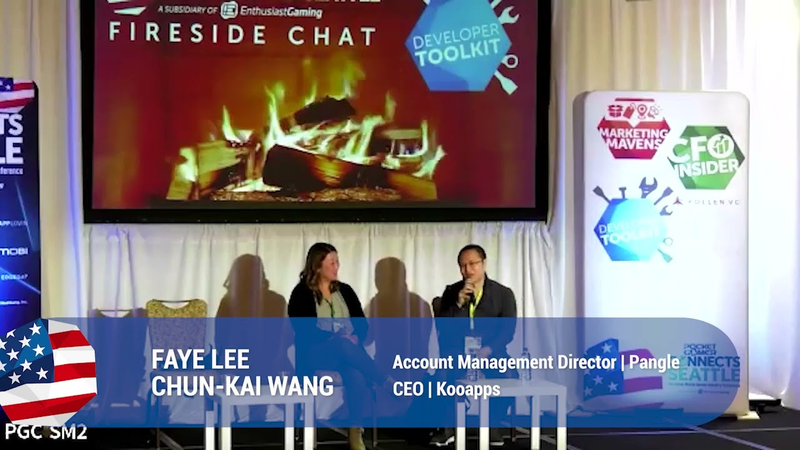
[Music] welcome everyone my name is faye and um and right next to me is an uh i wouldn't say old friend but we've been friends for a very long time we our times go back to when i used to work at tab joy and he was one of my um one of my very first publishers when i was on board so i always have a sauce part soft spot in my heart for cool ass and ck same same well with that let's go straight into a quick introduction again my name is faye i'm the director of account management with the u.s pangol team um what's pango pengo is just the advertise as an ad network with
exclusive demand from tick tock for business and if you're a publisher that means you can monetize your app with our in-app solution mobile in-app advertising solutions as an advertiser you can leverage our extensive premium web of publishers to grow your user base and grow your revenue and ck you want to do a quick round yeah sure my name is ck um co-founder ceo crew apps uh we make mobile games um and uh yeah our top title is a game called snake io uh that's doing pretty well and then as well as picked a word and we have other titles like stacky bird and helix and such and uh we're in the hyper casual space but i would say it's more uh like hybrid casual in what we call unified casual internally as well yeah we're about three million daily active users and going strong and working hard and yeah running a lot of live events in all of our games awesome and of course the title of this
fireside chat is monetizing apac traffic as an american publisher so maybe you can start us off with kind of telling us what led you to go into apac as an american gaming publisher yeah yeah sure um so our headquarters is here but we have a big presence in asia so we have 25 people here and then 80 in the philippines and 10 in taiwan i was born in taiwan and i grew up in the philippines all my life and so it's always been home there but having gone to school here and worked at microsoft here i think um you know the team and and my co-founders skill sets where are much more sort of american home base and so currently 40 of our revenue is in the us but looking for growth outside um you know asia is of course the number one spot for us because you know his home where i grew up and um yeah and of course culturally you know all the anime and all of the cartoons that i watched were in asia and so we're very very interested in um yeah growing
our presence in asia and that really fits in really well with pango because um pengol did grow out of asia from china initially and outwards to eastern asian countries and then southeast asia had a banner year last year we also launched in latim a really important geo for us last year around august late summer and um they made our q4 really awesome and earlier this year really excited that we launched in canada and we have more coming so i'm not at liberty to discuss that in detail but please pay attention to pango news um it'll be good geos that you can monetize here as an american publisher let's just leave it at that um so with that um so you've been a publisher both in um you know western world if you will and in asia so can you tell us a little bit about like the differences that you see between users in say u.s eu versus asia
yeah sure uh well first off like uh uh of course there's uh differences in how you want to monetize like videos alluding to and uh and shout out to pangold they're you know definitely top of our ads waterfall stack both on cpm and share voice and all that but in terms of on the user side i think there are big big differences for example on ui ux people in asia prefer to find something find a page that has a lot of things on there that is you know it feels like a treasure hunt feels like if they find like a discount or a deal they're very happy whereas the ui ux in the western world is kind of like google right so a very empty page clean simple to use i'm confused what am i supposed to do here uh whereas in asia um you know like i'd say the traditional yahoo homepage with like 80 links is what people enjoy um my co-founder as i we've discussed this and i think like um our theory is that because chinese characters have a lot of strokes um and you look for those strokes to be
able to read the characters and so uh so there's a little bit of like a treasure hunt there and if it's like one stroke difference it means like a different word different read different sound and all of that whereas uh in western cultures it's uh uh you know like english and such you know you're reading like word for word instead of like oh does the a have this like a stroke that then becomes like another letter um maybe because of that uh maybe something else but we do see a big difference in terms of uh ui ux that you know users are receptive with and uh and where we see drop-offs because of ui ux yeah um what other when you say ui ux um what about um style like of stuff uh i remember one in one of my previous panels we talked about you know asian users they're more receptive to more anime style versus in us is more i don't know disney cartoonish or like what do you see as a difference in terms of stylistic yeah yeah yeah for sure i would say for uh for gaming uh asia market you know definitely uh anime
style is huge i grew up watching anime um and so uh yeah so we're actually working on our first anime ever as a company anime game ever as a company um but but for the western market i would say you know historically it's been sort of like a no-no like you know art director who's been in gaming for 20 years he said that ck oh my god you know and he loves anime and he's like oh for the first time i'm going to be able to work on an anime game whereas you know he went through school he was at glue for a long time and all that you know the whole industry and all ever you know all of his mentors and teachers told him to avoid anime because they wouldn't sell in the us um and so uh yeah definitely you know very very different sort of art styles i would say gold standard in western market is probably like sort of toy story um and that and so yeah very very different but i think with how global mobile is as a market um partly because when you launch an app it's very very easy for you to launch it worldwide i do think there's um uh you know over
the past 10 years uh that mix has started to occur quicker uh than otherwise but but i would say yeah gold standard sort of uh art versus east west is definitely very very different yeah and um one of the things that pengo's marketing team also noticed is that although the differences between western and eastern users if you will some of the common threads that we share is that um one of the fastest growing genre of games in japan obviously like we know the rpgs like those they're the og of rpg games are japanese users but um match three is a common thread between american i mean well american and japanese gamer so i mean japanese gamers so that's one of the common thread is if you are developing a game for japan if you can mix in some of those um eastern anime style maybe with the gantry thrown in there and maybe put a match 3 element there i think you may have a chance so that's what our marketing team you know have found so
try that yeah yeah i think uh to add on to what faye said and then one thing that's very very powerful a theme uh in uh sort of asian like sort of games and anime games is you know waifu and husbandos you know so the characters that you really really want to collect um uh yeah those sell really well and partly why genshin is kenshin impact is doing so well um that's awesome um well you have you've been in the gaming industry for a very long time and you found success in you know global markets so can you tell us a little bit about what is your recipe success as an apac game developer yeah yeah definitely um and we're still learning um i'd say you know our first um test as i think 2013 uh we launched a word game in japan um so 2013 we uh we launched picked a word and in the u.s it was really successful i think we hit top 20 on the free charts organically and pick the word today is uh going strong as well we won you know u.s
department education grant to you know start selling in schools and all that but our team thought okay you know like like yeah let's try to make an asian version of this so we made a japanese version um of picked a word where we actually localized all the puzzles um and so uh there were interesting puzzles like you know kumo means cloud um but also spider um in japanese um and so we had you know fun twist we hired a local um uh you know japanese uh writer that could help us come up with interesting word puzzles as well uh we ended up being like top five uh in japan um in the word category um but but then realized that actually top five didn't have that much download and not that much revenue uh and it was actually like top i think 800 or top 700 in overall games uh whereas in the us if you're top five in the world category in the us uh you're likely like you know top 150 uh in overall gaming and so uh that's when we
realized sort of i think you know maybe word games just aren't nearly as popular uh in in japan as they are in the us um and so we're still learning there's a lot of like uh cultural differences of course and uh market differences um uh uh but yeah you know like i think for us like we're in hyper casual space and it's all about learning quickly adjusting and tweaking and and testing and launching so yeah when i was managing word publishers you can see obvious for obvious reasons that geo breakdown of their dau is mostly in revenue mostly in english-speaking geos and not so much in asia and that makes sense is the language um so my next question for you is like now that you you know 2022 it's been a while so what do you have what would you have done differently if you you have an award advice for all of our audience today who are going to apac tomorrow what's your word advice for everyone yeah yeah definitely um the i think our biggest success has been working with local influencers um and when you work
with local influencers uh and we find them actually on tick tock so our uh number one platform i'd say i'd say 2016 to 2020 was probably instagram was our biggest influencer network where we'd work with people and they would post about our content and post their followers and talk about it and all of that but i'd say uh yeah i would say in the past like a year or two it's definitely been tick tock has been our winner of our influencer marketing budget um and when we work with influencers we're able to learn about the local culture um and they'll tell us you know what their audience likes and why and we learn a lot from that so uh so i would say that's like our biggest advice is to work with local people um uh and you know creativity really is um uh is huge uh with you know the influence that you work with uh we currently work with maybe like uh 20 to 30 every month um and so uh yeah so like it's a little bit hectic because uh uh the the process is not very streamlined and all of that uh but
tick tock actually has a uh spark ads and creator marketplace to streamline this and so uh that's been super um and so yeah our biggest advice is to work with local influencers understand their culture learn from them listen to them um and uh yeah and our best um content have been uh where influencers actually cosplay um as well so we had a uh in-game um ninja snake event uh where uh yeah if you win you would you know win the ninja snake uh and actually our uh influencer dressed up uh as uh uh with ninja costume and ran you know and created the video with us and all of that so yeah that's been absolutely phenomenal for us um what about ad formats do you see any difference between um user engagement with regards to certain ad formats that's different in say u.s versus asian countries yeah yeah definitely i've seen like uh some a lot more variety in ad formats uh
in asian countries and then uh so examples like you know lock screen ads um i've seen um whereas in the us that's um maybe almost like a taboo for now like uh if you were to see like a lost re-net you'd probably get uh kind of annoyed um and so uh yeah i think i think in asia they were set they're uh they're a lot more receptive to different ad formats that you can try uh we're still looking into it you know be it lock screen ads or in-game ads and all of that uh we're still looking into it a lot for a lot of the reasons is performance reasons um so let's say with a lock screen ad you know not sure if uh uh you know if it's app launched then is there enough time to you know check the waterfall load the video or load the image and all that so there's a lot of complexities with different ad formats and standardizations and sizes and all that but uh but you see that a lot more in asia versus the us and i'm sure over time uh people here will start testing them out and uh yeah and maybe become very popular awesome and what about seasonalities in the do you i mean you
mentioned that you localized your games for um different markets what about season now do you run different events for different you say um chinese new year versus you know new year in japan or or whatnot yeah yeah yeah we definitely run chinese new year it's big enough uh for our user base that we do run it globally um i would say the biggest there is a lot of seasonality i would say the most the starkest difference in seasonality is last year in september i think the chinese government released a new law uh about limiting uh how many hours a week uh uh teenagers and kids and um could play games like yeah people heard but um they released something like this and initially we're like oh okay that's like odd and you know but actually we saw on literally right after september 1st like daus went down like i would say like 60 70 percent overnight when that was implemented um
and then um and then in you know christmas holiday season like you would see a spike and then of course um chinese new year we saw a huge spike um and so i would say there's a lot of seasonality difference you know of course it'll depend on your app and your user base and all of that uh but i would say one that is probably most vivid in my memory uh is uh is for china during the school year uh you'll see way way way less dau and then their you know session time and all of that uh will be it's like a very very stark difference it's like you know three to one um weekend versus weekday and then sort of holiday sort of uh two weeks like it's sort of spiking weekend traffic and then after that text tanks down so uh so yeah so for example on ua um i would say like on saturday and sunday uh right before the end of the holiday period you want to stop your ua because they're not going to come back monday like um and so you want to watch out for things like that um so i'd say seasonality right china is the biggest
um sort of uh up and down yeah yeah and um what part of um aipac do you see the most amount of growth i mean obviously japan is a it's a very mature market and some of the korea and taiwan as well but like do you see any other emerging markets that has been experiencing a lot of growth that maybe took you a little bit by surprise yeah yeah yeah definitely um yeah i would say revenue wise uh for sure still korea japan taiwan uh these three are top 15 revenue countries um and then in terms of downloads southeast asia is huge um indonesia malaysia okay indonesia malaysia philippines they're huge uh dau countries for us i believe top 15 if not top 15 top 20 and then sort of going more broad worldwide i'd say you know middle east brazil those are really really successful for us actually for snake our number two largest uh revenue country is actually
saudi arabia's middle east so number one's u.s number two is middle east uh larger than you know uk caau for us and so um yeah i think latim a lot of people talk about but i think sort of uh at the arabic countries have been really successful for us that not a lot of people talk about um localization is a little bit hard because like the screen like it's like different direction and how the text and text is very long um so watch out for that but um it's a very very good geo that we like a lot yeah well um thank you so much for answering my rapid fire questions to try to squeeze it all in within 20 minutes and thank you so much for your attending our panel and if there's any questions um you know let us know we'll be right here thank you so much and thank you ck thank you
Summary
This discussion explores the strategic considerations for American game publishers entering the Asia-Pacific (APAC) market, focusing on cultural nuances, monetization, and user acquisition. The primary thesis is that success in APAC requires a departure from Western-centric design and marketing strategies, necessitating deep localization, an understanding of regional user behaviors, and the integration of local cultural themes.
Key findings emphasize significant differences in user interface and user experience (UI/UX) preferences. While Western markets favor minimalist, clean designs, Asian users often prefer information-dense interfaces, which may be influenced by the complexity of local character-based languages. Stylistically, anime-inspired art is a critical driver of engagement in Asia, contrasting with the Western preference for Western-style animation. Furthermore, the discussion highlights that while genres like match-three games have global appeal, word games may face lower adoption in certain Asian markets due to linguistic differences.
Data points from the publisher’s experience indicate that influencer marketing, particularly via TikTok, has become the most effective channel for regional growth. The session also notes that regulatory changes, such as China’s restrictions on gaming hours for minors, can cause immediate and significant fluctuations in daily active users, necessitating agile user acquisition strategies. Beyond the mature markets of Japan, Korea, and Taiwan, the discussion identifies Southeast Asia as a high-growth region for downloads, while noting that the Middle East, particularly Saudi Arabia, has emerged as a surprisingly strong revenue contributor for specific titles.
The methodology relies on the professional experience of industry practitioners, drawing on longitudinal data from mobile game publishing across diverse global regions. The insights underscore that successful expansion into APAC is not a one-size-fits-all endeavor but rather a process of continuous testing, local partnership, and adaptation to regional seasonality and cultural preferences.