1 free read left. Create a free account for unlimited reading + AI research.
Create free accountArticle DiGRA
1 free read left. Create a free account for unlimited reading + AI research.
Create free accountArticleDiGRA
Sicart contends that The Sims, though marketed as a neutral social simulator, encodes an ideology specific to modern capitalist societies.
Miguel Sicart's "Family Values: Ideology, Computer Games & The Sims" contends that The Sims, despite marketing itself as a neutral social simulator, embodies an ideology specific to modern capitalist societies. Drawing on Louis Althusser's theory of ideology and Ideological State Apparatuses, Fredric Jameson's account of late capitalism, and Charles Taylor's ethics of daily life, the paper argues that the game's economic mechanics, such as purchasing virtual goods with virtual currency, and its structuring of social interaction encode particular assumptions about what counts as a successful life and a legitimate society.
The analysis rests on three case studies drawn from play sessions: earnings equality between genders, same-sex couples, and a "misfit" character modeled on Kurt Cobain. Sicart finds that the game presents an idealized late-capitalist world in which gender and sexuality pose no structural barrier to success, while nonconformist lifestyles are either excluded or reabsorbed into productive norms. His central conclusion is that the game's ideology resides less in its surface content than in its structural rules and gameplay, which position the player as a subject within a concrete ideological discourse. This leads him to propose the category of "ideological games."
The paper's empirical basis is the author's own play and interpretive reading rather than systematic data, so its conclusions are offered as one plausible interpretation rather than established fact. Its scope is theoretical and focused on a single commercial title, though its framework is intended to apply to digital entertainment more broadly. Sicart situates games alongside literature and cinema as a maturing art form and calls for analytical tools that examine the core structures of digital play rather than only their representational content.
Each row is a game or company this document names, each column a document, oldest first. A mark means that document names it. Select a row to see those documents.
DiGRA · 2023
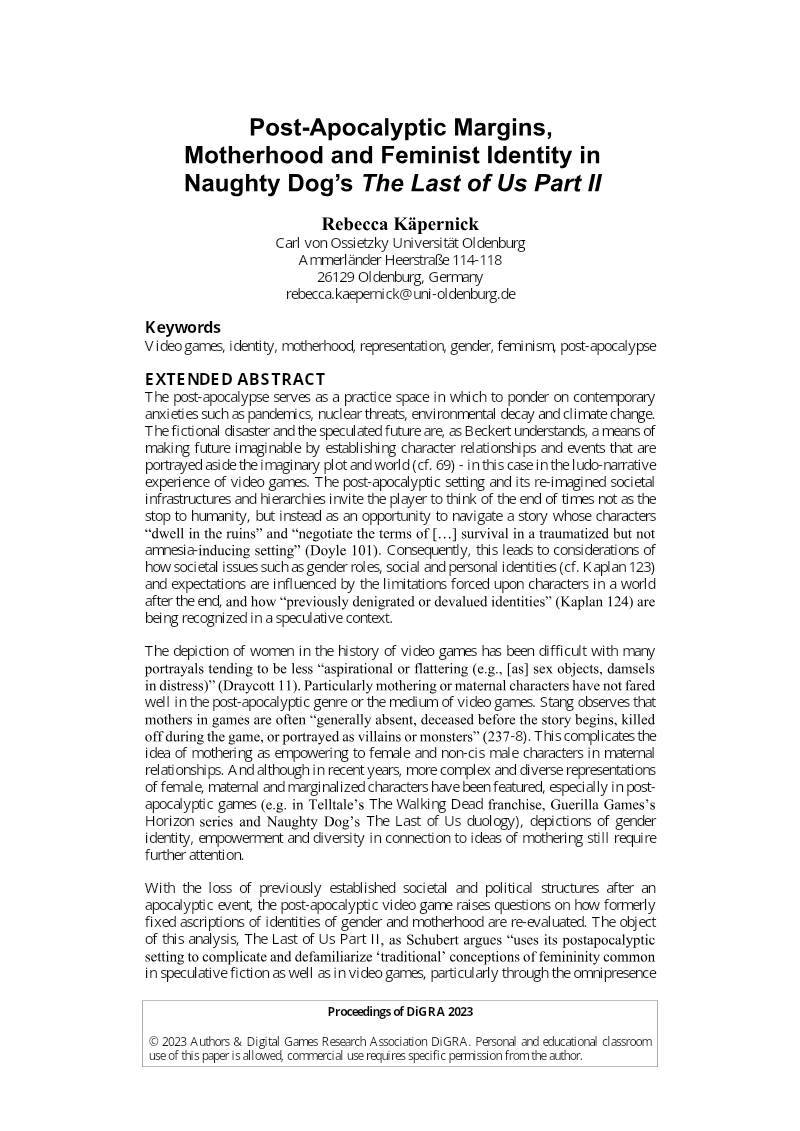
DiGRA · 2023
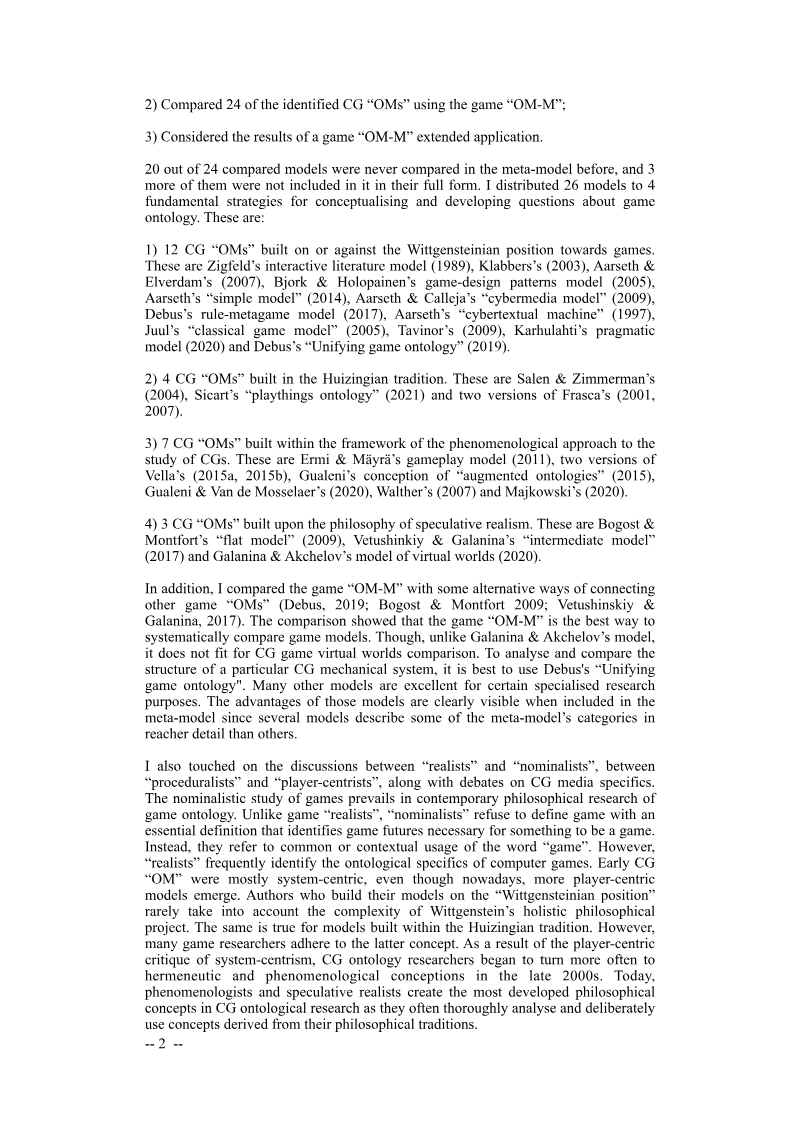
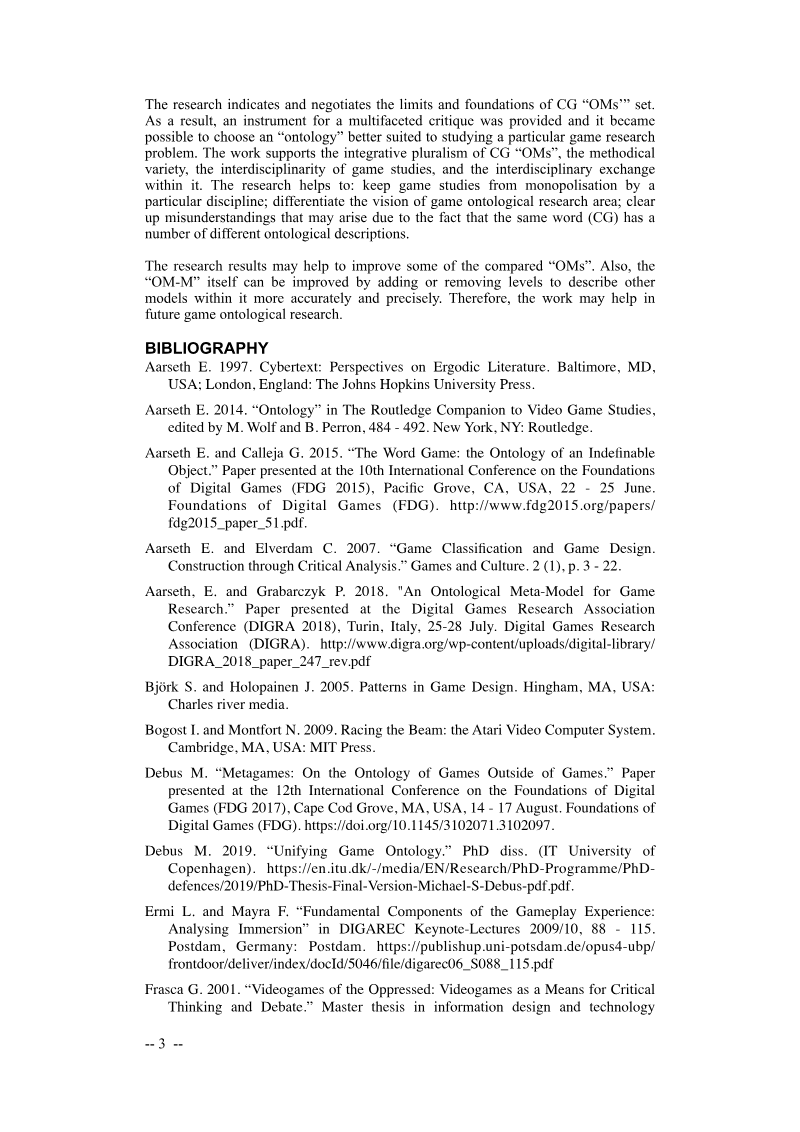
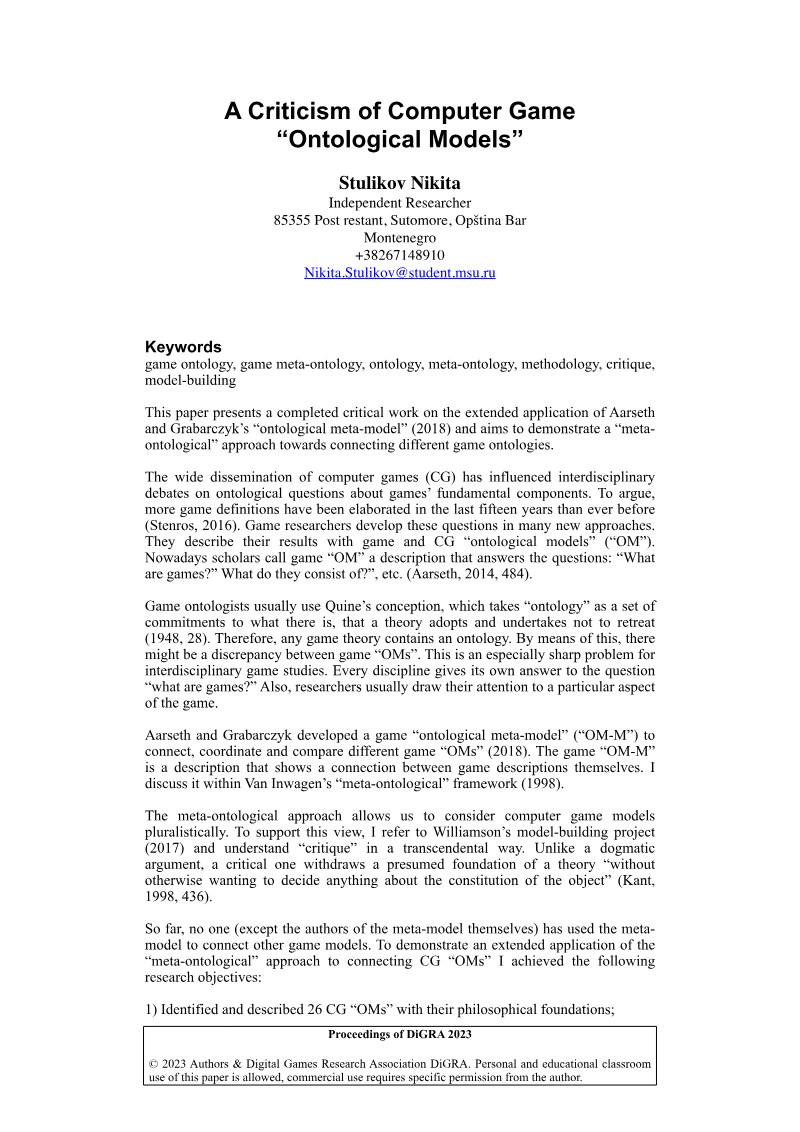
DiGRA · 2023
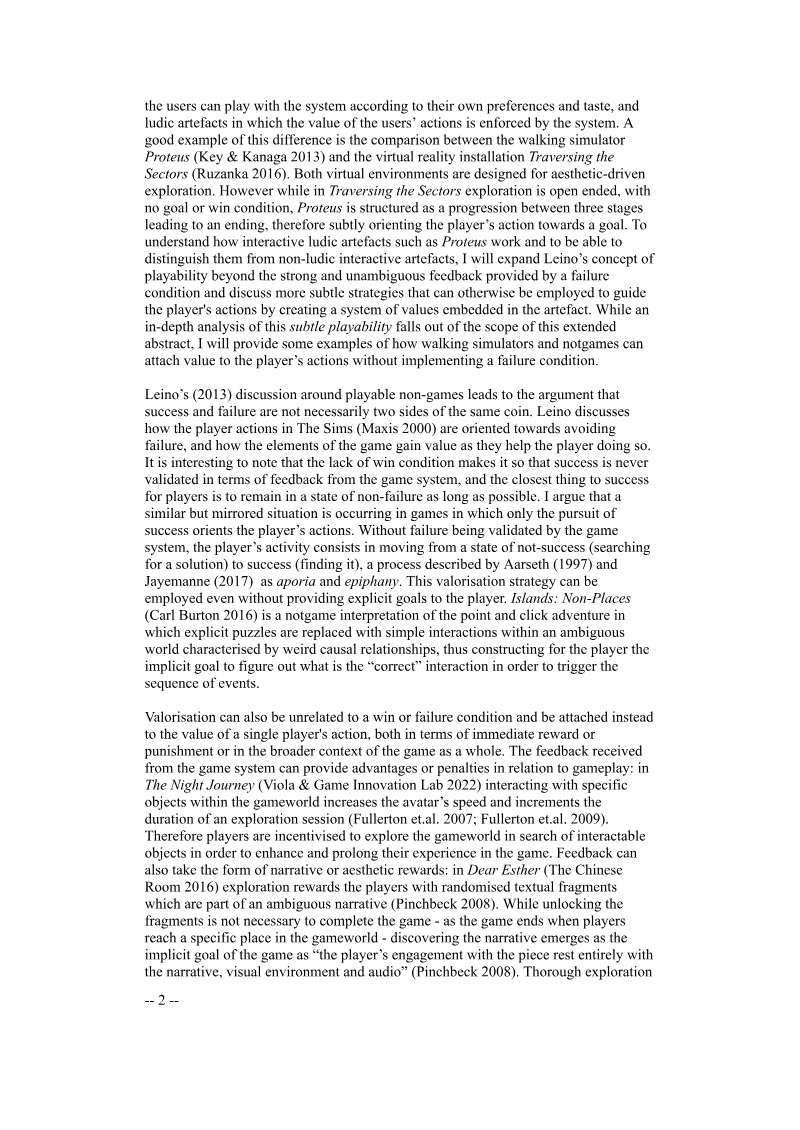
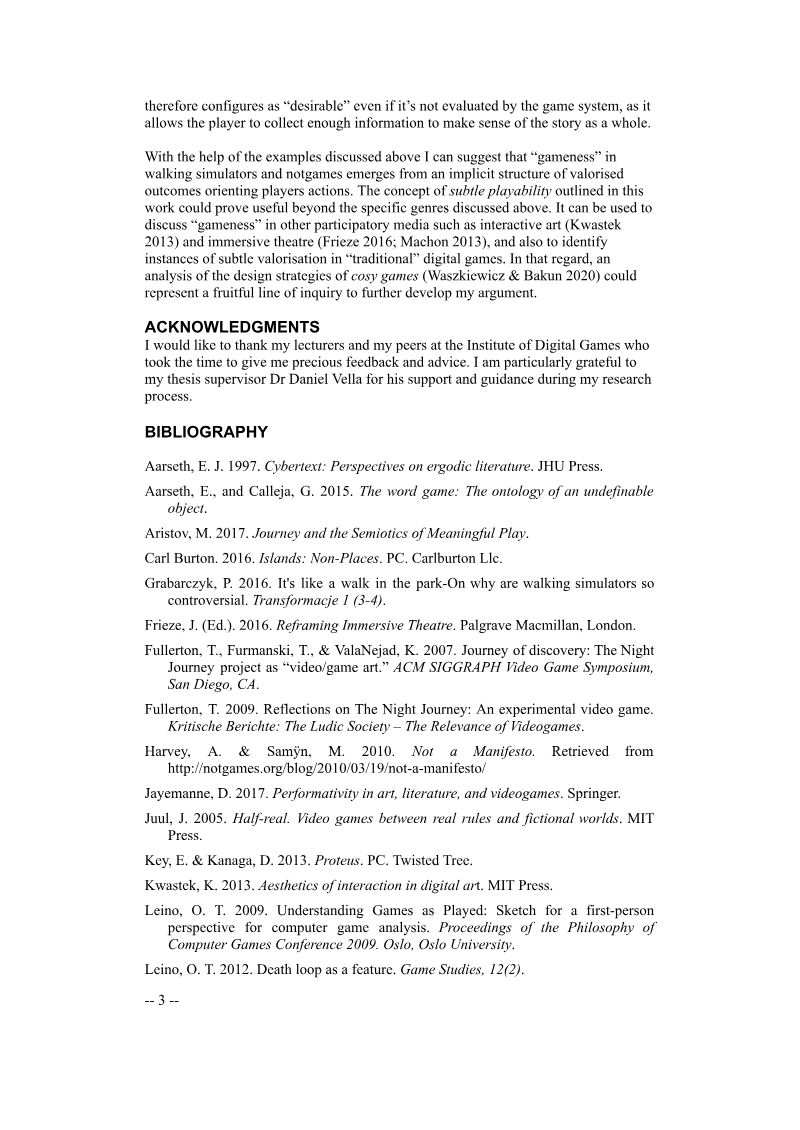
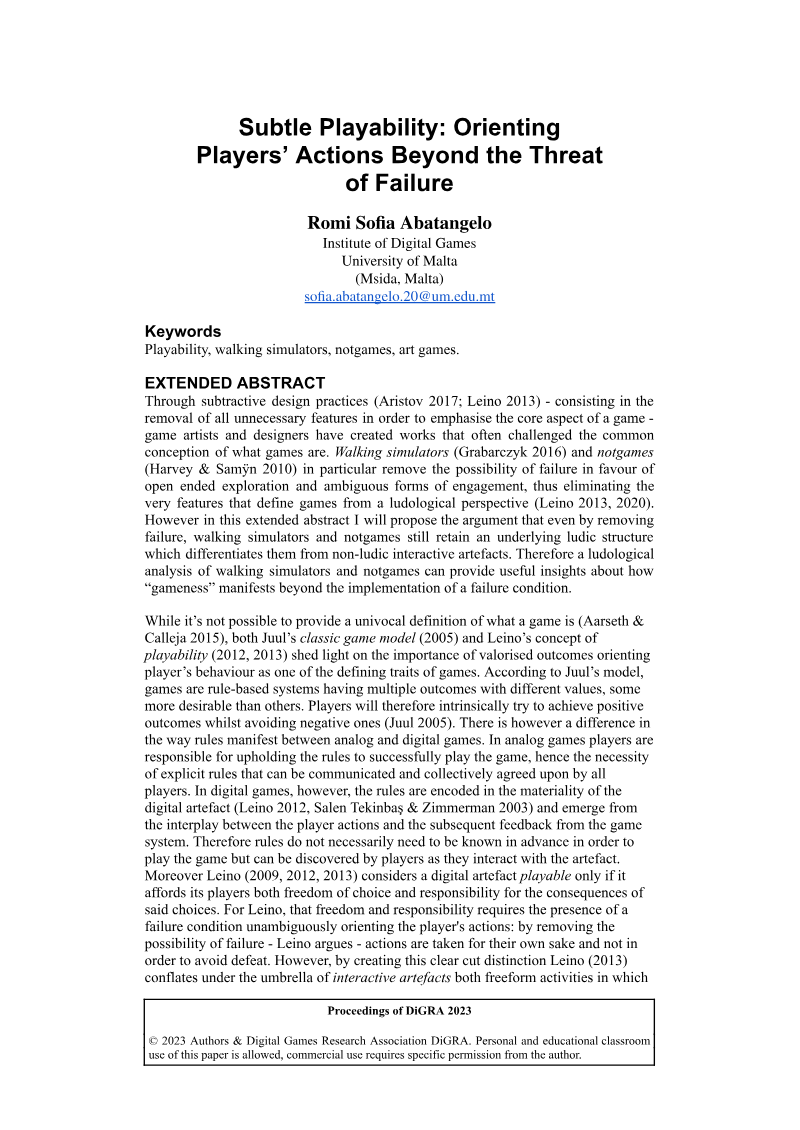
DiGRA · 2023
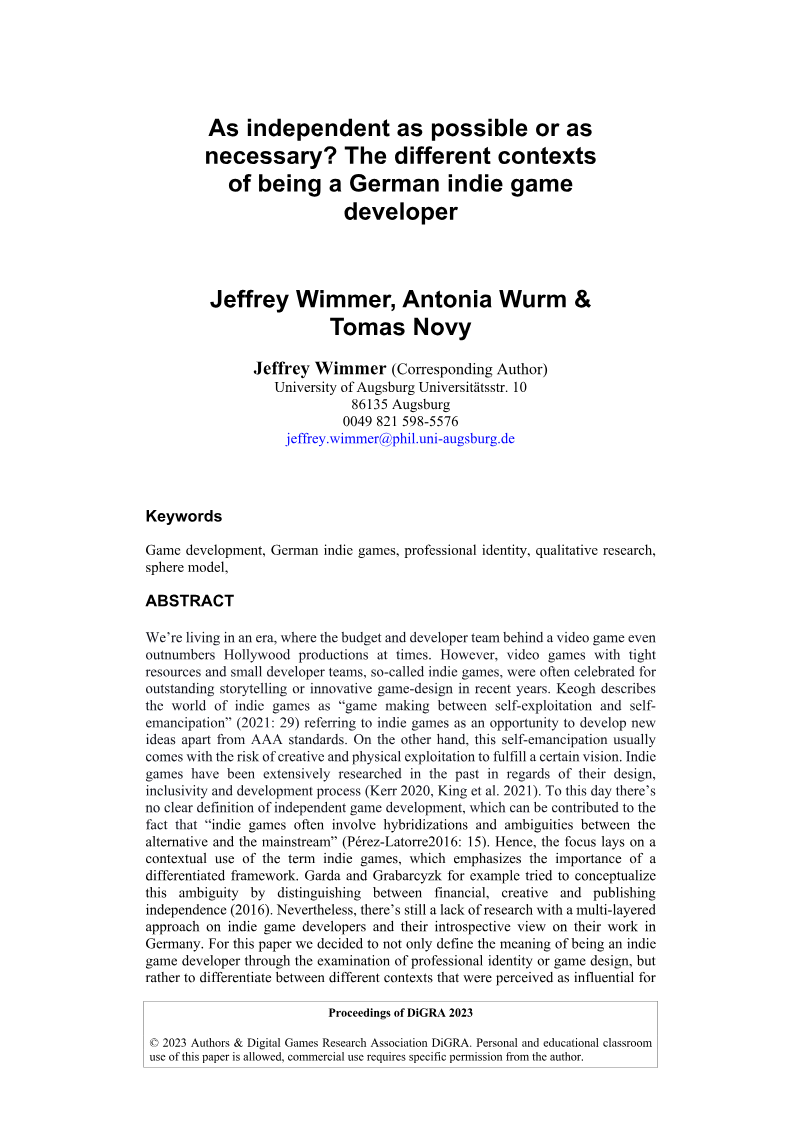
DiGRA · 2023
DiGRA · 2023
DiGRA · 2023
DiGRA · 2023
DiGRA · 2023

DiGRA · 2023
DiGRA · 2023
DiGRA · 2023