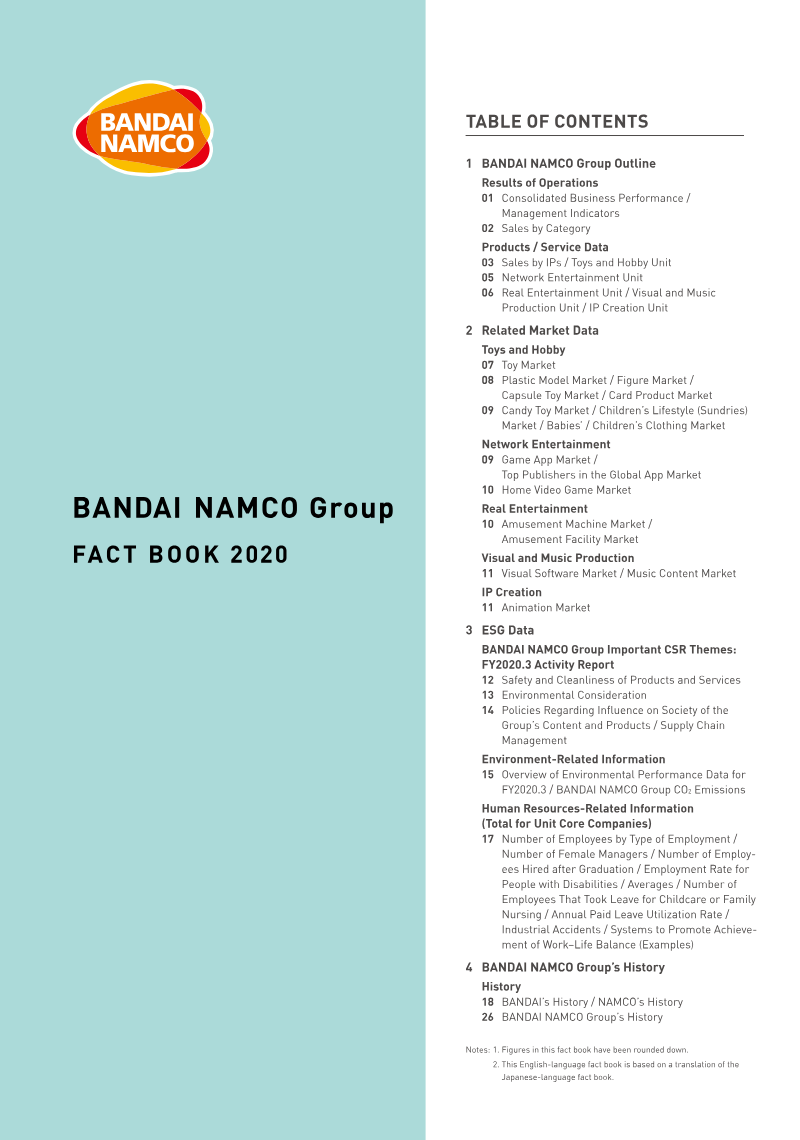
Bandai Namco’s 2020 performance reflects a modest contraction in consolidated net sales to ¥723.99 billion, down from ¥732.35 billion the previous year, while maintaining a diversified revenue base across its three core segments. Network Entertainment contributed the largest share at 42.3 % of sales, followed by Toys & Hobby at 32.7 % and Real Entertainment at 11.8 %. The Japanese market continued to dominate external revenue, accounting for roughly 80 % of the group’s total, underscoring the company’s reliance on its domestic fan base. Flagship intellectual properties remained pivotal drivers, with Dragon Ball alone generating ¥134.9 billion, and other titles such as Dark Souls III, DRAGON BALL Z DOKKAN BATTLE, and Gundam models achieving significant milestones in unit sales and downloads.
Corporate social responsibility initiatives centered on ethical‑content training and rigorous supply‑chain oversight, featuring mandatory briefings for new employees and suppliers and a dedicated ethics secretariat that conducts comprehensive audits across the network. This focus on governance complements the firm’s long‑term strategic narrative, which traces its origins to the 1970s‑80s development of iconic IPs—including Mazinger Z, Pac‑Man, and Gundam—and the subsequent establishment of dedicated publishing, toy‑manufacturing, and video‑game divisions. Both Bandai and Namco secured public listings on the Tokyo Stock Exchange in the late 1980s and early 1990s, cementing their corporate stature.
From 2016 through 2020, the group accelerated global expansion through joint ventures, regional headquarters in Asia, China, and Europe, and new subsidiaries such as BANDAI NAMCO Technica and BANDAI NAMCO Collectibles. These moves supported product achievements—over 10 million units of Dark Souls III sold, more than 100 million downloads of DRAGON BALL Z DOKKAN BATTLE, and Gundam model shipments exceeding 500 million—while also launching virtual‑reality offerings, signaling a continued push into emerging entertainment technologies.
Bandai Namco · 2026
Bandai Namco · 2025
Bandai Namco · 2024
Bandai Namco · 2024
Bandai Namco · 2023
Bandai Namco · 2023
Bandai Namco · 2022
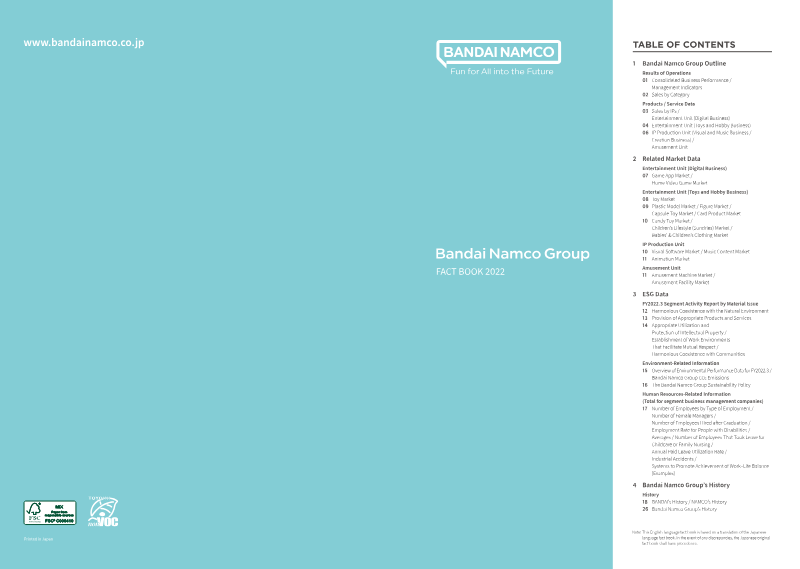
Bandai Namco · 2022
Bandai Namco · 2021
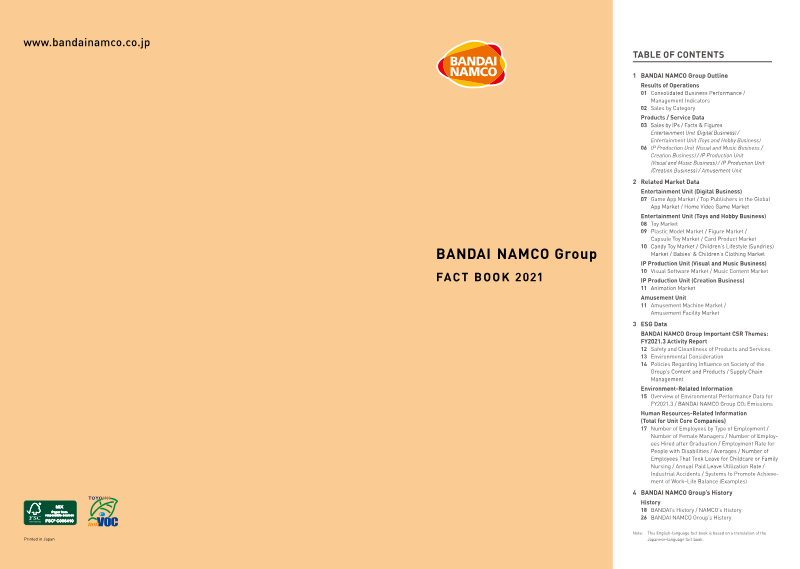
Bandai Namco · 2021
Bandai Namco · 2019
Bandai Namco · 2019
Bandai Namco · 2013
Koei Tecmo · 2023
Bandai Namco · 2017
Bandai Namco · 2016
Bandai Namco · 2014

Bandai Namco · 2012

Bandai Namco · 2007
Bandai Namco
GungHo Online Entertainment

Koei Tecmo
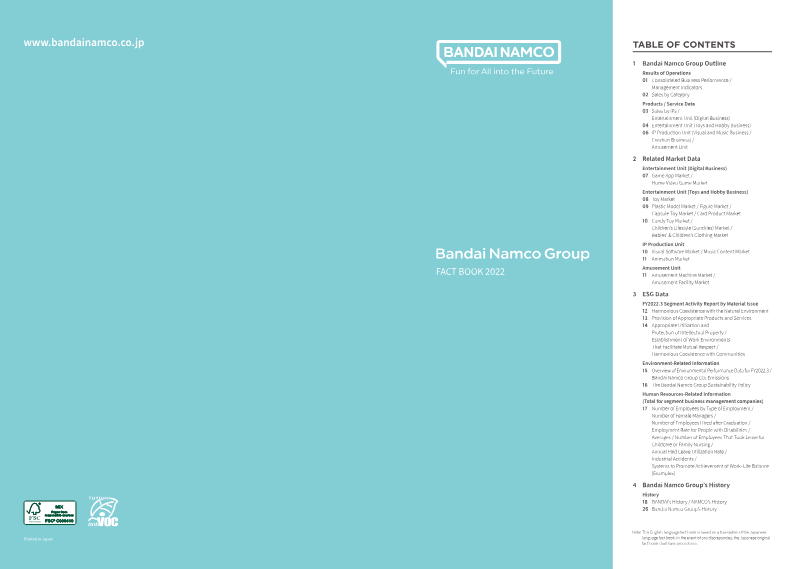
Bandai Namco
Koei Tecmo