The 2019 Fact Book presents a comprehensive overview of Bandai Namco Holdings’ financial health, strategic evolution, and market positioning, emphasizing the company’s transformation into an integrated entertainment conglomerate anchored by iconic intellectual property. Consolidated net sales reached ¥732.3 billion in fiscal 2019, an 8 percent increase over the previous year, while operating profit stood at ¥340 billion and return on equity hovered between 13 and 14 percent. Despite robust growth, the revenue mix remains heavily weighted toward the domestic market, with Japan accounting for roughly 81 percent of total sales and overseas operations contributing a modest share.
The narrative traces the group’s origins from Bandai’s post‑war toy manufacturing and Namco’s amusement‑ride and arcade ventures to their convergence in the 1990s, when both firms diversified into video games, publishing, and media. Landmark products such as Astro Boy, Gundam model kits, Pac‑Man, and Tekken established a foundation of enduring franchises. The 2005‑2007 merger created Bandai Namco Holdings, enabling coordinated acquisition of partners like TOEI and Sanrio, expansion of overseas subsidiaries, and the launch of cross‑media projects that leveraged the combined IP portfolio.
From the mid‑2010s onward, the group intensified IP‑driven growth through mobile and digital platforms, exemplified by titles such as Idolmaster—which achieved four million downloads within a week—and Dragon Ball Xenoverse. Cumulative sales milestones, including over 300 million Gundam model kits and tens of millions of units for Tamagotchi and Tales series, underscore the sustained commercial appeal of its core franchises. Collectively, these data points illustrate a strategic emphasis on leveraging legacy brands across multiple entertainment channels to sustain profitability and expand global reach while maintaining a dominant domestic presence.
Bandai Namco · 2026
Bandai Namco · 2025
Bandai Namco · 2024
Bandai Namco · 2024
Bandai Namco · 2023
Bandai Namco · 2023
Bandai Namco · 2022
Bandai Namco · 2022
Bandai Namco · 2021
Bandai Namco · 2021
Bandai Namco · 2020
Bandai Namco · 2019
Bandai Namco · 2016
GREE · 2022
GREE · 2021
Bandai Namco · 2013

Bandai Namco · 2007
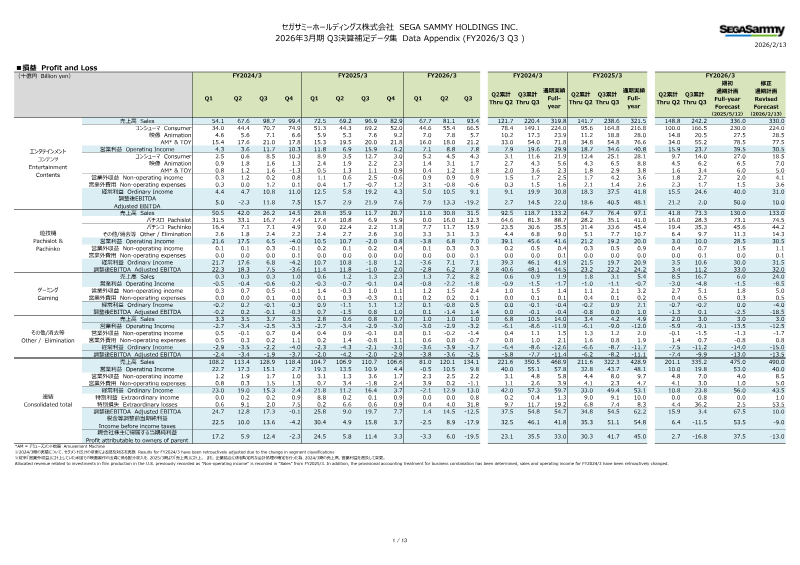
Sega Sammy Holdings · 2026
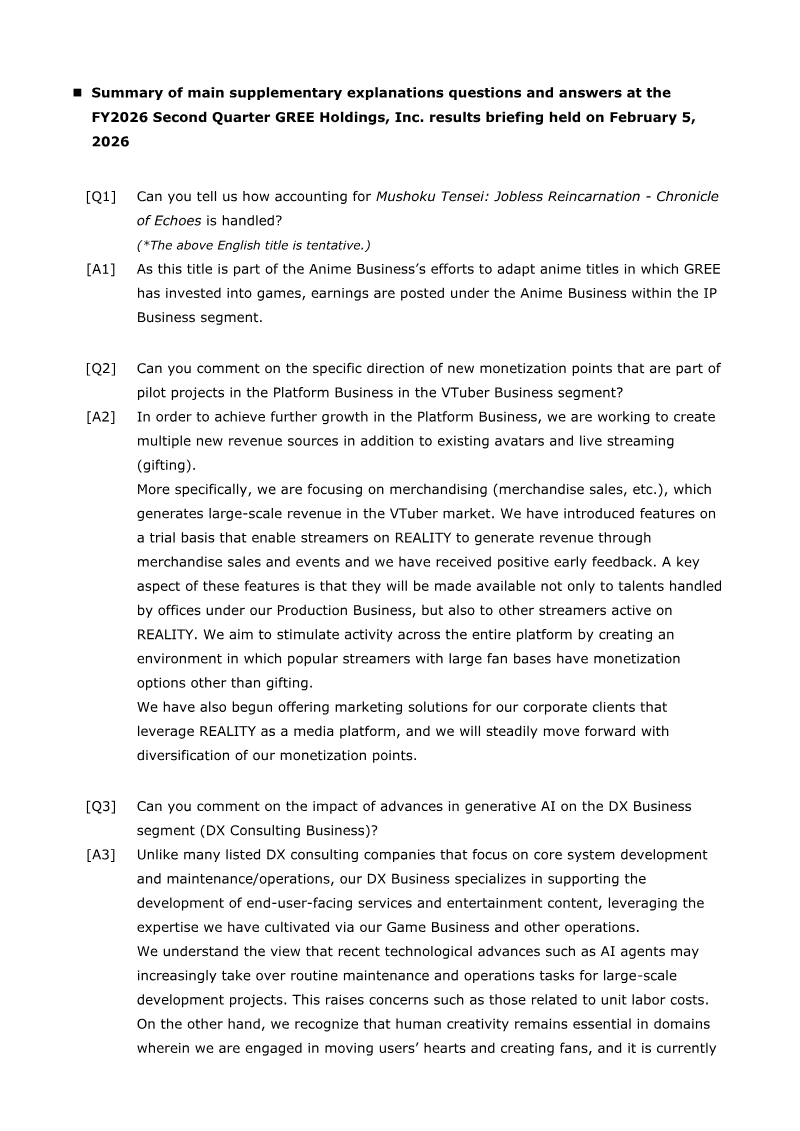
GREE · 2026
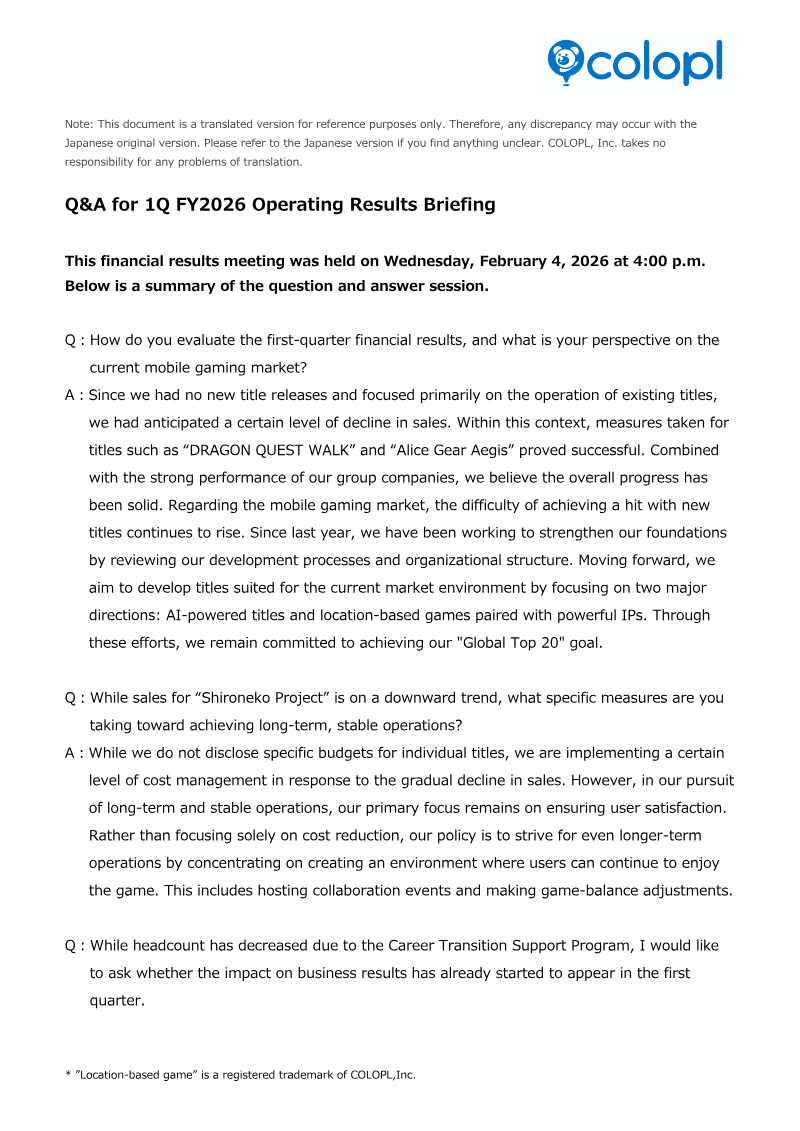
COLOPL · 2026

InvestGame · 2026
EA · 2025
Newzoo · 2025
Nintendo · 2025