1 free read left. Create a free account for unlimited reading + AI research.
Create free accountArticle G|A|M|E – The Italian Journal of Game Studies
1 free read left. Create a free account for unlimited reading + AI research.
Create free accountArticleG|A|M|E – The Italian Journal of Game Studies
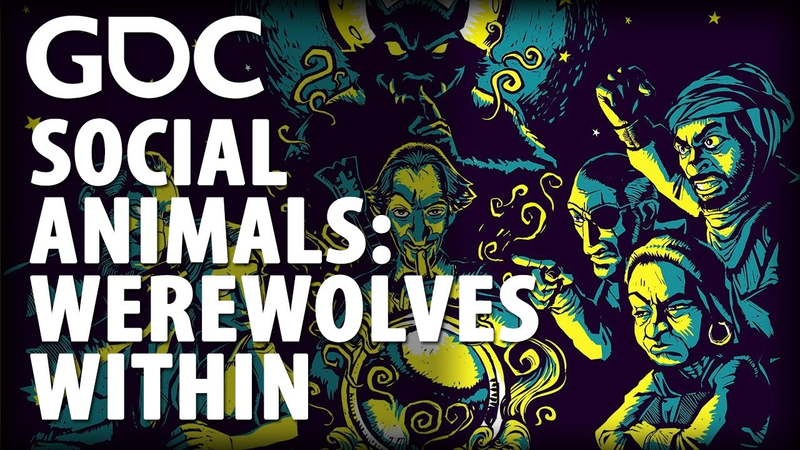
The article reads the hidden-identity mechanics of One Night Ultimate Werewolf as a structure of concealment that mirrors the closet and strategies of passing.
The document offers a queer theory reading of the party game One Night Ultimate Werewolf, arguing that its hidden-identity mechanics and secrecy-driven play mirror the lived experience of the closet and queer strategies of passing. Drawing on theorists including Sedgwick, Muñoz, Butler, Babuscio, Ruberg, and Benshoff, the analysis treats the asymmetry between Werewolf and Villager roles as a structure of concealment and performance. Werewolf players are read as performing a false identity under surveillance, while agency is located in successfully "keeping a straight face" and subverting the game's deductive gaze, much as queer individuals navigate heterosexist scrutiny. Central to the argument is Sedgwick's linkage of sex and knowledge, which the author maps onto the game's social deduction mechanics.
The analysis is explicitly interpretive and theoretical rather than empirical. Its primary textual support comes from the game's designer FAQ and from the cited scholarship, and it does not rest on player data or systematic observation of play. The scope is therefore conceptual: it concerns the structure of one tabletop game and its potential resonances with queer history and theory, rather than any particular community, region, or period of game culture.
The final sections extend the reading in two directions. First, the author argues that the game's secrecy-and-survival gameplay parallels covert queer communication, and that its horror tropes and fluid werewolf identities align with contemporary queer identities that resist rigid binaries. Second, the author contrasts the game's systemic hostility toward werewolves with the 1970s Gay Liberation framework of "coming out" and "pride," noting that the game lacks such a liberatory arc. Non-mechanical interactions, including the Night Phase and subtle gestures, are read as expressions of queer agency. The author presents these readings as one of many possible interpretations rather than a definitive conclusion.
G|A|M|E – The Italian Journal of Game Studies · 2026
G|A|M|E – The Italian Journal of Game Studies · 2026
G|A|M|E – The Italian Journal of Game Studies · 2026
G|A|M|E – The Italian Journal of Game Studies · 2026
G|A|M|E – The Italian Journal of Game Studies · 2026
G|A|M|E – The Italian Journal of Game Studies · 2026
G|A|M|E – The Italian Journal of Game Studies · 2026
G|A|M|E – The Italian Journal of Game Studies · 2026
G|A|M|E – The Italian Journal of Game Studies · 2026
G|A|M|E – The Italian Journal of Game Studies · 2026
G|A|M|E – The Italian Journal of Game Studies · 2026
G|A|M|E – The Italian Journal of Game Studies · 2026