More on Game Design
View all


Whitepaper
An Early-Stage Feasibility and Usability Pilot for an Immersive Serious Game to Support English Spelling and Semantic Skills
European Conference on Games Based Learning (ECGBL) · 2026
Whitepaper
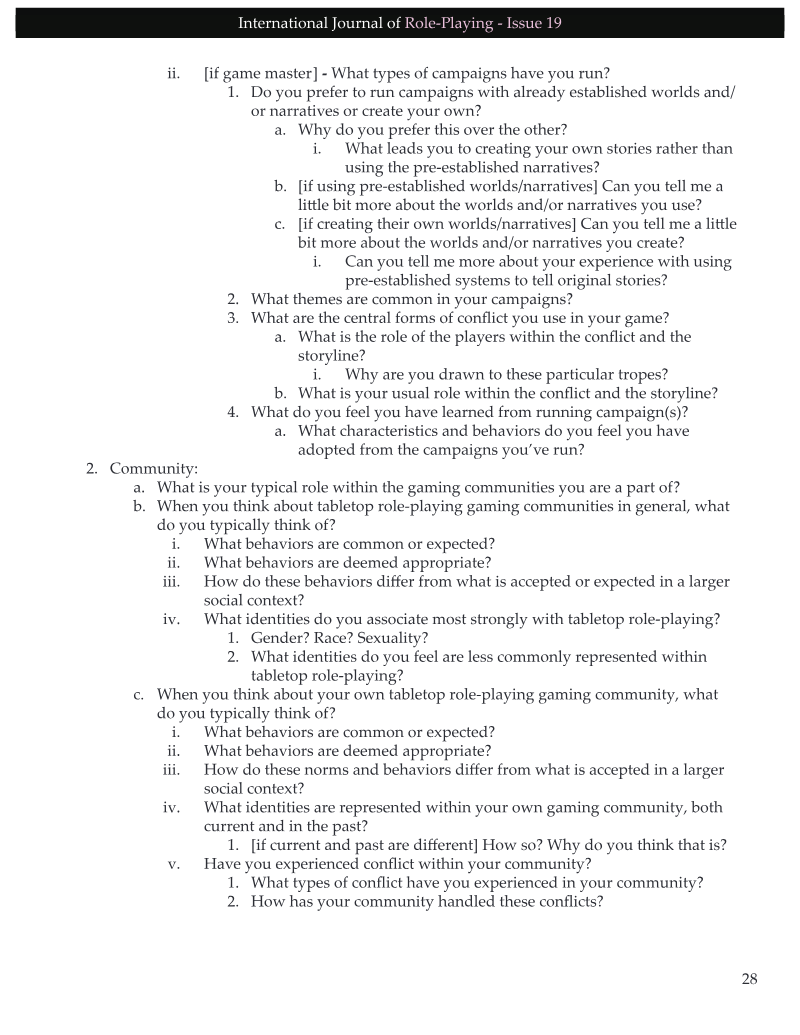
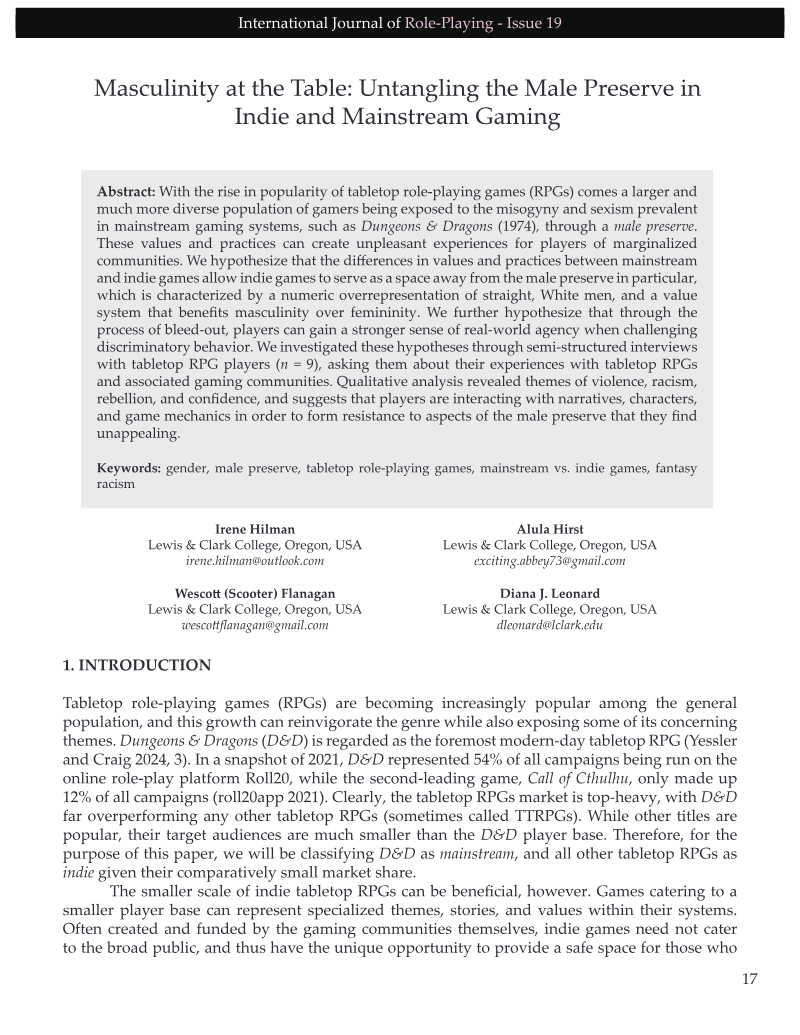
Asteria and Neurodiversity in Role-Playing Games: Inclusion or Tokenism
International Journal of Role-Playing · 2026
Whitepaper
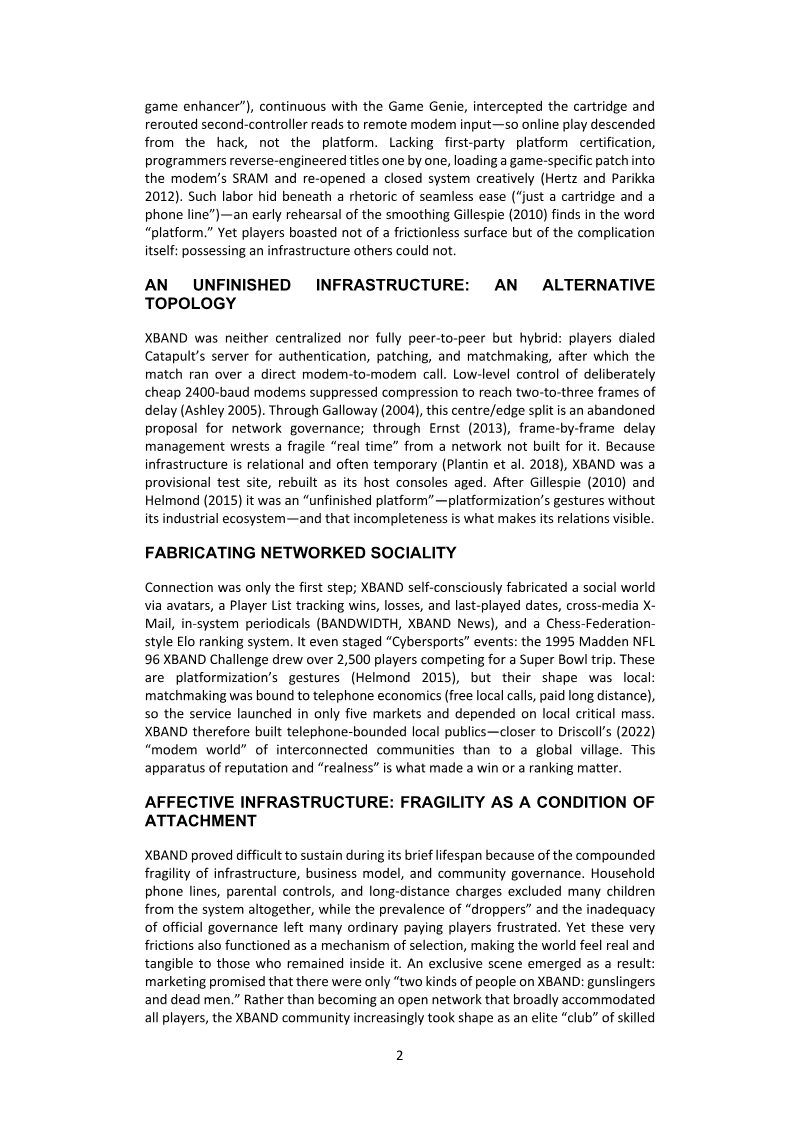
Masculinity at the Table: Untangling the Male Preserve in Indie and Mainstream Gaming
International Journal of Role-Playing · 2026
Whitepaper
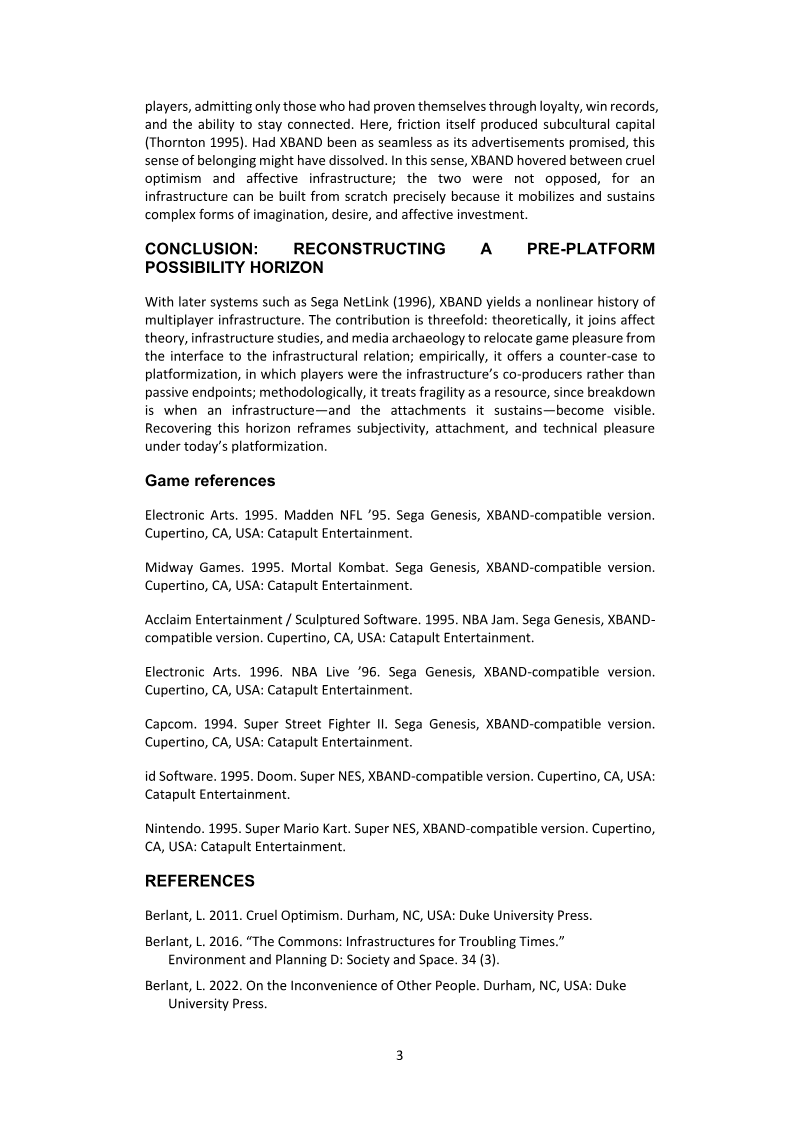
How Can an Unfinished Multiplayer Networking Scheme Produce Pleasure? XBAND as an Affective Infrastructure
DiGRA · 2026



Whitepaper
My Cozy Hero: How Cozy Games Challenge Conventional Hero Dynamics
DiGRA · 2026



Whitepaper
Old Pleasures, Dying Flames: Final Fantasy XIV and the Evolution of the MMO Genre
DiGRA · 2026
Whitepaper
The Name of Janosik Will Never Perish: Górals Tradition in Game Culture
Jagiellonian University · 2026
Whitepaper
Brazilian Indie Games and Hyperlocal Identity: Analyzing Culture, Design Choices, and Steam Reception in Gaucho and the Grasslands
DiGRA · 2026



Whitepaper
Slow Gaming: Applying Slow Movement to Post-anthropocentric Play
DiGRA · 2026
Whitepaper
Player as Archivist: A Proposed Analysis of Player-centric Video Game Preservation Practice
Edinburgh Napier University · 2026
Whitepaper
Ghost in the Dreamcast: Ludomusical Hauntology and Pleasures of a 90s Cross-Franchise Specter
DiGRA · 2026



Whitepaper
Thinking on Our Feet: Baby Steps (2025) Towards (Im)balancing the Somatic and the Stoney
DiGRA · 2026