Games and companies in this document
Connections
Each row is a game or company this document names, each column a document, oldest first. A mark means that document names it. Select a row to see those documents.
1 free read left. Create a free account for unlimited reading + AI research.
Create free accountWhitepaperDigital Artefacts Laboratory (LAD)
The paper's central conclusion is that game maps and perspective views make propositions about the spaces they represent. They are not neutral reproductions of space.
"Beyond God's Eye" argues that the maps and perspective views found in video games are never neutral reproductions of space. Drawing on theorists such as de Certeau, Panofsky, Harley, and Korzybski, the authors contend that these images carry Modernist assumptions: homogeneous, infinite Cartesian space and an anthropocentric, externally positioned viewer. Rather than treating game cartography as a hybrid of mapping and touring, the paper claims that games expose the inherent interdependence of these two modes of spatial practice, with the degree to which they challenge spatial stratification depending on how maps and perspective projections are combined, how synchronous they are, and how much control the player holds over the point of view.
The analysis proceeds through close examination of specific titles. Europa Universalis IV and Thronebreaker illustrate how map and perspective projections reinforce an impression of geographic accuracy while encoding historical and political values, and how players therefore function as guided tourists whose spatial narratives are shaped by the game's enunciative filters. Europa Universalis IV's oversized units and compressed distances are read as reinforcing human dominance over nature. By contrast, Minecraft's responsive mini-map and Skyrim's mobile third-person camera are presented as more interactive hybrids that can unsettle those values and connect mapping more directly with touring.
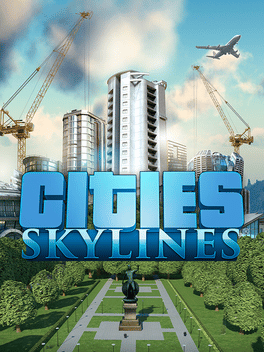
The paper's central conclusion is that gameworld images make propositions about the spaces they represent rather than simply depicting them. Its arguments rest largely on theoretical reasoning and literary-based analysis, supported by illustrative comparisons such as a sixteenth-century perspective plan set against a screenshot from Cities: Skylines, rather than on systematic empirical data. The authors identify the study of how players actually respond to these spatial propositions as a necessary next step in the field.
Each row is a game or company this document names, each column a document, oldest first. A mark means that document names it. Select a row to see those documents.
DiGRA · 2026