1 free read left. Create a free account for unlimited reading + AI research.
Create free accountWhitepaper DiGRA
1 free read left. Create a free account for unlimited reading + AI research.
Create free accountWhitepaperDiGRA
Distilling the key insights…
This paper argues that computer games, grounded in game design theory, offer a controlled, ethical, and engaging means of studying consumer misbehavior, a phenomenon driven largely by emotion that is difficult to examine through self-reports, direct observation, or role-play. Its central proposal is a graphical, single-player game built around emergent or enacted narratives, a first-person perspective, and carefully parameterized time-based and objective-based tasks designed to elicit behavior while preserving immersion. The authors support their case primarily through prior literature, including a cited Statistics Canada figure that nearly a third of nurses are assaulted by patients, rather than through original empirical data.
The design rationale rests on several mechanisms. Real-time constraints and a clear winning state are intended to produce realistic stress responses, while deliberately withholding information and feedback is used to provoke frustration and misbehavior. Non-player characters with emotionally responsive, context-specific dialogue are meant to sustain realism, and strong immersion and player control are positioned as counterweights that keep participants engaged rather than disengaged. The paper treats these elements as testable design choices rather than established effects.
The work is at an early, conceptual stage. It reports no experimental findings and outlines a three-step research plan: gathering scenario inputs from real consumption situations, building the game in the Valve Source Engine, and recruiting consumers to play it. Its theoretical foundation draws on service failure and illegitimate customer complaining research, game design scholarship, player enjoyment models, and work on virtual embodiment and identity, with the America's Army game cited as a reference case. The scope is therefore methodological and forward-looking, with its contribution resting on the feasibility and rationale of the proposed instrument rather than on demonstrated results.
Each row is a game or company this document names, each column a document, oldest first. A mark means that document names it. Select a row to see those documents.
DiGRA · 2012
DiGRA · 2012
DiGRA · 2012
DiGRA · 2012
DiGRA · 2012
DiGRA · 2011
DiGRA · 2011
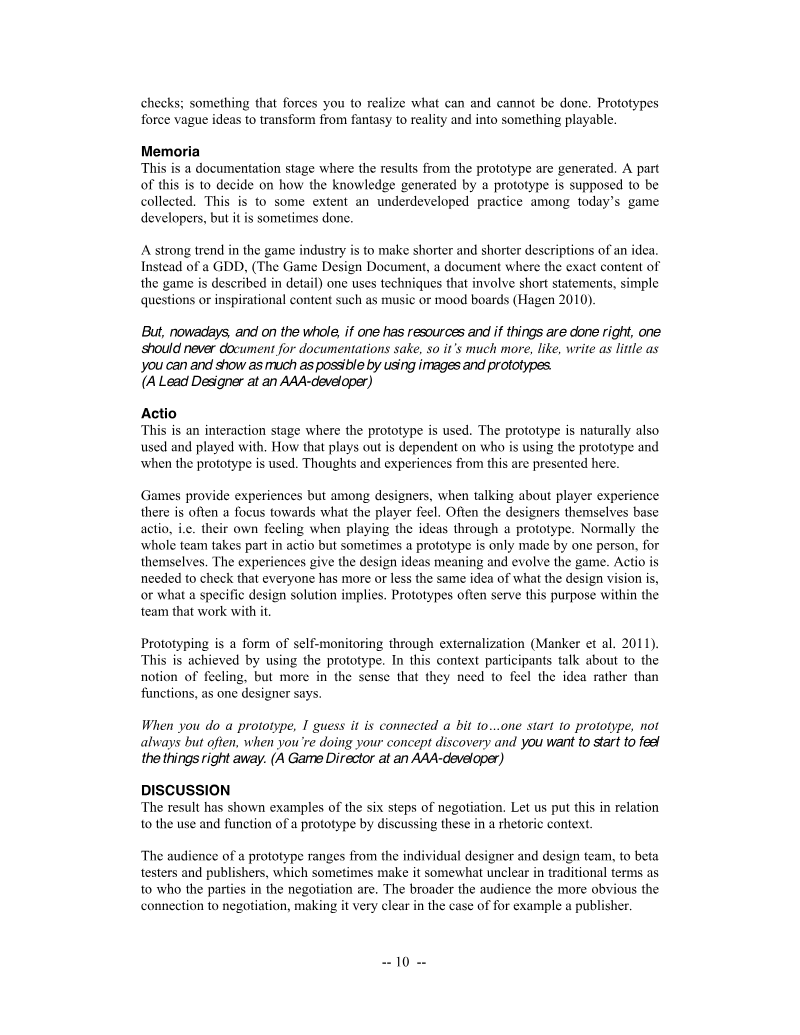
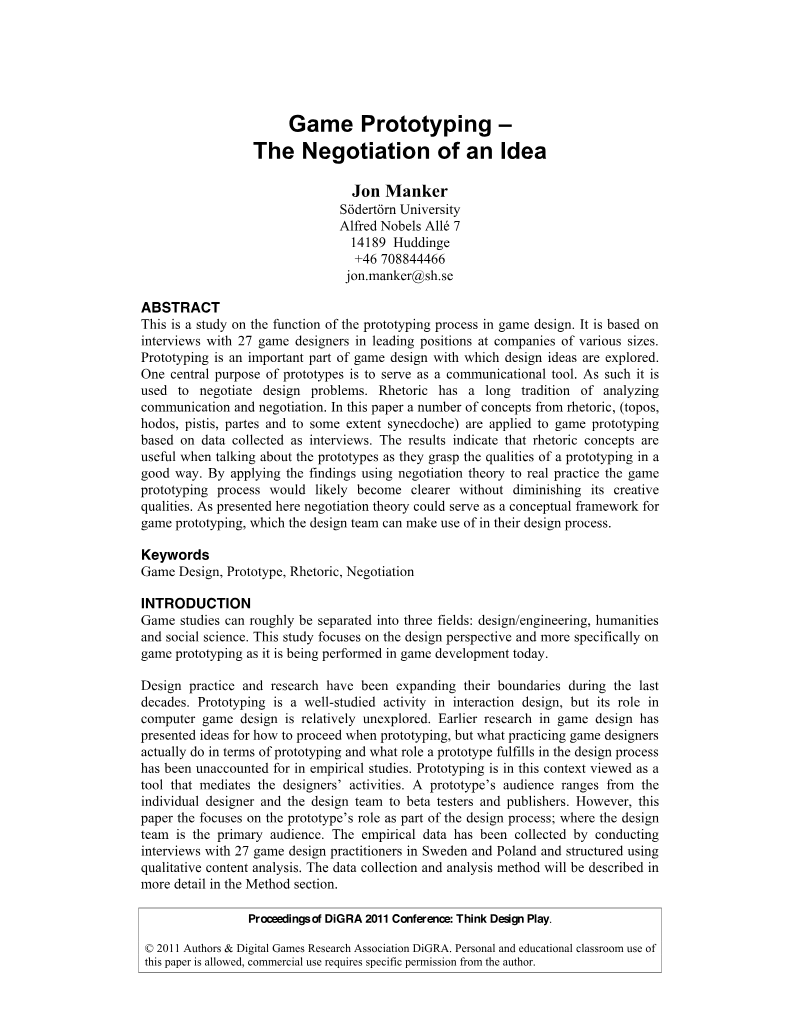
DiGRA · 2011
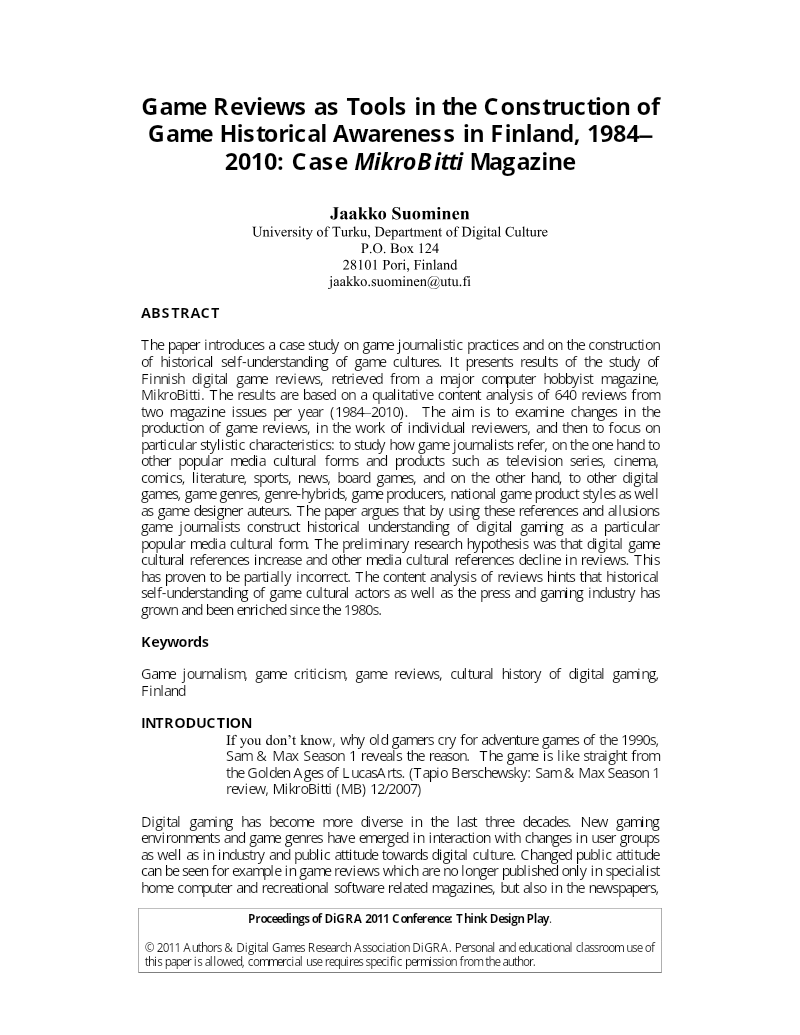
DiGRA · 2011
DiGRA · 2011
DiGRA · 2011
DiGRA · 2011