1 free read left. Create a free account for unlimited reading + AI research.
Create free accountWhitepaper International Journal of Serious Games
1 free read left. Create a free account for unlimited reading + AI research.
Create free accountWhitepaperInternational Journal of Serious Games
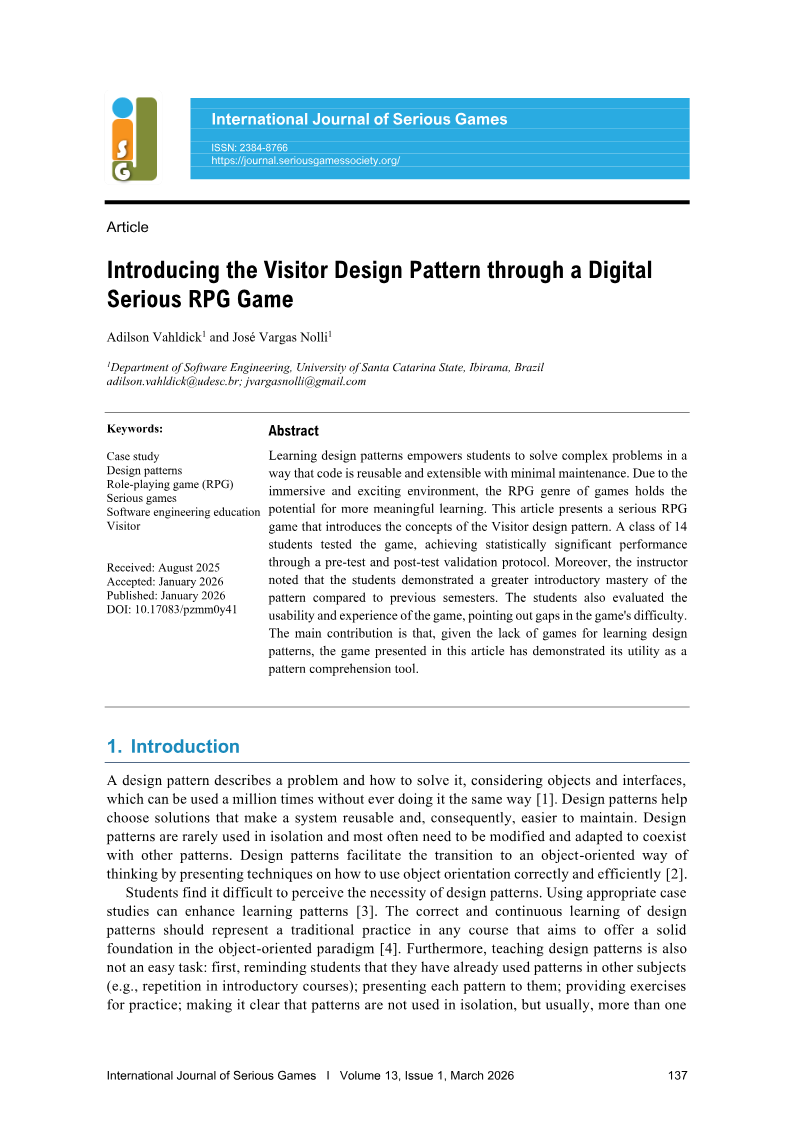
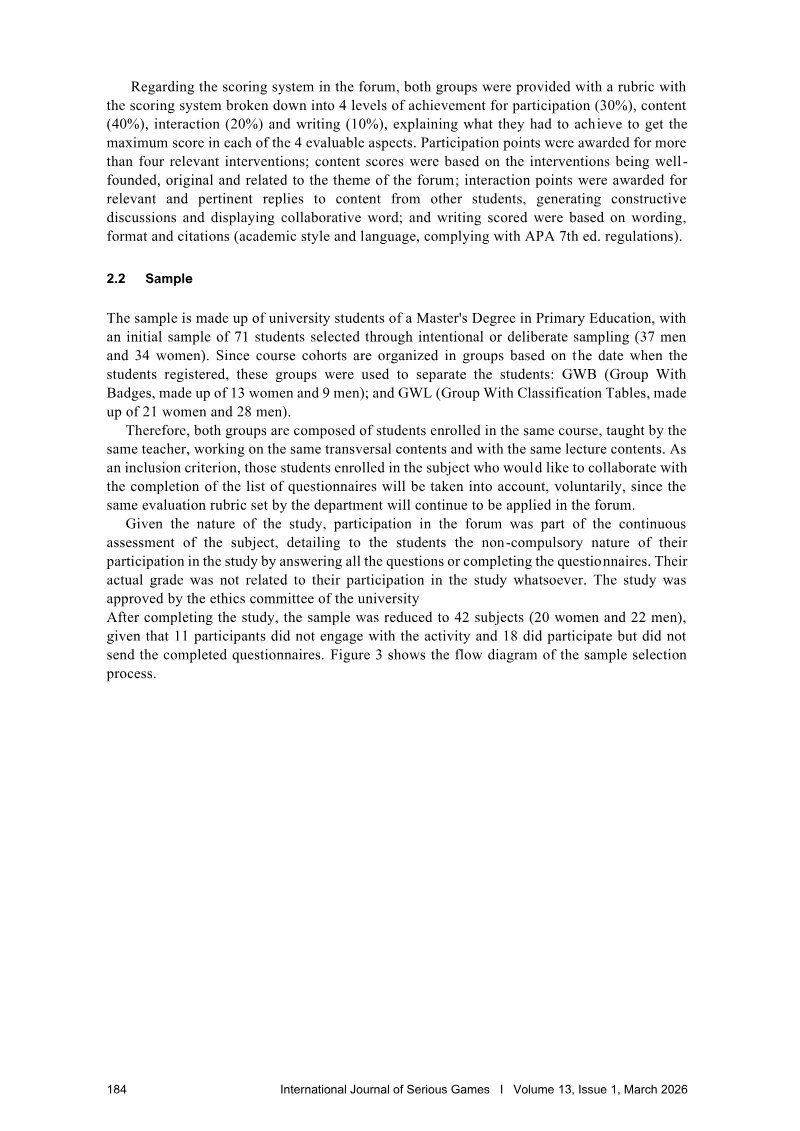
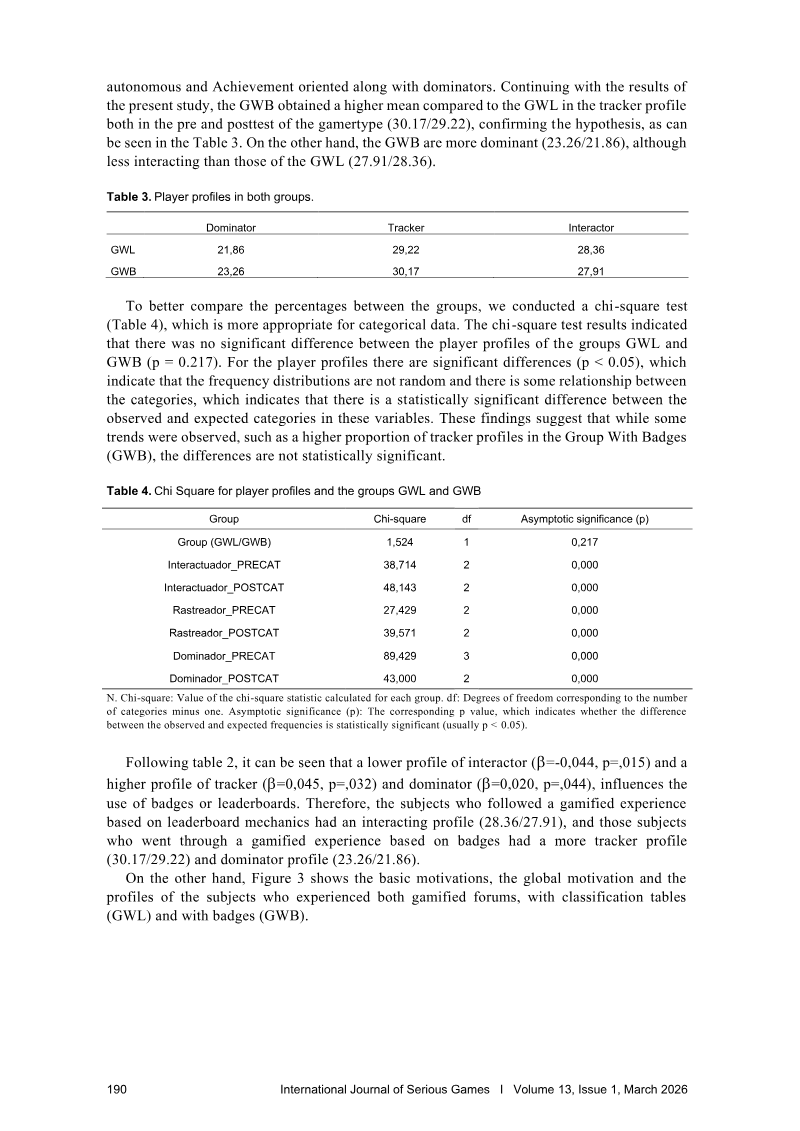
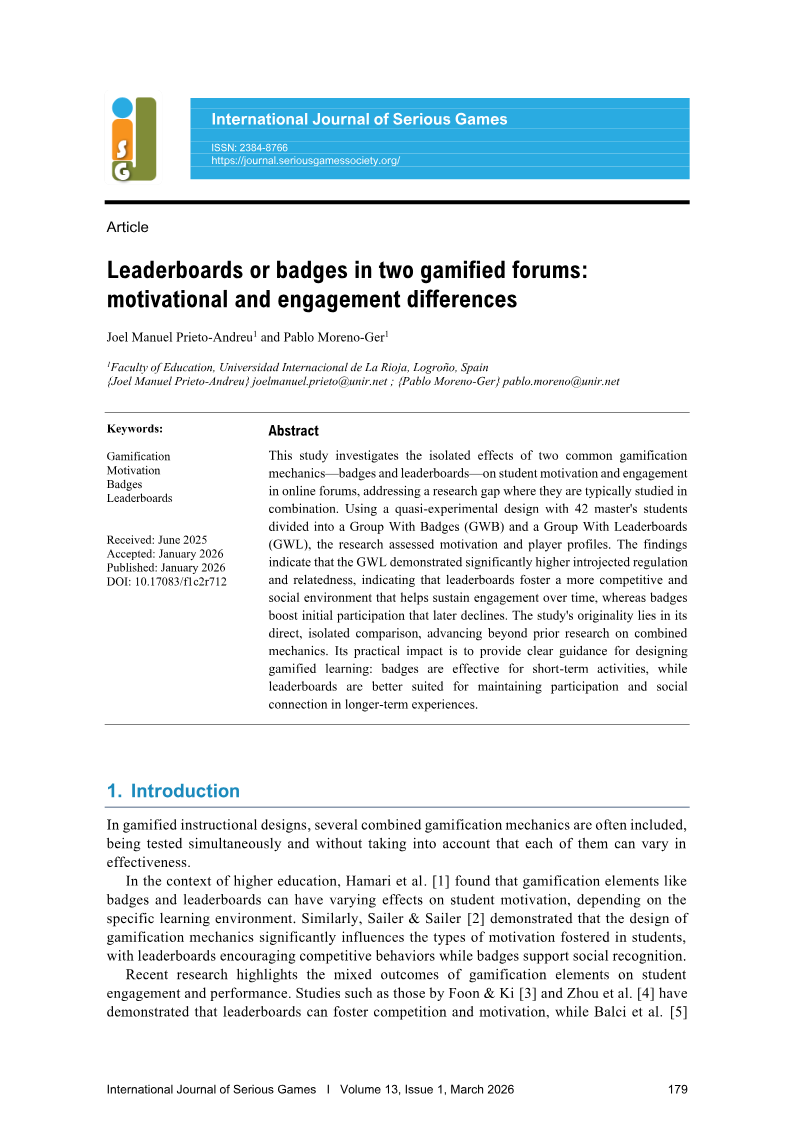
Gamification serves as a potent pedagogical strategy for enhancing student engagement and academic outcomes within higher education distance learning programs. By incorporating structured game elements such as points, badges, leaderboards, and levels, institutions can effectively mitigate high dropout rates and foster increased participation in online environments. These mechanics function primarily by providing students with tangible progress tracking and opportunities for healthy competition, which collectively bolster motivation and improve overall e-learning behaviors.
The efficacy of these systems relies heavily on deliberate design and implementation. Research involving 294 undergraduate students confirms that while gamification positively influences academic performance, the integration of these elements must be balanced to avoid the "wear-out" phenomenon, where student interest wanes over time. To ensure long-term success, educators must provide clear, concise instructions regarding reward structures and feedback mechanisms. Without such clarity, the complexity of game-based systems can lead to student confusion rather than engagement.
Effective integration requires adherence to specific design principles, including structured scoring systems, balanced competitive environments, and consistent, transparent feedback loops. These strategies, supported by broader academic research into game-based response systems and flipped learning models, provide a framework for higher education institutions to modernize their digital curricula. By prioritizing these principles, universities can create more immersive and sustainable learning experiences that address the unique challenges of remote education while maintaining academic rigor.
International Journal of Serious Games · 2026
International Journal of Serious Games · 2026
International Journal of Serious Games · 2026
International Journal of Serious Games · 2026
International Journal of Serious Games · 2026
International Journal of Serious Games · 2026
International Journal of Serious Games · 2026
International Journal of Serious Games · 2025
International Journal of Serious Games · 2025
International Journal of Serious Games · 2025
Serious Games Society · 2025
International Journal of Serious Games · 2025
Western Norway University of Applied Sciences · 2025