1 free read left. Create a free account for unlimited reading + AI research.
Create free account
Design & Implementation of Security & Protection Measures | PocketGamer.biz RoundTable
Key insights
6 takeaways- 01Security measures must be treated as a core pillar of game design, equal in importance to community management and toxicity mitigation, to protect intellectual property and ensure long-term player investment.
- 02Developers should adopt a proactive, holistic approach by integrating anti-tamper middleware early in the development cycle to prevent reverse engineering and botting without sacrificing performance.
- 03Cheating directly impacts revenue and retention, with 77% of players likely to abandon a game if they perceive the environment as unfair and 46% reporting a decreased willingness to spend money.
- 04Maintaining game integrity requires balancing robust detection methods, such as emulator identification and data analysis, with a non-intrusive user experience to preserve community trust.
- 05Regional soft launches serve as critical testing grounds for security features, allowing developers to adapt detection strategies to specific cultural and geographic market needs.
- 06While early integration is ideal, anti-cheat and security protections can be retrofitted into existing titles to address evolving threats as a game scales.
Ask AI about this video
Transcript
so welcome to pocket gamer dot biz's round table so we have one of these um every month covering various different subjects um so i hope you are looking out for those um they provide a opportunity to really get stuck into a particular topic about mobile games and also um ask questions of the expert panelists that we have and we have some expert panelists certainly uh today um so i should say obviously uh we have also our q a box which you should have access to via zoom so as questions arise um please jot them down in the uh q a box um and i will kind of drop them into the conversation uh as and when is appropriate so let's let's uh give our formal uh title make sure i get it right so we have the formal title is design and implementation of security and protection measures in mobile games so that that's
pretty wordy um but i think there's plenty of opportunity for us to kind of drill down into some of those words and and kind of put together a holistic kind of view of what's going on in this space clearly from a kind of headline point of view over the years we've had lots of talk about kind of security mainly in sort of pc games i suppose um and it makes total sense now mobile games are the biggest single uh part of the of the games uh kind of industry that we're kind of taking mobile games and their security and anti-hacking and this sort of stuff a lot more seriously so that's good to see um should point out this round table is in association uh with uh de nuvo at dito and they have some technology um which they will be talking about which specifically helps developers in this area um and we have other panelists as well coming in from a different angle so we have game developers as well and people coming at it from a kind of player experience point of view so hopefully we're going to kind of um kind of put together some some interesting uh kind of opinions and get a broad view on this kind of
subject matter um if people were looking um for one of our panelists ben unfortunately he can't make it he's he's he's been ill so he was going to cover kind of regular regulatory sort of aspects i'm sure we can still talk about them but he was going to be our aspect on that so um so maybe we won't talk about them as in depth as we would otherwise do but anyway um enough from me let's kick off with introducing our panelists or i will get them to introduce themselves at least because that's they know more than me about themselves as much as anything else um so um panelists if you can just kind of give me uh to kind of tell me kind of who you are and who you work for and and briefly the sort of stuff you do and then maybe some sort of um you know headline statement about why you think this kind of stuff is important or what trends you see and then we'll kind of take it from there um steve do you want to kick us off sure thanks uh jj so i'm steve hewitt and i am the cmo at uh to know and do novo is basically the uh the world leader in games protection and anti-piracy technologies
um so really our focus is is helping game publishers to monetize their their assets and that's why we here today is to talk exactly about that lovely thanks steve um chris uh hello yeah so my name is chris nguyen and i'm a senior game designer working at mediatonic uh at mediatonic i work on yahtzee with buddies which is a social casual free-to-play mobile game based around you know yahtzee and rolling dice and stuff uh prior to that i worked at king and prior to that i worked at out playing today excuse me apple entertainment so my entire career has been in mobile casual and free to play and i suppose anti-tampa is particularly interesting from a mobile free to play perspective because regardless of the title that you're creating if it's single player multiplayer or anywhere on that spectrum the second that you are expecting to monetize from that experience anti-tamper becomes super important and
you can't allow bad actors to undermine the way that you're planning on constructing your whole business model um so i kind of view it as a boilerplate requirement in the same way as any other base fundamentals of um the game development would be and i suppose that's why i'm here good i guess we'd like always like the term the term bad actor i always kind of issue this kind of terrible shakespearean person who's been kind of hacking up right okay moving on um christian can you introduce yourselves i am christian i am leading the development of the mobile protection solution at tenure and therefore my interest in is in protecting all kinds of mobile application and for most mobile games cool good uh who we've got next uh renee hi my name is renee gittins i'm the executive director of the international game developers association and it is our mission to support and empower game developers in achieving fulfilling and sustainable careers
and part of that is ensuring that developers are able to make proper profits from the games that they create both by ensuring the security of their release titles but also the integrity of player experience because if players in multiplayer games are having a bad experience due to cheating and other negative experiences then they're unlikely to support the studio to the same extent that they would otherwise my background is both in technology and creative direction and i've actually previously been a server developer on the back end of competitive mobile games you're going to get lots of questions you're covering all the bases there that's good thanks and um pascal yes hi so my name is pascal i'm a player experience consultant currently working at hatch entertainment but also i have the pxhop which is a platform for content on player experience through which i actually help
developers see how they can build more sustainable games and obviously one of those topics or um multiple of those topics like fairness security and safety for players is a big thing so yeah i mean it it reaches with what i do so that is why i'm here good good so it's interesting some kind of uh phrases some some terms have been thrown around which is good which kind of gives us a setting a few of you mentioned player experience and as we've got kind of pascal up now we'll stick with you as the kind of our player experience expert um i'm sure other people abuse as well but but um how does that i guess player experience for me often you know is like kind of how much you enjoy a game which is i guess sort of um the positive sort of kind of uh kind of experience you know how much do you enjoy this compared to this other game sort of thing but i guess in this kind of format we're thinking it of um there's a negative experience which could be there's cheating going on or it could also be i suppose that um i guess particularly on pc we've seen people not not like some of the uh technologies that have been used
to to to try and um stop anti-cheating so can you talk a little bit around how you see um player experience kind of uh working in you know i guess there's kind of two forces going on there's a positive one and a negative one how do you think that plays out yeah well uh well obviously there is a negative aspect towards towards games when it is not safe or when people do not feel safe i mean one thing to understand is that player experience is not just like when people are interacting with your game it's a lot more than that as well like it's all about the the journey that the player makes even before they actually get to your game i mean in a game for instance where there is where people don't feel actually safe when they're playing it it will create this kind of vibe or attitude around around that game around that community and that will actually spread outside as well so that is how it actually touches with people that are not yet playing your game but could be playing your game so companies that actually try to ensure that they have a fair and a safe playing
ground for their players it's something it's it's more that is more the positive kind of side of it like that that will actually help word of mouth is a powerful thing so yeah uh can i lost for words here at this point uh okay let's give you time to define those words um kind of chris you've gone through i imagine lots of kind of products um of different formats what's your kind of kind of take on take on how this kind of plays out within the player experience and how that links the back to the game sure i guess to specifically look out from a mobile game design perspective um a lot of mobile titles uh and specifically games in sort of a mid course space i suppose uh midcore to core uh progression is often times all of the game but especially if you're looking in like the gacha game environment like progression is the core of the experience all the way to the whole of the experience and if you give
players if you allow for players to gain access to that progression and cheat it in ways like for example in a gacha game like i mentioned being able to skew the drop rates of the high quality rewards which potentially they're expected to get much like the point and you allow them to undermine that um crafted progression then it's not only going to create like a negative user experience for other players assuming that some light social elements in this imaginary game have made up um but it's also going to negatively affect like the active player in that if you've constructed an experience that's built around this long-term retention and they're capable of undermining that then in theory they're also not going to get the best experience out of the product um that you provided right um and to build on something that pascal was saying as well around like player experience outside of the product itself um i think it's super interesting the way that uh the way that you know your game has cheaters uh your game has cheats available affects uh how people just approach a product like
perhaps i enjoy a game and i'm playing the game every day but i hear that it has cheetahs you know i hear that in like a twitch stream or i hear that in a youtube video or whatever my friends are talking about it that means that i no longer want to play that game um because as renee touched on earlier like you've undermined the integrity of that whole that whole experience in multiplayer obviously that integrity is very uh felt and pushed upon me but even in single-player experiences like i was touching on i think that knowing that other people are getting past your troubles much more easily and without integrity lowers your desire to engage in that product as well um so it's really good really good i potentially answered the question yeah yeah no no absolutely yeah it's good you've reframed it almost and it's almost you know there's the game and then the meta game and then there's this almost like softer you know external meta game as well which is the i guess communities here that we'd use and and now one of the questions i had was going to be about kind of single player and multiplayer but obviously you know that wider community is is is very
uh kind of strong and i guess the other interesting thing is probably probably if there's a game of lots of cheaters that probably attracts more cheaters so it's almost like a you know you can almost like your cheating can actually kind of kind of destroy your game okay so let's let's get a bit specific now so um uh so um steve can you talk a little bit um about what um the nouveau does because i guess your background is in pc games that's where a lot of the kind of focus has been and in the last year you've kind of moved over to mobile so from i guess from a company point of view why is this the time that you kind of felt that mobile needed um these kind of uh tools right okay well look uh if you look at uh that has the highest level there's there's quite a few different revenue streams that uh that can come uh and and help fund uh basically the games and monetize the games there's uh it starts depending on on the business models with with the games being sold and that's true on on pc platforms but also on on mobile so there's an element of
actually supporting the uh the game publishers in in protecting the game itself and there's there's tremendous issues there where people tend to steal the games and and republish them on other stores potentially you know in these guys potentially with ransomwares with different ad networks uh ultimately you know enabling people to make money off the original game in the uh the original publisher not not really being able to monetize their games but also as as we transition i guess more and more into into the connected world then there is indeed this this additional uh monetization elements including the the downloadable elements uh and and of course the multiplayer element which which need to be secured to to ensure that uh that that that the players remain engaged and so de novo kind of covers you know from one end to the other to the other so it's really from the original uh the original revenue if there is one because there's a lot of
free to play games all the way to uh keeping the players engaged and making sure that the games remain fair and that the demonetization happens all the time good thanks um so so rene if i guess i can uh get you to put on the hat of sort of overseeing um kind of kind of how the where the development kind of community is do you think this is something that kind of the mobile um community takes serious enough at the moment is it something that you know is a kind of ongoing trend or developers very clearly understand this um with the mobile community and understanding the risks of cheating and such like that i think that there's a varied audience i mean if you look at mobile game players even in competitive games you see a large percentage of them being people who are not previously experienced with games or online games so they might understand that something seems off particularly if you have
something like leaderboards and they'll either make the assumption that those people are either spending lots of money to get advantage in that regard or that there's something questionable going on now when it comes to player versus player interactions i think that people tend to assume cheating it is easier to assume cheating than uh than issues with one's own skill set right uh and i think that sometimes um particularly in the like newer mobile games when it comes to to player versus player uh people don't fully acknowledge that there can be issues with integrity of like client information so you know it's very easy to do packet sniffing and change packets if you're like for example communicating entire game states back and forth between the client and the server and i think it's acknowledging those
potential vulnerabilities and addressing them is something that everyone who has a competitive game should make sure that they're doing i guess with mobile i guess being kind of smaller teams and potentially less experienced teams than stuff on pc that they would probably not have the expertise in house anyway and probably not have had the experience of of of that being a big issue yeah definitely and i think this brings um back into light of something that was we were talking about previously when it comes to player experience i think there's always a balance in between uh different types of the experience so if you have uh anti-cheating measures that's great you don't want cheaters cheaters are bad but over aggressive anti-cheating measures can affect the player experience or might target people who aren't cheating and just happen to have a program running on their computer that you detect is potentially cheating and and cause problems with your community that way so there's definitely a balance when you're looking at these different
measures to ensure that the player experience is optimal another way they say players say the game is cheating because my kids say that all the time and everybody loses the game is cheesy i'm going well you mean that you lost yeah okay um right so uh christian can we go into a little bit of detail um let's not go too deep kind of straight away we've got plenty of time but um how how does how does the kind of anti-tamper kind of kind of product work what kind of things you know is it uh is it stopping and what kind of things isn't it stopping um can we can we take that as a first point sure point um view how our protection looks like so that it is at the very end of the development process you just invoke our tool or you use our service like i said so what you can do is you upload the final application and then we add the protection on to that you get it back and you're good to do your final qa and then release the game so that's how it looks like from a usability point of view but what it
does is it has um several um it's built around plugins it has several plugins that can do different things and you can choose which ones you want to have so for example if you choose to use um integrity verification then what we do is that we make sure that no that the code is not tampered with its in the original form as you submitted it to the store as and the same goes for all the assets in the game so we also make sure that no assets are changed in any way to i don't know gain any unfair advantage for example and there are also a number of other plugins that we have and they can do different things like for example um make the game not playable on rooted devices so if you choose to do this we activate it not labeled on emulators and a couple of other things to um make reverse engineering harder like anti-debugging like anti-hooking features that's just a couple of them so so um i guess as all kind of middleware and tool companies um
do uh kind of suggest you suggested basically uh this is very simple when you take your take your finished game and you do do something at the end end of the process um which i'm sure i'm sure is is totally right i'm not sure if that's the case but but obviously obviously you're adding something in there so mobile games there's obviously always concerns about performance file size uh maybe network uh you know net data traffic and stuff can you talk a little bit about how how that kind of plays out yes we add some code to the game and that code also needs to be executed of course and this takes cpu cycle so nothing nothing to hide there but what we do and i think this is also one of our uh our main advantages among other tools is that we are one of our main goals is not to degrade any user experience and this specifically we do this by not not decreasing the performance of the game and as one
service that also comes with us is um during the setup of our game so there's some setup phase on our end where we do for example profiling of the game so we check which functions which part of the game are running during the gameplay and which are outside of gameplay like some option menus or startup or whatever else and then we only choose functions that do not have an impact on the in-game experience in addition to that then we also do some test run of the of the protection itself and then we are playing the game for a couple of hours just 200 percent make sure that during the gameplay there is no degradation at all so maybe it's a very important thing that that's that's probably uh the magic that that comes with the new one practice the the magic comes from the uh 10 to 15 years of of actually doing that and finding ways to to secure the games without without impacting the performance and legitimately doing that without without actually integration effort which again sounds sounds magic
but is ultimately what what ends up happening cool thanks um so so chris um do you kind of have any kind of uh tools to just to see kind of what impact uh kind of kind of cheating or all those these kind of issues are having on your games or is that something that you don't really kind of have any metrics around kind of formally it's just kind of something you hear about anecdotally that's an interesting question uh yeah that's an interesting question i have two answers that i'm going to give so i'll give the first one first um so one of the ways that we do notice the impact of cheaters in games is through our business performance and analytics teams obviously if you're running a mobile game especially a large mobile game and it's expected to have like a long life cycle and be live operable if that's a real word then there's a huge amount of data management and analytics that comes alongside that you're constantly checking the
difficulty curves where the players are hitting the progression points that you're expecting at the in the time scales that you expect checking that the economy is balanced with the right sinks and taps et cetera and uh one thing that those analytics teams are always having to do is to distill uh potentially fraudulent players who aren't engaging in the game we expect who are using tamper techniques we have to distill those users out of that data so that we actually get a proper read of the way um actually get a proper read out of the uh the way the players are actually engaging with our games so i suppose the more you can build these anti-tamper techniques uh early on in the process the more you're gonna save time in those analytics conversations and the more you're going to be able to ensure that the data that you're handling is accurate and representative of the experience that your users are having which is just going to help you to make better and better more data informed decisions um the other thing that i was going to talk about in terms of impact of cheaters was from more of a
road map and developmental and production perspective obviously every time that you decide decide that you're going to place uh anti-cheat techniques into the into your product that is time that those developers are going to have to spend not being able to work on something else to like take a super distilled down uh perspective on this by putting anti-cheat software in you're choosing not to include another level or a client system or be able to play with friends or whatever um and that means that anything that you can do to simplify that implementation process whether that's through you through the use of third-party tools for example is something that's going to help you actually um build those uh build those features that increase the reach of your game in from the from the get-go you know those conversations are often very difficult until they're not right it's like do we need anti-cheat it's like well maybe we should get all this other stuff
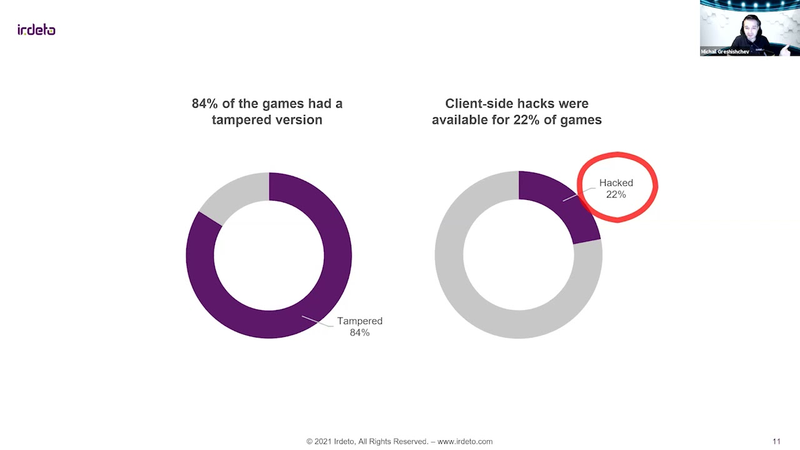
that's going to make our game a success and then your game is a success and suddenly you really wish you had anti-tamper you know so you kind of in a catch 22 there as well so any ways to simplify that is also super important cool sorry can you just uh you mentioned camper techniques could you just maybe i don't know what those are so oh i know the idea either maybe i did i meant to say anti-tamper or time okay cool all right good okay i can make up for this definition though sorry it's my year's nature okay um steve do you want to jump in and say something there uh just just maybe to to add a bit of data because we uh what we did before joining or jumping into the anti-cheat area arena if you will we did we did a major survey i think we surveyed over over 10 000 uh gamers worldwide uh don't don't quote me on this but uh it was a significant amount of gamers the report is available somewhere on the web but but i think what the date of the interesting is is that uh over 77 percent of the gamers were really put off when they would feel like they would be cheaters within
the environment on online 46 of them were basically making the clear statement that they were not willing to put to spend more money uh within the game if if they felt that they were being cheated so there is there is a direct impact into into the span of people uh when when they start feeling like they're being cheated yeah i guess it's going going back into like the ideas of the integrity of the community and i guess if things are free to play the most important thing is keeping the community in the game for as long as possible um and having fun so they can monetize them and and anything that kind of uh um degrades that is is actually you know a fairly important factor um uh pascal um i don't know if you if you've come back to the thought you had before but if you haven't i wonder from a development kind of uh perspective as well a kind of similar question to to to chris do you um kind of try to monitor um your games and and how things like cheating are impacting their uh kind of
performance either from a kind of a metrics point of view or a monetization point of view well you should right i mean that would be a bit silly not not to do it i mean i mean it's like what chris was explaining like you you you need to pay attention to your data like mobile games are indeed gathering way more data on player behavior than other companies actually would i suppose um so it's more a matter of like trying to compare what is actually going on based on your quantitative and your qualitative kind of feedback from players as well like one being your analytic stack and what's going on there how's the game performing are we seeing drops in resource usage or or is there certain spikes in resource usage uh on the other hand there's also the sense of the community that you actually would need to need to pull like are people talking about cheating if they are if there is well substantial number of people talking hey this is not fair
this feels like there's cheaters here or something like that there is a big likelihood that there might be something going on if not i mean because it doesn't mean that it's 100 that you are having cheaters or something is going wrong there it can also be that the perception is just quite off like maybe a mechanic feels not fair or something like that um but yeah i would definitely say you you need to pay attention to it like it's it's it's indeed this is catch 22 like do you do you focus on building a kind of feature that will actually ensure that your players are safe that everything is fair or do you go for the next big feature that you know will retain your users but then you also have companies that are like yeah well why should we care at this point we have no reason to think that something is going on until something hits the fan and then indeed you're at the point like oh now i wish that we actually had planters in and then yeah alarm bells are ringing everywhere so so it's it's not the kind of the nice place to be in
i think there is a lot of companies that actually fall for that it would be good that at least when you are figuring out that you have either a very competitive kind of game especially like we mentioned that before especially with like competitiveness that you try to ensure that everything can be as fair as possible and that if there is an inkling that you're thinking this might be something that could get abused or someone could do a workaround then at least make a plan on what you can do if things would go wrong bad reputations in the game development or in the game industry come really quickly to the audience right like if you're if your game has reputation for lagging or for cheating or for toxicity that spreads very quickly and will be seen as how your game is defined even if you fix that quite quickly as well so i think that yeah i completely agree that a lot of these problems should be
nipped in the bud or before the bud even starts because if you do get that bad reputation it is going to take so much time to overcome it i have to say go ahead oh i was just i was going to ask a question kind of emerging out of this like how do people think that you should handle um pr around these sort of topics because if you have a large portion of your user base that are drifting away because they think that the cheaters in the game and suddenly that game is for cheaters becomes part of the rhetoric um what do you do uh because if you make a twitter post for example saying hey you know we're looking to address it then you're drawing attention to the issue you're perpetuating that discussion um and also you're raising awareness of people who perhaps weren't aware uh that those tools existed so it's another just tricky situation that you can find yourself in especially as like your user base grows larger and larger so i guess i'm just curious what what other people's thoughts are around that and not targeting anyone in particular
but they don't have any thoughts um when it comes to pr communications obviously it depends on your community and the state that the issues are in but i think that saying that you're implementing new measures to ensure you know no cheating i don't think that's going to generally be seen as a negative thing if you say we've had tons of you know cheating problems and now we're addressing them like that's not how you want to phrase that but if you say hey uh community we just want to inform you of these new anti-cheating measures this is if it will explain yeah this is how it will affect your experience not at all hopefully uh and this is what you should be aware of if you have any problems with these anti-cheating measures because you use uh like accessibility programs in the game please reach out to us and we'll ensure that this doesn't affect your experience you know that way it sounds you know nobody's gonna get upset about about that um but if you do have a huge problem where cheating is well known like maybe some
streamers get shown cheating and it becomes a really big topic then i would say yeah you should directly address that there is cheating but for the most part i would just address what you're doing to prevent cheating yeah i would actually also also add on that like communicating is of course better than not communicating because if something like this pops up and you as a company you're staying silent i mean then you're just advocating for it then it's just like yeah it could just just as well communicate and in that case that yeah we don't care so yeah i mean you you want to show that you care towards your community so yeah you need to communicate yeah look from my experience because i'm also noticing that the q a that's asking at the same time when when should we should we even worry about starting to to roll out and teach technologies the the answer is probably from day one if you know that it's going to be a an online multiplayer game because there probably will be some pain generated by
adding it later anyway versus if it's clean and clear from day one um but with that being said it it's it's really not hard and and so you know adding the technology and we've we've seen it done in the magnitude of days in in moments of crisis so it's not that hard but but uh it it needs it needs to be decided and and people need to want to do it and then and then you have to hit it uh hard on the pr side you need at that point right because otherwise you're you you're losing control over it just to be clear um steve that that as far as i understand it you you can you know you can have like a like a finished finished game and then you add the protection at that point obviously it's always better to do it as early as possible but you can basically have a finished game and literally before you submit to the app store at it then yeah that's exactly that in general that that's how it works uh yeah it's preferable to get involved earlier because then you know part of the you know the testing cycles before that
rather than the the right before the end kind of thing because you never know what what you might discover um but but but essentially that that's pretty much it right the game is finished and then we we back on uh technology or around it without impacting its performance to to warranty that people can't temper it uh and and therefore skill it in case it's actually sold as as a game but also uh then the anti-cheat energy which is really there to ensure that it's it's fair and people can't you know apply all kinds of crazy crazy hacks and bots and you name it uh all kinds of super smart way of of trying to attack your games these days good thanks steve i don't know if this is kind of going back to our previous uh discussion about kind of communication and that sort of stuff i don't know if these two are related but i have noticed probably over the last year or so um particularly some of the some of the bigger game companies putting out you know press releases uh kind of boasting about how many accounts they've just banned um and that would kind of struck me as an intro sort of an interesting way of
dealing with it because obviously if you just banned a million accounts then that suggests you've got a lot of issues with cheating but equally if you've banned a million accounts that suggests you're really against uh people cheating so i guess it cuts both both ways and those were particularly i think that that was like a pub g and some of those kind of really big mobile games um which are very competitive and and probably are attracting a lot more attention um but i think i think that that you know potentially can be an interesting way of dealing of dealing with uh the kind of the pr thing because it i although i guess that going back to your point renee it depends whether the community then takes that as a oh they ban loads of cheese let's go and see if we can kind of kind of kind of kind of cheat some more sort of thing where that attracts people you know whether that kind of like dampens it all down and says if you cheat we're going to take your account away you're going to lose all your stuff i mean i guess there's no there's no right answer to that really but um um but maybe just to comment on that further days so if i look at that technology a technology is probably ill-named anti-cheat because it's not there to prevent it it's there to detect it and then every
game developer is then responsible to do what they what they want on on the data and so some might decide you need to to basically put out the player of of the game the competitive game that's that's going on up to potentially up you know banning the players if that's what they want but you know some other strategies include for example grouping the cheaters together and you know what let them play and then and then the non-cheaters are then playing fair game on the other side right so there's plenty of strategies possible and it doesn't have to go as far as expanding people in practice okay good um so we're getting some good questions in now um so this one is is gonna be fairly technical but i guess it's good to raise these um so uh christian you've been a bit quiet so if you can maybe speak up a bit get close to the microphone um that sort of thing anyway um so i guess you can read as well but i'll read it out the question um could you go into slightly more in depth about how you detect emulators um particularly uh considering the uh
the wide wide range of uh android devices and and operating systems etc uh keep apart all these different android devices uh with uh and the emulators but what we are looking for for emulator detection is some and there are some pretty well known telltale signs so there are certain files in there they have made certain packages installed they are having certain properties and other things is that always the emulator needs to communicate from the emulated guest to the host so we're also looking for traces so where are these communication channels to yeah just name a few of the techniques were used there okay um so if that didn't answer the question um please please ask a more detailed question uh thanks thanks christian um okay so um i wonder there was a question we were going to talk to with ben uh who couldn't make it
but i think it's worth kind of kind of raising and um we've mentioned a lot about particularly kind of competitive games and i guess um there's a broad trend happening in mobile games that games all mobile games are becoming more competitive obviously different um features because that's a good way of retaining and monetizing um and i guess on the broader on the kind of like the the biggest sense uh we're seeing the rise of things like esports and even um things like kind of real real money competitive play with with platforms like skills and things like that uh i mean this is a more general question i get i guess the this particular subject but uh let's start with with you chris i mean did you think now that that pretty much all games do have to be competitive and it kind of you know a version of esports is kind of where all games are going in the sense of esports being um something that you know a game that people that more people will kind of watch than people will play i mean is that something that really is playing into where you think mobile games are going in future uh that's an interesting question i guess i wouldn't specifically call out um esports
as the direction that mobile games are going to move into especially not by like necessity though i recognize obviously it's a huge area of the industry i would call out that social is an increasingly necessary area especially for larger mobile games to move into and that's part a huge part of that is just because um the cost to acquire users is just going up and up like over time especially with um the current pandemic going on obviously like that's also increased the cost to acquire users and that just means that finding ways to improve virality increase that k factor within your products is going to become more and more important and one of the easiest and simplest and most reliable ways to do that is just through those car social fixtures and when we talk about social like that's a sliding spectrum sliding scale it makes two microphones there that's a sliding scale you've got like direct real-time pvp on one end which we've discussed quite a little bit on the opposite end of that you've got lighter social elements including just basic clans systems and other ways of grouping users together to allow them to
cooperate or compete or compete cooperate together like you can do all sorts of um different approaches to that but that's still a social interaction which is going to improve the kpis of your product and help you retain your users over the long term and opens another avenue for bad actors to um ruin the experience for other players and then even if you're not doing anything like that like you've got things like bot games right late it is not uncommon for you to present player to player interaction when in fact it is just ghosts and bot data and if you are going to make use of that sort of structure which there's plenty of sensible reasons to do so then that's just another reason that you need to make sure that you're preserving that integrity um and on top of that i guess increasing emphasis especially in mobile casual and i guess generally in the mobile market of um community events just social features are becoming more and more penetrative uh whether those are light social or
built social from the ground up and anti-camp is going to be important for all of those um i i find it difficult to imagine a top of the charts mobile title at this point that doesn't contain some sort of social feature someone can point out the one that is achieving that and i'll look silly but i i think it's a reasonably safe comment for me to make but i guess it'd be good for someone to talk if they do have more specific specific information about the esports angle because i think that is like totally super important um just not something i have a huge amount of experience with ascalon or renae you got anything particularly you want to say about esports or oh yeah i mean i i think that esports is going to make the world go around in gaming really right with with uh the advent of streaming we've seen that people are showing more and more interest in watching games be played whether that is in a competitive manner or simply just enjoying watching a personality
go through a single player game esports has become more and more popular and we are seeing it more on mobile these days and be being seen as a more significant aspect of mobile like true competitive esports on mobile games i think that we'll continue to see that especially as mobile titles continue to develop and become more in-depth uh have more of that very active pvp kind of situations you know we're seeing mobas on mobile we of course games like fortnite also have mobile versions you know wizards of the coast is coming out with a mobile version of magic arena so i think that the next generation uses their phones to play games just as much as they use their consoles or computers and we will see the growth of esports and with that growth of esports
integrity of that competition is extremely important on those platforms i guess we can call out there as well but like the western market specifically is actually probably behind the trend in that environment like when we're talking about mobile esports like we already we already see the impact the arena valla for example is having in like an eastern market or mobile legends bang bang which has seen some success in both markets um or if you start to look in um middle eastern territories and you see more like the management sort of thing which is less less esports but still has some of that sort of sentiment around it so yeah just another interesting aspect as well i guess what's interesting to play into that is because as esports kind of goes obviously not having any big esports in arenas probably for a while now so so that's another kind of force onto mobile and as the amount of money behind winning esports you know increases that's kind of a direct monetization which obviously is a is a direct incentive for people to try and cheat to get further up the
you know the leaderboard to get to get the big prizes i mean i wonder if at some point maybe uh kind of just an observation you end up kind of having people having to create specific client you know specific game types for um kind of esport tournaments to try and you know make them make them kind of more more tough against things like anti-choosing because there's so much at stake um anyone got any views on that good possibility no i'm sure okay i'll move on uh pascal you've not said anything on the kind of esport competitive um kind of stuff have you seen from the from the hutch point of view or from the user experience point of view well well i would have to agree with what actually what rene was actually saying that that esports is going to grow it's going to keep growing i mean it's it's not only on mobile and and we're already seeing the the effects of or what the possibility of cheating on what it does with uh with the industry i mean we had like
when was it a few months ago we had actually one esports athlete getting getting banned because he was actually uh posting a video online where he actually was using a hack or something like that i mean the expectations of the of the audience is also something that we need to take into consideration here like if if people who are watching football or soccer or or cycling if they know that one of the athletes over there is actually cheating by by using doping or something like that then of course it's going to have like repercussions on the brand on the team on the sport itself so i think esports itself is also not going to take that like i think they're going to like crush down on that as well like what you what you brought up like maybe specific kind of clients only to be used for esports tournaments i don't think it's like too futuristic thinking or something like that i i think it might very well be within the possibilities but that would also only be if cheating would be so rampant in that
case so i guess it depends as well on how the developers of esports titles would actually look at that like most likely i would bet that they actually would say like okay no this is not going to happen we're going to try to ensure that this is not possible but never say never right something might slip because as you point out there you know when it comes to kind of physical sports you might think of something like the tour de france that for you know i guess 20 you know for the last 20 years has been kind of rightly be deviled with with people doping and all the records being rewritten and now still you know cycling is still seen as something that really hasn't kind of overcome that that or maybe only in recent years and i guess um you know when there is kind of real money and real prestige involved which is kind of where esports takes us is is um and it goes back to the integrity thing it's not necessarily people are cheating but if it's seen as people are assumed to be cheating and winning um it's almost like you know it's an interesting thing that i didn't think would come out of this discussion but obviously cheating at people actually cheating is very bad for
for the for your games but the perception of people cheating is is in some ways kind of more insidious and and worse it's almost you know people should be maybe talking a bit more about um we are doing we are using these anti-cheating mechanics this is almost like a nintendo approval stand we're using this anti-cheat you know mechanic to stop people cheating it's almost you know i don't know i'm very carried away now you're right it's it's also a deterrented way that's uh that's also kind of uh telling people that uh that this is not the game to be reckoned with and instead uh people move on to the next one um so let's have a look um i mean getting a few um more questions so one i guess we've kind of discussed it as we got you up uh steve or christian can jump if you want um so uh we spoke a bit about impacting performance um do you wanna maybe reiterate um
how how how the software works in terms of performance of the of the game on the device is that all the performance impact that happens is not happening during or any other problems really during the gameplay this is uh actually what we are looking for to keep all of this uh all of this performance out of this phase of the game so it's just happening where it doesn't really matter that much if you lose a couple of milliseconds because if you're i don't know in between changing levels or rounds or whatever things like this i was standing tempted to do a voiceover this one [Laughter] um sorry christian you you were breaking out a little bit with your mic but suggest you reiterate the basics so the technology is designed uh around around profiling and profiling technology which is basically understanding the the game before the technology is
then applied at the right point such that the game is not slowed down so the whole the whole magic is that it's not slowing slowing down the both with anti-temper technology and and anti-cheat so that's that's by design the case and anybody that that's that's worried and interested can can easily compare the two um and and and usually the game developers can't find a single difference between the two um so let's pick up this uh point which kind of i guess kind of re rehashes some of the stuff we've been talking about which is um uh anti-cheat tools and and have a bad reputation i guess this is more kind of anti-piracy in in the past um but how can developers um if we think in in future there's going to be maybe people to be a bit more public about using these sort of tools even in mobile and that in the past on in pc games has has sort of uh caused problems with i guess going back to player experience people um some people having problems with like
drm solutions either they don't like them philosophically or they have problems accessing their their content because because maybe they're using you know something like german like a vpn or an emulator um how do we think developers should be dealing with that i guess it comes back a bit back to communication i mean chris how they how do you see that uh yeah so i su ho i'm going to do the absolute worst thing in the world nasty to repeat the question sorry i was gonna try and win cleveland i actually have some opinions on that yeah um so i think that it all comes down to communication like you were saying the players who are concerned about drm because of how it affects performance are going to be the ones who are most tuned into those communications about the topic right so i would just say hey you know we're having these anti-piracy measures
this is how it is implemented and this will not affect your experience because they're being implemented in this manner or it's being implemented in this way you know ensure that your computer or phone or whatever meets these minimum specifications to ensure a player a seamless player experience as long as you talk about what that experience is going to be like in your approach to it you're going to address the issues of those players who are going to be most concerned about that and truthfully the vast majority of players aren't that tuned in they're not going to care but those ones who are the most vocal and who do care are the ones who are also going to be the ones who are listening to your tweets or press releases or whatever statements you're going to be making on that front that's very good i mean it seems like a lot of this is is is taking this as an opportunity to sort of um uh kind of deepen the relationship with the community and and you know to take the community maybe community understand a little bit more about about kind of what it is to to build
games often yeah the community think it seems to think games like appear appear magically from the i know the stalk delivers them and doesn't see people behind it i think that's actually a really interesting aspect of games is most times like if you're buying some product or even some entertainment a board game not perhaps not modern board games uh the communities aren't really expecting communication about it but with video games the communities these days highly highly expect communication and if you aren't don't have a pr team that is consistently communicating with your community they see that as a negative and you'll be constantly called out on twitter and reddit and everywhere else um which is not something that most industries experience right like movie creators tv show producers don't have to deal with that nearly to the same extent as video game developers i think it's a problem that is almost unique to our industry at least the
expectations are at a higher bar than pretty much anywhere else and particularly for a product you're giving away for free so cool i mean um steve do you think at some point uh the nouveau becomes a consumer brand i'm sure the answer is no but you can can you kind of imagine that you know it's seen as i'm talking about kind of the seal of approval not necessarily not just just your product but but in general you know you could argue you know why why why did why gpus consumer brazil you know no i think that's the hope right so and i think we really have to differentiate a little bit uh the two technologies being anti-temperature and and anti-cheat because anti-temporal is there uh like a drm to make sure that you pay for the game that that that that you're basically getting uh and that again assumes that it's it's paid for so that that is is indeed has been traditionally associated with an evolution kind of picture uh but but anti-cheat is really
there to help the players it's really to to reinforce a safe environment where people actually don't lose because somebody is is a gt and cheating on the other side so so so so the nouveau brand actually has been improving drastically with the players as we've been launching and focusing on on helping the players right rather than just supporting the business more of of the game publishers but trying to be at the intersection where we we're helping everybody intimately [Music] um cool i've got a question about geo uh kind of locations and things like that um maybe i'll make a bit more specific i mean um chris we'll try this question with you so so are there particular geographies you kind of worry about from from this kind of perspective and um would you would you ever kind of release specific versions or like kind of hard harder version yeah hardened versions for specific areas or is that just like a total ridiculous um suggestion just confuses everything you're muted by the way
start falling apart yeah so to answer that question one of the things that we already do is uh region specific releases of games um whether that's through uh whether that's new features or soft launches obviously within specific regions and i don't think it's unreasonable especially within uh within larger companies that have the resources available to think that you could release a feature in a specific region to see what the impact from a tampa perspective would be i think that's something that realistically could be done i haven't seen it done but considering we already do those style of releases to measure the impact of our the uh response to our economies like that doesn't seem like an unrealistic expectation i would also answer that like in terms of specific geos where it is more or less more or less prone to tampering and piracy i think that is almost certainly the case like there is an understanding that there are certain regions where specific platforms are more popular obviously there is none there are specific platforms where this sort of piracy is easier to do
um and in the same way that we in the industry like structure specific geos around like the uh their propensity to spend and the weight the amount that they uh uh mimic the player behaviors of tier one countries like for example i know that i think it's australia that is like a cheaper geo to releasing but is well known for mimicking the behaviors of tier 1 countries for example like we release in those zones to see how things are going to be released you could definitely do the same with um more uh tamper heavy geos in some ways i think that there are sort of different obviously kind of legally as well as culture there probably are different attitudes to copyright anyway so so that the fact that we might see in in in in the uk or or the eu as as being a you know copyright is this kind of pristine thing um it's just not how different cultures kind of operate so it's not necessarily that
they're they're being very evil and trying to destroy our game it's just not how how how they approach this sort of stuff fascico anything anything to say on on uh different geographies different audiences cultures you're muted again are you yeah sorry just in time yeah after one year you would think that you wouldn't be used in a conference call anymore um yeah i would actually say that there is indeed differences like it's it's maybe a more of a culture kind of thing rather than anything else i suppose or how how game communities or the culture of particular game communities have evolved over time like without naming any geolocations right now you've all been very political completely yeah i think you definitely can say that there would be certain communities that are um more seeing the the relationship between developer and and player as a against kind of kind of
feeling not in the sense of like i'm going to come break your game or something like that but but when a game is made it's it it's obviously it's a framework and somehow certain players tend to prefer to try to bend the rules a little bit or try to try to touch the walls of the framework in order to see how far they actually could go which is predominant in certain gaming communities in other yeah also from experience in other communities you you actually have people who are very open about it they tend to boast as well about how they can crack this or cheat in that particular kind of game because it tends to give them status or something like that um which is some which is something that it's it's i wouldn't say it's the majority of of gamers and definitely not in those particular kind of gaming communities it's it's more a minority i would have to say so it's something to be aware of i guess
i guess yes developers are fairly aware of i guess that sort of stuff um good so we're uh we we're coming up to time um i don't want to uh go over time particularly if there's any more questions we've had a good set of questions um i hope we've answered them all specifically if not please let us know um and i guess to kind of kind of um kind of finish up if we kind of go go around the panelists and uh um wait where do where do you think th this sort of stuff is going is this is this kind of a a year which mobile developers have to take this kind of very very much more seriously or is it just going to broader trend that that will kind of um kind of happen happen over time any other kind of point you want to raise um renee do you want to kind of kick us off with that yeah i think that with the expansion of competitive and mobile games and online gaming in general that ensuring the integrity of those player experiences is really important as well as the quality of those players experiences
and while a lot of this can be implemented at the very end with every aspect of game development if you consider it from day one it's going to make the process a lot easier a lot more seamless and keep that player experience as enjoyable as it can be good good we've got integrity in there so that's a thumbs up um uh chris yeah i have to summarize some of the points i made earlier like social social and whether that's extreme or light social is becoming more and more important as social escalates like the need for integrity those words also increases um and that means it's going to become a larger and larger consideration regardless of um regardless of the size of the team that you're working with and obviously the issue i mentioned mentioned earlier about deciding on what you're going to put in your road map is a larger issue for smaller developers so finding ways to simplify that work is going to become more and more important um yeah cool
steve yeah i look at i'd ran for some of it but when i said i think it's something to be to be uh uh considered from day one i think it's it's kind of irresponsible at this point not to apply uh technology to to prevent cheating to prevent your game from being stolen and if you want to know more obviously you can reach out but beyond that just wanted to promote the the pocket gamer connect number five in february where we'll be talking about the real cost with uh with ubisoft uh in many clip as well okay good good you're doing my job for me in in february yeah we'll sign up um christian i think we're having a few kind of mic problems but still you can you can you can shout um right there yeah i can still give it another try that's good that's perfect now at the very end yeah so i would what i would have to add to this is that um i think uh in terms of cheating
people always say it maybe get some bigger problem or so on but i think we already arrived there so mobile is a really huge platform for games already and cheetahs already also found this and uh that being said i thought i just think that uh we need to raise awareness that this is already happening to almost all the games or to the majority of games that there are cheats out there and uh it's probably as we heard throughout the talk it's probably too late or not a good idea to care about that once uh the nightmares happened uh but just try to get some at least some basic kind of protection or basically take care about anti-cheating and piracy protection from the launch of the game excellent thank you christian and uh pasco you can uh you can conclude uh for us yeah i was i would say that i mean the key word that we have been talking about like over and over again and during this roundtable has been integrity and i think integrity is one of those things that is going to become so
important for the whole gaming industry at this point we're already seeing it with other kind of behavior not necessarily the cheating but also like undesired behavior or toxicity we have all major platforms who are cracking down right now they're stepping up their game we have uh we have major gaming companies that are declaring war almost on toxicity like it's it's not gonna take so much time before companies are going to figure out as well that next on the line is going to be the security excellent good well um i've certainly learned um an awful lot so i hope the people attending have also thank you very much uh for our panelists um for uh pascal chris steve renee christian um and andy and also ben i hope he gets well soon um and uh yeah just to say uh we do these round tables uh every month the pocketgamer.biz obviously different subjects every month so um but if you take the opportunity to kind of uh ask experts about what's going on in these particular areas i hope you find that useful and
and as has been helpfully pointed out we have a a a full week of of conference going on in february so definitely sign up for that because it's gonna be you know an enormous amount of information uh going to be dropped there so thanks everyone and um see you next time i guess you
Summary
Security and anti-cheat measures have evolved into fundamental requirements for mobile game development, serving as essential safeguards for both revenue stability and long-term player retention. As mobile titles increasingly incorporate complex multiplayer and competitive features, the integrity of the game environment directly influences user behavior. Data indicates that 77% of players are likely to abandon a game if they perceive the environment as unfair, while 46% report a decreased willingness to spend money in titles where cheating is prevalent. Consequently, protecting in-game economies and preventing unauthorized app redistribution are now as critical as traditional anti-piracy efforts.
Developers are encouraged to adopt a holistic, proactive approach by integrating anti-tamper solutions early in the development cycle. Utilizing third-party middleware allows teams to secure their titles against reverse engineering and botting without compromising performance or development timelines. While early implementation is ideal, these protections can be retrofitted into existing games to address evolving threats. Furthermore, regional soft launches provide valuable opportunities to test security features and adapt strategies to specific cultural and geographic market needs, ensuring that protections remain effective as a game scales globally.
Beyond technical implementation, maintaining game integrity requires transparent communication to foster community trust. Developers must balance robust detection strategies—such as emulator identification and sophisticated data analysis—with the user experience to avoid overly intrusive measures. As mobile esports continue to rise, the stakes for fair play have never been higher. By treating security as a core pillar of game design alongside community management and toxicity mitigation, developers can protect their intellectual property and ensure a sustainable, competitive environment that encourages player investment and long-term engagement.
















Comments