1 free read left. Create a free account for unlimited reading + AI research.
Create free accountWhitepaper European Conference on Games Based Learning (ECGBL)
1 free read left. Create a free account for unlimited reading + AI research.
Create free accountWhitepaperEuropean Conference on Games Based Learning (ECGBL)
The Digital Algebra Game connects abstract algebra to everyday experience by having children transform equations into stories.
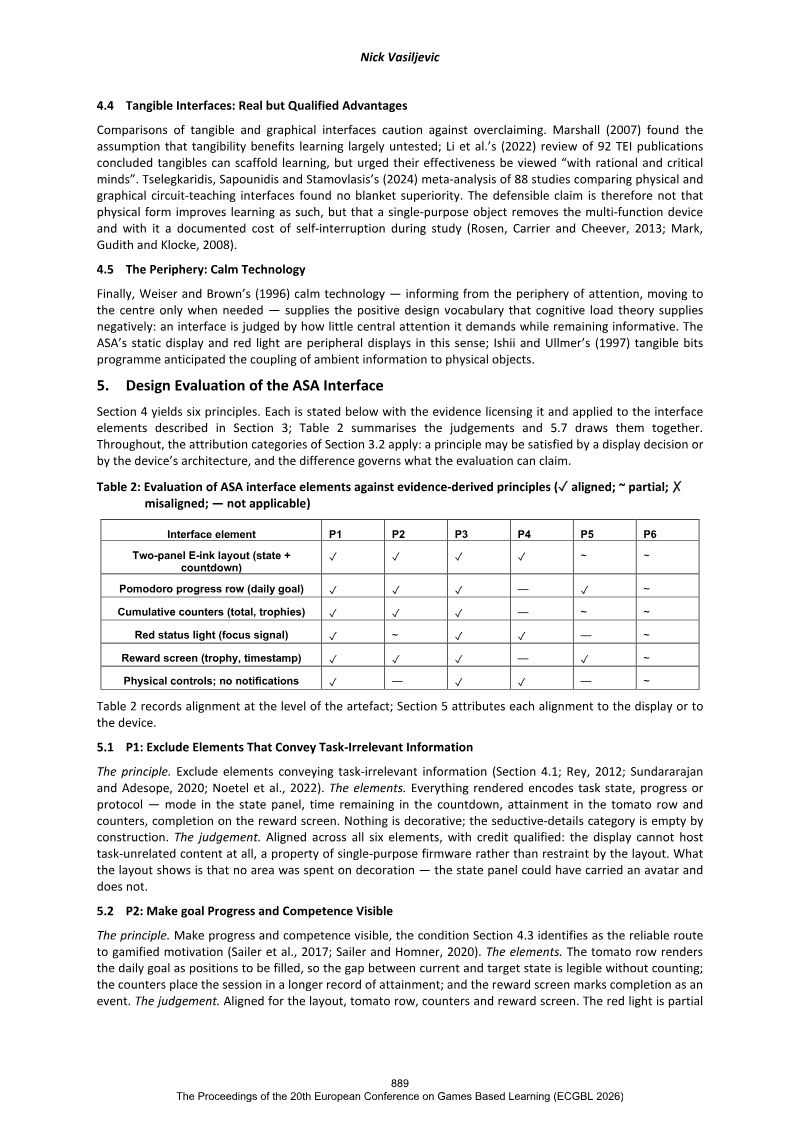
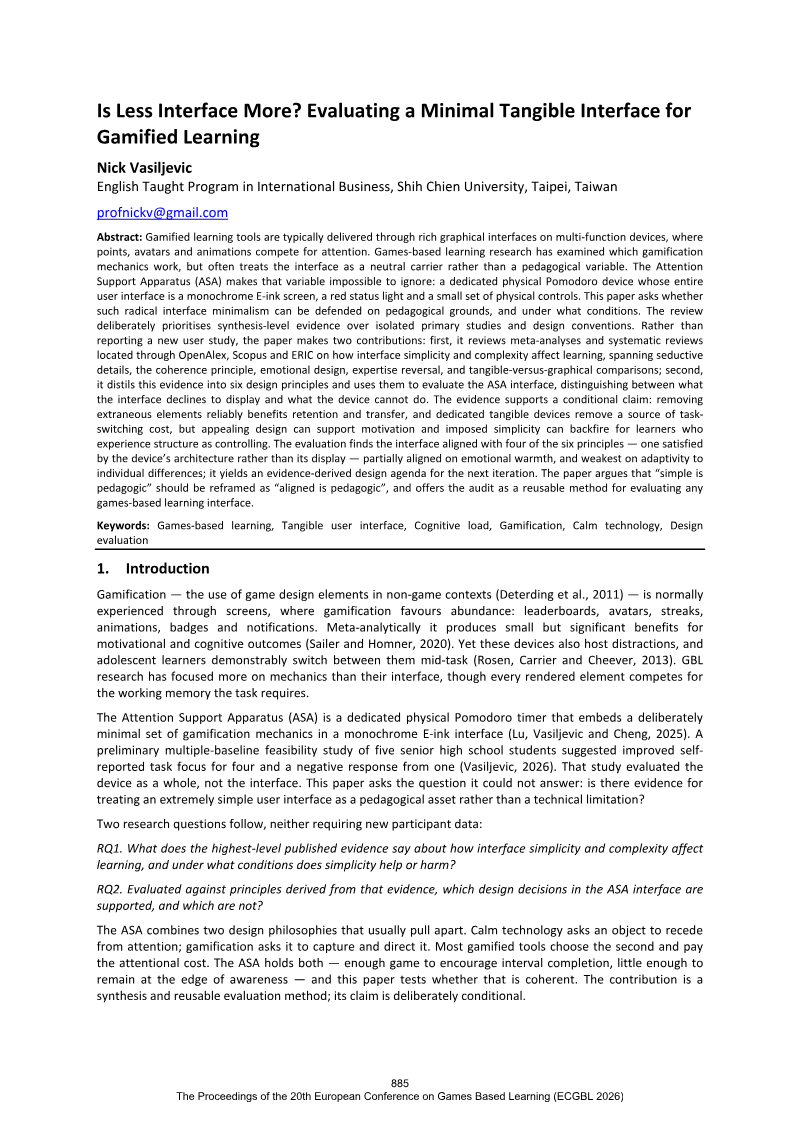
The Digital Algebra Game (DAG) is a low-fidelity prototype designed to help children connect abstract algebra to personal experience by having them transform equations into stories. The work evaluates this concept with 96 children aged 9 to 11 and four teachers at a single primary school, using thematic analysis of interviews and feedback. Its central thesis is that grounding algebra in personal, real-world narratives may enhance engagement and understanding, a proposition the authors present as promising but not yet conclusively demonstrated.
Across both students and teachers, the reception was largely positive. The game was widely described as fun, engaging, and useful for linking algebra to everyday contexts, and the story-creation feature was identified as its most distinctive element. Students' most frequent requests centered on more personalized characters (52% of comments) and additional settings (45%), alongside calls for gradually increasing difficulty, extra levels, points, and a tutorial. Roughly 13% of students found story creation with simple equations challenging, and several teachers expressed concern that the game was less suitable for 9-year-olds.
The evidence base is limited in scope. The evaluation is qualitative, concentrates mainly on usability, draws on a small teacher sample, and is confined to one school, so its findings cannot be generalized to broader populations, geographies, or curricula. Because the study tested an early prototype, its conclusions about learning outcomes remain provisional. The work's contribution lies chiefly in identifying design directions and user expectations that merit more rigorous, longitudinal investigation of the game's effects on algebraic understanding.



European Conference on Games Based Learning (ECGBL) · 2026



European Conference on Games Based Learning (ECGBL) · 2026



European Conference on Games Based Learning (ECGBL) · 2026



European Conference on Games Based Learning (ECGBL) · 2026



European Conference on Games Based Learning (ECGBL) · 2026



European Conference on Games Based Learning (ECGBL) · 2026



European Conference on Games Based Learning (ECGBL) · 2026



European Conference on Games Based Learning (ECGBL) · 2026



European Conference on Games Based Learning (ECGBL) · 2026



European Conference on Games Based Learning (ECGBL) · 2026



European Conference on Games Based Learning (ECGBL) · 2026



European Conference on Games Based Learning (ECGBL) · 2026
European Conference on Games Based Learning (ECGBL) · 2024
European Conference on Games Based Learning (ECGBL) · 2023
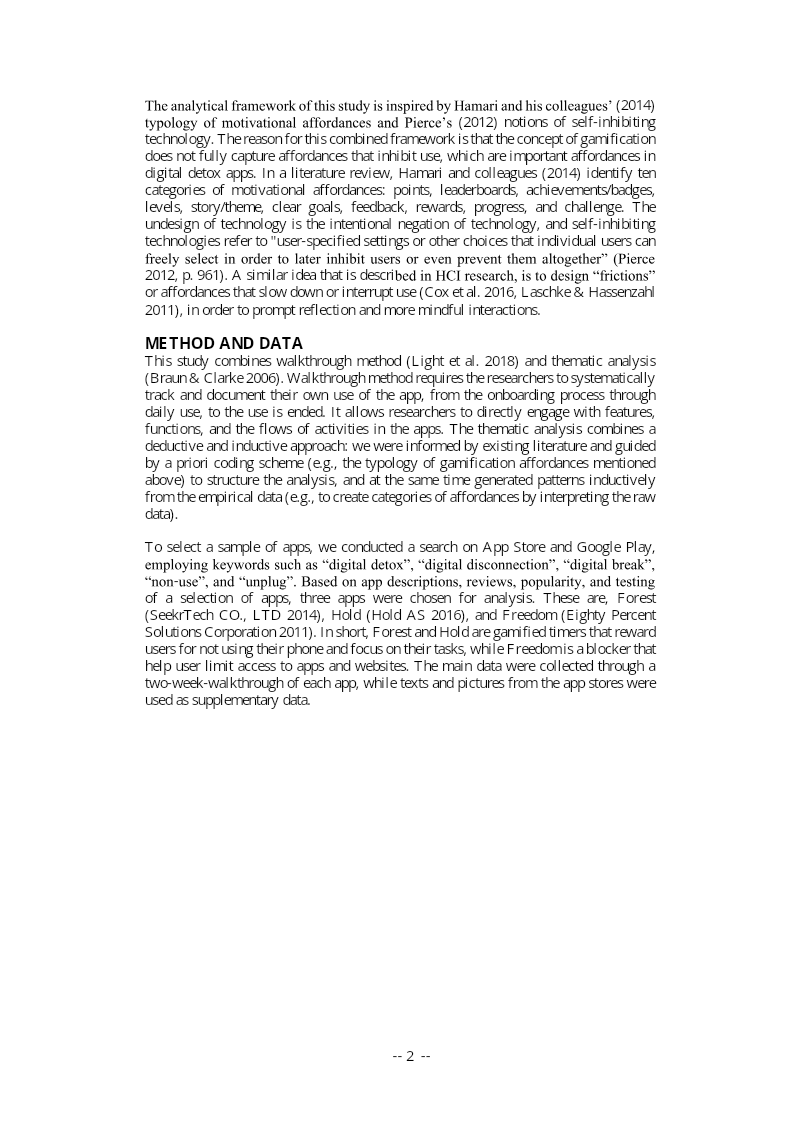
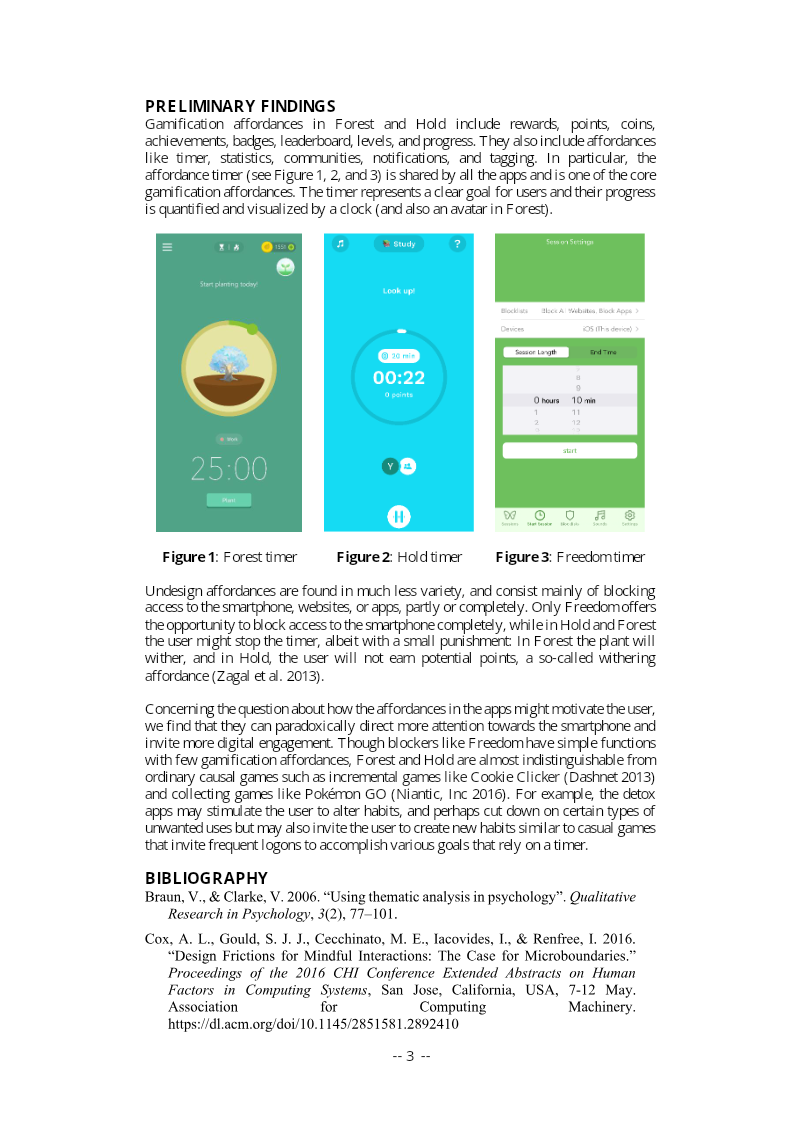
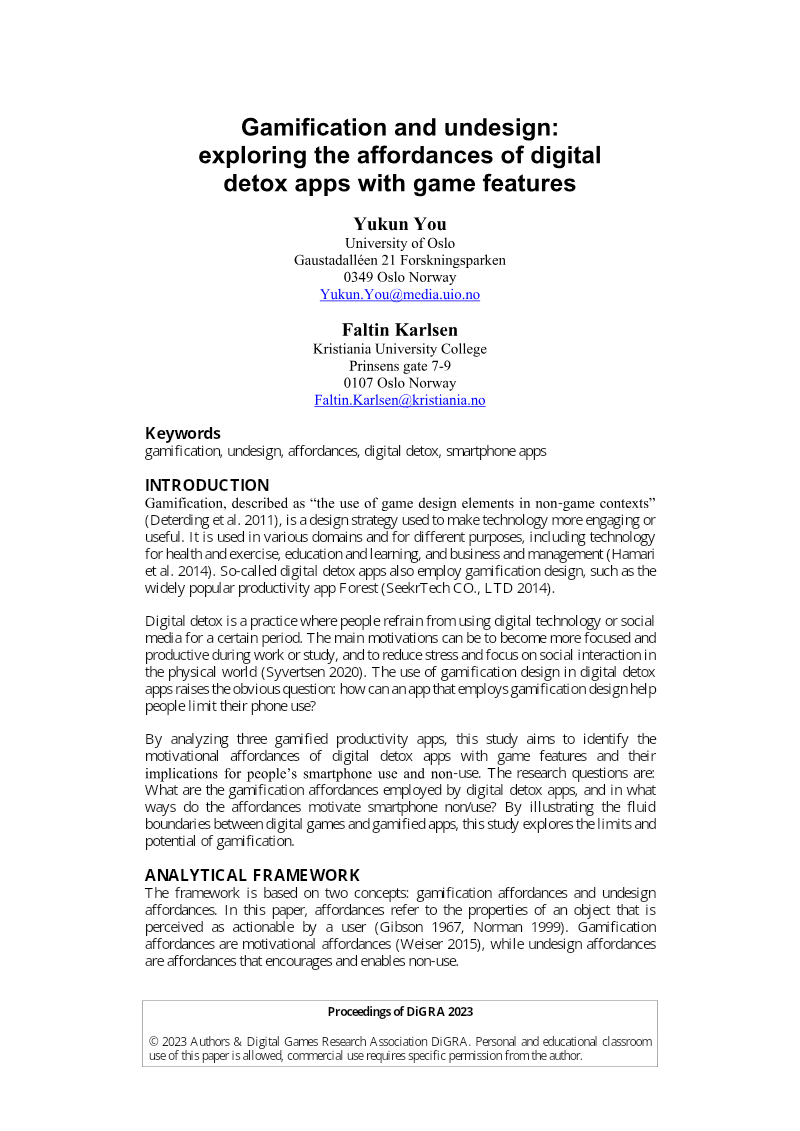
DiGRA · 2023