1 free read left. Create a free account for unlimited reading + AI research.
Create free accountWhitepaper Ludic Language Pedagogy
1 free read left. Create a free account for unlimited reading + AI research.
Create free accountWhitepaperLudic Language Pedagogy
Players engage in critical analysis, negotiation, and digital content creation through games like Towerfall Ascension. This approach transforms passive consumption into active participation.
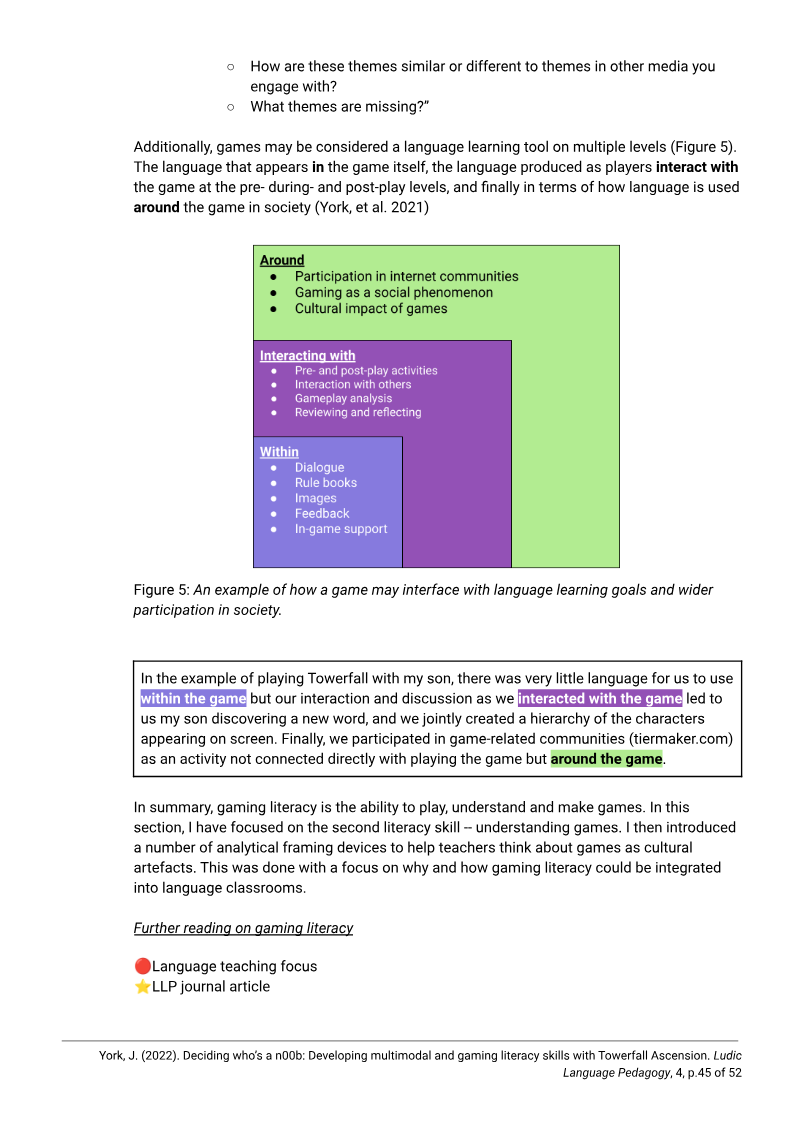
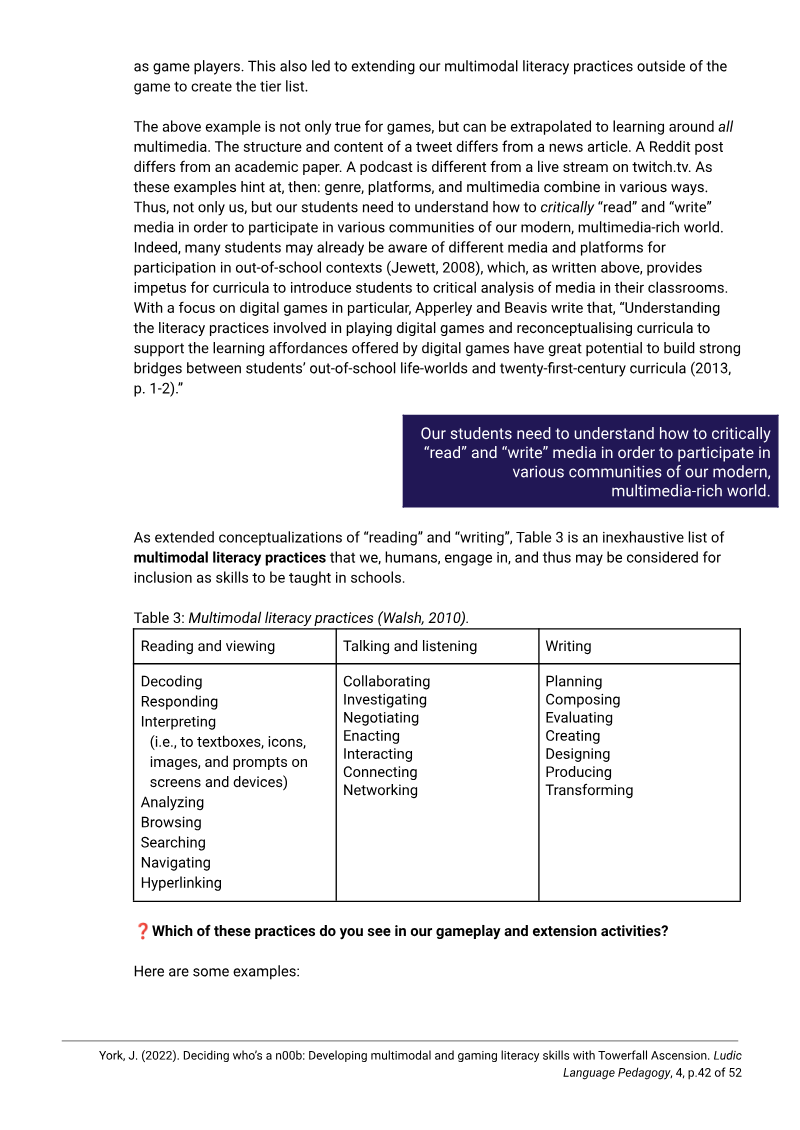
Informal gaming experiences serve as a potent foundation for developing multimodal and gaming literacy, bridging the gap between recreational play and structured educational development. By engaging with the mechanics and cultural artifacts of games like Towerfall Ascension, participants cultivate essential skills in critical analysis, negotiation, and digital content creation. These activities transform passive consumption into active participation, as players must evaluate game elements, justify their performance standards, and communicate these findings through collaborative projects such as ranking systems and social media engagement.
The pedagogical framework derived from these interactions treats video games as complex cultural texts rather than mere entertainment. By utilizing comparative and superlative language to categorize game characters or enemies, students practice linguistic precision while simultaneously developing a deeper understanding of digital culture. This approach allows educators to integrate gaming literacy into both first and second language classrooms without the necessity of active gameplay, focusing instead on the analytical processes of reading and writing about digital systems.
Ultimately, the synthesis of ludic activities and academic instruction fosters a sophisticated level of media literacy. By requiring students to articulate the reasoning behind their evaluations, educators can encourage the development of critical thinking skills that are highly transferable to other forms of multimedia. This methodology provides a scalable model for modern curricula, demonstrating that the collaborative practices inherent in gaming communities can be effectively adapted to enhance student engagement and analytical proficiency in diverse educational environments.
Ludic Language Pedagogy · 2026
Ludic Language Pedagogy · 2026
Ludic Language Pedagogy · 2026
Ludic Language Pedagogy · 2026

Ludic Language Pedagogy · 2026
Ludic Language Pedagogy · 2026
Ludic Language Pedagogy · 2026

Ludic Language Pedagogy · 2026
Ludic Language Pedagogy · 2026
Ludic Language Pedagogy · 2026
Ludic Language Pedagogy · 2026



Ludic Language Pedagogy · 2026
DiGRA · 2026